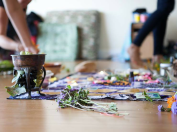
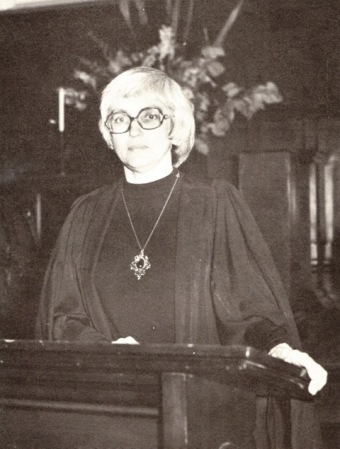
 I am grateful to the Interfaith Group of Feminist Theologians and Women of Faith for remembering my spiritual affiliation and giving me the opportunity to lead this service in this fully of blessings month of Ramadan and share with you a reflection in the form of a sermon or khutba. Perhaps you know that in orthodox Islam, tradition, without any theological basis, still forbids women to speak or lead rituals. So, this is a joyful occasion for me and I want to start with my usual invocation:
I thank God for this day. I praise Allah for the paths I had to walk that led me to its light and the present day. I ask the protection of the Divine that lives in the essence of everything. and I invite my female ancestors to walk with me in this journey.
A Call to Radical and Angry Women of Faith
My dear sisters, I want to invite you this evening to reflect on what it means to be a radical woman of faith, in a context of extreme upsurge of violence against women and minoritized groups we live in. What does mean being a radical woman? As we know, radical women are feared even by their activist and feminists peers. For the mainstream of society, a radical woman is a little crazy, a little witch, a little ugly, and especially, a very angry woman.
Well, they are right about anger. To be radical is to be as outraged enough to, fearlessly and tirelessly, claim and work for the total end of all kinds of oppression. You heard it right, the total end of all kinds of oppression. For women of faith, like us, who believe in social justice as the prior duty and principle of living in the creation, the current status of abuse, violence and exploitation to which a part of humankind is subjected must provoke us to rage, anger and outrage.
Aren`t you upset? Because I am. Religious patriarchy has historically exercised and endorsed, until today, violence against women and those group defined as “minority.” This religious patriarchy, composed for priests, imams, lamas and rabbis legitimize multiple forms of exclusion of women, sexism, control of our bodies, misogyny and rape culture.
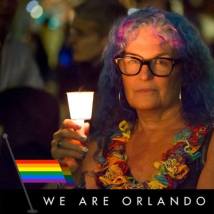
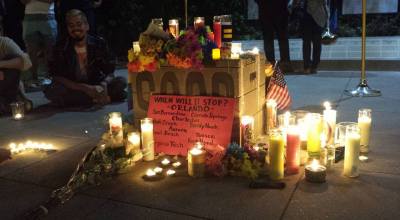
This week we mourn the death of about 50 of our Latino siblings in Orlando. We have to add to this list the hate crimes against queer people in Veracruz, México, as well the slaughtering of women in thousands of gendercides that have become the standard cover of newspapers every day, and the violence against lesbians and trans women, crimes that fail to capture the visibility and solidarity of a homophobic and androcentric society.
Without denying the misogyny and homophobia existing in my community, I want to say that the specific religion of those criminals doesn´t matter, you know why? The pernicious influence of religious patriarchy extends beyond the limits of our assemblies. People blame misogyny and LGTBQphobia on religions as if this is something external to their lives. But each day, at the school, workplace and media our society reproduces all that hetero-sexist, colonial, racist, elitist violence. Heterosexuality as a political regime, validated by hegemonic religious narratives, present in all belief systems, is a source of violence and a form of terrorism itself. Continue reading “Khutba “A Call to Radical and Angry Women of Faith” by Vanessa Rivera de la Fuente”


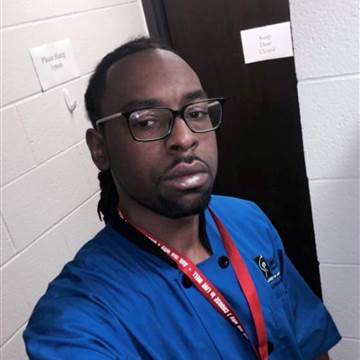
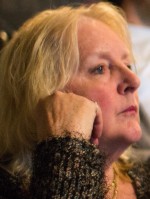 “All children are our children.” As I was posting my recent blog about the shooting of black men by the police, these words came into my mind with the force of revelation. At the time I was looking at a photograph of Philando Castile, taken at his place of work. Yes, I thought, my heart opening: “he is my child too.” This widening of the heart is at the center of the maternal values of ancient and contemporary matriarchal cultures around the world. It is a feeling some of us who were mothered well enough or who mothered children—including children not our own—carry within us. Is this the healing balm our world needs today?
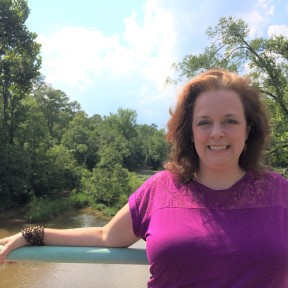 My spirituality is inherently creative. Deep in the creative process, I open more fully to awareness of what is flowing around and in and through me. When I can get there – to that place of fully giving myself over to Spirit as a channel, vessel, and embodiment – creation itself becomes an act of prayer, of devotion, of intense ecstatic ritual to honor, grieve with, or celebrate the Ground of Being behind all expression. I craft, dig, carve, build, dance, drum, and sing. Mostly, my art involves words – spoken and written – to create moments, spark feelings, paint pictures, or shape ideas. Words carry tremendous meaning, unconsciously as well as when we use them consciously, with intention.
 A few days ago I watched the movie
  The White House Summit on Women was held this week on Tuesday, June 14, 2016 and it was a great privilege to be among those invited to participate in this inaugural event. There was an incredible line up of speakers and so much was shared. It proved to be an overwhelming day – in a very good way. Topics addressed included violence against women, economic empowerment, and education. In addition to the main event, there were breakout sessions on a myriad of topics presented by the most preeminent authorities in their fields. I walked away from the day with a sense of urgency to find news ways to engage gender issues and social policy. However, I also wondered how to bring religion into the dialogue and give greater attention to its impact on women’s issues in the US.
