

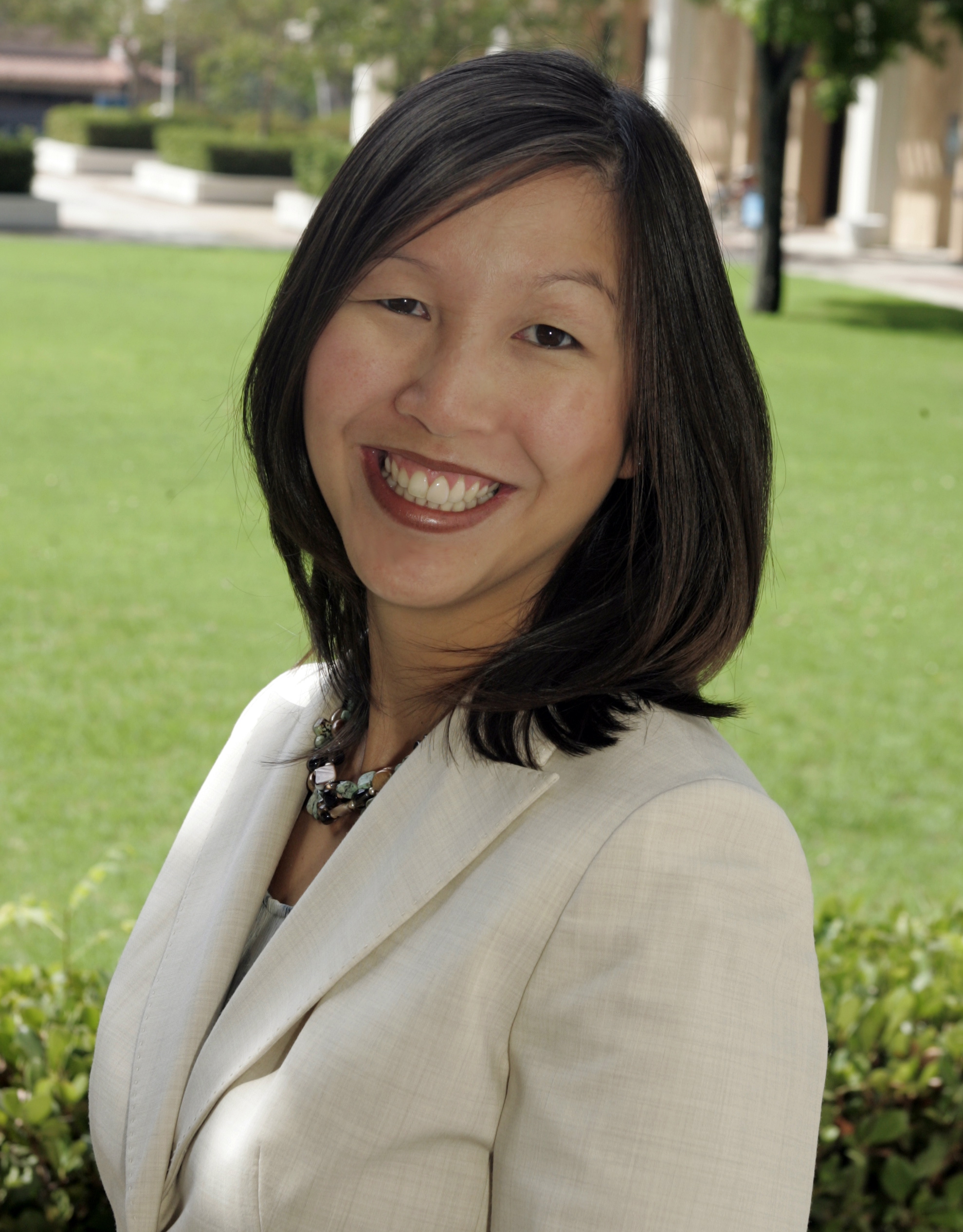
 I recently came back from a weeklong camping retreat for Christian faculty and their families in beautiful Catalina (an island an hour’s boat ride away from the Southern Californian mainland). This year’s conference theme was “Power Revealed: Gifts, Dangers, and Possibilities.” Not surprisingly, the topics of race, race relations, and institutional racism came-up repeatedly in sessions and informal conversations.
Continue reading “Does the Term “Women of Color” Bother You? By Grace Yia-Hei Kao”
Category: Activism
A Day of Peace: On the Anniversary of Michael Brown’s Death by Qumyka Rasheeda Howell

I remember when I heard of the death of Michael Brown who was shot by a Ferguson, Missouri Police Officer exactly one year ago today. His bloody body laid in the middle of the street for four hours before receiving help. I wondered if Michael Brown would still be alive today if he hadn’t been shot and left for dead. I remember looking at my beautiful black sons that night as they slept. I wept until my knees gave way. I do not think I have stopped weeping as I continue to be imbued with reports of black and brown bodies dying at the hands of police officers month after month.
One year later, I am still grieving and praying. I am still tired. I am now joined into a call with my sisters who work alongside me in the anti-violence movement. We held each other as we listened over the phone. Then my friend Corine Reed gets our attention. She says it’s time for peace. That word, peace, was the divine pause I needed. I think it is what the world needs right now – PEACE. Continue reading “A Day of Peace: On the Anniversary of Michael Brown’s Death by Qumyka Rasheeda Howell”
Satirists as Public Theologians by Melissa James
Why satirists have become our public theologians (or why I am doubling down on feminist theological ethics as public theology)…
Did you see the Daily Show last night? I’m sure it was all over your Facebook feed and Twitter. The show just nailed the response to. . .fill in the blank. From Ferguson to pay inequality, from racism to culture wars the satirists have had quite the run lately. From political cartoons to the Onion to late night cable “news” shows, satire plays an important role in society. What satirists are excellent at is holding up a magnifying mirror to our society to show us areas of absurdity, oppression, and hypocrisy. The mix of political commentary and humor allows satirists to push further than many other interlocutors in public discourse.
Part of their success stems from our deep need and longing for collective moral reflection and humor allows us to do so in a way that feels safe enough to engage. What makes good satirists effective is their ability to do deep, critical analysis of society. They use sociology. The better they employ their analysis the better their satire. The better the satire the more they reflect to us what we need to hear. And many satirists have played that role really well. Continue reading “Satirists as Public Theologians by Melissa James”
Spouses for Life by Marie Cartier
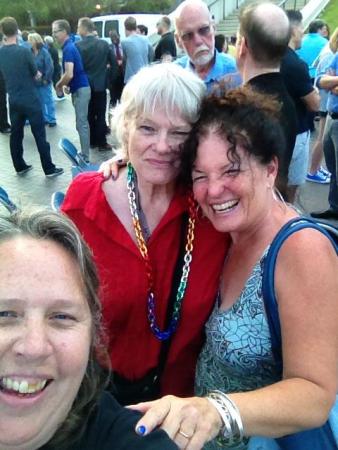
This essay is perhaps the last in an occasional series I have written since the New Year, which can be read here and here. Gay marriage as of June 26th is now legal in the United States. What has changed—and what has not?
If public opinion drives public policy, then the motivation for banning same-sex marriage was moral disapproval, religious disapproval—and the belief that God was not “on the side” of the homosexuals and had cast homosexuals as sinners in the faith choice of the person formulating the public policy critique. Public discourse —based on religious formulations such as “sinner” and what “God intended” had been the primary agents erected into state law to ban the LGBTIQ population from civil rights—such as marriage.
Religious sentiment, such as “you are a sinner” should not make the case for legal judgment. In fact, it was unconstitutional.
Love the Sinner. Hate the Sin. Continue reading “Spouses for Life by Marie Cartier”
Homoerotic Jesus at Pride Parades? This Christian Says, “Yes, Please!” by Trelawney Grenfell-Muir
 Recently, some Christian communities have been angrily sharing these photos of lesbian and gay Jesus figures from Brazil’s pride parade in Sao Paolo. Conservative Christians tend to denounce anything to do with Pride as part of their general rejection of any celebration of LGBTQ folks as equally in the divine image. However, some progressive Christians and queer Christians have also expressed that they are offended by these images, which they characterize as “extreme,” because they believe the people in the Pride parade intended to offend Christians by insulting Christianity.
I love them. To me, these images express powerful theology: Jesus as gay, lesbian, a lover, fully human, present in homoeroticism… I find these images beautiful and powerful. I’m also not sure these queer Jesus folks are merely trying to cause offense. Maybe they are trying to cause shock; however, I see these acts as a positive statement rather than a negative one. I see these depictions of queer Jesus as a powerful statement about how Jesus is crucified whenever any oppressed group or person is denigrated, excluded, subjugated, or harmed by the more powerful community. People have previously compared Jesus to victims of homophobic hate crime such as Matthew Shepard and noted that such violence is widespread and comparatively socially acceptable. Continue reading “Homoerotic Jesus at Pride Parades? This Christian Says, “Yes, Please!” by Trelawney Grenfell-Muir”
Changing the American Story? by Carol P. Christ
 In a moving part of Goddess and God in the World, the book Judith Plaskow and I are writing together, Judith describes how the Sabra and Shatila massacre forced her to confront the fact that “her people” are just as capable of perpetrating evil as any other group. Growing up in the shadow of the Holocaust and the pogroms that had scattered her people across the world, Judith was taught to think of the Jewish people as the victims of history rather than as the perpetrators of evil. The willingness of the Israeli army to countenance the outright massacre of up to 3500 people told another story: when in power, Jews too were capable of great evil.
I tell this story because I believe the lesson Judith learned is a lesson that Americans as a group still need to learn. I am thinking about this in the days following the heated debate that led to the removal of the Confederate flag from the Capitol of North Carolina.
In a brave and impassioned speech, Jenny Horne explained that though she is a descendant of Jefferson Davis, she was speaking against the display of the Confederate flag because it is a symbol of the harm that has been done and continues to be done to slaves and descendants of slaves in her state. Jenny Horne was rejecting the story she had been told about what it is to be an American in South Carolina. Continue reading “Changing the American Story? by Carol P. Christ”
Who Sits at the Center of this Story? By Elise M. Edwards
 Have you ever heard of the Vitruvian Man? It’s an image from 1490 inked by Leonardo da Vinci that came to symbolize the centrality of the individual in the Renaissance. It is quite clearly a depiction of a muscular, European male. His body is perfectly proportionate and thus simultaneously represents ideal humanity and a microcosm of the universe. The Vitruvian Man is so named after the ancient Roman architect Vitruvius who describes the proportions and symmetry of a temple as being analogous to the proportions of a man.
As an architect and scholar in the humanities, I’ve been acquainted with the Vitruvian Man for many years now. I even had a da Vinci theme on my PC’s Windows software about 15 years ago, meaning that the image of the Vitruvian Man appeared regularly on my desktop and screen saver. There was nothing problematic to me about his presence until a few days ago, when I took part in a discussion about teaching philosophies with some new friends and academic colleagues.
I was listening to Tamara Lewis, an assistant professor in religion whose research and teaching addresses the medieval and Renaissance periods. When she described a metaphor for her teaching philosophy, she discussed replacing the symbol of Vitruvian Man with the “woman at the well.” The woman at the well is a figure in Christian stories about Jesus and his teachings. Her narrative in the Bible is placed in chapter 4 of the Gospel according to John. Int eh story, Jesus encounters a Samaritan woman at a well. He asks her for a drink, which begins a meaningful exchange about spiritual teachings. Jesus’ male disciples and surprised to witness this exchange, presumably because she is a woman and a Samaritan, as the text tells us that Jews do not associate with Samaritans. The woman goes back to her town, tells people about her encounter with Jesus, whom she believes is the Messiah, which prompts many of them to come to him and also believe.
Dr. Lewis described how her presence in the historical study of medieval or Renaissance periods is sometimes questioned and how the woman at the well represents this presumed misplacement. Her metaphor caught my attention not just because of its profound coherence within her own career trajectory and narrative, but its coherence within mine. As a black feminist, religion scholar, and practicing Christian, I often wrestle with questions of belonging and being in or out of place.
This summer, I’m taking the time to think about broad questions and do some vision casting. This past December, Grace Kao wrote about using sabbatical time differently, and I’ve connected this to my own practice of Sabbath keeping as a ritual. I dedicate specific times to cease work. I am engaging in some productive activity this summer, but I’m also honoring one of the truest blessings and privileges of full-time employment in my profession, which is break time to rest, reflect, and plan for the seasons ahead. The metaphor of woman at the well who intentionally replaces the Vitruvian Man provokes these questions in my reflection:
Who is the default person around which the places we inhabit are constructed? Who sits at the center of our stories about the places we will go?
As the little bio that follows my posts says, in my professional career I examine issues of civic engagement and how beliefs and commitments are expressed publicly through aesthetic and artistic practices. I’m currently writing a book-length project about theological ethics and architectural design. So these days I’m thinking a lot about the way public spaces and built environments communicate the values of those who build them and inhabit them. One of the questions I’m wrestling with is the way “common” spaces are defined by the narratives of only some people in the community. What does it mean to be literally “out of place”? What exists as a “safe space” in a public park for a man may not feel safe at all for me as a black woman. A public bench upon which I can rest in the middle of an afternoon jog may not be so uncontested for a homeless man at night.
As I think about my future, I have to ask who sits at the center of my story. I’m approaching a milestone birthday, and I don’t want to fall victim to someone else’s vision of what a 40 year old woman should be. What does the story look like with me at the center? What happens when I replace an idealized image of perfection, vitality, and beauty with an imperfect but gloriously alive and wonderfully formed vision of who I already am?
As I plan for a new academic year, who do I imagine in my classes? As I engage students in discourse about the history of Christianity, the development of its theology, and the ethical issues of today’s world, who do I place at the center? As the US becomes enmeshed in presidential election politics and ongoing racial tensions, what image to we present as the archetypal American?
I’m so grateful that I was brought to see the woman at the well as a metaphor of intentional displacement. Even in a religion that places a male Savior (Jesus) at its center, there are women who sit with him. Although they confound some of Jesus’ other followers by their presence, they remain meaningful conversation partners and witnesses to their faith.
Elise M. Edwards, PhD is a Lecturer in Christian Ethics at Baylor University and a graduate of Claremont Graduate University. She is also a registered architect in the State of Florida. Her interdisciplinary work examines issues of civic engagement and how beliefs and commitments are expressed publicly. As a black feminist, she primarily focuses on cultural expressions by, for, and about women and marginalized communities. Follow her on twitter, google+ or academia.edu.
Referendum in Greece: One Small Victory for the 99% by Carol P. Christ
 Yesterday the Greek people voted by an unexpectedly large margin of 6l.31% against the austerity programs insisted upon by the European creditors–despite threats from the creditors that Greece would be expelled from the European Union. This was a victory for democracy and for the 99% against the 1%. The blog I wrote on the eve of the referendum explains the situation.
Here in Greece, we are in a state of suspended animation and have been for the past 5 ½ months, since the new government of Alexis Tsipras began to negotiate with the European Commission, the European Central Bank, and the International Monetary Fund, popularly known as the Troika, regarding the Greek national debt. Each week we have heard: “a few days more and the crisis will be resolved.” We hold our breath and wait. Holding your breath for that long takes a toll on your health. Right now our banks are closed, and no one knows what the future will be.
Prime Minister Alexis Tsipras and Minister of Finance Yiannis Varoufakis have been negotiating on the assumption that representatives of the Troika are rational and moral actors—or can be convinced to be. Continue reading “Referendum in Greece: One Small Victory for the 99% by Carol P. Christ”
Feminism, Race, and Religion: An Interview with Sikivu Hutchinson by Kile Jones
While black Churches are burning, and black children are being gunned down by police, I felt it important to speak with someone who is involved in raising awareness on the role of racism and cultural imperialism in American society. I am honored to present to you all, Sikivu Hutchinson.

As a woman of color, and an atheist, how do you respond to the invocation of God in the Charleston tragedy?
It frustrates me but the invocation of God in crisis is a significant part of African American cultural and social history. As I wrote recently in an article entitled “Pushing Back on ‘God’ in Charleston”: “Radical black humanists, most notably Frederick Douglass and A. Philip Randolph, have challenged black religiosity under slavery while acknowledging the crucial role activist churches played in black self-determination.
Randolph’s critique of organized religion and the god concept was always coupled with a critique of capital and the imperialist occupation of black bodies and African countries. Churches dominated black communities because of the nexus of racial apartheid and capitalism.”
Organized religion and God belief continue to dominate African American communities because of these legacies. That said, clearly no loving god would allow a twenty six year-old in the prime of his life to be cut down in cold blood, nor abide by a five year-old having to play dead to avoid being murdered. And no moral god would demand forgiveness for a crime for which there has never—since the first African was stolen, chained, exploited and “imported”—been any reparations. Continue reading “Feminism, Race, and Religion: An Interview with Sikivu Hutchinson by Kile Jones”
Caitlyn Jenner is a Friend of Mine
To speak ones truth is oftentimes a difficult and nearly impossible act. However, to live one’s truth, on a day-to-day basis, is an aspect of life that has become so foreign to individuals who have become so comfortable in their own skin that I fear the activist and social justice roots that we all claim to hail from have fallen at the wayside and been replaced by complacency and reductionism.
 I’m deeply troubled by some of the anti-trans and anti-queer commentary that has been taking place on some of the comments on this blog in recent months. I’ll never forget when this project first began—talking with the founders about its original purpose: to bring the “F” word back into the mainstream religious discourse and more importantly, to be a place where scholars, young and old, senior or junior, could write, collaborate and eventually converse with across cyberspace.
However, in recent months, I’ve found myself being more of a watchdog rather than a frequent commentator on issues pertaining to feminist religious discourse. I’ve found myself reading comments about issues I may not frankly identify or agree with just to make sure that the cisgendering or anti-trans narratives do not become symbolic of what this blog is now rather than what was supposed to be at the beginning.
When I sat down to write my very first post I was scared. I was terrified that feminists from all communities would see me only as I appeared and not for whom I actually was. I was afraid that all I had worked for throughout my life would be moot with the first bad comment on one of my posts. While all of those fears were real and valid they quickly faded away as I was embraced by this community and many others for my passion rather than my gender; my life’s work rather than my privilege; and more importantly, the personal mission to make the world a safer and better place for women and girls everywhere.
To speak ones truth is oftentimes a difficult and nearly impossible act. However, to live one’s truth, on a day-to-day basis, is an aspect of life that has become so foreign to individuals who have become so comfortable in their own skin that I fear the activist and social justice roots that we all claim to hail from have fallen at the wayside and been replaced by complacency and reductionism.
Caitlyn Jenner’s story is one that many individuals, often not highlighted on this blog, know all too well. Caitlyn Jenner’s story and personal experiences are valid and for members of the feminist community to refer to her as not “feminist” or merely as a man “masquerading” as a woman while still utilizing his privilege from being biologically born as a man is troubling and the root of the problem facing many trans individuals today when they’re negotiating coming out as their true selves.
Trans individuals face a cadre of other horrible social, physical and mental statistics that oftentimes lead them to be more likely to self-harm. However, as feminists, isn’t it our job to make sure that all groups have access to the same freedoms rather than working towards denying it for certain groups while trolling the comments sections of posts?
Shakespeare said: “To thine own self be true” and for those of us who identify with the Golden Rule, if we no longer treat others as we would like to treat ourselves, then we really have failed as feminists; and if the comments on recent blogs are any indication, we still have a long way to go before all voices can feel welcomed not only on FAR but also in the world at-large.
John Erickson is a Ph.D. Candidate in American Religious History at Claremont Graduate University. He holds a MA in Women’s Studies in Religion; an MA in Applied Women’s Studies; and a BA in Women’s Literature and Women’s Studies. He is a Permanent Contributor to the blog Feminism and Religion, a Non-Fiction Reviewer for Lambda Literary, the leader in LGBT reviews, author interviews, opinions and news since 1989 and the Co-Chair of the Queer Studies in Religion section of the American Academy of Religion’s Western Region, the only regional section of the American Academy of Religion that is dedicated to the exploration of queer studies in religion and other relevant fields in the nation and the President of the University of Wisconsin Oshkosh’s LGBTQA+ Alumni Association. When he is not working on his dissertation, he can be found at West Hollywood City Hall where he is the Community Events Technician and works on policies and special events relating to women, gender, sexuality, and human rights issues that are sponsored or co-sponsored by the City of West Hollywood. He is the author of the blog From Wisconsin, with Love and can be followed on Twitter @JErickson85
 Feminism and Religion