Legacy of Carol P. Christ: Two Ultimates: The Ground of Being and Goddess

This was originally posted July 15, 2013

The concept of two ultimates, the ground of being and Goddess, can be helpful in understanding differences of emphasis within and among religions.  Some religions or strands within religions focus on relationship with or worship of a personal God, while other religions or strands within religions focus on identifying with or merging with the impersonal ground of being or the whole of which we are part.  These two ultimates are found in feminist spiritualities and theologies.

In “Being Itself and the Existence of God”* process theologian John Cobb identifies two ultimates.  The ground of being as the metaphysical principles that structure all of life is unchanging; as the whole of which individuals are part, the ground of being is impersonal.  God, on the other hand, is an active presence in the world, is personal, and cares about individuals in the world.  If God is understood to be in some sense an individual in relation to other individuals, then God cannot be identified with the whole, because the whole is made up of God and other individuals.  Yet God is not simply one individual among other individuals.  Only God has perfect knowledge of the world and every individual within it and only God cares for the world in light of perfect knowledge of it.

Continue reading “Legacy of Carol P. Christ: Two Ultimates: The Ground of Being and Goddess”


Legacy of Carol P. Christ: On Believing Things That Are Not True

This was originally posted on August 19, 2019 (when the former guy was President. Although former guy isn’t in power now, Carol’s points are still operative in our world.)

Anyone who is following American politics these days knows that the American President and his acolytes have little respect for what the rest of us consider to be the truth—or at least the best approximation of the truth that we can discern. Last week, while discussing the “lie” of white supremacy that approximately 40% of the American public has bought hook, line, and sinker, I had occasion to reflect again on the relation between traditional religious beliefs and rejection of reason and common sense. As is also well-known the President and his supporters have no respect for factual truth.

Continue reading “Legacy of Carol P. Christ: On Believing Things That Are Not True”

From the Archives: And No Religion Too by Elizabeth Cunningham

This was originally posted on January 17, 2016

Religion. As a species we can’t seem to live with it or without it. There is dispute about the derivation of the word, but some scholars believe it has the same root as the word ligament, ligare, to bind or tie, to reinforce the bonds between human and divine, or perhaps the bonds between believers. The words bond and bind also have a variety of meanings and connotations. A bond can be used to tie someone up; it can be a bond of kinship, or bond given as surety.

Religion’s impulses and manifestations are just as ambiguous. Did religion arise because the world seemed so beyond human control (weather, health of crops, availability of game)? Perhaps there were gods or spirits to appeal to or propitiate? Or did it arise equally from a sense of gratitude for the earth and seas that feed us, for a sky that dazzles us, for the life that flows through us and surrounds us. Song, dance, storytelling, drama, art likely began as religious or ritual expression. No aspect of life was beyond the sacred. And so religion also went into the business of law, social control. Religion has a long, bloody, ongoing history of occasioning and/or justifying war, oppression, persecution, torture, genocide.

Continue reading “From the Archives: And No Religion Too by Elizabeth Cunningham”

From the Archives: Longing for Hermitage by Elizabeth Cunningham

This blog was originally posted on October 20, 2013. You can read the comments here.

At least since the days of the Desert Mothers in the 4th and 5th centuries CE, there have been women in the Christian tradition (and doubtless other traditions) who have lived lives in religious solitude, whether by choice or circumstance.  In Medieval Europe many churches had anchorholds, small enclosures inhabited by men or women dedicated to a life of solitude and prayer. The word anchorhold implies that the presence of the anchoress or anchorite grounded the church community, but the word derives from the ancient Greek verb (pronounced anachōreō) for to retire or withdraw.  Anchoress Julian of Norwich is still revered as the author Revelations of Divine Love, possibly the earliest surviving book written by a woman in the English language.  Six centuries after her death, her vision of Jesus our Mother continues to challenge, comfort, and inspire.

Continue reading “From the Archives: Longing for Hermitage by Elizabeth Cunningham”

Carol P. Christ’s Legacy: Does Belief Matter?

Moderator’s Note: Carol Christ died from cancer in July, 2021. Her work continues through her non-profit foundation, the Ariadne Institute for the Study of Myth and Ritual and the Goddess Pilgrimage to Crete. This blog was originally posted December 10, 2012. You can read it long with its original comments here.

In recent days I have been pondering the fact that some people and some feminists seem to see the issues of religious faith and belonging to be rooted in birth, family, and community, while for others the question of belonging to a religious community hinges on belief and judgments about the power exerted by religious institutions.  What accounts for this difference in the way we view religious belonging?

Recently I watched The Secret History of Sex, Choice and Catholics, a film featuring Roman Catholic feminists and ethicists who dissent from the Roman Catholic hierarchy’s views on contraception, abortion, and homosexuality.  At the beginning of the film those interviewed state almost univocally that for them being Catholic stems from having been born Catholic. These Catholic dissidents continue as Catholics, even though they disagree with major portions of Roman Catholic teaching.  It may have been because they were not asked, but most of them did not name reasons of belief for remaining Catholic.

Continue reading “Carol P. Christ’s Legacy: Does Belief Matter?”

Lucky by John M. Erickson

This past weekend, I was asked by an individual why I decided to get my Ph.D. in American Religious History focusing on LGBTQ spirituality and sexuality.  Now, I’ve been asked this before, and if you know anything about me, you know I like to shock people at times, so my usual response is: “I have always been fascinated with people tell me I was going to hell.” 

It’s almost the end of Pride Month and I wanted to take a moment to reflect on where we’ve come and where we must go.

This past weekend, I was asked by an individual why I decided to get my Ph.D. in American Religious History focusing on LGBTQ spirituality and sexuality.  Now, I’ve been asked this before, and if you know anything about me, you know I like to shock people at times, so my usual response is: “I have always been fascinated with people telling me I was going to hell.” 

Continue reading “Lucky by John M. Erickson”

Star Trek: Discovery Season Two: On Characters, Action, and Faith by Ivy Helman.


Season two of Star Trek: Discovery incorporates religion differently than season one.  While there are religious overarching themes running throughout, like how actions to shape the future and faith not as convictions but as empowerment, a more fitting and interesting way of addressing religion throughout this season is to look at the individual characters and what their stories have to stay about religion.  

Captain Pike knows and understands religion.  He also often believes.  Michael is the persistent skeptic.  The Red Angel plays many roles: an illogical mystery, a revelation, a savior or a intentional sign. Saru is the convert, physically transformed with a newfound confidence and power, while Hugh is the reincarnated, whose bodily existence begets loneliness and struggle.  Spock is the logic wrestler, who as Pike says asks “amazing questions.”  Finally, not a character per se, episode two, entitled “New Eden,” represents a typical Western understanding of organized religion, replete with sacred writings and a church.  

Like season one, religion is present in the opening scene of the season, this time in the form of mythology, as Michael tells a tale of an African girl who threw embers from a fire into the air creating the Milky Way.  Michael says that she left a message in the stars if one was willing and open to receiving it.  

Continue reading “Star Trek: Discovery Season Two: On Characters, Action, and Faith by Ivy Helman.”

Judaism or Christianity: Which Tradition Is More Open to Feminist Change? by Carol P. Christ

Jill Hammer’s recent post on midrash surrounding the Biblical figure of Eve (Hava in Hebrew) sparked me to muse again about the fact that, despite its patriarchal roots and overlay, Judaism is a much more flexible tradition than Christianity and, therefore, much more open to feminist change.

Part of this is due to the fact that Judaism is midrashic while Christianity has been and remains a doctrinal tradition. Midrash is a form of Biblical interpretation that includes retelling the story to fill in the blanks and to answer contemporary questions left unanswered in the original text. Jews consider the Torah (the 5 books of Moses) to be the “Word of God” though opinions vary as to what this means. In the rabbinical tradition, the Torah is interpreted through the Talmud which is an extensive collection of discussions and disputes that draw on Biblical texts in relation to contemporary (to the rabbis) questions. Midrash included in the Mishnah (a collection of teachings that preceded the Talmud) and the Talmud are considered part of the “oral Torah.” which is also “the Word of God.”

The Talmud is considered to be authoritative, but it includes conflicting interpretations that were never resolved into a single definitive view. Though different Jewish groups have declared certain views to be normative, other groups have disagreed. There is no central authority (such as a Pope or council) to resolve these disputes. Though some Jewish groups disagree strongly with the beliefs or practices of others, in Judaism as a whole an attitude of “live and let live” leads to inclusion rather than exclusion. Indeed. The Talmud records that in the midst of a particularly vehement dispute between two rabbis, a voice intervened, stating: “These and these are the words of the Living God.” (Quoted by Judith Plaskow in Goddess and God in the World.) Continue reading “Judaism or Christianity: Which Tradition Is More Open to Feminist Change? by Carol P. Christ”

When Life Hands You Lemons… by John Erickson

“When life hands you lemons, sometimes you have to make applesauce.”

I’ve been thinking a lot about something my grandmother would always tell me: “When life hands you lemons, sometimes you have to make applesauce.” I know, it sounds crazy, but life right now appears to be more on the crazy than the sane side.
We’re all in a state of uncertainty right now. The news is scary. Twitter is scary. Heck, even TikTok is losing parts of its humor. Everywhere we seem to turn, it’s more information about COVID-19, new cases, new lockdowns, and new things that we shouldn’t do for the foreseeable future. Continue reading “When Life Hands You Lemons… by John Erickson”

Let’s Try Creativity This Year by Barbara Ardinger

As usual, I’m writing my post a couple weeks before you’ll be able to read it. I bet we’re all wondering in mid-December if 2020 is really gonna happen. Will we still be living in a civilization? Will there still be wild animals (outside of zoos)? Will trees and other plants still be growing? Well, my friends, if we all woke up last Wednesday and opened our eyes and it’s all still here……hooray!

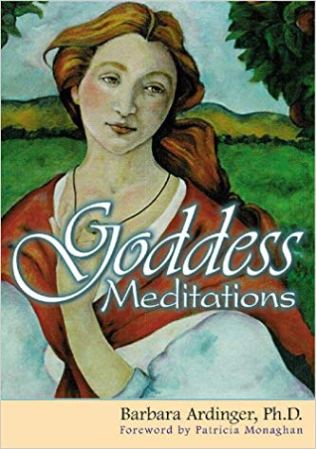
Way back in 1998 I wrote a book called Goddess Meditations. It was the first-ever book devoted to guided meditations centered only on goddesses. No gods. No empty minds or asanas. Goddesses, some well known, others obscure, from many pantheons. One chapter in the book is “Chakra Goddesses,” in which I assigned a goddess to each of the seven major chakras. The goddess of the throat chakra—which rules clear communication, self-expression, and creativity—is Sarasvati. Here (with comments that pop out of my mind and into my fingers as I type) is part of what I wrote about communication.

Continue reading “Let’s Try Creativity This Year by Barbara Ardinger”