Moral Courage by Kelly Brown Douglas

The time for false solidarity is over…Let’s us stop talking about it, let us just dig deep inside of ourselves and find a way to do it. 

Fifty years ago in response to President Kennedy’s assassination Martin Luther King Jr. wrote: “Our nation should do a great deal of soul-searching …” It is these words of Martin King’s that echo in my mind fifty years later as news headlines continue to be filled with stories of innocent young black bodies falling victim to a social climate that nurtures racialized fears and breeds racialized violence. If the deaths of Renisha McBride, Jonathan Ferrell, Jordan Davis, and Trayvon Martin tell us nothing else, they proclaim loud and clear that we are a people in need of a “great deal of soul-searching.”  For me, this time for soul-searching is nothing less than a kairos time. Continue reading “Moral Courage by Kelly Brown Douglas”

The Quiet Voice of the Frame Drum by Oxana Poberejnaia

oxanaLayne Redmond passed away on 28 October 2013. Days before her death I received by post her signature Lotus Tambourine which Layne developed with Remo, manufacturer of world frame drums. Remo posted a tribute to her on her page as a Remo artist. Percussive Arts Society published an In Memoriam of her, along with the link to an article by Layne Redmond “Frame Drums and History”. Facebook and especially Women Frame Drumming page exploded with expressions of gratitude, sympathy and testimonials of how Layne changed people’s lives. Here is an account of Layne’s last summer by a person who supported her in her end-of-life transition.

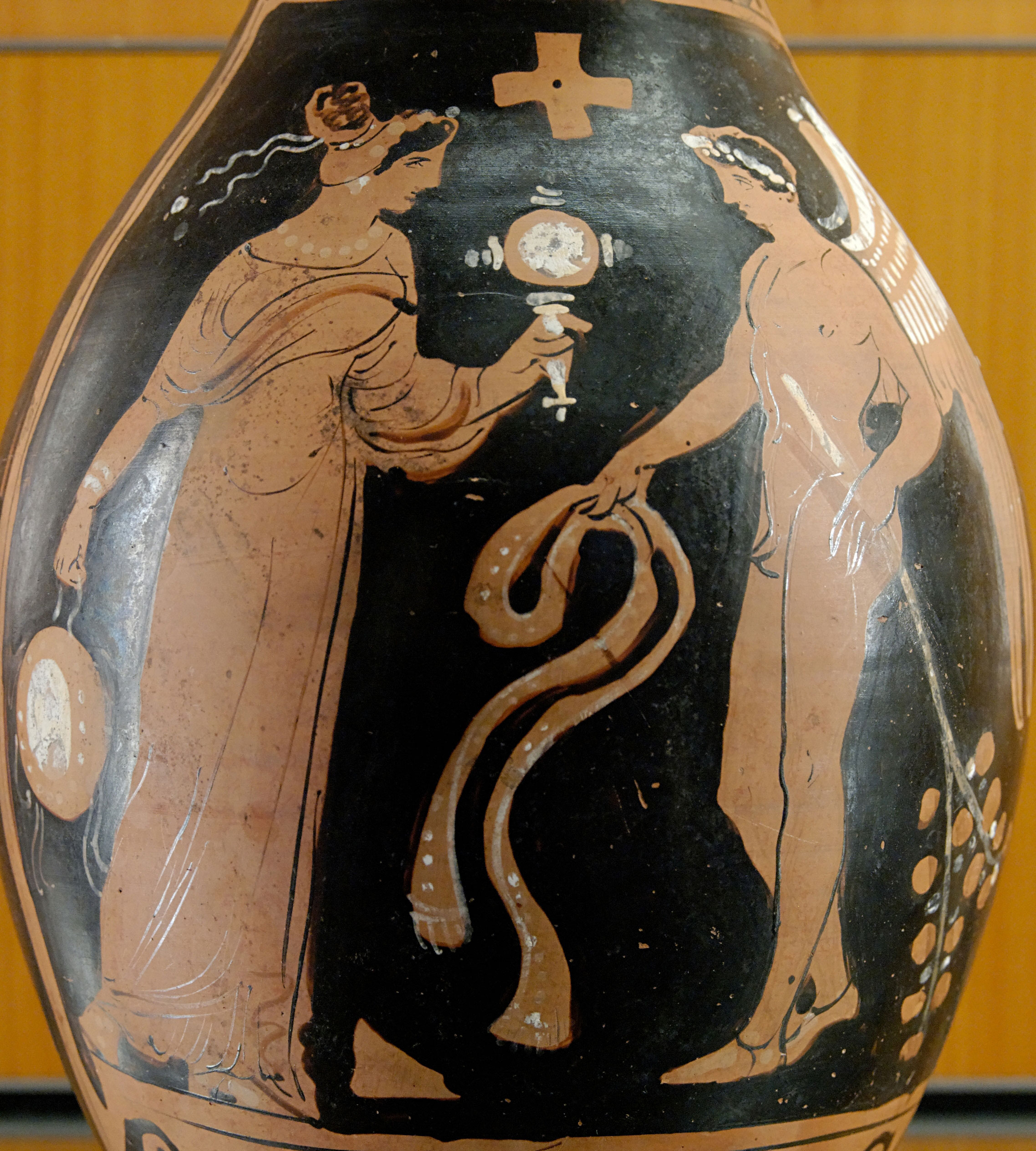
Woman_mirror_tambourine_MBA_Lyon_L631FWLayne Redmond was intensely busy with two projects during this time: completing her film about drumming spiritual practices to dream awake Afro-Brazilian Gods and Goddesses, and preparing her seminal book When The Drummers Were Women for re-printing with new materials and photos. She put out appeals for both projects, including on Karen Tate’s show “The Voices of the Sacred Feminine” in June 2013, and people helped with their money and time.

Continue reading “The Quiet Voice of the Frame Drum by Oxana Poberejnaia”

Muslim Ritual Prayer, Social Submission, and Embodied Dissonance by Laury Silvers

Silvers, Bio Pic FRBlogWebsites run by Muslim scholars typically offer advice columns for those seeking legal rulings and religious guidance on personal concerns. One young Muslim woman wrote to a site about her doubts that wearing hijab was connected to being a good person. The gist of the opinion was that wearing a head scarf, whether she feels right about it or not, will internalize good behavior thus transforming her faith. The acting scholar, Shazia Ahmed writes,

“…performing good deeds, even if one may not be ‘feeling it’, can affect us and change us.  The limbs are inroads, and performing good deeds with them can soften a hardened heart, bring enlightenment to a closed mind, and give a person a feeling of rejuvenation and desire to come closer to Allah and do more positive things.”

If she wears a head scarf, her faith, ritual and ethical observance, and peace of mind will increase. This approach is supported by studies undertaken in the field of social and behavioral psychology. It’s been shown that standing or sitting in an open-bodied “power pose” increases testosterone and reduces cortisol, just as forcing a smile increases serotonin. That’s all well and good, and I’ve certainly got nothing against hijab. As we should all be aware by now, hijab has multivalent meanings for Muslim women that do not typically accord with non-Muslim assumptions of its oppressiveness. So hijab is not the point here. My point is that the use of repetitive behaviors and rituals, which are capable of transforming a person’s the inner life, may also act as methods of social control that may not result in the desired peace of mind.

Continue reading “Muslim Ritual Prayer, Social Submission, and Embodied Dissonance by Laury Silvers”

“Stand Up Straight” by Kelly Brown Douglas

When I was little my mother use to always tell me to “stand up straight.” It is probably because of my mother’s plea that one particular bible story became one of my favorites. It is a story that comes from the Gospel of Luke, Chapter 13.  In this story Jesus heals a woman who had been crippled and bent over for 18 years. As he does so he tells her “to stand up straight.” For me, these are some of the most powerful words that Jesus could have spoken to this woman. For not only did they signal that he had freed her from whatever the burden was that kept her hunched over, but they also restored her to a sense of dignity. These are simple, yet powerful words, for the many women in our midst who have for so long have not been able to stand up straight.

I think of the Sarah Baartmans of our world, like a Rachel Jeantel, who are made into a circus act because of their appearance. What happened to Sarah Baartman in 1810 as she was paraded across Europe so that people could examine her buttocks and genitalia—deeming her exotic and erotic, happened to Rachel in 2013 as she gave testimony in an American courtroom while people decried her appearance and mocked her speech—deeming her ignorant and illiterate. Continue reading ““Stand Up Straight” by Kelly Brown Douglas”

Stories from the Yoga Mat: Sleep as Spiritual Necessity (Part Three-Final)— Feminism, Sleep and On with the Revolution by Marie Cartier

This is a follow up to my summer 2013 blogs: “Stories from the Yoga Mat: Sleep as Spiritual Necessity” –  part one and part two.

“The nicest thing for me is sleep. Then at least I can dream.”
–Marilyn Monroe

In the past two months I have written extensively about “sleep as spiritual necessity.” The Dalai Lama believes spiritual practice suffers without sleep. Sleep is important—all things in life work better if you have a good night’s sleep under your belt before undertaking them. But—how many of us slog through the day without that good night’s sleep? In my first blog on this topic I posted information about how women get less sleep than men. And last month (August) I followed up with yoga therapy techniques to combat insomnia—postures, meditation, and helpful techniques such as the use of aromatherapy. Continue reading “Stories from the Yoga Mat: Sleep as Spiritual Necessity (Part Three-Final)— Feminism, Sleep and On with the Revolution by Marie Cartier”

Unjust Wars and ‘Innocent’ Bodies by Kelly Brown Douglas

According to a recent online CNN report (15 September 2013) an 8 year old girl in Yemani died from internal injuries after her wedding night. Apparently this was not the first time a young Yemeni girl died under these circumstances.  Despite the fact that there have been various attempts to outlaw child marriage in Yemani, it remains legal.  For some families steeped in poverty, the “innocent” bodies of  young girls becomes a way to make money as these girls are sold for marriage to older men. One Yemeni woman lamented, “this is what poverty can do to people” (CNN online 15 September).

All around the world there are stories of young girls and women whose bodies are being “legitimately” violated.  Even in those places where the violence against women’s bodies is considered a crime, the redress for these crimes fall short of justice.  The story of the Yemeni girls and others like it have raised many theological questions in my mind concerning  notions of innocence,  the meaning of violence, and the implications of just war.  In this blog, I will share my rather fragmented thoughts on these issues as an invitation to conversation. Continue reading “Unjust Wars and ‘Innocent’ Bodies by Kelly Brown Douglas”

What I’m Wearing to the Pool and What it Means, by Sara Frykenberg

Sara FrykenbergRecently a FAR colleague sent us writers an article entitled, “Toward a New Understanding of Modesty,” and asked if any of us would like to comment on it.  I dove at the chance, pun intended.  Not only did the article address the politics of swimwear (a kind of clothing I spent nearly a third of my life wearing everyday, swimming competitively for eight years), it also discussed the swimsuit designs of Jessica Rey – a former Power Ranger, the white-suited one to be specific.

The article’s author, Katelyn Beaty, explains that Rey believes, “that the now-ubiquitous bikini hurts women” because it encourages men to see women as objects to be used.  Beaty states, “Rey has a mission: to get as many women as possible in one-piece swimsuits.”  This mission immediately perked my attention.  As a Power Ranger, Alyssa  (Rey) is all too familiar with the utility of a shining, stretchy body suit.  Armored head to toe in white, pink and gold lycra and spandex, sporting a skirt over her leggings,[1] Alyssa defeats many monsters in the Power Ranger universe.

Sourced from: http://www.1up.com/do/blogEntry?bId=8982878
Source

But fantasy aside, the utilitarian nature of swimwear is often overlooked in deference to “sexiness” and fashion.  Bikinis are featured in most fashion magazines as the standard for bathing beauty, as is the ‘ability’ (or supposed ‘right kind of body’) to wear a bikini, aka the elusive “bikini body.”

Continue reading “What I’m Wearing to the Pool and What it Means, by Sara Frykenberg”

Stories from the Yoga Mat: Sleep as Spiritual Necessity (Part Two) by Marie Cartier

This is a follow up to my July 2013 blog: Stories from the Yoga Mat: Sleep as Spiritual Necessity.

Last month I wrote about “sleep as spiritual necessity,” and posted information about how even the Dalai Lama believes spiritual practice will suffer without sleep—and compassion must be practiced for the self—by giving the self—sleep.

If you didn’t get a chance to read that column—there is some pretty compelling evidence gathered there from an informal search of recent web articles attesting to the importance of sleep.

But, for now, let’s assume that we all agree—sleep is important and without it life is much harder than with it.

“Sleep on it.” “Things will look better in the morning.” And other common place sayings show us how much we believe in this. And yet—sleep is elusive for so many of us. So–this month I am following up with tips– including a brief yoga therapy overview to combat insomnia. Continue reading “Stories from the Yoga Mat: Sleep as Spiritual Necessity (Part Two) by Marie Cartier”

On Fasting and Feminism by Ivy Helman

headshotOn July 16th, I fasted for Tisha b’Av, when Jews commemorate the destructions of the temples in Jerusalem among other events.  On July 23rd I attended, as a member of GLILA, iftar, hosted by the Tolerance and Dialogue Student Association of UMass Lowell.  Iftar is the traditional nightly break-fast dinner during the month of Ramadan.  On Saturday, July 27th, I read in the Boston Globe an obituary of a sixteen-year-old girl who lost her battle with anorexia nervosa.  That small paragraph obituary gave me pause.  I have literally spent this last month steeped in mine or my friends’ religious practices of fasting.  That young woman spent much of her last years of her life fasting to the point of death.   How does a religious feminist respond?

Religious fasts regularly praise the virtues of self-denial and self-sacrifice.  Abstention from food is thought to be spiritually purifying.  The theology of fasting frequently seeks to humble the adherent in which the practitioner seeks to garner favor or be seen as worthy in the eyes of the divine.  Fasting, especially in Christianity, also separates body and mind. Continue reading “On Fasting and Feminism by Ivy Helman”

Cleaning My “House” by Sara Frykenberg

Sara FrykenbergPrompted by a dear friend of mine during the new moon, last month I set an intention to “clean my house.”  This intention does, to a degree, involve the actual “house,” aka, apartment in which I live.  Great—fantastic even, and no problem at all!  I actually love to clean, particularly cleaning out closets, garages, cupboard or really, any space where junk can be hidden away, brought into the open, sorted and organized.  I’m really not joking.  I tell people this, and they laugh and say, “oh, I should have you come clean at my house.”  Seriously—do.  I am still waiting for several invitations.

Dust Bunny- sourced from http://www.rhl.org/blog/blog/dorm/dust-bunnies-and-more-keeping-a-clean-dorm-room/2909/

But meditatively speaking and in dreams, one’s “house,” is often one’s self and one’s physical body in particular.  This work has been a bit more challenging to me.  As I shared in my January post, I have been working this year to “create a healthier relationship to food in at least one way,” which also involves creating a healthier relationship with my body altogether, physical, spiritual, mental and emotional.

One reason I began to practice yoga and meditation was so that I could learn to better care for my body.  Feminism teaches me to reclaim embodiment and value physical bodies more, and yoga teaches me to incorporate what I learn in a highly physical way.  In yoga, I also found a safer place to access what I consider sacred and divine by approaching it primarily in my body while my mind and emotions unlearned an abusive relationship to God.  I have even searched my “house” once before through active meditation and visualization.  It was extremely powerful.  I fixed broken locks.  I gave people back items I didn’t even know I had been storing for them.  I also realized that I was not ready to open some doors. The process was fun and very rewarding, involving almost two hours of seated meditation.

Yet, I have also struggled to maintain this practice.  I felt very disconnected from myself before the new moon last month and hadn’t wanted to meditate.  I wanted a vacation from embodiment and myself.  Embodiment, after all, often demands that we actually hear what our bodies are trying to tell us.  Honestly, I don’t always want to listen.  When I have too much work to do, I don’t want to know that I am tired.  When I am anxious, I would rather feel in control.  I knew, however, cognitively, that “cleaning my house,” would be good for me so I made myself set the intention.  I pushed myself to carve out moments in passing during the day to focus my mind and tell me what I wanted to do.  I then proceeded to have four powerful dreams in the week following this intention-setting, all related to my “house.”  In the final dream, I spoke to me, literally.  I faced myself and said very assertively, “You need to work with what you have.” Continue reading “Cleaning My “House” by Sara Frykenberg”