

This past year (2020) has been a year of tremendous upheaval and unwelcome change for most of us due in large part to the COVID-19 pandemic. It’s the second time in my life (first time I was in my 40s) where I’ve responded to stress with anorexic behavior—not consuming enough calories to sustain a healthy weight.
Category: Body
Living with Cancer Treatment by Carol P. Christ
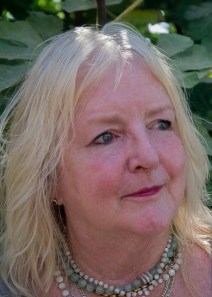 At the end of July 2020, I was diagnosed with stage 3 aggressive cancer. As of this week, I will have been receiving a very high dose of chemo (5 hours on the drip every 3 weeks) for 6 months, with 2 treatments to go. When I was diagnosed with cancer, I was in a state of shock. As I was about to leave the oncologist’s office, I said to the doctor, “stage 3 is pretty bad, isn’t it?” He responded, “Well, it could have been stage 4.”
As I understand it, the prognosis for becoming cancer free for stages 1 and 2 is good, for stage 4 it is unlikely, while for stage 3, the chances are something like 50-50. Although my primary oncologist declines to make predictions, I was told by a junior doctor that with the type of cancer I have, my chances were about 40% that the surgery that would follow chemo would remove all of the cancer.
Despite the fact that my chances were less than 50-50, for the most part I remained optimistic that I would be one of the lucky ones. I have not suffered depression, nor have I been overcome with anxiety. Although my primary doctor and the others I have seen are not interested in discussing the effects of prayer, meditation, and visualization, to a one they have said that “attitude” makes a big difference.
I attribute my ability to remain optimistic to several factors. I am not afraid of death. Continue reading “Living with Cancer Treatment by Carol P. Christ”
The Body is a Nation by Sara Wright
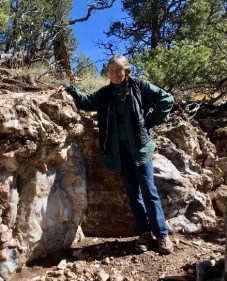
“The body is a nation I have not known.
The pure joy of air: the moment between leaping
from a cliff into the wall of blue below.”*
Oh, the pure joy of being weightless – I leapt to the stars, flung myself with abandon into the deep until the fire started burning and I was forced to surface for air…
I was a stranger to my body, escaping messy feelings by living through my mind. I dressed her, made her behave – learning that I must have control at any cost. I cultivated a winning smile to cover anguish I could not name. Buried all fear. This last one backfired during infancy. I lived pure terror. I had no Voice. It was years before I realized who stole it. Continue reading “The Body is a Nation by Sara Wright”
Crow and the Pornographic Gaze by Sara Wright
Once she believed that
it was her fault
they came on to her,
that she owed them
something…
They owned her?
Secretly the
girl was pleased
because any kind of attention
was better than none,
or being so “different” –
stitched into an Indian skin.
She was a pretty shell,
an abandoned spiral
worn down by waves –
assaulted from within
by the pornographic gaze.
How she hated being young.
Continue reading “Crow and the Pornographic Gaze by Sara Wright”
Feminist Parenting, Part 2 — What are Children? Are Children Human? by Trelawney Grenfell-Muir
 The first thing I do in parenting courses is ask students their most basic beliefs about children. Students are startled by this opening slide, “what are children?” The obvious, knee-jerk response to the question, “Are children human?” is “Of course!” It seems like an unnecessary, bizarre question to ask.
However, many parents and societies treat children as though they are not fully human. Children are valuable, but they are not given the respect, trust, and basic human rights that we generally say humans should receive. Actually, most people treat children with coercion, humiliation, and distrust – as though children are willfully bad and thoughtless. Every time parents give a “consequence” (imposed punishment) for “bad behavior,” they are telling the child that she is a bad person, who needs to be “kept in line” by punitive measures. Every time parents tell children to eat this before they can eat that, or that they must put on a coat if they are to go outside, parents are sending the message that children do not deserve bodily autonomy, do not have the right to make basic decisions about their own bodies, are incompetent. That is anti-feminist parenting. Continue reading “Feminist Parenting, Part 2 — What are Children? Are Children Human? by Trelawney Grenfell-Muir”
Mourning with the Goddesses, Now More than Ever by Carolyn Lee Boyd

We may all remember 2020 as the year when we could no longer look away from death. Our western culture has hidden death away in hospitals and funeral homes for generations. However, in these past months we have all been inundated with daily images of COVID-19 patients dying alone in ICUs, terrified people and wildlife consumed by flames or flood, televised funerals of victims of racial violence, children starving due to droughts, the loss of icons of courage and compassion like Ruth Bader Ginsburg, Elijah Cummings, and John Lewis, and so much more. Even as we seem to be surrounded by death, we risk being inured to its tragedy by the sheer numbers of dead from these and other causes.
How we survive this time as individuals and a society may depend in part on how we are able to answer the question “Were we able to mourn each life lost – human or non-human — as a sacred being, unique and irreplaceable? Did we ignore the suffering of others or did we find deeper compassion?”
Continue reading “Mourning with the Goddesses, Now More than Ever by Carolyn Lee Boyd”
Re-Visioning Medusa: Part I by Sara Wright

All through my childhood a self-portrait, painted by my mother hung above my parents’ bed. I was fascinated by this image of the stern face of my very beautiful mother with her long wavy chestnut hair. In the painting my mother’s body was buried in the sand up to her neck. Behind her, churning waves cascaded onto the shore. A blue sky was visible. A few seashells were scattered around and a large shiny green beetle was crawling over the sand. On the surface this image of my mother with her long curly hair seemed quite serene but as a child the painting disturbed me. It was as if this painting held a key – but to what? My father loved the painting and often commented on it…
I can remember playing at the seashore. My father would dig holes and bury both his children up to their necks in the warm sand that also held us fast…
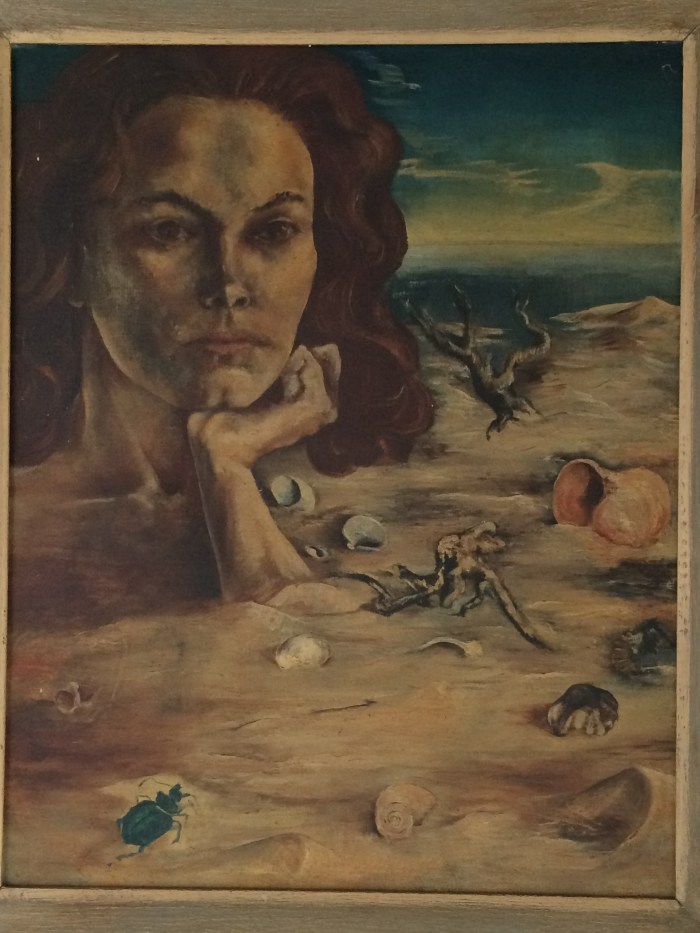
I had one reoccurring childhood nightmare of waking up and not being able to breathe. Continue reading “Re-Visioning Medusa: Part I by Sara Wright”
Women, like Goddesses, Come in All Colors, Shapes, and Sizes…by Vanessa Soriano
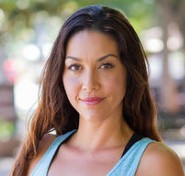
I wish I could have gotten this phrase tattooed on my arm when I started the serpentine journey into womanhood. Like most of us, growing up, all I ever saw in media were thin female bodies with impossible proportions. As one article put it:
Although body size and weight perception differ across race and ethnicity, women in western society are subject to images of women as not only thin, but also athletic and toned, with small waists, large buttocks, and large breasts, a body type that is largely unattainable. Because of this ideal, all girls and women typically have weight concerns that ultimately shape body image, satisfaction, and appreciation. Continue reading “Women, like Goddesses, Come in All Colors, Shapes, and Sizes…by Vanessa Soriano”
Post-Hysterectomy Reflections: Not All Women Bleed by Ivy Helman
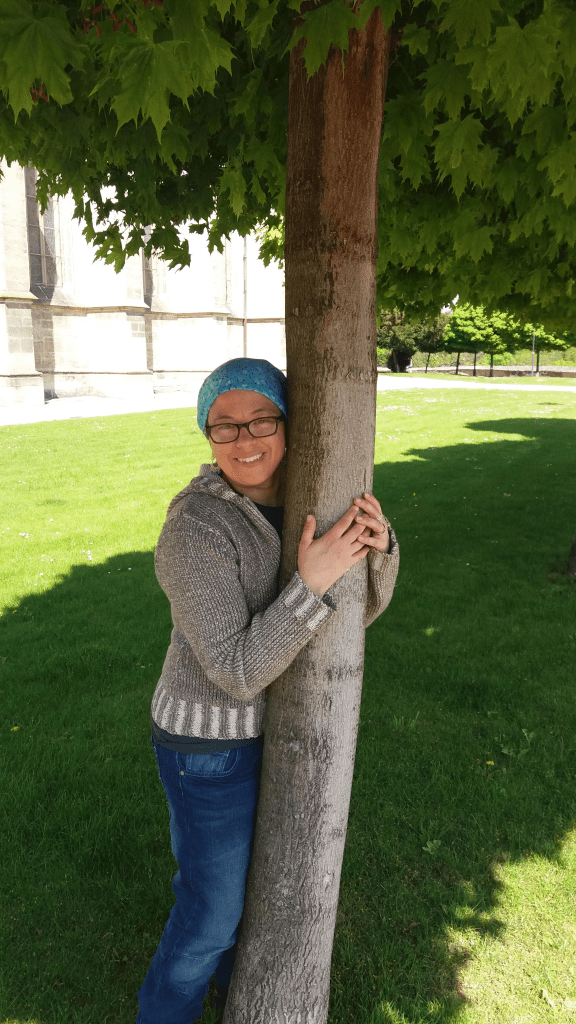 Around the age of 8, or maybe 10, I learned my aunt had had a hysterectomy. I remember visiting her house either shortly before or after the operation. I can’t remember which, and it doesn’t really matter. At the time, I don’t think I even knew what a uterus was or that I too had one.
Just like me, she had suffered from uterine fibroids. This year, at the end of May, after nearly two years of various treatments including a failed myomectomy and ineffective prescription medication, I followed in her footsteps. It was really the only option for me, although it was not an easy decision. After surgery, there was the usual post-op pain and restrictions, but luckily my body has been healing well.
Since the surgery, and as I prepare to teach “Gender and Religion” again in the fall, I’ve been thinking about a conversation I had with a student the first time I offered the class at Charles University. We were about to begin discussing the article, “Why Women Need a Feminist Spirituality,” by Judith G. Martin, when a student pressed me on why we weren’t acknowledging that not all women bleed. What he really wanted was to make sure that in our category of women, we were including transwomen. Continue reading “Post-Hysterectomy Reflections: Not All Women Bleed by Ivy Helman”
“What If We Touched Ourselves Lovingly Every Day?” by Trelawney Grenfell-Muir
 I watched her hand stroke along my arm, so gently, so lovingly. Her voice whispered, “I love you, Trelawney. I love you, Trelawney.” The soft, tender caress felt poignant, healing, magical. I wept with gratitude.
It was my own hand stroking me. My own voice. Continue reading ““What If We Touched Ourselves Lovingly Every Day?” by Trelawney Grenfell-Muir”
 Feminism and Religion