Thanksgiving by Beth Bartlett

When I offered to write the FAR post for Thanksgiving a month ago, I had no idea how difficult I would find that task to be. I suppose I had a different vision of what these days would be like.  I had no idea how heartsick and wordless I would become in the wake of a second and even more bizarre and dangerous Trump presidency.  It hardly feels like a time for celebrating a national holiday. 

Thanksgiving in the United States and the colonies before has gone through several iterations – from the mythologized feast of the Puritan colonists in Plymouth, Massachusetts with the indigenous Wampanoag following the successful corn harvest – corn the Wampanoag had taught the Puritans how to plant after half of them had starved to death the previous winter; to George Washington’s Thanksgiving proclamation giving thanks for the successful ratification of the US Constitution; to Abraham Lincoln in 1863 acceding to Sarah Josepha Hale’s 36-year quest to establish Thanksgiving  as a national holiday — “to heal the wounds of the nation.” Goddess knows we could use that now, but it seems farther out of reach than ever.

Lesser known is the proclamation of a day of thanksgiving by the Massachusetts Bay Company to celebrate their defeat of the Pequot nation following the Pequot Wars of 1636-1638 in which most of the Pequot peoples were killed or enslaved, giving rise to many indigenous peoples observing Thanksgiving as a National Day of Mourning.

Continue reading “Thanksgiving by Beth Bartlett”

The US Election Results and Justice: What Will You Do? A Jewish Feminist Perspective by Ivy Helman

I met with a new friend/colleague of mine this past week.  We were discussing the election results, and I was discussing the work I do in the field of religion.  Living and teaching in Central Europe, I have quite a lot of experience navigating the study of religion in a place that is quite atheist and/or actually anti-religion.  In fact, it has been somewhat of a struggle to have the study program, Gender Studies, in which I teach, recognize its importance.  Many of my colleagues, I think, are under the impression that religion is personally not important and/or just not that important in general.  Yet, as I have mentioned here, and as my new friend brought up as we sat over coffee, religion underpins so many aspects of our patriarchal society.  

Continue reading “The US Election Results and Justice: What Will You Do? A Jewish Feminist Perspective by Ivy Helman”

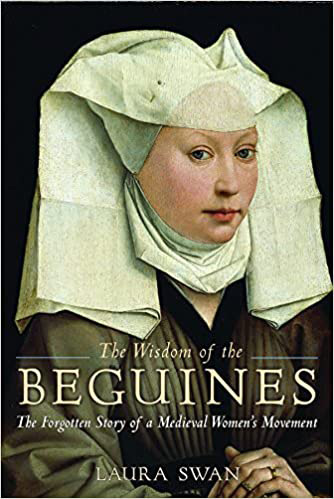
The Wisdom of the Beguines: The Forgotten Story of a Medieval Women’s Movement by Laura Swan, part 2 by Theresa C. Dintino 

Part 1 was posted yesterday

Praying people out of purgatory

Beguines excelled at this. By the Middle Ages, the belief in many Christian circles was that one did not go directly to heaven but to a sort of “holding place” after death to be cleansed of their sins before being allowed into heaven. Eventually “the medieval church also taught that people could pray for the souls in purgatory and that their prayers would effectively aid those souls in their transition from purgatory to heaven”(108).

It’s important to note that these women were esteemed by the communities they lived in as spiritually gifted, able to intercede with God on their own without permission from the church, clergy or men. This is radical for the time.

“Beguines, as we have seen, were understood to have extraordinary spiritual powers. People believed that having a beguine intercede before God on their behalf was an assurance that their petition was heard by God—and perhaps in no instance more than for “those poor souls in purgatory.” And beguines believed that they did indeed exercise the authority to release countless souls from purgatory. Many of the stories included in the vitae of beguines grapple with the fate of the deceased in purgatory (or hell)”(109).

Continue reading “The Wisdom of the Beguines: The Forgotten Story of a Medieval Women’s Movement by Laura Swan, part 2 by Theresa C. Dintino “

The Wisdom of the Beguines: The Forgotten Story of a Medieval Women’s Movement by Laura Swan, part 1 by Theresa C. Dintino 

Moderator’s Note: This piece is in co-operation with The Nasty Women Writers Project, a site dedicated to highlighting and amplifying the voices and visions of powerful women. The site was founded by sisters Theresa and Maria Dintino. To quote Theresa, “by doing this work we are expanding our own writer’s web for nourishment and support.” This was originally posted on their site on July 5, 2022. You can see more of their posts here. 

Around 1200 AD in Europe, communities of women often called beguines began to form. These women were not nuns, they were devout and devoted to the tenets of Christianity but did not belong to any church. They were independent communities of women who often created their own industry, trade or other means to produce income. They were self-sufficient and generally concerned with helping the poor, especially women. They lived in convents. This was the origin of that word.

“These women were essentially self-defined, in opposition to the many attempts to control and define them. They lived by themselves or together in so-called beguinages, which could be single houses for as few as a handful of beguines or, as in Brugge, walled-in rows of houses enclosing a central court with a chapel where over a thousand beguines might live—a village of women within a medieval town or city”(2).

Continue reading “The Wisdom of the Beguines: The Forgotten Story of a Medieval Women’s Movement by Laura Swan, part 1 by Theresa C. Dintino “

How Will Catholics Vote?

Will Catholics be “salt” and “light” in the 2024 election? Cardinal Dolan fails to show the way.

Dawn Morais Webster, the Pope off to his summer palace, Castel Gandolfo. He tells the world he will now become just a “humble pilgrim.”

Donald Trump’s parade of vulgarity, racism, misogyny and grift is always on display. He is proud of it. His outrageous lies are his version of “truth,” or as his running mate JD Vance would say, they come “from the heart.” It’s easy to condemn Donald Trump but the more urgent question is how will our vote stack up against our professed values, and for believers, how does it square with our faith?

I am deeply ashamed that Catholics were enablers of Trump’s rise to power. And that Catholics, by a slim but crucial margin, still support Trump over Kamala Harris in seven battleground states, according to a National Catholic Reporter survey of self-identified Catholics.

Continue reading “How Will Catholics Vote?”

The Purpose of Women by Beth Bartlett

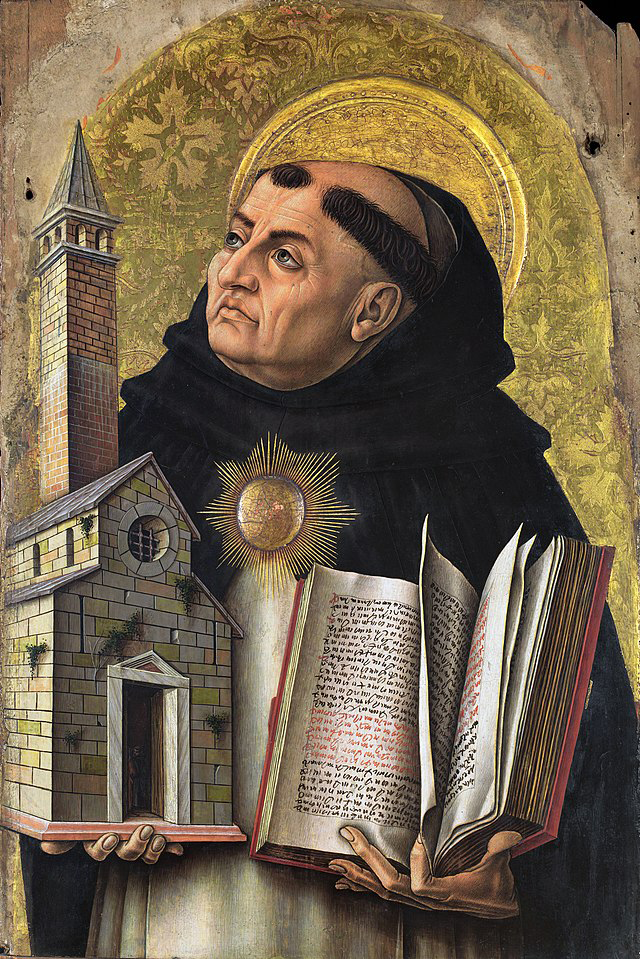
Thomas Aquinas, Wikimedia Commons

12th century theologian Thomas Aquinas didn’t think much of women.  He’d known less than a handful during his lifetime – his mother, who sent him off to a Benedictine monastery when he was five, as was the custom at the time, and later abducted and imprisoned him, with the help of her other sons, seeking to “rescue” him from his choice of becoming a Dominican priest; his two sisters who were sent to him while imprisoned to dissuade him from his choice; and the prostitute his brothers sent into his prison cell to try to tempt him to sin and break his vows – unsuccessfully. So perhaps it is no wonder that Question 92 of his Summa Theologica asks, “Should woman have been made in the original creation?” Though more likely his question was prompted by the milieu of misogyny in which he was raised and lived, having been educated in the theological tradition of Augustine who believed women to be the “lesser” sex and necessarily subject to men, and highly schooled in and known for reviving the thought of Aristotle, who said of women, “a woman is a misbegotten man.”[i]

Continue reading “The Purpose of Women by Beth Bartlett”

From the Archives: Is Baptism a Male Birthing Ritual? By Michele Stopera Freyhauf

This was originally posted on March 22, 2012

Quite a number of years ago I had a conversation with one of my professors, a feminist theologian, who posed the question “Why do I need a man to purify my baby with the waters of baptism?  Is there something wrong or impure about the blood and water from a mother’s womb – my womb?”  Before you jump and shout the words Sacrament or removal of original sin, this question bears merit in exploring, especially in today’s world where women are taking a serious beating religiously, politically, and socially.  In today’s world, violations and rants are causing women to stand up and say STOP!  This is MY Body.  This outcry was provoked by chants of ethical slurs against women– Slut! Prostitute! Whore!  The cry got even louder when the issue of religion and government was raised in the fight of healthcare coverage of contraception. The cry got even louder with the enactment of the laws in Virginia and Texas (and many other states to follow suit) that forces women to undergo transvaginal ultrasounds in early stage abortions.  The mandatory insertion of a wand into a woman’s vagina (mandated by the government, mind you), is a violation and has women crying RAPE!

Continue reading “From the Archives: Is Baptism a Male Birthing Ritual? By Michele Stopera Freyhauf”

An Ambitious Task: A Queer, Feminist, Decolonial Listening to the Gospel According to Mark by Xochitl Alvizo

Photo by Chris Pinkham. (I recently shaved by head again – I’ll get an updated photo soon!)

I was recently invited to give the Castañeda-Jennings lecture via Zoom at the Chicago Theological Seminary. The lecture was yesterday and it was founded to celebrate the the awarding of the Castañeda-Jennings Scholarships, which go to students whose work helps transform Christian congregations from places of hostility to places of support and empowerment for the LGBTQ community. It really was an honor to get to participate and share through a lecture. And, it was an opportunity to do what I don’t often get to do, which is to be fully theological – to present my critical reflection on Christian praxis in light of the scripture, which is considered the word of God by Christians, and in this case, I was specifically reflecting on the gospel according to Mark.

This lecture is a snapshot of the larger book project on ecclesiology that I am working on – a feminist, queer, anti-racist, decolonial theology of church. So here I’ll share some of the highlights of the talk…

Continue reading “An Ambitious Task: A Queer, Feminist, Decolonial Listening to the Gospel According to Mark by Xochitl Alvizo”

Processing my experiences of patriarchy has changed my faith for the better by Liz Cooledge Jenkins

As my first book, Nice Churchy Patriarchy, approaches six months of being out there in the world, I find myself reflecting on the journey. The process of unpacking all the ways patriarchy shows up in faith communities—and, in particular, the ways patriarchy has impacted my experience of church—has been a long one, and a winding one. It is no easy path.

How could a person travel this road and have their faith remain unscathed? Or perhaps a better question is this: How could one’s faith remain unchanged? And is this even a desirable goal?

After spending eleven years in “complementarian” (that is, explicitly patriarchal) evangelical church spaces and then two years in evangelical spaces that were egalitarian in theory but still had a long way to go to reach full gender equity—and, especially, after spending four years intentionally reflecting on these experiences and writing about them—I certainly see questions about gender roles and women in leadership differently. But it’s not only that. I see everything differently.

Continue reading “Processing my experiences of patriarchy has changed my faith for the better by Liz Cooledge Jenkins”

The Pain and Struggle of Gender by Michele Bodle

In the April 2024 issue of Christianity Today, Fellipe Do Vale wrote, “Gender on Earth as in Heaven: Will Our Gender be Removed or Renewed in the Resurrection?”

            The entire issue was dedicated to a conversation between egalitarian and complementarian beliefs regarding gender, which I am not here to argue. However, I will wholeheartedly and fully engage with a quote in the article where Do Vale states the following.

                        There is a long and impressive lineage in Christian history and
contemporary theology that says the best way to envision the
redemption of our gender is to picture its removal….
They say that gender was an attribute given to us only
because God knew humanity would sin. It was meant
to sustain us only until the restoration of creation. Therefore, 
attributes like gender, race, and disability, which they believe
cause the most pain and struggle in this life, will not remain
in the resurrection. 
(Do Vale, “Gender on Earth as in Heaven,” Christianity Today (Aril 2024), p. 24-25.)

Continue reading “The Pain and Struggle of Gender by Michele Bodle”