
No Longer Moved … by Symbols that Once Moved Me Profoundly by Carol P. Christ

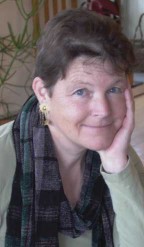
Carol in Crete croppedThis week Judith Plaskow and I submitted the final version of our new book Goddess and God in the World to our publisher at Fortress Press. Just before completion, I added a shorter version of the following passage to my final chapter. In it I tried to describe the odd feeling of not being moved any longer by a religion that once moved me profoundly. Our book, which explores an embodied theological method, will be out in the summer of 2016.

I have never regretted my decision to leave Christianity. Although I have a sentimental attachment to Christmas trees, Christmas dinners, Christmas carols, and some hymns, I miss little else about Christianity. At a distance of several decades, I find that I quite simply have no feeling for the Christian edifice of doctrines and rituals based on the life and death of a single individual. Jesus was a visionary, but there have been many others like him—including Martin Luther King, Elizabeth Cady Stanton, and Gandhi, all of them flawed, as Jesus must have been as well.

A few years ago, I decided to participate in the Greek Orthodox Easter week services, because they are attended by so many of my neighbors. But while enjoying the company of the women who decorated the epitaphios (tomb for Jesus), the procession through the streets of our town on Friday night, and the lighting of candles at midnight on Saturday, I came to a clear understanding that the Easter drama is no longer my drama. During the Thursday night services, I realized that many of the women were openly grieving the death of Jesus. Though intellectually I could understand that the Easter drama allowed my friends to release pent-up and repressed feelings, I found their deeply emotional response to the re-enactment of the death of Jesus bizarre.

P6115475
Idean Cave

In leaving Christianity, I had gained the freedom to name the sacred in my own experience, confirmed my deep inner knowing about the human connection to nature, and found the power to create and participate in rituals that have meaning in my life. For me now, the rituals on the Goddess Pilgrimage to Crete are at the center of my spiritual life. To listen to Alice Walker’s words, “We have a beautiful/mother/Her green lap/immense/Her brown embrace/eternal/Her blue body/everything we know”* on a mountaintop or to repeat Ntozake Shange’s cry, “we need a god who bleeds now/whose wounds are not the end of anything”** at the mouth of a cave, moves me more than any passage from the Bible.

Singing “Light and Darkness” in the depths of caves is an embodied act of reclaiming the womb as a symbol of creation and the darkness as a place of transformation. I still enjoy singing the Doxology (Hymn of Praise)—and doing so connects me to my history. But I now sing it in front of altars laden with summer fruits or winter vegetables and with words that express my spirituality: “Praise Her from whom all blessings flow/Praise Her all creatures here below/Praise Her above in wings of flight/Praise Her in darkness and in light.”***

*Alice Walker, “We Have a Beautiful Mother,” Her Blue Body Everything We Know: Earthling Poems 1965-1990 (New York City and Orlando, FL: Harcourt Books, 1991), 459-460.
**Ntozake Shange, “we need a god who bleeds now,” A Daughter’s Geography (New York: St. Martin’s, 1983), 51.
***See Carol P. Christ, She Who Changes: Re-imagining God in the World (New York: Palgrave Macmillian, 2003), 238, for a discussion of the meaning of the new words.

Carol P. Christ leads the life-transforming Goddess Pilgrimage to Crete (facebook and twitter).  Carol’s books include She Who Changes and and Rebirth of the Goddess; with Judith Plaskow, the widely-used anthologies Womanspirit Rising and Weaving the Visions and forthcoming in 2016 from Fortress Press, Goddess and God in the World: Conversations in Embodied Theology. Explore Carol’s writing. Photo of Carol by Maureen Murphy. Photo of Idean Cave by PJ Livingstone.

A Day of Peace: On the Anniversary of Michael Brown’s Death by Qumyka Rasheeda Howell

Q Howell

I remember when I heard of the death of Michael Brown who was shot by a Ferguson, Missouri Police Officer exactly one year ago today. His bloody body laid in the middle of the street for four hours before receiving help. I wondered if Michael Brown would still be alive today if he hadn’t been shot and left for dead. I remember looking at my beautiful black sons that night as they slept. I wept until my knees gave way. I do not think I have stopped weeping as I continue to be imbued with reports of black and brown bodies dying at the hands of police officers month after month.

One year later, I am still grieving and praying. I am still tired. I am now joined into a call with my sisters who work alongside me in the anti-violence movement. We held each other as we listened over the phone.  Then my friend Corine Reed gets our attention. She says it’s time for peace. That word, peace, was the divine pause I needed. I think it is what the world needs right now – PEACE. Continue reading “A Day of Peace: On the Anniversary of Michael Brown’s Death by Qumyka Rasheeda Howell”

Mary Magdalen’s Cave by Elizabeth Cunningham

Elizabeth Cunningham headshot jpegMy first post for FAR appeared on July 22, 2012, the feast day of Mary Magdalen. I like to dedicate my July posts to her and include an excerpt from The Maeve Chronicles, the novels I spent 20 years writing, which feature a feisty Celtic Magdalen who is no one’s disciple. This year’s excerpt is from Bright Dark Madonna, the third in the series, which follows her (mis)adventures from Pentecostal Jerusalem, to the wilds of Turkey’s Taurus Mountains, the port city of Ephesus, and finally to her legendary cave in France.

While doing research for the novel, I made a pilgrimage to Le Grotte de Marie Madeleine in Southern France. A forty-five minute climb, past a spring leads to a high cliff wall where a spacious cave has been made into a chapel to the saint. There were no other people at the site except my husband and daughter who kindly gave me time alone in the cave—alone with her. As I wrote in FAR’s pages a while back, I have a longing for hermitage that I haven’t allowed myself to fully inhabit. Maeve, on the other hand, goes all out, or rather, in.   Here is what she has to say: Continue reading “Mary Magdalen’s Cave by Elizabeth Cunningham”

An Indecent Reading of Mary Magdalene by Cynthia Garrity-Bond

cynthia garrity bondRecently I took one of those on-line quizzes that show up on Facebook. Based on my response to particular questions, it promised to tell me what my Biblical name would be. To my joy I received Mary Magdalene. To my disappointment her bio lacked any of the historical tensions we have come to expect.

On July 22 we celebrate the Feast Day of Mary Magdalene, witness to the Resurrection and therefore deemed, “apostle to the apostles.” For as many depictions of Mary there are just as many interpretations. Her status in early Christianity surpassed the Virgin Mother in popularity but by the fourth century her positive image began to decline. In 594 Pope Gregory the Great delivered a sermon in which he conflated the story of the unnamed woman anointing Jesus in the Gospel of Luke with Mary of Magdala as penitent whore, a title she would embody for nearly 1,400 years until in 1969 when the Catholic Church repealed its teaching of Mary as prostitute.

On the other hand, recent feminist theological scholarship, especially by Karen King, offers a depiction of Mary as leader within ecclesial settings, where, “From the second to the twenty-first century, women prophets and preachers have continued to appeal to her to legitimate their own leadership roles,” (King, 153). By casting Mary as prostitute and adulteress, King argues, the church tarnished the image of Mary as a spiritual leader. It is this binary of Mary as repentant whore or “prominent disciple of Jesus, a visionary, and a spiritual teacher” (King, 154) that I wish to explore.

To begin I ask the question what does it mean for Mary’s role as leader for her to have been a prostitute who also functioned, in the words of King, as disciple of Jesus, a visionary and spiritual teacher? Continue reading “An Indecent Reading of Mary Magdalene by Cynthia Garrity-Bond”

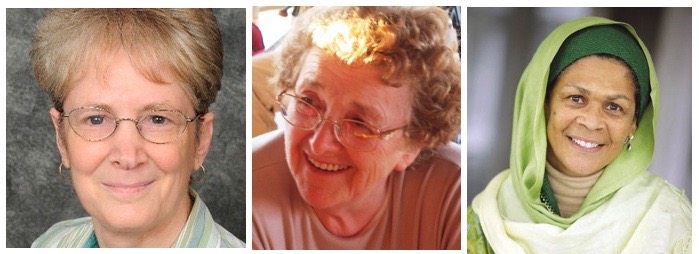
Feminism and Faith by Judith Plaskow, Rosemary Radford Ruether, and amina wadud

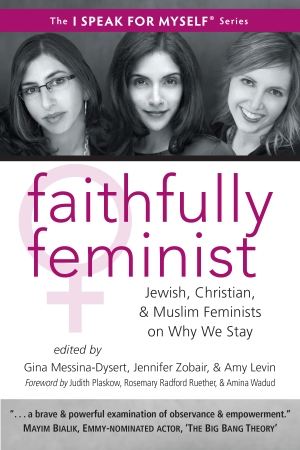
Foreword Image.001 (1)“Feminism saved my faith” is the concluding phrase of one of the writers in Faithfully Feminist, and though not everyone would say it that way, most of these women have found feminism and faith vibrantly interrelated. The contributors to this anthology articulate a range of reasons that feminists might choose to remain within a patriarchal religious tradition. They also remind us that women reconcile their faith and feminist identities in diverse ways. This volume testifies to the dynamism within the religious communities of Judaism, Christianity, and Islam in the United States, and to their internal diversity. This diversity allows for the contributors to engage in a process of their own development as feminists of faith that interacts with similar processes of development going on in their religious communities.

The overriding common bond for these women of faith is the shared conviction that the conflict between religion and feminism is real— even when it is generated by other people’s expectations that those two identities are separate and irreconcilable. Once each woman arrived at a place where she no longer felt an imperative to abide by an either/or dichotomy, she was able to define the terms of her religion and feminism for herself and to own both identities as significant.

Multiply the individual accounts in this volume by tens of thousands, and the effect of these women’s decisions and the concerted actions for change that have flowed from them has been enormous. For example, feminism has profoundly altered American Judaism in the last forty-plus years. Women are ordained in all branches of liberal Judaism and, in all but name, in modern Orthodoxy. New denominational prayer books written in English use inclusive language and incorporate writings by women. Feminists have written Torah commentaries, designed rituals for important turning points in women’s lives, and created new scholarship on women that contributes to a fuller history of the Jewish people.

Likewise, Christianity has been significantly impacted by the work of feminist theology. While some branches continue to refuse leadership roles to women, many others have acknowledged that every person embodies the spirit of Christ and have embraced the ordination of women. In 2006 the Episcopalian Church ordained its first woman bishop, the highest office in the church. Inclusive language has found its way into the prayers and rituals of many churches and feminist commentaries have shifted thinking on scriptural interpretations. Dialogue within and across branches of Christianity are expanding borders, and movements like Woman Church and online feminist spaces have created opportunities for women to claim agency and participate in roles that have been traditionally withheld.

In the long road to Islamic feminism, women have sometimes lacked agency to define either Islam or feminism. Traditional definitions of these words which operate as a constraint on work within Islam towards justice, equality and dignity; feminism was connected to Western imperialism and invasion into Muslim-majority nation states, and centuries of patriarchal control and interpretation stifled women’s efforts to claim Islam for themselves. This is changing, aided by campaigns such as the 2009 launching of the Musawah movement for equality and justice in Muslim family law. A new freedom is emerging that allows Muslim women the dignity and honor of defining Islam and feminism for themselves—no matter how little they might know of global discourses and historical traditions. All that was necessary was to, identify as a believer and expect a life of justice within that belief. Islam has also witnessed women-led prayers and a move toward inclusive prayer spaces.

The profound changes feminists have inspired and worked for do not mean that all problems have been solved and that women’s subordination is a thing of the past; there is plenty of work for a new generation. The difficulties with overcoming the glass ceiling and balancing work and life that women within the larger society face also bedevil women in all three religious communities. Panels, boards, and publications often exclude women’s voices completely or have only token female participation. Ordained women in Judaism are paid less than their male counterparts and rarely become senior rabbis in large or prestigious congregations. If women “choose” to serve smaller synagogues —the explanation often tendered to explain these gaps—that is partly because the expectations surrounding the rabbinate have not kept pace with its changing demographic, and women who want to combine rabbinic work with raising a family face considerable obstacles. Christian ordained women face similar obstacles within the priesthood and continue to be denied leadership roles in some branches, including Catholicism and Mormonism. Similarly, Muslim women are often excluded from panels at religious conferences and are underrepresented on the boards of religious institutions. The idea of women leading Muslim prayers remains controversial. And too often, discussions about women’s role in Islam still revolve around the issue of hijab, or covering.

The challenge for feminists today is passing on feminist insights and gains to the next generation. Is women’s history being incorporated into elementary and high school texts, or are students being taught the same parade of male names and faces? More particularly for Jews, Christians, and Muslims, when a girl or woman wants to mark some nontraditional ritual occasion, is it clear where to turn for resources? Do most Jews, Christians, and Muslims even know that it is possible to create new rituals that feel deeply meaningful and religiously authentic?

Finally, when teachers—and parents—talk about God, how is God imagined? Are children still growing up thinking about God as a distant male figure, or are they offered a range of images, and emboldened to create their own? Are children being encouraged to talk about and challenge passages in and interpretations of the Torah, Bible, and Qur’an that are misogynist or otherwise unethical? Are they developing critical tools that will allow them to engage with and transform difficult parts of tradition?

The next generation of feminists should consider a move beyond rhetoric and terminology towards substance and personal affirmation. Identifying as feminists of faith helps forge global alliances towards meaningful dialogue across difference—even the differences within. It is only when these deeper levels of change are addressed that the question, “Why stay?” will cease to be relevant.

FF_front-cover_FINALThis essay is the Foreword for Faithfully Feminist: Jewish, Christian, and Muslim Feminists on Why We Stay edited by Gina Messina-Dysert, Jennifer Zobair, and Amy Levin.  

For more on Faithfully Feministclick here.

Join the conversation on Twitter using the hashtags #FaithfullyFeminist and #WhyIStay.

Related Articles:

9 Badass Feminists of Faith You Should Know

Mayim Bialik Endorses Faithfully Feminist

Why We Stay

Judith Plaskow is Professor Emerita of Religious Studies at Manhattan College and a Jewish feminist theologian. Co-founder and co-editor of the Journal of Feminist Studies in Religionshe is co-editor of Womanspirit Rising and Weaving the Visions and author of Standing Again at Sinai: Judaism from a Feminist Perspective and The Coming of Lilith: Essays on Feminism, Judaism, and Sexual Ethics 1972-2003.

Rosemary Radford Ruether, Ph.D. is Professor of Feminist Theology at Claremont Graduate University and Claremont School of Theology.  She is also the Carpenter Emerita Professor of Feminist Theology at Pacific School of Religion and the GTU, as well as the Georgia Harkness Emerita Professor of Applied Theology at Garrett Evangelical Theological Seminary. Rosemary has enjoyed a long and distinguished career as a scholar, teacher, and activist in the Roman Catholic Church, and is well known as a groundbreaking figure in Christian feminist theology.  Ruether is the author of multiple articles and books including Sexism and God-TalkGaia and GodWomen Healing Earth and The Wrath of Jonah: The Crisis of Religious Nationalism in the Israeli-Palestinian Conflict. Her most recent books include Catholic Does Not Equal the Vatican: A Vision for Progressive Catholicism(2008), Many Forms of Madness: A Family’s Struggle with Mental Illness(2010), and Women and Redemption: A Theological History, 2nd ed.(2011).

amina wadud is Professor Emerita of Islamic Studies, now traveling the world over seeking answers to the questions that move many of us through our lives.  Author of Qur’an and Woman: Rereading the Sacred Text from a Woman’s Perspective and Inside the Gender Jihad, she will blog on her life journey and anything that moves her about Islam, gender, and justice, especially as these intersect with the rest of the universe.

Homoerotic Jesus at Pride Parades? This Christian Says, “Yes, Please!” by Trelawney Grenfell-Muir

Trelawney bio pictureRecently, some Christian communities have been angrily sharing these photos of lesbian and gay Jesus figures from Brazil’s pride parade in Sao Paolo. Conservative Christians tend to denounce anything to do with Pride as part of their general rejection of any celebration of LGBTQ folks as equally in the divine image. However, some progressive Christians and queer Christians have also expressed that they are offended by these images, which they characterize as “extreme,” because they believe the people in the Pride parade intended to offend Christians by insulting Christianity.

I love them. To me, these images express powerful theology: Jesus as gay, lesbian, a lover, fully human, present in homoeroticism… I find these images beautiful and powerful. I’m also not sure these queer Jesus folks are merely trying to cause offense. Maybe they are trying to cause shock; however, I see these acts as a positive statement rather than a negative one. I see these depictions of queer Jesus as a powerful statement about how Jesus is crucified whenever any oppressed group or person is denigrated, excluded, subjugated, or harmed by the more powerful community. People have previously compared Jesus to victims of homophobic hate crime such as Matthew Shepard and noted that such violence is widespread and comparatively socially acceptable. Continue reading “Homoerotic Jesus at Pride Parades? This Christian Says, “Yes, Please!” by Trelawney Grenfell-Muir”

A Christian Response to Racism, Sexism, & the Rise of American Terrorism by Trelawney Grenfell-Muir

Trelawney bio pictureAs our country reels in horror at the brutal massacre of nine worshipers at Emanuel African Methodist Episcopal Church, one particularly important detail has emerged: the young man who killed those nine people entered the world of white supremacism after the object of his romantic interest rejected him and dated a black man.

According to his cousin, the experience dramatically changed the young man, led to his obsession with racist hatred, and motivated him to commit the atrocity. In some ways, the event resembles the 2014 Santa Barbara massacre, in which a young white man with strong racist tendencies massacred young women because he felt angry that women generally did not respond favorably to his romantic advances. Other mass murderers have also exhibited violent misogyny. Moreover, our country has begun to notice that most mass shootings are carried out by white males, and to point out that white masculinity may lead young men into feeling like failures if they do not achieve all the trappings of their supposedly superior race and gender identity.

My questions are: how did we, as a society, fail these young men? And how have we, as a church, failed society? And, most important, how can we help heal these diseases that are killing us? Continue reading “A Christian Response to Racism, Sexism, & the Rise of American Terrorism by Trelawney Grenfell-Muir”

Who Sits at the Center of this Story? By Elise M. Edwards

Elise EdwardsHave you ever heard of the Vitruvian Man? It’s an image from 1490 inked by Leonardo da Vinci that came to symbolize the centrality of the individual in the Renaissance. It is quite clearly a depiction of a muscular, European male. His body is perfectly proportionate and thus simultaneously represents ideal humanity and a microcosm of the universe. The Vitruvian Man is so named after the ancient Roman architect Vitruvius who describes the proportions and symmetry of a temple as being analogous to the proportions of a man.

As an architect and scholar in the humanities, I’ve been acquainted with the Vitruvian Man for many years now. I even had a da Vinci theme on my PC’s Windows software about 15 years ago, meaning that the image of the Vitruvian Man appeared regularly on my desktop and screen saver. There was nothing problematic to me about his presence until a few days ago, when I took part in a discussion about teaching philosophies with some new friends and academic colleagues.

I was listening to Tamara Lewis, an assistant professor in religion whose research and teaching addresses the medieval and Renaissance periods. When she described a metaphor for her teaching philosophy, she discussed replacing the symbol of Vitruvian Man with the “woman at the well.” The woman at the well is a figure in Christian stories about Jesus and his teachings. Her narrative in the Bible is placed in chapter 4 of the Gospel according to John. Int eh story, Jesus encounters a Samaritan woman at a well. He asks her for a drink, which begins a meaningful exchange about spiritual teachings. Jesus’ male disciples and surprised to witness this exchange, presumably because she is a woman and a Samaritan, as the text tells us that Jews do not associate with Samaritans. The woman goes back to her town, tells people about her encounter with Jesus, whom she believes is the Messiah, which prompts many of them to come to him and also believe.

Dr. Lewis described how her presence in the historical study of medieval or Renaissance periods is sometimes questioned and how the woman at the well represents this presumed misplacement. Her metaphor caught my attention not just because of its profound coherence within her own career trajectory and narrative, but its coherence within mine. As a black feminist, religion scholar, and practicing Christian, I often wrestle with questions of belonging and being in or out of place.

This summer, I’m taking the time to think about broad questions and do some vision casting. This past December, Grace Kao wrote about using sabbatical time differently, and I’ve connected this to my own practice of Sabbath keeping as a ritual. I dedicate specific times to cease work.  I am engaging in some productive activity this summer, but I’m also honoring one of the truest blessings and privileges of full-time employment in my profession, which is break time to rest, reflect, and plan for the seasons ahead.  The metaphor of woman at the well who intentionally replaces the Vitruvian Man provokes these questions in my reflection:

Who is the default person around which the places we inhabit are constructed? Who sits at the center of our stories about the places we will go? 

As the little bio that follows my posts says, in my professional career I examine issues of civic engagement and how beliefs and commitments are expressed publicly through aesthetic and artistic practices. I’m currently writing a book-length project about theological ethics and architectural design. So these days I’m thinking a lot about the way public spaces and built environments communicate the values of those who build them and inhabit them. One of the questions I’m wrestling with is the way “common” spaces are defined by the narratives of only some people in the community. What does it mean to be literally “out of place”? What exists as a “safe space” in a public park for a man may not feel safe at all for me as a black woman. A public bench upon which I can rest in the middle of an afternoon jog may not be so uncontested for a homeless man at night.

As I think about my future, I have to ask who sits at the center of my story.   I’m approaching a milestone birthday, and I don’t want to fall victim to someone else’s vision of what a 40 year old woman should be. What does the story look like with me at the center? What happens when I replace an idealized image of perfection, vitality, and beauty with an imperfect but gloriously alive and wonderfully formed vision of who I already am?

As I plan for a new academic year, who do I imagine in my classes? As I engage students in discourse about the history of Christianity, the development of its theology, and the ethical issues of today’s world, who do I place at the center? As the US becomes enmeshed in presidential election politics and ongoing racial tensions, what image to we present as the archetypal American?

I’m so grateful that I was brought to see the woman at the well as a metaphor of intentional displacement. Even in a religion that places a male Savior (Jesus) at its center, there are women who sit with him. Although they confound some of Jesus’ other followers by their presence, they remain meaningful conversation partners and witnesses to their faith.

Elise M. Edwards, PhD is a Lecturer in Christian Ethics at Baylor University and a graduate of Claremont Graduate University. She is also a registered architect in the State of Florida. Her interdisciplinary work examines issues of civic engagement and how beliefs and commitments are expressed publicly. As a black feminist, she primarily focuses on cultural expressions by, for, and about women and marginalized communities. Follow her on twitter, google+ or academia.edu.

Were Hildegard’s Visions Caused by Migraines? by Mary Sharratt

hildegard's vision of christ 2

Hildegard’s vision of Christ, surrounded by concentric circles of light.


When I was forty-two years and seven months old, Heaven was opened and a fiery light of exceeding brilliance came and permeated my whole brain, and inflamed my whole heart and my whole breast, not like a burning but like a warming flame, as the sun warms anything its rays touch.

–Hildegard von Bingen, Scivias, translated by Mother Columba Hart, O.S.B., and Jane Bishop

Neurologist Oliver Sacks believed that the dazzling visions of Hildegard von Bingen (1098-1179), the great Benedictine abbess and polymath, were caused by migraines. Hildegard struggled with chronic health problems. In Scivias, her first book of visionary theology, she described being bedridden when she received the divine command to write and speak about her visions that she had kept secret since childhood. According to Sacks, the symptoms she described are identical to those of migraine sufferers. He also stated that the concentric circles in the illuminations illustrating her visions are reminiscent of a migraine aura.

But can Hildegard’s visionary experience truly be reduced to pathological hallucinations? Continue reading “Were Hildegard’s Visions Caused by Migraines? by Mary Sharratt”

Feminism, Race, and Religion: An Interview with Sikivu Hutchinson by Kile Jones

While black Churches are burning, and black children are being gunned down by police, I felt it important to speak with someone who is involved in raising awareness on the role of racism and cultural imperialism in American society. I am honored to present to you all, Sikivu Hutchinson.

??????????????

As a woman of color, and an atheist, how do you respond to the invocation of God in the Charleston tragedy?

It frustrates me but the invocation of God in crisis is a significant part of African American cultural and social history. As I wrote recently in an article entitled “Pushing Back on ‘God’ in Charleston”: “Radical black humanists, most notably Frederick Douglass and A. Philip Randolph, have challenged black religiosity under slavery while acknowledging the crucial role activist churches played in black self-determination.

Randolph’s critique of organized religion and the god concept was always coupled with a critique of capital and the imperialist occupation of black bodies and African countries. Churches dominated black communities because of the nexus of racial apartheid and capitalism.”

Organized religion and God belief continue to dominate African American communities because of these legacies. That said, clearly no loving god would allow a twenty six year-old in the prime of his life to be cut down in cold blood, nor abide by a five year-old having to play dead to avoid being murdered. And no moral god would demand forgiveness for a crime for which there has never—since the first African was stolen, chained, exploited and “imported”—been any reparations. Continue reading “Feminism, Race, and Religion: An Interview with Sikivu Hutchinson by Kile Jones”