Painting the Mother of Exiles by Angela Yarber

angelaLast month, my column focused on the importance of intersectionality within the feminist movement by highlighting the revolutionary work of Sojourner Truth, an escaped slave, abolitionist, and women’s rights activist. I’d like to continue to press the importance of intersectionality, particularly given our current political state. Of late, I’ve received a little criticism that some of my recent Holy Women Icons are too political, particularly with reference to Mothers of Black Lives Matter, Dolores Huerta, and the Midwives of Standing Rock. As a woman artist, and particularly a queer woman artist, the personal is always political. Feminists taught us this decades ago. Since the lives, loves, and bodies of LGBTQs, women, refugees, immigrants, people of color, Muslims, Jews, those who are differently abled, and the poor continue to be legislated, violated, excluded, and oppressed, I’d contend that writing about, painting about, and working for liberation for all of these intersectional identities is paramount, especially for those who profess faith in a homeless refugee liberator from the Middle East (that would be Jesus, of course). Needless to say, I believe these recent works in the Holy Women Icons Project fit in quite nicely with the over seventy revolutionaries—political and otherwise—that I’ve painted and written about in the past.

These critiques combined with the current climate of the United States, new legislation passed, proposed, and promised that attacks the lives of the aforementioned marginalized groups. So, I took to canvas and, for the first time, I did not pen the poetry scrawled across the holy woman’s heart. Instead, I relied on the words of Jewish American poet, Emma Lazarus (1849-1877). Most famous for the portion of her sonnet, “The New Colossus,” that graces the pedestal of the Statue of Liberty, I wanted Lady Liberty and Lazarus’ timely words to become my newest Holy Woman Icon. In its entirety, “The New Colossus” reads: Continue reading “Painting the Mother of Exiles by Angela Yarber”

A Letter to Those I’ve Lost by John Erickson

Out of all of these things, the one thing that has kept coming to my mind is G-d. What is he (or she) thinking? I feel like I’m back in one of my Old Testament classes discussing the harsh and cruel G-d that thrust so many horrible things onto their believers. Maybe, the worst part about the election isn’t Donald Trump, but it is the realization that G-d may be dead after all.

Dear [Insert Name Here],

Something died on November 8, 2016, and I do not think I’ll ever be able to get it back. I sat there, walking back to my house, in disbelief and utter shock and scared about the next 4 years of my life.

For weeks leading up to the election, I had found myself praying in the copy room at my work almost daily. I would sit there, silent and alone, having just read some misleading article or alt-right post from a family member that called Hillary Clinton the devil, and wonder: when did everything go so off the rails?

Although we’ll spend years trying to figure the answer to my above question out, for me, it is a question I have been asking myself ever since election night and specifically knowing how certain members of my family would, and ultimately did, vote. Continue reading “A Letter to Those I’ve Lost by John Erickson”

Keepin’ On Keepin’ On by Carol P. Christ

carol-p-christ-photo-michael-bakasIt is now Monday morning, five days after the new President was elected, despite losing the popular vote.

For many of us, and for me too, losing this election feels like losing everything we have worked to achieve during our whole lives. One of my friends wrote, “I am totally distraught and unable to focus.” My cousin said, “I feel like I am in Nazi Germany in the 1930’s.”

I have been scouring the internet to try to figure out what we can still do to try to create a world that guarantees liberty and justice to all people and all beings in the web of life.

There is much to fear. Continue reading “Keepin’ On Keepin’ On by Carol P. Christ”

The End is Nigh by John Erickson

How will the world end? No, it isn’t Lucifer himself coming from hell to bring in the end times, it is someone far worse, and his name is Donald Trump.

John Erickson, sports, coming out.When I was a little boy I was terrified that I would live to experience the end of the world.  Whether it was by an asteroid, Y2K, or a zombie plague, I would make myself sick by picturing these horrible things that could befall me and my family.  Although I was a precocious child, the crippling fear that would lurch its way up my stomach and into my head would sometimes make it impossible to sleep at night.  While I like to think I grew out of that phase, I now sit here feeling that way again.  I’m crippled with fear that the end of the world is at hand and there may be nothing we can do to stop it.   How will the world end? No, it isn’t Lucifer himself coming from hell to bring in the end times, it is someone far worse, and his name is Donald Trump.

By the time you’re reading this post, the first Presidential debate between Hillary Clinton and Donald Trump will have occurred and, no matter where you look, the aftermath will haunt us for weeks to come.  We will either be sitting here, coaxing in the sunlight that Clinton has, in proper fashion, just goaded Trump into revealing to the 100 or so million viewers that will have chimed in to viewing how completely dangerous he truly is, or will we be scurrying to uncover decade old bunkers that were used during the 1950s and the Cold War to take shelter from the fallout to come should, Donald Trump become the next President of the United States. Continue reading “The End is Nigh by John Erickson”

I’ll Go With You: On Bathrooms and Theocracy by Chris Ash

IMG_0754Last month, I took a dear friend on a trip to the North Carolina mountains. Throughout the trip we were sharply aware that we were no longer in the progressive enclave where we both lived – the tiny area whose deep blue always stands out in votes-by-county maps after elections and whose responses to discriminatory legislation like HB2 – the controversial “bathroom bill” that prevented trans people from using the restrooms that correspond to their identities – has always been resistance.

Even in our progressive bubble, though, transphobic people found themselves empowered by legislative support to speak louder and more harshly to gender nonconforming people. Leaving that bubble for two days of rural travel with a trans friend meant a thread of tension that followed us throughout much of our trip, as every glance, every bathroom break and every interaction with strangers had the potential to become upsetting or frightening. Continue reading “I’ll Go With You: On Bathrooms and Theocracy by Chris Ash”

Remember by John Erickson

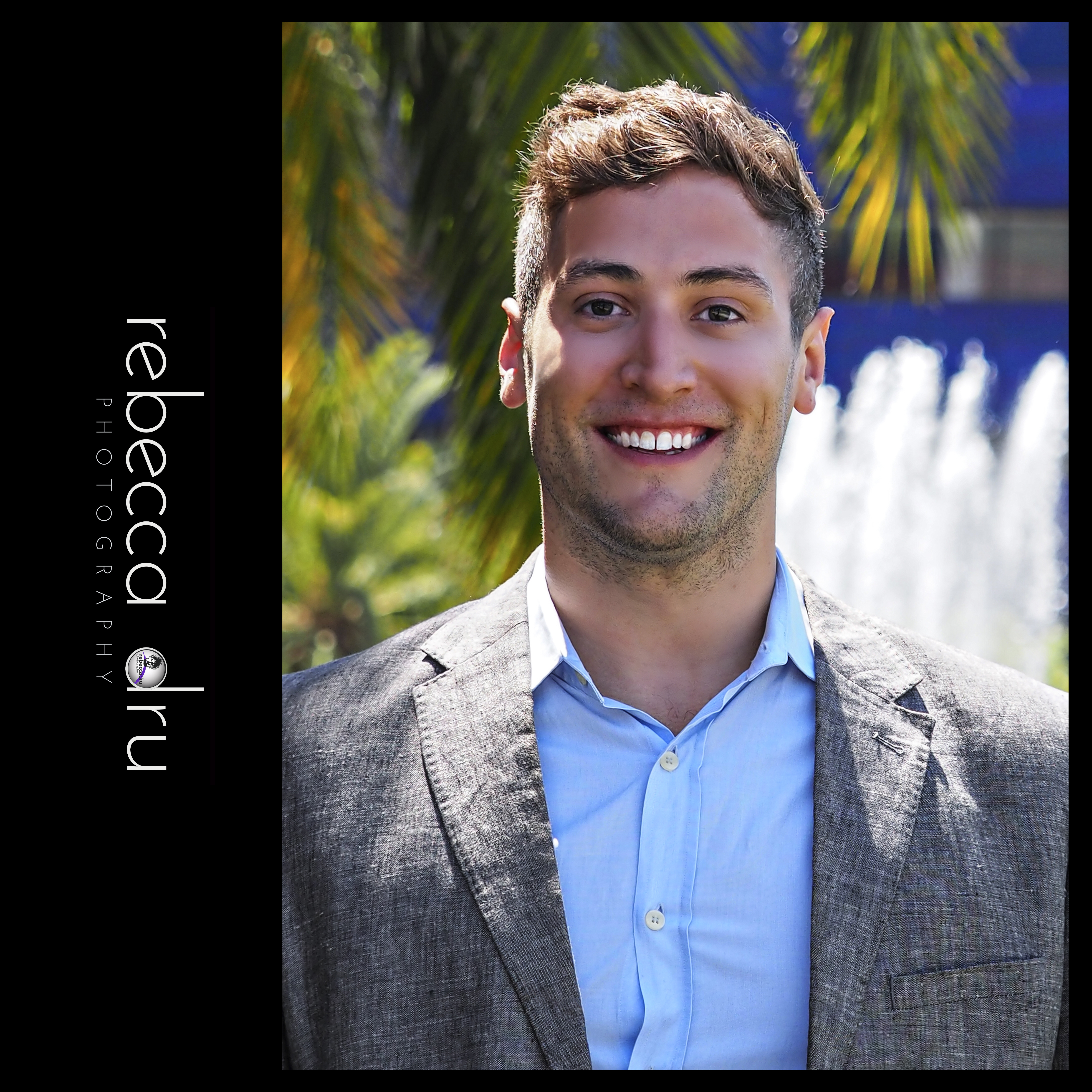
Remember the loss, because we’re going to need it for the tomorrows to come and for those that need our protection the most: the next generation. Remember, we are Orlando; now, tomorrow, and always.

WEHO CA (June 7, 2015)©2015 Rebecca Dru Photography All Rights Reserved http://www.rebeccadru.com

I want to tell you a short story about the small town of Ripon, WI. On May 19, the local newspaper, The Ripon Commonwealth, which has served as the town’s paper since 1864, published a story regarding the political right’s uproar concerning President Barack Obama’s executive order that all public schools must allow transgender individuals to use the bathroom which matches that of their gender identity. Angry and upset, the paper’s education reporter wrote an article expressing his clear disdain for the President and also expressing a clear lack of empathy, understanding and sheer bigotry towards the transgender community.

Growing up in Ripon, I always read the paper when it came out on Wednesday evenings. Those of you who grew up in a small town can attest to the luxury of seeing friends, family members, and even the smallest ongoings in one’s town in print for the entire town to see and talk about. However, one thing I never saw in the paper was the clear hate I read in Mr. Becker’s article (the author of said piece). Enraged, I immediately asked myself: what can I do? Having connections back in Wisconsin, I immediately turned to friends who owned businesses, a friend who is the Director of a vocal and important group in the town, and community organizations and friends to begin to write letters. Continue reading “Remember by John Erickson”

A Complicated History by Elise M. Edwards

Elise EdwardsIn my previous post, I wrote about my participation in planning a memorial event for the lynching of a man named Jesse Washington in Waco, Texas one hundred years ago. It prompted me to reflect on the challenge of faithfully remembering a conflicted past.  It’s important that we don’t just remember past events, but that we remember them appropriately.

I’m convinced that when we remember the past, we must avoid oversimplifying the stories of what occurred to suit our present day agendas and sensibilities.  We have to acknowledge the complexity, tension and conflict in what occurred, and perhaps even our own guilt and complicity in what is still occurring.  As a black feminist Christian ethicist, I face this challenge when one aspect of my identity seeks to address a particular issue through a narrative that implicates or denigrates another aspect of my identity. Uncomfortable as it is, I recognize Christianity’s complicity in its defenses of chattel slavery.  I recognize women’s support of patriarchy.

I went to a lecture a few weeks ago by Walter Brueggemann, a well-respected Old Testament theologian, titled “The Risks of Nostalgia.” Brueggemann warned us of the dangers of mis-remembering the past.  Pointing to texts from the prophets and Psalms, he demonstrated how the people of Israel remembered a past before exile without remembering the difficulties, the exploitative conditions, and the tensions of that time.  Excluding these harsher realities allowed them to gloss over the differences among them to unite in hatred and distrust in a common enemy—the one responsible of their present situation.  By misremembering, they lamented a version of past that didn’t belong to all of them because it didn’t include their diverse histories.  But the singular narrative served a purpose—it furthered their cause, their yearning and motivation to return to the way things were before.  Did this cause really serve all those who were yearning for it? It’s a question that comes to mind when I hear women yearn for a pre-feminist era or Christians yearn for an era of Christendom.

Like the Old Testament people of exile, we are in moral danger when we remember the past with a nostalgia that sweeps over the real stories of what happened in the past.  We risk buying into a narrative that harms us in its oversimplifcation.  A simple solution will suffice if we believe we have a simple problem.

Lynching was not a simplistic problem and the Waco Horror is not a simplistic story.  A black man was lynched for raping and murdering a white woman named Lucy Fryer.  I’ll admit it. The realities of the story make me uneasy. Jesse Washington confessed to a crime and was found guilty in the court proceedings that preceded his murder.  It makes sense to question whether the criminal proceedings were biased and whether his confession was coerced or illegitimate in some other manner.  But even if we question his confession or conviction, we shouldn’t gloss over them as if they never occurred. To present him as a purely innocent victim would be to distort the past to serve a cause – and even a cause as noble as community unity or racial justice should not be attained through lies.  People of integrity must guard against distorting the past for “the good” because the distortions themselves cause pain and harm.

Fryer’s family is still experiencing pain over her murder which precipitated the lynching.  Sadly, their pain is made worse by the remembrances of Jesse Washington.  Their pain does not mean we should not remember, but it does mean we cannot, as people of good conscience, romanticize violence or idealize its victims.  Some people might make Washington out to be a hero or a martyr, but the organizers of the memorial service didn’t remember him that way.  We didn’t cast him as a blameless victim.  But we remembered him as a victim, nonetheless.

We didn’t romanticize the lynching crowds and their pursuit of justice, either. Washington was brutally tortured and killed before a crowd of thousands.  If Christians are a people who embrace the love and mercy of a God who forgives the worst of sinners, they have to condemn even those crimes committed in the name of justice; crimes committed against criminals.

Noble causes, if they are just, must stand in the truth – the messy, complicated truth that resists casting all our heroes as saints, all our villains as irredeemable sinners.  Real humans aren’t characters who wear the white hats and black hats of the old Westerns (or even the white hats of Olivia Pope & Associates on ABC’s Scandal).

When we resist remembering simplistic, nostalgic stories, we can begin to grapple with the reality of how difficult it really is to achieve justice.  We can see humankind for who we really are. And maybe then we can ask for help.

We can ask victims to help us heal the wounds that persist.  We need their help to understand their pain and the underlying causes we seek to solve.

We can ask for the help of those who study the various aspects of our world and culture—the economists, the sociologists, the historians, the artists, the theologians and ethicists, the criminologists, and the scientists. We can be humble enough to learn what we don’t know about what’s really going on.

And I hope we also ask for divine assistance.  Despite their own complicated histories, wrongs, and imperfections, our faith traditions can enable us to do more than merely rightly remember, consider, and observe the problems in the world. They can embolden us with the courage of Harriet Tubman, Sojourner Truth, and Ida B. Wells-Barnett to speak a complicated truth and yet still dare to fight to make this a better world.

Elise M. Edwards, PhD is a Lecturer in Christian Ethics at Baylor University and a graduate of Claremont Graduate University. She is also a registered architect in the State of Florida. Her interdisciplinary work examines issues of civic engagement and how beliefs and commitments are expressed publicly. As a black feminist, she primarily focuses on cultural expressions by, for, and about women and marginalized communities. Follow her on twitter, google+ or academia.edu.

To Work and to Pray in Remembrance by Elise M. Edwards

Elise EdwardsOne hundred years ago, Jesse Washington was lynched downtown in Waco, Texas. Next week, on March 20th, some of my colleagues and I are organizing a memorial service to remember this horrific event and pray for a better future for our city.

We invited submissions of original prayers, poems, spoken-word pieces, music, drama, and other pieces of liturgy for this ecumenical memorial event.  We received a number of thoughtful, heartfelt submissions, but we also a question:

“Why in the world do we need a memorial for one person who was lynched?!?! In the reality of things, Jesse Washington was one of thousands of Blacks that were lynched in America during the time period.”

I thought the answer was so obvious that I initially brushed off the question. But as our group proceeded with the plans, I thought about the question and wondered whether our university community would understand why we are doing this. And honestly, in moments of exhaustion when I put off responding to emails, I wondered, too. Why am I doing this?

To remember. We memorialize one person who was lynched to remind us that every single one of the thousands who were lynched was a human being who was killed unjustly.

In the speech “Lynch Law in America,” from 1900, Ida B. Wells-Barnett describes the injustice: “Our country’s national crime is lynching. It is not the creature of an hour, the sudden outburst of uncontrolled fury, or the unspeakable brutality of an insane mob. It represents the cool, calculating deliberation of intelligent people who openly avow that there is an “unwritten law” that justifies them in putting human beings to death without complaint under oath, without trial by jury, without opportunity to make defense, and without right of appeal.”

Wells-Barnett was an African-American journalist and activist for civil rights and women’s suffrage. Her writings and activism advanced anti-lynching campaigns adopted by Black women’s clubs and the NAACP. Unsurprisingly, her work was controversial, even among women’s groups. Wells-Barnett argued that lynching began after the emancipation of slaves to repress “race riots.” When a constitutional amendment permitted black men to vote, lynching was used to violently prevent their participation in state and national elections. When fraud, intimidation, and local policy succeeded in suppressing the black vote, the brutality continued in the name of avenging or preventing rape and assault of white women.[1] For this argument, lawmakers, ministers, and women’s groups accused Wells-Barnett of defending rapists and subverting “justice” for their alleged victims.

She did not defend rapists. (Neither do I.) She condemned a system that used allegations of rape of white women to legitimate hanging, burning alive, shooting, drowning, dismembering, dragging, and displaying black men’s bodies. Some allegations may have been true. Many were false. Despite the veracity of the allegations, the vigilantes tortured and killed men, women, and children in brutal, public ways, and we must not mistake that for any form of justice. Lynching apologists explicitly valued white lives over others. Lynching was, and remains a crime against humanity.

In our own age of campaigns against the impartiality of law and law enforcement, we should remember the lynching victims and the tensions within earlier waves of feminism and the temperance movement over anti-lynching campaigns. We do not have to condone criminal behavior to call for humane law enforcement or prison reform. We can affirm the humanity of accused and convicted criminals in the pursuit of justice. So we remember Jesse Washington and the other lynching victims to engage more consciously in the activism of our time. We remember so that we don’t lose sight of the complexities of our work. We work in remembrance of the many victims of injustice.

We also gather to pray. For some people, prayer is about making requests to the divine. But in a more expansive sense, prayer is communication with the divine. In prayer, we set time aside to connect to something greater than ourselves. It’s our hope that gathering as a community to pray for the future of our city prompts us to see beyond individual concerns. In a liberation ethics framework, as explained by Miguel De La Torre[2], prayer is not limited to individual, private conversations with God in hopes of gaining wisdom and guidance. De La Torre presents prayer as a communal activity that brings together different members of the spiritual body. It involves the critical application of the biblical text to the situation at hand. This involves critical analysis of the social context that gave rise to the text or its common interpretation. So we pray to give us time to come together, to read scripture, to seek God and hear God through other members of our community.

So why are we gathering? Why do we memorialize one person when there are so many others who have been harmed, not just in my local community but all of our communities?

To remember past wrongs.

To commemorate.

To honor.

To inspire.

To call attention to persisting injustices.

To make us mindful in our work.

To provoke us to pray.

[1] This argument about the reasons for lynching is found in several of Wells-Barnett’s essays, but is quite developed in The Red Record: Tabulated Statistics and Alleged Causes of Lynching in the United States (1895).

[2] See Miguel A. De La Torre’s Doing Christian Ethics from the Margins (2nd Edition, 2014).

Elise M. Edwards, PhD is a Lecturer in Christian Ethics at Baylor University and a graduate of Claremont Graduate University. She is also a registered architect in the State of Florida. Her interdisciplinary work examines issues of civic engagement and how beliefs and commitments are expressed publicly. As a black feminist, she primarily focuses on cultural expressions by, for, and about women and marginalized communities. Follow her on twitter, google+ or academia.edu.

#LoveWins by John Erickson

On Saturday, September 19, 2015 I married two of my best friends Andrea and Cindy in holy matrimony in Appleton, WI.

John Erickson, sports, coming out.Don’t urge me to leave you or turn back from you.

Where you go, I will go, and where you stay, I will stay.
Your people will be my people and your God my God.
Where you die, I will die, and there I will be buried.
May the God deal with me, be it ever so severely, if even death separates you and me.
Book of Ruth 1:16-17

On Saturday, September 19, 2015 I married two of my best friends Andrunnamedea and Cindy in holy matrimony in Appleton, WI.  Having been ordained since 2009, I truly never thought I’d ever get the chance to use these credentials until they asked me a few months back.  Although my answer was an automatic yes, I sought to make sure that my homily and the words of advice I gave them on their special day were something unique, not always heard at wedding ceremonies. Continue reading “#LoveWins by John Erickson”

Two Wrongs Don’t Make a Right by John Erickson

Kim Davis does need a lot of things but saying of suggesting that she needs a haircut, a makeover, or even to lose weight, makes you and those that continue to repeat it no better than she is; to state such statements doesn’t purport the ideal that #LoveWins, which took over social media just mere months ago, but changes the whole narrative to symbolize that sexism and hate are more important than love and equality.

John Erickson, sports, coming out.Kim Davis, the defiant county clerk, is currently sitting in isolation in a jail cell after refusing to issue marriage licenses to same-sex couples in Rowan County, Kentucky, even after she was ordered by a judge to comply with the Supreme Court’s ruling on same-sex marriage or be held in contempt of court.

Everywhere I turn on both social media or in person people are talking about Ms. Davis, her actions, personal history and for some weird reason her hair and looks.   I’m all for individuals taking a virulent stand against an individual who chooses to not uphold the law of the land as well as continually acting in an unjust discriminatory way but bringing her looks or anything else about her physical appearance into the narrative is not only just plain wrong it is sexism in its worst form. Continue reading “Two Wrongs Don’t Make a Right by John Erickson”