For the Children by Sara Wright

“What you make from a tree should be just as miraculous as what you cut down”.

Richard Powers

November is the month of endings and beginnings – I am keenly aware of all trees as they prepare for winter sleep, and this is the season during which I begin to celebrate evergreens. Most deciduous trees are a tangle of sleepy gray branches, but the conifers are still breathing life. Herein lies the Deep Forest Green Religion of Hope. Many trees, both thin barked deciduous trees and conifers are still photosynthesizing. 

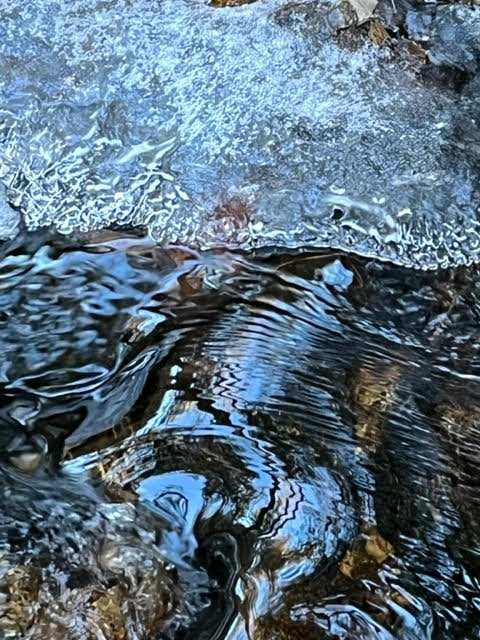
I love gazing into the woods beyond my brook lush with balsam, fir and hemlock knowing that the animals and birds that are left will soon be nestled in thick undercover finding nourishment and protection from winter winds and snow.

Continue reading “For the Children by Sara Wright”

Shifting Landscapes by Sara Wright

(Written on Oct. 27)

 Adjusting to earth changes is as much of a personal challenge as is my aging process… The earth and I are both struggling to survive the age of the Anthropocene. Hard times.

It’s late October and the next turning of the wheel will soon be upon us. The Days of the Dead. Honoring the Ancestors, those who came before… I think of the Sandhill cranes flying south in loose family aggregations and believe some of my ancestors must be these birds… I missed seeing them this year due to an accident, but say earth prayers for their safety on the wing… I remember my Grandmother.

Continue reading “Shifting Landscapes by Sara Wright”

Witches in the Weeds by Sara Wright

There she is in flight,

a shooting star on fire.

There she spirals eyeless

her blue wind births chaos.

There she moans bitterly

churning up dark waters.

There she plows fiercely

heaving up  mountains.

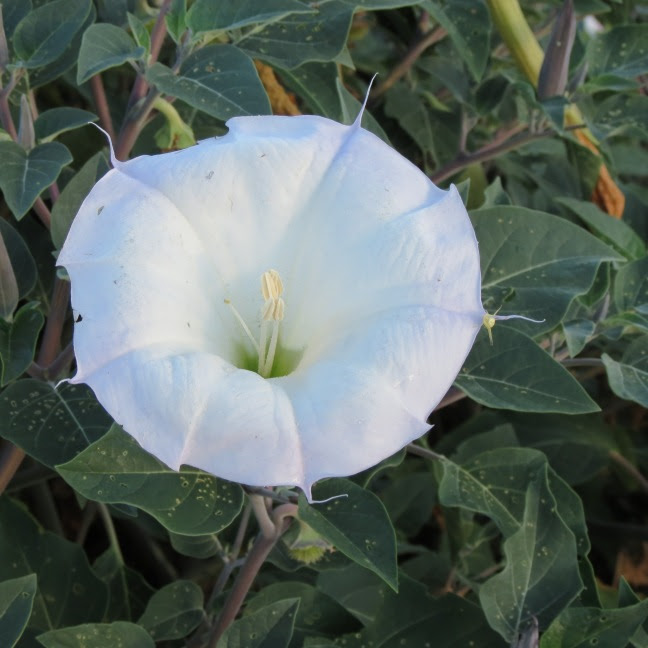
Her Datura pods explode,

broadcasting black seeds ..

Fire, Air, Earth and Water –

Old women stir the cauldron.

Shapeshifting into birds

they stalk fish in every marsh.

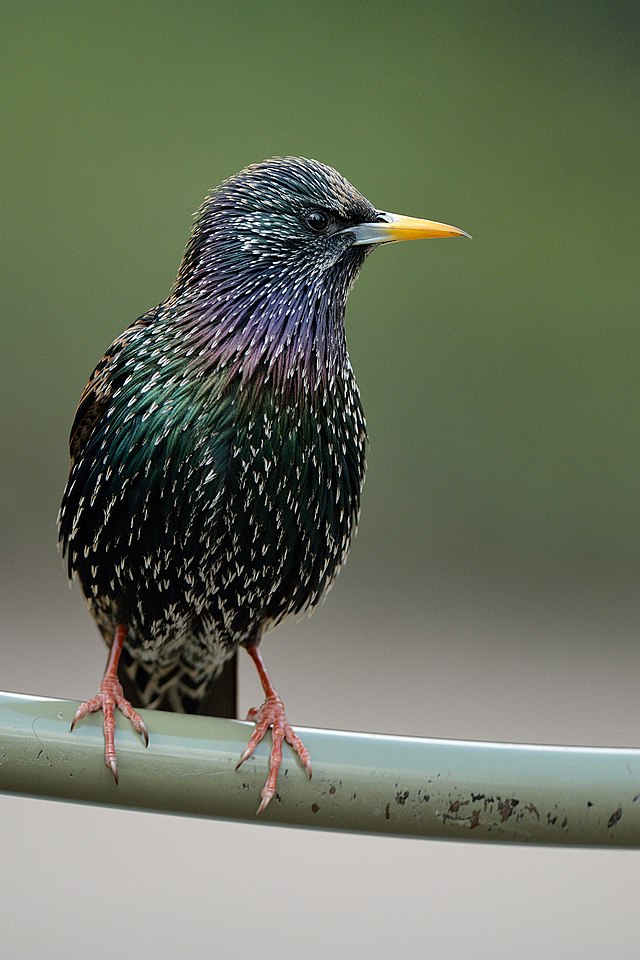
Black crowned night herons?

Owls with second sight?

Ah, these are the women with wings…

soaring through the night.

Listen to the reeds applauding.

Brown Cattails are humming.

Bitterns sing love songs to

Witches in the Weeds!

Continue reading “Witches in the Weeds by Sara Wright”

Label or Be Labelled Part 3: Toward Embodied Presence

In Part 1 of this series on labelling, I highlighted the difference between naming and labelling, and the search for a personal label as ‘participation ticket’ for life.

In Part 2 on professional and spiritual identity, I looked at what we can learn from the autoethnographic practice of disclosing various selves in research situations. I also discussed the effects of Christianity on the suppression of pagan traditions in northwestern Europe, and nature-based spirituality as part of our generic spiritual DNA.

Today I share a few final reflections including what groups celebrate their differences with ‘prides and games’, and which ones remain invisible? What are the effects of woke ideology on fear of expression and loss of voices, and an invitation for embodied presence as one characteristic of our shared humanity.

Continue reading “Label or Be Labelled Part 3: Toward Embodied Presence”

Label or Be Labelled Part 2: Professional and spiritual identity

This post continues from Part 1, where I situated this essay as a reflection on Xochitl Alvizo’s article Human, Just HumanThere, I questioned the difference between the power of naming versus the pressure to label. I then described my search for a personal identifier as ‘participation ticket’ to life. This feels important nowadays to join the conversation and not be dismissed by default. However, I wondered whether looking for things that set us apart emphasises otherness rather than shared humanity.

Today, I question what can we learn from autoethnography about the many selves we bring to different professional situations and how they might hide more than they reveal. I also describe the challenges of naming nature-based practices in a geographical area where 2000 years of Christianity forced our pagan traditions underground.

Continue reading “Label or Be Labelled Part 2: Professional and spiritual identity”

The Monarch That Didn’t Get Away –Butterfly Tagging, part 2 by Sara Wright

Part 1 was posted last week. You can read it here.

Today I learned that everyone is invited to witness butterfly tagging twice a week during the month of September. Efforts to publicize the value and ‘rightness’ of tagging are being stepped up.

Several people agreed with my assessment, namely that tagging creates trauma for the insect – and the idea that this practice may interfere with the butterfly’s ability to survive the 2000-mile journey, winter over successfully and then fly north to reproduce in the spring.

To my knowledge no one else had openly expressed their personal views to those in charge of the organization. However, some folks have come to talk with me. Most of us know that trauma weakens any organism’s immune system making it more vulnerable.

Continue reading “The Monarch That Didn’t Get Away –Butterfly Tagging, part 2 by Sara Wright”

The Monarch That Didn’t Get Away –Butterfly Tagging, part 1 by Sara Wright

 The timing couldn’t have been worse. I entered the garden focused on photographing flowers, so I was totally unprepared to see the monarch fluttering around helplessly almost hitting the cement as it attempted to recover its ability to become airborne. Instinctively, I turned away before I realized that what I had just witnessed was the trauma that this butterfly was experiencing after just having been tagged.

 This organization’s hope was that some guide or kid in Mexico would find the tagged DEAD body of this monarch somewhere on the ground after the butterfly completed its journey from Maine to its winter stopover in Mexico.

Continue reading “The Monarch That Didn’t Get Away –Butterfly Tagging, part 1 by Sara Wright”

Legacy of Carol P. Christ: Essentialism Reconsidered

This was originally posted on September 15, 2014

In my Ecofeminism class we have been discussing essentialism because some feminists have alleged that other feminists, particularly ecofeminists and Goddess feminists, are “essentialists.” They argue that essentialist views reinforce traditional stereotypes including those that designate men as rational and women as emotional. I too find essentialism problematic, but I do not agree that Goddess feminism and ecofeminism are intrinsically essentialist.

Goddess feminists and ecofeminists criticize classical dualism: the traditions of thinking that value reason over emotion and feeling, male over female, man over nature. We argued that the western rational tradition sowed the seeds of the environmental crisis when it separated “man” from “nature.”

Goddess feminists and ecofeminists affirm the connections between women and nature in an environmental worldview that acknowledges the interconnection of all beings in the web of life.

Continue reading “Legacy of Carol P. Christ: Essentialism Reconsidered”

August: A Summer to Reflect, and a Time to Start Letting Go by Sara Wright

This has been an unusual summer. I can still listen to a roaring brook as I fall asleep at night. The flooding has been intense. The humidity is hardest to bare; I am grateful my cellar is finally free of water if not drying out. Our overall weather pattern remains the same; thundershowers almost every day; many clouds and thick morning fog. And tropical hurricane season is underway.

I am grateful for the moss and tall grasses that still glow lemony- lime emerald and sage green. My frog pond is empty except for snails; all the tadpoles have matured into tiny froglets that have disappeared into the dense foliage I have provided for them; ferns and anemones tower over others. A large toad only shows himself/herself  mostly at night when he hunts from the water dish I leave for him. Wild bee balm spikes are in bloom providing bees and hummingbirds with enough food for now. Some bee balm are ragged around the edges but the rain has brought in a second blooming cycle. My magic bean, the one I planted in March (in the house) has masses of deep orange flowers just outside my window. Grape leaves are climbing over the ground and visiting with the bean vine.

Continue reading “August: A Summer to Reflect, and a Time to Start Letting Go by Sara Wright”

Legacy of Carol P. Christ: The Flourishing of Life and Feminist Theology

This was originally posted on July 28, 2014

I first encountered the image and concept of “flourishing” in Grace M. Jatzen’s feminist philosophy of religion, Becoming Divine. For Jantzen “flourishing” is a symbol of a theology of “natality” or birth and life, which she contrasts to the focus on death and life after death in traditional Christian theologies.

Jantzen argues that the focus on death and life after death is a rejection of birth. Birth is rejected because birth through a body into a body implies finitude. Birth ends in death.  Jantzen argues that embracing natality means embracing finitude and death.

Continue reading “Legacy of Carol P. Christ: The Flourishing of Life and Feminist Theology”