When Networking Feels Like My Soul is Dying by Melody Stanford

Melody

A few months ago I sat down to eat with Dr. Kwok Pui Lan. We were meeting because I had voiced some personal struggles during our class, and she offered to have a meal with me. 

I was nervous, mesmerized by her accessibility – by her – for all the many things she has accomplished.

Over plates of chicken and rice, we sat, chewing. Professor and student. She smiled, and waited for me to start speaking. I told her in spurts that I was struggling through my semester at seminary and didn’t know what gave me hope anymore. I didn’t know why I was doing this. I asked what gave her hope.

“Well,” she said, “thirty years ago, there was no such thing as Asian feminist theology. My friends and I got together, and we started it.” She said, between bites of chicken. “You just started it?” “Yes,” she replied. She and her friends sat around, over glasses of wine, and talked.

And those nights of friendship became a global conversation.

Continue reading “When Networking Feels Like My Soul is Dying by Melody Stanford”

Meditating on Oneness by Amy Wright Glenn

Utah native Amy Wright Glenn will talk about her book: "Birth, Breath, & Death: Meditations on Motherhood, Chaplaincy, and Life as a Doula." Courtesy Amy Wright GlennAt the age of fourteen, I began to question the Mormon faith of my family. I embarked on a life long personal and scholarly quest for truth. While teaching comparative religion and philosophy, I was drawn to the work of supporting women through labor and holding compassionate space for the dying.

In my book, “Birth, Breath, and Death,” I share moving tales of birth and death while drawing on my work as a doula, hospital chaplain, and mother. I weave together these stories with philosophical reflections on truth, meaning, and Spirit.

This is an excerpt taken from the first chapter entitled “Search.”

I spent much of my early twenties traveling throughout The Middle East and India. I lost track of time gazing at an ancient copy of Homer’s Iliad at a museum in Cairo. I remember sleeping through a freezing cold night on Mt. Sinai and awakening to a brilliant sunrise over the Arabian Peninsula. I climbed the pyramids in Egypt and protested the Israeli occupation of the West Bank with Arab and Jewish women peace activists. For a year, I studied in Jerusalem. Later, I dedicated myself to the practice of meditation at an ashram in the Himalayas.

A lively mix of debate and discussion characterized my Hebrew University days. In the evenings, I worked illegally as a waitress in the Jewish Quarter of the Old City. Adorned in Roman attire, I served fantastic platters of Middle Eastern cuisine and performed folk songs and dance routines for photo-snapping tourists. I was nineteen and living in Jerusalem, a place saturated in religious symbolism. Known as Al-Quds in Arabic and Yerushalim in Hebrew, Jerusalem is a city renewed and ravaged due to contested paradigms of poetry and politics. Continue reading “Meditating on Oneness by Amy Wright Glenn”

Our Loss of Od by Deanne Quarrie

Deanne QuarrieFreyja is an Old Icelandic goddess of the Earth, fertility, and beauty. Her name means “Lady.”  Freyja is known to be very beautiful and sexual. It is thought that Freyja was first in union with Od.  This union represented what is known in Old Icelandic as sam-vit, a state of united consciousness. In other words, consciousness that reflects a state of being united, integrated, or whole. Od had vanished from Her life causing her to weep for his loss.  Where her tears fell on the land, they turned to amber and where they fell in the Sea they became gold. Amber and gold are both sacred to Freyja.  From the time he left, she continued to travel and search for him. Continue reading “Our Loss of Od by Deanne Quarrie”

Terry Pratchett’s Discworld, Feminist Theology, and Finitude by Linn Tonstad

Linn Marie TonstadIn David Kelsey’s theological anthropology, Eccentric Existence, he emphasizes that finitude renders creation vulnerable, but he still insists on the goodness of what he terms the “quotidian proximate contexts” in which human life is lived: our ordinary, everyday lives. Terry Pratchett’s Discworld novels bring together a multitude of characters – ethnically, religiously, and otherwise diverse – in the chaotic yet lively city of Ankh-Morpork (a fictionalized London). The Discworld offers what I see as a theology of everyday flourishing that fits with both Kelsey’s analysis of finitude and with significant feminist theological claims.

The books focus on the men and not-men (women, werewolves, vampires, trolls, a six-foot tall dwarf named Carrot, and a Nobby Nobbs) who populate the city and bring it to life. The characters of Pratchett’s city offer a vivid imaginative rendering of the vulnerabilities and possibilities of life in everyday finite contexts that bring together diverse creatures in the service of the goal of common flourishing. Although all theologies outline a social imaginary, whether implicitly or explicitly, the dry and technical character of much theological reflection can make it difficult for the reader to imagine what life would be or could be like given the proposals advanced by a particular author. Pratchett is a consummate observer of the everyday, and his world brings to life what a theology of the everyday would look like. Continue reading “Terry Pratchett’s Discworld, Feminist Theology, and Finitude by Linn Tonstad”

Heart of the Matter by Oxana Poberejnaia

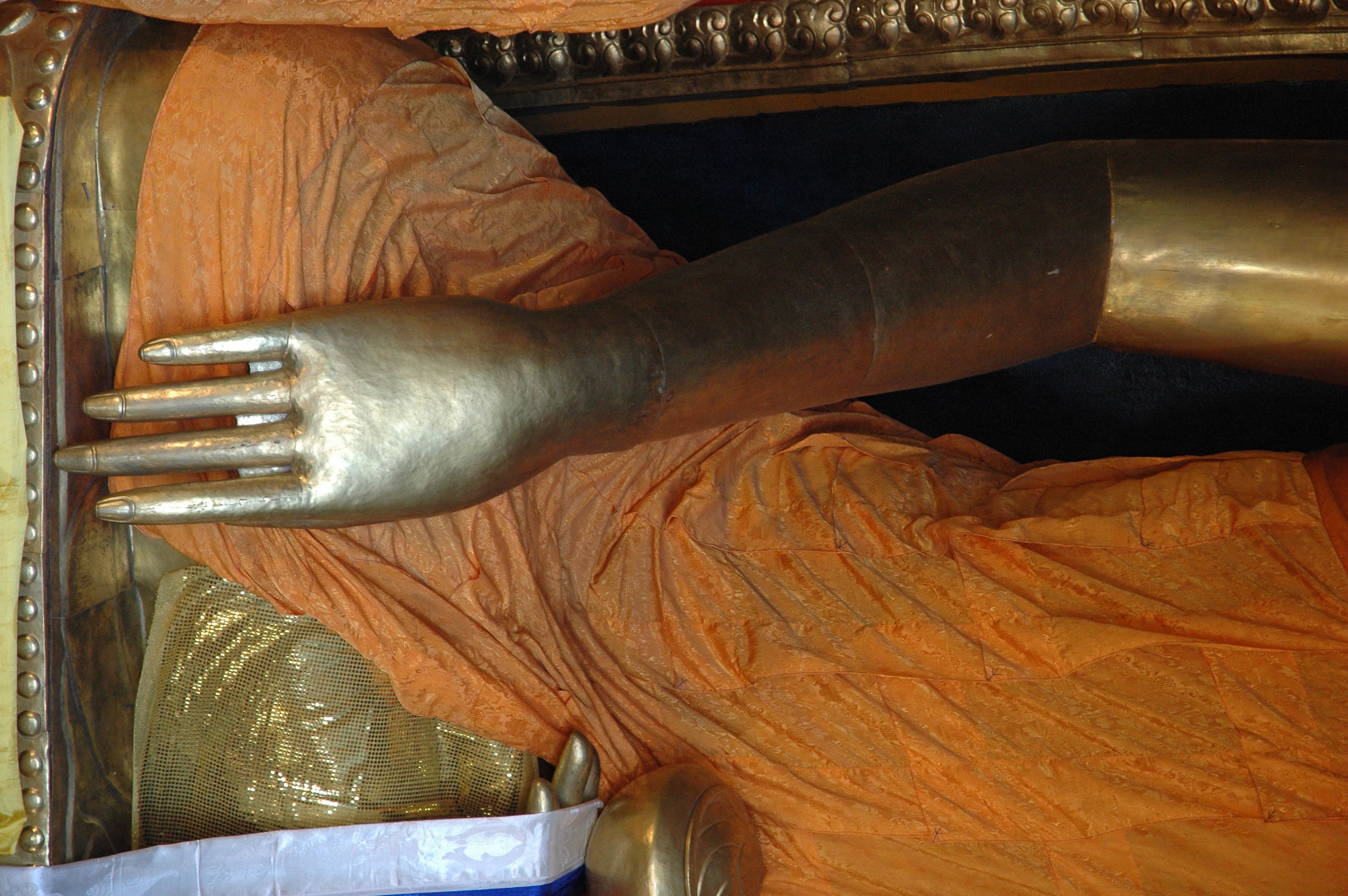
oxanaMy friend whom I teach frame drumming teaches us shamanic journeying. There was an episode in one of my journeys, when, unable to see the way forward, I put the palm of my hand on the ground and went down a hole I was creating to the core of the earth. Since then, this scene came into my mind several times when I was talking to friends about inner truth. Also, the posture itself bears uncanny resemblance to the iconic Buddha posture of touching earth with his right hand.

Touch the Earth Mudra

According to a Buddhist legend, on the night of Enlightenment Prince Siddhartha encountered Mara, the Lord of Death, who threw various hindrances the Buddha’s way to prevent him from attaining Supreme Enlightenment.  The final challenge was Mara’s claim that the Buddha had no right to be in the seat of Enlightenment. The Buddha then touched the earth with his right hand to call Her as a witness of his past spiritual achievements and his right to gain Enlightenment.

Continue reading “Heart of the Matter by Oxana Poberejnaia”

Anti-sex feminism? by Linn Marie Tonstad

Linn Marie TonstadLori Gottlieb’s article in the February 9 New York Times magazine, “The Egalitarian-Marriage Conundrum,” was yet another tired entry in the New York Times’s annual clickbait misogyny Olympics. Who doesn’t remember the supposed opt-out revolution, and the sadness of the decade-later follow-up demonstrating every single consequence that any feminist could have predicted? Or the weekly gender terrorism spewed by Maureen Dowd, who somehow gets people to believe that constant belittling and feminizing male Democratic politicians counts as incisive, progressive political commentary? To name just a few of the most memorable, and most infuriating, examples.  

Gottlieb’s article rehashed the studies – I’ve lost count of how many times I’ve read about them in one version or another – that suggest that equality in household labor leads to decreased frequency of intercourse among married heterosexual couples. The most revolting lines in the article – among many contenders – start with a quote from Julie Brines, the author of the study in question: ‘”The less gender differentiation, the less sexual desire.’ In other words, in an attempt to be gender-neutral, we may have become gender-neutered.” It is possible that Brines may be quoted out of context, or that what she intended to say was something quite different, but as the quotation stands, it implicitly suggests that so-called “traditional” gender differentiation is necessary for sexually satisfying heterosexual relationships. (For, of course, there are plenty of other ways in which gender differentiation might be present in heterosexual relationships. Gender differentiation is here being equated with a very particular set of decisions about ‘housework’, a notion that arguably exists only to render some parts of women’s work invisible.) That’s before getting into the implications of the word “neutered” used in the second sentence. Why would egalitarian distribution of household labor be considered “gender-neutral” to begin with? Continue reading “Anti-sex feminism? by Linn Marie Tonstad”

Remember the Sabbath Day: The Cost of Difference by Linn Marie Tonstad

Linn Marie TonstadI grew up Seventh-day Adventist and was educated at Seventh-day Adventist schools all the way through college. I can tell endless quirky stories about growing up – about the time my parents gave me The Lion, the Witch, and the Wardrobe to read at the age of seven and I was certain, certain, that they had no idea what devilish literature they had given me (all those horrible hags and werewolves), so I promised myself never to tell them because they would feel so bad for having led me astray. (I figured it out when I reread the story at the age of nine.) About my joy in meeting missionaries from the Church of Jesus Christ of Latter-day Saints, or Jehovah’s Witnesses, at the train station on my way to and from school, so that we could proof text against each other. I was always certain that my marked Bible (marked with Sabbath texts, carefully traced with different colored pens, based on a pamphlet I had picked up somewhere) would eventually lead someone to the truth. (Again, I was nine.) As I entered adolescence, I became increasingly worried about the early Adventist dictum that the degree of responsibility you have as a believer is proportional to the degree of light you have been given – after all, I had a lot of light! In fact, I knew the truth.

But no stories like this will tell the truth of my relationship with the church. Yes, I grew up in ways that seem strange to many people: keeping Saturday holy starting Friday at sundown, without TV or movies until about the age of eleven, as a life-long vegetarian (although I became a pescetarian in my twenties), believing that Jesus Christ will return soon, having read the Bible cover to cover by the age of nine (do you see a pattern emerging?), and so on. Having spent the last decade plus outside Adventist institutions, I know much more than I did then about the ways in which my upbringing and beliefs were unusual by mainstream standards. Yet unlike many people who become theologians, and unlike many women who become feminist theologians, I never experienced the church as a particularly repressive site, even though the external forms of my life look very different now. I loved the church, and despite some unfortunate experiences with authority during my high school and college years, the church gave me gifts that I have valued ever since. Continue reading “Remember the Sabbath Day: The Cost of Difference by Linn Marie Tonstad”

Creating Space: Mosques Affirming All Bodies, Minds, and Hearts by Laury Silvers

Silvers, Bio Pic FRBlogIn my first blog for Feminism and Religion, I discussed the cognitive and embodied dissonance that some Muslims experience as a result of historically (not eternally) gendered ritual forms. I ended with a promise to share with readers the ways in which el-Tawhid Juma Circle mosques try to create space to break free of those forms. Our mosques affirm all human beings as spiritually, socially, and ritually equal and try to break down the social hierarchy of ritual and theological leadership by opening up a space for all bodies, minds, and hearts to lead and follow as equals among each other.

Continue reading “Creating Space: Mosques Affirming All Bodies, Minds, and Hearts by Laury Silvers”

Seeing Death and Resurrection by Linn Marie Tonstad

Linn Marie TonstadYesterday, I visited the Capuchin catacombs in Palermo, Sicily. In a grotto about a mile or so from the center of the modern city are found the preserved remains of about 2,000 people who paid the monks to preserve their bodies after death, dress them in their finest clothing, and put them on display. Each of them is placed in its own niche along the wall, held up by iron bands, and has a tag around its neck with its name and date of death. The bodies are not displayed in random order: they are sorted (to some extent) by sex, profession, and familial status. In one large recess, a number of children’s skeletons are on display, many of them in heartbreakingly tiny coffins. In another corridor, friar after friar hangs in his robes, some with cords around their necks signifying their adherence to a Franciscan order. Almost indistinguishable from the cords are the braids still hanging from the heads of some of the women’s bodies. Some families are arranged together; in another corridor doctors and lawyers are segregated and in yet another female virgins are gathered together. The oldest body I saw dated from 1599 – high on a wall hangs the body of a monk whose name was almost illegible but who hailed from the Umbrian hill town of Gubbio.

Some of the skeletons presented death’s heads; others had skin dried to a leathery tightness over remaining bony protuberances. Some of their outfits are well preserved; others have disintegrated under the relentless assault of the years. The practice became illegal around 1880, but until then, people chose – or perhaps their relatives chose for them – to be preserved in this seemingly macabre manner. Continue reading “Seeing Death and Resurrection by Linn Marie Tonstad”

How I Loved Myself through Charismatic Worship by Andreea Nica

Andreea Nica, pentecostalismBreaking up with your first love can be an excruciating process; especially when it happens to be completely entangled with your being. God was my first love and he stayed for a long while. We had many exhilarating times together, particularly within the branch of Christianity I was raised in: Pentecostalism. I fell in love with God when I uttered his divine language at 13 years of age.

Currently, I’m writing my memoir and narrative nonfiction, Freeligious ™, for which I explore the scientific explanations of my charismatic experiences in the church, which inevitably led to a closer attachment to God. In the Pentecostal church, we were encouraged to connect with God through supernatural phenomena.

Examples include: speaking in tongues (glossolalia), healings, trances (drunk in the holy spirit), visions (hallucinations), prophetic messages (delusions), rebuking evil spirits (paranoia), and many more god-friendly activities. While some of my church peers and most outsiders found the charismatic ordeal to be phantasmical and plain ol’ crazy, I became enchanted by the initiation. The initiation process was quite simple really. As believers in Christ, we must receive the baptism of the holy spirit which usually took the form of speaking in tongues, clinically known as glossolalia. Continue reading “How I Loved Myself through Charismatic Worship by Andreea Nica”