Four Days of Bliss (or How I used The System to beat The System) by Vibha Shetiya

Vidha SI’m not particularly fond of my periods – they’re painful, full of cramps. But they are a part of who I am, and I’m not going to apologize for them. We women, especially those of us belonging to the sub-continent, have been shamed or embarrassed into silence, while being reminded that motherhood is the most exalted position a woman could ever hope for. I mean, isn’t that paradoxical – if it weren’t for the bloody nemesis (pardon the pun), we would never get to experience motherhood.

I grew up in a Western environment (in southern Africa) where “period” wasn’t necessarily synonymous with repulsion. But when I moved to India, the land of my birth, soon after my “life-altering” experience, things began to look different. I came to realize that I ought not to be like the neighbour girl who was so besharam, or shameless, that she insisted on announcing her monthly ignominy to the world by refusing to conceal the fact that she had indeed been at the pharmacist’s to buy sanitary pads. Why, the pack of pads, sealed in newspaper and carried in a little black plastic bag was right there for the entire world to see on her ten minute walk back home! I gradually came to understand that “those four days” were taboo – do not speak of “it,” do not make it obvious even if you are writhing in unbearable pain, do not contaminate sacred space with your womanly profanity. Continue reading “Four Days of Bliss (or How I used The System to beat The System) by Vibha Shetiya”

Who Sits at the Center of this Story? By Elise M. Edwards

Elise EdwardsHave you ever heard of the Vitruvian Man? It’s an image from 1490 inked by Leonardo da Vinci that came to symbolize the centrality of the individual in the Renaissance. It is quite clearly a depiction of a muscular, European male. His body is perfectly proportionate and thus simultaneously represents ideal humanity and a microcosm of the universe. The Vitruvian Man is so named after the ancient Roman architect Vitruvius who describes the proportions and symmetry of a temple as being analogous to the proportions of a man.

As an architect and scholar in the humanities, I’ve been acquainted with the Vitruvian Man for many years now. I even had a da Vinci theme on my PC’s Windows software about 15 years ago, meaning that the image of the Vitruvian Man appeared regularly on my desktop and screen saver. There was nothing problematic to me about his presence until a few days ago, when I took part in a discussion about teaching philosophies with some new friends and academic colleagues.

I was listening to Tamara Lewis, an assistant professor in religion whose research and teaching addresses the medieval and Renaissance periods. When she described a metaphor for her teaching philosophy, she discussed replacing the symbol of Vitruvian Man with the “woman at the well.” The woman at the well is a figure in Christian stories about Jesus and his teachings. Her narrative in the Bible is placed in chapter 4 of the Gospel according to John. Int eh story, Jesus encounters a Samaritan woman at a well. He asks her for a drink, which begins a meaningful exchange about spiritual teachings. Jesus’ male disciples and surprised to witness this exchange, presumably because she is a woman and a Samaritan, as the text tells us that Jews do not associate with Samaritans. The woman goes back to her town, tells people about her encounter with Jesus, whom she believes is the Messiah, which prompts many of them to come to him and also believe.

Dr. Lewis described how her presence in the historical study of medieval or Renaissance periods is sometimes questioned and how the woman at the well represents this presumed misplacement. Her metaphor caught my attention not just because of its profound coherence within her own career trajectory and narrative, but its coherence within mine. As a black feminist, religion scholar, and practicing Christian, I often wrestle with questions of belonging and being in or out of place.

This summer, I’m taking the time to think about broad questions and do some vision casting. This past December, Grace Kao wrote about using sabbatical time differently, and I’ve connected this to my own practice of Sabbath keeping as a ritual. I dedicate specific times to cease work.  I am engaging in some productive activity this summer, but I’m also honoring one of the truest blessings and privileges of full-time employment in my profession, which is break time to rest, reflect, and plan for the seasons ahead.  The metaphor of woman at the well who intentionally replaces the Vitruvian Man provokes these questions in my reflection:

Who is the default person around which the places we inhabit are constructed? Who sits at the center of our stories about the places we will go? 

As the little bio that follows my posts says, in my professional career I examine issues of civic engagement and how beliefs and commitments are expressed publicly through aesthetic and artistic practices. I’m currently writing a book-length project about theological ethics and architectural design. So these days I’m thinking a lot about the way public spaces and built environments communicate the values of those who build them and inhabit them. One of the questions I’m wrestling with is the way “common” spaces are defined by the narratives of only some people in the community. What does it mean to be literally “out of place”? What exists as a “safe space” in a public park for a man may not feel safe at all for me as a black woman. A public bench upon which I can rest in the middle of an afternoon jog may not be so uncontested for a homeless man at night.

As I think about my future, I have to ask who sits at the center of my story.   I’m approaching a milestone birthday, and I don’t want to fall victim to someone else’s vision of what a 40 year old woman should be. What does the story look like with me at the center? What happens when I replace an idealized image of perfection, vitality, and beauty with an imperfect but gloriously alive and wonderfully formed vision of who I already am?

As I plan for a new academic year, who do I imagine in my classes? As I engage students in discourse about the history of Christianity, the development of its theology, and the ethical issues of today’s world, who do I place at the center? As the US becomes enmeshed in presidential election politics and ongoing racial tensions, what image to we present as the archetypal American?

I’m so grateful that I was brought to see the woman at the well as a metaphor of intentional displacement. Even in a religion that places a male Savior (Jesus) at its center, there are women who sit with him. Although they confound some of Jesus’ other followers by their presence, they remain meaningful conversation partners and witnesses to their faith.

Elise M. Edwards, PhD is a Lecturer in Christian Ethics at Baylor University and a graduate of Claremont Graduate University. She is also a registered architect in the State of Florida. Her interdisciplinary work examines issues of civic engagement and how beliefs and commitments are expressed publicly. As a black feminist, she primarily focuses on cultural expressions by, for, and about women and marginalized communities. Follow her on twitter, google+ or academia.edu.

Reading “Women” by Laury Silvers

My friends make my life difficult. They make me see what I could not see before. Kecia Ali, Aisha Geissinger, Karen Ruffle and Kathleen Self taught me how to read for gender in the classical texts I use for my academic work. It’s a way of doing close readings by paying attention to the way gender shows up in the text. Aisha sat with me one afternoon and walked me through my own sources pointing out references to gender in the sources. She showed me how the sources I was reading used gender to express social norms. She kept asking me, “What work is gender doing in the text?”

Don’t laugh you been-reading-gender-forever-and-a-day people! Okay laugh. I was a bit slow to pick up this gender thing at first, but I caught up okay. Now I cannot unsee it. I see it everywhere. For instance, I was heading to the stairs at work after a long day and was brain tired. I saw this sign at the stairs:

I nearly kept walking past the stairs thinking for a second that it meant they were for people that society designates as having “male” bodies only. I actually thought that. Then I started laughing at myself. I took a picture and posted it on social media with a story complaining how my friends have absolutely ruined me! Continue reading “Reading “Women” by Laury Silvers”

Belonging to the Land by Carol P. Christ

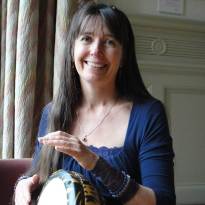
Carol Christ in LesbosI believe that we can restore our hope in a world that transcends race by building communities where self-esteem comes from not feeling superior to any group, but from one’s relationship to the land, to the people, to the place, wherever that may be.—bell hooks

In these words from her poignant memoir-reflection-analysis Belonging, bell hooks suggests that rather than creating identity by comparing ourselves to others, whether in the academy, in communities, or in the larger society, we would do better to root our identity in the land.

Hooks “left home” in rural Appalachia in order to pursue “higher” (why do we call it that?) education including a Ph.D. which enabled her to teach at prestigious universities in the urban north. Despite her considerable success as an academic and a black feminist, hooks suffered persistent depression in the cities where she taught. Eventually she diagnosed her dis-ease as a longing for the home she had left behind, specifically as a need to connect with the traditions of her ancestors, the mountains, and the land that had sustained them since the end of slavery. Continue reading “Belonging to the Land by Carol P. Christ”

Responding to Human Suffering by Elise M. Edwards

Elise EdwardsIn the past few weeks, there have been renewed debates throughout the US about death with dignity laws and the role of government is providing or securing access to health care. The tragic story of Brittany Maynard and the incessant election-year politicking about the Affordable Care Act (Obamacare) have made issues about human suffering more visible and volatile than usual. These are topics I deal with in two courses I am teaching this semester–one about Christian ethics and the other about bioethics.

I truly admire those who work in the presence of suffering daily by caring for others.   It’s difficult to even talk about suffering in the classroom day after day. My intention behind doing so is for my students to resist simplistic responses by either valorizing human pain and suffering or retreating to escapism. I caution them about using religion to legitimize suffering when it accompanies from evil, yet encourage them to see the meaning in suffering as well. We try to maintain the fine line of affirming the experiences of those who claim to gain strength or some other good from their pain without crossing into discourse that names the pain itself as something good. We debate whether there can be any way of discussing suffering as redemptive. We discuss disparities in medical treatment and health care along economic, racial, gendered, cultural, and international divides and what the responses of clergy, medical providers, and everyday people to remedy them.

Through these heavy debates, I’ve gained more clarity about the ways that suffering is often a result of human injustice and I’m deeply saddened by it. Continue reading “Responding to Human Suffering by Elise M. Edwards”

Fannie Lou Hamer’s Commitment to Life by Elise M. Edwards

Elise EdwardsA few weeks ago, I came across a postcard that I was given at a conference last year. I got the postcard (advertisement?) because it has a picture of Fannie Lou Hamer on it, and in my home and office, I like to display images and quotes from inspirational women, especially black women. Hamer was a sharecropper from rural Mississippi who became a leader within the civil rights movement in the United States. I was happy to have something with her likeness on it. It was only later that I looked at the text on the front and back of the card, which read in part, ”Often called the ‘spirit of the Civil Rights Movement,” Hamer worked tirelessly on behalf of the rights of others—including the unborn. [She said,] ‘The methods used to take human lives such as abortion, the pill, the ring, etc. amounts to genocide. I believe that abortion is legal murder.’” I realized then that the card was distributed by an organization called Consistent Life, who, in support of a “consistent ethic of life,” is “committed to the protection of life threatened by war, abortion, poverty, racism, capital punishment and euthanasia.”

I was conflicted about the ushamere of Hamer’s image for this organization’s purposes. It is true, Hamer did have those views about abortion and birth control. But I did not know if her image and story was being manipulated for a particular political and religious agenda—one I do not align myself with. I put the card in a box of other images and quotes. I didn’t display it, but I didn’t throw it away, either, which is why I came across it again a couple weeks ago as I was cleaning and decorating my home office. I had the same misgivings about the image as before, and I set it aside again. Continue reading “Fannie Lou Hamer’s Commitment to Life by Elise M. Edwards”

More than Individual Concerns by Elise M. Edwards

Elise EdwardsWell, the fall semester of the school year has begun. I’m teaching undergraduate classes in Christian Ethics and Bioethics this fall. I’ve designed my classes so that they are much more discussion-based than they have been in previous semesters and as a result, I’m noticing the things that challenge and confuse my students fairly early. I have readings from feminist, womanist, and mujerista thinkers in these courses, and unsurprisingly, some of my students don’t know what to do with the arguments feminists make about how we arrive at moral decisions and live them out. I hope that as we work through the essays together, my students and I learn from each other.

I assigned an essay called “Theology’s Role in Public Bioethics” by Lisa Sowle Cahill that was included in the Handbook of Bioethics and Religion edited by David E. Guinn (2006). Cahill, a feminist thinker, asserts that theology can be a conversation partner in public debate about bioethics and also an advocate for just, compassionate, and inclusive health care practices. Citing the work of another feminist, Maura Ryan, Cahill argues that ethical questions about reproductive technologies should be examined not only as individual dilemmas but as issues that exist within a social justice context. In the conclusion of the essay, she states, ”Specifically, one of [theology’s] most important and distinctive contributions to public discourse is a critique of the ways in which modern biomedicine and biotechnology have become luxury items marketed to economically privileged classes, while the world’s poor majority lacks basic health needs.” (55).

I suppose because I’ve been reading feminist thought, theology, and social ethics for years, some of the claims that my students see as radical and new are commonplace and go unquestioned by me. I expected some of my students to disagree with Cahill and Ryan’s particular positions about assisted reproduction. But I was surprised by students’ rejection of the idea that debates about reproductive technologies include MORE than individual considerations.

I’ve blogged on this site about reproductive rights before, and let me be clear that I do not think that the church, state, or any institution should have more governance over a person’s body than that person herself. But while respecting individuals’ rights to make health decisions for themselves, I also acknowledge that these “individual” decisions have broader social implications and meanings. This is one reason second-wave feminists have insisted that “the personal is political.”

Feminists routinely relate individual, “personal” acts and beliefs to larger constructs and the too-often asymmetrical power dynamics at work within them. This is why we are disturbed by video of a man who knocks his fiancée out and drags her unconscious body from an elevator and pop stars who gain commercial success by graphic displays and descriptions of sexuality that is objectifying or exploitative. And, in response to one of my students who wondered if feminist interpreters of religious texts go too far, that is why they point to patriarchy in a story that seems to be about devotion (referring to the Book of Ruth).

I’m grateful to my students for prompting me to explain some of these convictions that feminists hold. Certainly feminism is not monolithic. We feminists disagree on many issues including the scope of individual rights, the role of religion in public debate, and the extent of harm (or lack thereof) in media portrayals of female sexuality. But I believe we tend to agree that our personal decisions as well as our societal issues should be addressed with a consciousness that as humans we are beings-in-relation. Our conviction that we are connected and affected by each other lies behind our motivation to make the world a better place for women and girls and others who suffer from patterns of dominance.

What do you think?

Elise M. Edwards, PhD is a Lecturer in Christian Ethics at Baylor University and a graduate of Claremont Graduate University. She is also a registered architect in the State of Florida. Her interdisciplinary work examines issues of civic engagement and how beliefs and commitments are expressed publicly. As a black feminist, she primarily focuses on cultural expressions by, for, and about women and marginalized communities. Follow her on twitter, google+ or academia.edu.

Anger is Not a Panacea: The “Next Stage” after Rage by Carol P. Christ

carol mitzi sarahIn a recent post Xochitl Alvizo cited Beverly Harrison’s much-loved essay “Anger as a Work of Love.” Harrison captured feelings that were in the air at the time of its writing several decades ago. Women were laying claim to the right to be angry at the silencing of our voices, the double standard, the media portrayal of women, income inequality, lack of access to good jobs, failure to prosecute rape and domestic violence, and a host of other injustices.

Most of all we were protesting the cultural stereotype that the “good woman” (understood to be white, Christian, and married or hoping to be) would not protest loudly or at all, would turn the other cheek, and would think about others rather than herself. (Jewish women and black women had to strive doubly hard to “live up” to this standard, as it was assumed that Jewish women were “overly assertive” and that black women were “too strong” and often “angry.”)

In this context Harrison’s essay and Mary Daly’s epithet “rage is not a stage” gave women—especially white women–permission to get in touch with our feelings of anger and to express them. We understood that “good women” had been hiding and repressing their feelings for centuries if not millennia with the result that the structures of injustice remained intact. Continue reading “Anger is Not a Panacea: The “Next Stage” after Rage by Carol P. Christ”

Thealogy of the Ordinary by Molly

crop027

The Goddess Gaia is alive
In this time and in this space
She speaks in sunrises
And waves against the shore
She sings with the wind
She dances in moonlight
She holds you close
Your heart beats in time with hers
A great, grand hope and possibility
For this planet…

Over the last two months, I have been listening to a wonderful telesummit about priestesses. I am also a huge fan of the radio show, Voices of the Sacred Feminine. However, as I listen to both, I sometimes find myself wondering if walking a Goddess path is also viewed as synonymous with, “believe everything, question nothing.” Crystal essences, gemstone healing, soul contracts, past lives, spirit guides, astrology, the many realms and dimensions of the occult, mystical, New Age and metaphysical. Is wholesale suspension of logic required to join hands with the Goddess? Is deft management of the tarot essential to the priestess path?  Is excavating my “inner masculine” relevant or appropriate? Must I ascribe to “enlightened” tenets like, “you are not your body,” “I am a spiritual being having a spiritual experience” and “we made an agreement to do this work before we showed up in this body at this time and place” in order to move forward? Continue reading “Thealogy of the Ordinary by Molly”

Transcendence, Immanence, and the Sixth Great Extinction by Carol P. Christ

carol christIn my recent blog “The Flourishing of Life and Feminist Theology” I discussed Grace Jantzen’s view that theology should focus on “natality” or birth and life, rather than life after death or life apart from this world. This week Tikkun magazine published its summer issue with a feature called “Thinking Anew about God.” In it two male thinkers, one Buddhist and one Christian, argue for a similar turn toward the world in their traditions. Their calls for religions to focus on this world were published the same week scientists warned that the world stands on the brink of the sixth great extinction.

I have come to believe that any religion espousing cosmological dualism (devaluing this world in favor of a superior reality such as heaven) and individual salvation (the idea that what ultimately happens to me is disconnected from what ultimately happens to you) is contributing to our world’s problems rather than offering a solution. … [Religions should] stop emphasizing the hereafter and focus instead on how to overcome the illusion that we are separate from this precious, endangered earth. –David Loy, Buddhist, writing in Tikkun Summer 2014

My aim in this regard is to reawaken in each of us an emotionally felt and primordial sense of spiritual belonging within the wider natural world. In turn, my hope is that this deep sense of belonging to the earth — to God’s body, as it were — will en-flame our hearts and empower our wills to commit us to healing and saving the earth.—Mark I. Wallace, Christian, writing in Tikkun Summer 2014 Continue reading “Transcendence, Immanence, and the Sixth Great Extinction by Carol P. Christ”