Then They Came for the Immigrant and Refugee Children by Marie Cartier

I started this blog June 18, 2018, writing about the horrific policy of the trump administration of separating children from their parents who seek asylum at the border. And this is where we are…a human rights disaster.

Then I watched with the rest of the nation as Rachel Maddow, our top news reporter, cried while trying to report the news that the Trump Administration has opened and is using three “Tender Age” facilities to house children 3 years and younger. They will soon be opening a fourth.


Continue reading “Then They Came for the Immigrant and Refugee Children by Marie Cartier”

Beyond Human Rights by Esther Nelson

For way too long, the only meaning I found in my life happened when peering through one specific, religious prism. Then I discovered what’s called the academic study of religion.  Observing the many ways people find meaning through their own experiences with God (or their “ultimate concern”) shattered the tightly-sealed insulation around my worldview.  Those things that comprise religion (stories, concepts of the holy, ritual, symbols, social structures), coupled with our individual experiences create a powerful reality affecting us individually and communally.

Some of my students identify as agnostic or atheist. They’re happy to have shed (or never put on) garments they perceive as obstacles.  Rarely do they realize that religious “truths,” because they are taken to heart by people and implemented into the social fabric, shape the world they inhabit. When we discuss the ways religion affects women within society, they are far more likely to think about women’s lived realities in terms of human rights, not religious identity.  Religion is seen as something superfluous (at best) or an impediment towards progress (at worst).

Continue reading “Beyond Human Rights by Esther Nelson”

We Don’t Need Armed Guards, We Need Grandmas by Karen Moon

(Written the day after the Parkland high school, Florida shooting.)

Last night, my husband and I went outside to our driveway to sit in the car and have a beer.  Those of you with lots of children will understand that sometimes you just do not have the time, energy or funds for babysitting, but at least we have some uninterrupted time to talk to each other. Our youngest is six years old, so the older ones can easily watch her for twenty minutes.  We are not leaving toddlers to fend for themselves.  And it is cold out.  That is why we are in the car.

Only last night, there was no ‘unwinding’ going on. Somehow, we started speaking about the Parkland, Florida high school gun shooting, and his voice became raised.

He calls it ‘Meditarranean’ and ‘passionate’; I call it an ineffective way of communicating.  I would like to say that I replied calmly. But I did not. He had me, and my voice became raised in response.

Continue reading “We Don’t Need Armed Guards, We Need Grandmas by Karen Moon”

Is Religion Our Sacred Cow? by Esther Nelson

Recently, my colleague (I’ll call him Ben) participated in his grandson’s bris—the circumcision ritual within Jewish tradition. The circumcision was performed by a mohel–someone who is trained on removing the foreskin of an eight-day-old, male child.

Neither Ben nor his wife is Jewish. Their son converted to Judaism when he married a Jewish woman whose family celebrates the birth ritual with a host of traditions.  One of those traditions dictates that the immediate family members, upon news of the baby’s imminent birth, gather together in, or around the vicinity of, the new family’s home in order to welcome the child into the world.

So Ben rushed to his son and daughter-in-law’s home a couple of states away shortly after the baby boy’s birth, staying until after the circumcision ceremony where Ben had the official role of conferring on the newborn his Jewish name. Continue reading “Is Religion Our Sacred Cow? by Esther Nelson”

Another Brick in the (Ivory) Wall by Natalie Weaver

I have recently read a couple of articles in the Chronicle of Higher Education about the challenge of working in academia.  One article lamented the paucity of tenure line positions and the great disappointment some ex-academics feel when they finally give up searching for that elusive job, which is actually non-existent.  Another article reported on the sham interview experience, in which a national search is conducted, but the whole thing is a ruse since an internal candidate already has the position.  Hopeful candidates put their families and lives on hold as they bide months of time while thinking, completely ignorant of the reality of situation, that they may be in line for a new position.  They get letters of reference, prepare for interviews, buy suits, arrange childcare, manage time away from whatever they would otherwise be doing to make an interview, and then endure the emotional trial of waiting.

They never had a chance.  They never even knew they never had a chance.  As one who has been in this situation, I can vouch that such pretenses of fairness and transparency are not equal opportunities for employment but dishonestly motivated, targeted opportunities for exploitation.

Academia, friends, worries me enormously.  And, I’m not at all sure what we are doing.  As a former board member of a large theology society, I had the privilege of working with new members, many of whom were degree-seekers, finishing up courses, exams, and research projects.  Each person’s work could arguably be, to a greater or lesser degree, sufficiently interesting to some population of readers, but the lot, en masse, would inevitably strike me as, well, struggling in the very least to be relevant.  What schools could or would support these newly minted degrees?  What academic programs would these new scholars populate, and who in turn would be their students? Continue reading “Another Brick in the (Ivory) Wall by Natalie Weaver”

Considering Our Spaces in the Pursuit of Justice by Elise M. Edwards

This past summer, my friend and I were perusing the exhibits at the National Museum of African-American History and Culture when she urgently called for my attention.  “Psst… Isn’t this where you are from?” she asked, pointing at a placard titled African American Life in Montgomery County.  Yes!  I grew up, I was educated, and I was churched in Montgomery County, Maryland.  So I eagerly read the exhibit’s description:

By 1900 there were at least eight African American communities in Montgomery County, Maryland. Unlike many rural African Americans, the residents were not tenant farmers—they owned their property and homes.  This gave them greater control over the land and the crops they produced.  They also directly benefited from improvements to their homes, which was an incentive to make additions and to stay in place.  Descendants of these early settlers still live in these communities today. Continue reading “Considering Our Spaces in the Pursuit of Justice by Elise M. Edwards”

Exploring Muslimness in the Aftermath of September 11, 2001 by Stephanie Arel

In my last post, I addressed the deeply personal accounts of Haroon Moghul’s self- and religious exploration in his memoir How to be a Muslim: An American Story. This post will broaden that reading to consider an October 2017 interview with Moghul at the 9/11 Memorial & Museum in New York City.

The interview echoes themes relevant to current global crises which implicate religion including how religious rhetoric circulates to support extremist violence and Islamophobia. Exploring how the events of 9/11 intertwine with such crises adds depth to understanding Moghul’s individual experience.

Continue reading “Exploring Muslimness in the Aftermath of September 11, 2001 by Stephanie Arel”

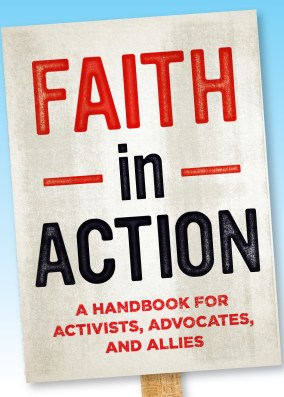
Faith in Action by Lisa Kloskin

Nearly a month ago, American voters showed up at the polls and delivered some big wins: the first openly transgender person was elected to a statehouse—Danica Roem in Virginia. Roem defeated an incumbent candidate who authored an anti-trans bathroom bill. Also in Virginia: the boyfriend of a reporter shot and killed on live TV, Chris Hurst, won a seat to the statehouse on a gun-control platform, defeating the three-term NRA-backed incumbent. And Hoboken, New Jersey, got its first Sikh mayor: Ravi Bhalla. These and others are encouraging signs that love and tolerance are gaining ground in the public sphere. But there’s still so much work to do. White Supremacists and Nazis still walk boldly in the streets, LGBTQIA teens still face bullying and higher rates of self-harm, women are still paid less for equal work and harassed in every arena, sea levels are rising at faster rates than we previously thought, people of color are still being killed by police, mass shootings are still a regular part of our news cycle, refugees are still waiting in camps around the world for a chance at a better, safer life.

Activists and advocates have been working for justice in these and other areas for decades. In the last year, spurred on by events like the Women’s March, a growing group of would-be activists has emerged. These allies are a welcome addition to the justice movement, but many worry they won’t do or say the right things, and want to have their perspectives deepened on important issues. They need guides and resources to give them the knowledge, tools, and confidence to make a real impact.

Continue reading “Faith in Action by Lisa Kloskin”

How Do We Heal Rape Culture? Part 2: How to Help Men Become Safer by Trelawney Grenfell-Muir

In Part 1, I presented a spectrum of male behaviors and attitudes, from violently misogynistic to safe ally. Next it is time to think about how we – as women, male allies, and society – can help men move up that scale to become increasingly safer for women. The strategies will differ depending on where a man starts out. However, using current research about change theory, we can find some concrete strategies to help us start to make progress.

The Research

Social scientists have conducted many studies about persuasion and social change, and I encourage everyone to follow these research trends. For this piece, I will focus on a few simple ideas about what works. I’m gearing this advice mainly toward men who want to become safer and to help other men become safer, but some of it applies to women as well. It also applies to religious communities – if they prioritize this issue, the men who attend will learn to be safer.

Continue reading “How Do We Heal Rape Culture? Part 2: How to Help Men Become Safer by Trelawney Grenfell-Muir”

“Queen Sugar:” Must-See Ecowomanist TV by Elise M. Edwards

elise-edwardsHave you been watching “Queen Sugar”?  It is a thoughtful, compelling, and gorgeous TV show that evokes ecowomanist sensibilities.

“Queen Sugar” is a television drama in its second season on OWN, Oprah Winfrey’s network. It was created by celebrated filmmaker Ava DuVernay, who is also the show’s executive producer.  The show has an all-female directing team and an inclusive crew.  Like many of the original series on OWN, “Queen Sugar” features a predominately African-American cast, and like many other programs on the network, it delivers content intended to stir the viewer’s soul.  But notably, “Queen Sugar”’s soulful messages are not mediated by the cadre of life coaches and inspirational leaders often seen on Oprah’s network.  Instead, it is the fictional Bordelon family who invites us to reflect on their world and ours. The series’ three main characters, Nova, Charley, and Ralph Angel, are siblings who take over their father’s sugar cane farm in Louisiana after his death. Their narrative and the lush cinematography that captures it offers viewers the opportunity to consider the complexity, joy, and hardship of African-American characters who are rarely depicted on screen.  The show’s themes and aesthetics are expressive of ecowomanist spirituality.

Continue reading ““Queen Sugar:” Must-See Ecowomanist TV by Elise M. Edwards”