

My late uncle, an atheist since age twelve when well-meaning Christians told him his youngest sister was “in a better place,” is now ashes in three red cloth bags. He was the last of my mother’s siblings to die, at the age of ninety-eight, the first being their little sister who died at age four. His children and grandchildren are taking his ashes to be scattered at sea where they will mingle with the bones the pirate Blackbeard, who met a violent end in these same waters almost three centuries earlier. Though most of this memorial weekend is a series of social occasions, and the guests on the boat continue chatting, I am moved by the sight of my cousins taking up spoons and scattering their father and grandfather’s ashes on the wind.
He is returning to the elements that sustained his life: fire, earth, air, water. When we breathe, drink or eat, sweat or shed a tear, in every moment of our lives, we connect through the elements to all the life that has gone before us and all the life that is to come. No belief system is necessary to know this truth in our bones. May we learn to care for the elements—rivers and oceans, air, soil, fuel for light and heat—as we would care for our own bodies. When the elements are degraded, we are degraded; when they are vital, we are vital. The elements are our ancestors, our children. The elements are us. Continue reading “The Elements Are Us by Elizabeth Cunningham”

 My sister once said about me, “One thing you have to understand about Elise—she takes the ritual of whole thing very seriously.” My sister was right and her words helped me see this quality about myself. What ritual was she talking about me taking so seriously? Happy hour on Fridays.
 The story of Jephthah’s daughter – found in the Hebrew Bible, Judges 11:29-40 – is a difficult story to read. The first time I read it, I was in my Christian high school Bible class and I could not understand why our teacher did not address the violence done by a father to his daughter. In my experience, Christians dismiss much of the violence done to women in the Hebrew Bible as evidence that ancient fathers, brothers, and husbands really did not care for their daughters, sisters, and wives. Since today men love the women in their lives, the ancient problem is no longer an issue, and we can continue with more pressing issues – or so the unspoken logic goes.
 We were playing six-degrees of separation, I think. I don’t know if there are rules to follow. It was after dinner, and we were talking about people we had encountered and their linkages to others. Surprisingly quickly, we found ourselves connected to Dwight D. Eisenhower, Elvis, Winston Churchill, and the Queen of England, herself. My mom had autographs from Jerry Lee Lewis, Duke Ellington, the Globe Trotters, and a gaggle of NFL players and professional golfers. She once chatted up Tori Spelling in a bathroom in Canton, Ohio at a Football Hall of Fame Induction ceremony. My husband worked in film in Los Angeles and Cleveland, meeting a crowd of stars and politicians over the years. One time he had a chance, face-to-face encounter with Prince (the artist himself!) as one rode up and the other rode down an escalator at a Borders in Chicago. As the distance between them closed, my husband quietly acknowledged him, saying, “Bravo!” Prince, whose head was angled away so as to avoid having to say anything, apparently, after a moment of consideration, looked back over his shoulder as they passed and silently mouthed, “Thank you.” I still give my husband kudos here… I mean, what else do you say to Prince? This connection, moreover, gave us our links to Morris Day, Jerome, Apollonia, and Shelia E., so we were all excited at his impressive list. I had a far less remarkable cast of characters to contribute, but I could offer a Vatican insider acquaintance, providing thereby a papal connection, which gave us our links to several world leaders. I felt I had contributed my part, even without autographs and celebrities.
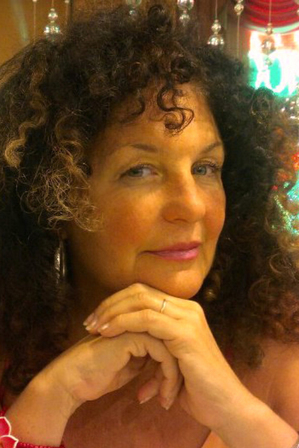 My mother-in-law is currently in hospice and expected to cross over any time now. My wife is with her. Those two sentences alone—since I am a woman writing this blog—signify historic/herstoric change. I am a woman and I am writing about my mother in law and I am writing that my wife is with her. We are in a sea change regarding gay marriage. I will be allowed bereavement to go with my wife, when the time comes, for the services.
 Two New Years’ Eves ago, I came to the realization that I did not need to watch the television countdown to ring in
 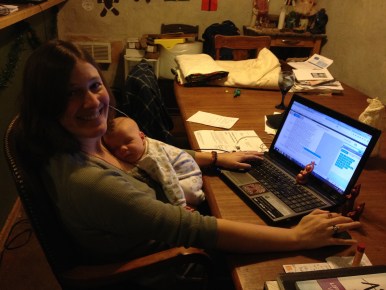 When the wheel of the year turns towards fall, I always feel the call to retreat, to cocoon, to pull away. I also feel the urge for fall de-cluttering—my eyes cast about the house for things to unload, get rid of, to cast away. I also search my calendar for those things which can be eliminated, trimmed down, cut back on. I think it is the inexorable approach of the winter holiday season that prompts this desire to withdraw, as well as the natural rhythm of the earth which so clearly says: let things go, it is almost time to hibernate.
 Feminism and Religion