Stop. Drop. And Pray. by Valentina Khan

543296_10151140607043082_1192980077_n

The other night, it was close to 11:00 pm and I was finally enjoying my own little ‘midnight’ snack and a healthy dose of reality TV when I got a phone call from a cousin I haven’t heard from in quite some time. He is in the East Coast and it seemed too late for a leisure phone call from him. So I answered in a panic, yet, all he wanted was to say “hi” and to talk a little bit about the obligation of a Muslim to pray the five daily prayers. OK, this is odd, I thought, but I guess I could entertain this topic for a few minutes. Might be better for me than the junk TV I was winding down to anyway.

We chatted for a few minutes and he started to get very heated about the requirement of the five daily prayers.  To back up a little, let me paint a quick picture of this eccentric cousin of mine. He is smart.  A New Yorker.  Middle-aged. He has studied at prestigious universities, has traveled the world, and even delved into religion so much so that he used to give sermons on Fridays, the holy day of the week for congregational prayer in the Muslim tradition. His main question for me, “Do you really believe in the flying white horse story?” Continue reading “Stop. Drop. And Pray. by Valentina Khan”

Fannie Lou Hamer’s Commitment to Life by Elise M. Edwards

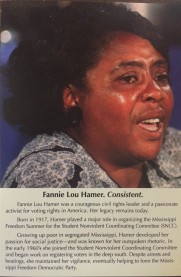
Elise EdwardsA few weeks ago, I came across a postcard that I was given at a conference last year. I got the postcard (advertisement?) because it has a picture of Fannie Lou Hamer on it, and in my home and office, I like to display images and quotes from inspirational women, especially black women. Hamer was a sharecropper from rural Mississippi who became a leader within the civil rights movement in the United States. I was happy to have something with her likeness on it. It was only later that I looked at the text on the front and back of the card, which read in part, ”Often called the ‘spirit of the Civil Rights Movement,” Hamer worked tirelessly on behalf of the rights of others—including the unborn. [She said,] ‘The methods used to take human lives such as abortion, the pill, the ring, etc. amounts to genocide. I believe that abortion is legal murder.’” I realized then that the card was distributed by an organization called Consistent Life, who, in support of a “consistent ethic of life,” is “committed to the protection of life threatened by war, abortion, poverty, racism, capital punishment and euthanasia.”

I was conflicted about the ushamere of Hamer’s image for this organization’s purposes. It is true, Hamer did have those views about abortion and birth control. But I did not know if her image and story was being manipulated for a particular political and religious agenda—one I do not align myself with. I put the card in a box of other images and quotes. I didn’t display it, but I didn’t throw it away, either, which is why I came across it again a couple weeks ago as I was cleaning and decorating my home office. I had the same misgivings about the image as before, and I set it aside again. Continue reading “Fannie Lou Hamer’s Commitment to Life by Elise M. Edwards”

Mother Blessings and the Power of Ritual by Molly

Mollyblessingway 116You are the
most powerful
intelligent
inspirational

Woman

Close to my heart.

You continue to
become
exponentially more amazing.

Always giving
others the step UP.

Force of the cosmos
connecting the Web

You are.

Thank you.

–Phanie


Last week, my friend sat on the floor during my mother blessing ceremony and wrote the above poem for me. When she gave it to me she said, “I’m not like you, I don’t write things and share them on the internet.” It was very powerful to receive the gift of written word from someone who does not often write, but who knows how deeply writing speaks to me.  Continue reading “Mother Blessings and the Power of Ritual by Molly”

We Are Music by Natalie Weaver

Natalie Weaver editedWhen I was about eight years old, I dreamed one night that I stood inside the workings of an immense instrument, so big it filled the sky. It was crafted of wood and gold, and although there was no obvious source of light, it was brightly illuminated. I could have confused it for the inner workings of a clock except that I could hear the sweet music it produced resonating throughout its cavernous hollows. It was curious to me that there seemed to be no atmosphere there either to breathe or to carry sound. Within it, I did not perceive any movement. And, there was no actual melody that it produced, which could be sung or repeated. There was only an enveloping harmonic thrumming. The sound was multiplicative and voluminous although not piercing. I understood it in the dream to be cosmic, structural, primordial, and generative. When I awoke, I had the feeling that I had seen something divine. It was not heaven. It was not God. It was more like the instrument of the universe, or the universal instrument, created as a first work among creation

It was puzzling to me that I had such a dream because I was not then a musician. I felt that I understood its meaning, but I was surprised by its discontinuity with things in my normal frame of reference. My mother played piano, but she had no music theory in her background. She surely did not have any training in musical cosmologies, such as those produced in antiquity by the philosophers and theologians. I occasionally mentioned the dream over the years when context seemed to warrant it, but, more or less, I filed it away. Continue reading “We Are Music by Natalie Weaver”

A Mother Not Feeling Guilty by Natalie Weaver

Natalie editedLast Tuesday marked my fourth day home in over two months. I was researching over the summer in Europe. When I was not working, I was climbing up castle ruins or carrying groceries or creatively managing my children’s laundry with very modest facilities at my disposal. Unlike all of my other summer colleagues, I had elected to bring my children with me, so my summer was work intensive in both the professional and parental capacities.

Arriving home from our journey late in the evening Friday, we went straight to bed. But, the following day, I began again the task of laundering and grocery-ing, now made more mundane by the absence of castles to climb. It was a good thing that the jet lag woke me around 4am. For, I needed to buy juice boxes, sandwich bags, cookie treats, fruit, and so on for lunch the following week. I ran out in between loads, remembering also that we still needed to eat over the weekend. I bought Stouffers. Then, still between loads, I began the tedious task of labeling individual crayons, markers, glue sticks, safety scissors, tape roles, pencil packs, and the like. Somewhere in all that, I read an addendum to the supply list that said the kids needed headphones for their computer work. So, I threw another load in the washer and ran back to the store. About 5 pm, I began to feel really tired, but that is also when I discovered that the uniform pants I had purchased didn’t fit. I began scouring last year’s batch for a temporary fix. Then, I labeled the gym shirts, got the lasagna out of the oven, fed everyone, cleaned up, and readied the lot for bed. That was a Saturday. Continue reading “A Mother Not Feeling Guilty by Natalie Weaver”

Family Ties by amina wadud

amina 2014 - croppedSome of you may be familiar with the time honored curse: “May you grow up to have a child exactly like you…”? I know, no one is exactly alike, but the point is, some of what we put our parents through will likely be revisited upon us if/when we become parents. And so it is, I have joked with my children time and again, “I wonder where you got THAT from?”

Of my five children the one most like me is my middle daughter. Of course from my perspective her version is multiplied exponentially. Take her vegetarian beginnings. When she was 10 years and 10 months old she made the pronouncement that she would no longer eat slaughtered animals. As she was too young to have any kitchen responsibilities besides a weekly dish-washing assignment along with her siblings, I begged her father to intervene on my behalf. He managed to get her to agree to wait until she was older. 2 months later, she had a birthday. Now she was older. She has been a vegetarian ever since! Continue reading “Family Ties by amina wadud”

No Ramadan Gloom and Doom by amina wadud

amina 2014 - croppedThe first blog I read about Ramadan this year was full of the usual self-righteous pontification that takes this occasion to remind people to do such and such at this or that level. Who is the target audience for such an approach, I wondered? It seemed to operate on the basic idea that Muslims will NOT do the right thing unless someone tells them to. Mostly, though I noticed the gloom and doom of it and I decided then to make my Ramadan focus on joy.

First a quick reminder about the basics: Throughout the 9th lunar month, Muslims are obliged to abstain from food, drink and sexual intercourse during the day. It goes on like this for 29-30 days. There are also points of difference about some details of the fast, like how we determine which day to start. Either we actually cite the new moon, go by advanced calculations of the new moon, or some combination of these two. This leads to healthy chaos at the beginning because no one knows when the first day will, be but must prepare in order to get in that pre-dawn meal, called suhur. I say, healthy chaos, not only because I’m a bit of an anarchist, but also because I like that no one has complete control about such an important decision. Continue reading “No Ramadan Gloom and Doom by amina wadud”

Sleeping: Thinking about Bodily Practices, Pt. 2 by Elise M. Edwards

Elise EdwardsAs I mentioned in my previous post, I’ve been reflecting on bodily practices–especially those that are not typically associated with feminism and religion. Our lives as embodied persons are so multi-dimensional! There is so much we perceive and experience through our senses, through our movements, and through the places we locate ourselves. So I have decided to use this blog to think through some ideas and learn from you in this community of readers, contributors, and commenters. Over the next few months, I will continue to discuss the ways I am becoming more intentional about connecting habits surrounding the body to feminist and religious concerns. Once again, I’ve glossed on only a few of the many connections we could make about women, religion, and bodily practices. Today I write about sleep. I would love to hear your thoughts in the comments below.

Do feminism and religion have anything to do with sleep?

Sleeping is as vital to human survival as food and water. But lamentably, getting the proper amounts of sleep is not one of those healthy goals that is fiercely defended. It is much more common to hear someone brag about how productive she can be on a few hours of sleep than to boast about her productivity after a full night’s rest. I have to admit, I am always a little suspicious of those people who proudly proclaim they only need 4 or 5 hours of sleep, and I’m a little antagonistic to those who want to recruit the rest of us into their sleepless world: “There is so much else you could be doing with your time than sleeping!” They say, “I’ll sleep when I’m dead!” I have even heard “Sleep kills dreams!” Um, actually, dreams come when you sleep. Sleep breeds dreams, you could say. More on that below.

As you might be able to tell, I am the type of woman who loves sleep. I love climbing into my bed at night. I enjoy the feeling of waking up with a rested body and a renewed spirit and a groggy-but-fresh mind. I especially love naps for that reason. The most enjoyable and perhaps “productive” seasons of my life have been those when I could take a nap after class, after work, or after the gym.

Sleep is vital because it allows the body to rest. In the Christian tradition, we claim that rest is part of the creation of the world. That God marveled at the wonderful world God created, and when the work was done, God rested. This rest inspires the Sabbath. Sabbath is a day set aside for rest, worship, and contemplation of the holy. It is regrettably observed less and less in contemporary American Christianity. Since we have let go of the need for the Sabbath, it certainly no surprise we have also lost sight of the importance of daily rest, too.

Although my thoughts are little uncharitable towards those who preach the gospel of little sleep, I am very sympathetic to those who feel they do not have enough time to sleep. To those who feel like sleep is a luxury they cannot afford. Certainly many women tasked with numerous responsibilities often feel this frustration. They make do with less sleep because they have to complete more tasks in their waking hours. Yet it has been my experience that even those who are overworked and overscheduled appreciate the uncommon times when they can sleep a little longer than usual.

For me, times of sleep are very much connected to gratitude. In the past year or so, I have retrieved the practice of nightly prayer, which sadly got left behind in my childhood years. In all honesty, it was not a renewal of spiritual piety that led me to resume these bedtime prayers. It was insomnia. As much as I love sleep, I am often kept from it by anxieties and thoughts of the coming day. I started using bedtime prayers as a way of turning my cares over to God. These silent prayers become conversations about what is important to me and what concerns me. I talk to God about what I am grateful for. I talk to God about my family and my friends, about their lives and concerns that weigh on me. And then I let it go–at least for the night–and trust my soul to the divine power who cares for me while I sleep.

These nightly prayers have not only promoted peaceful sleep (for most nights, at least) but also the experience of vivid dreams. Dreams, like other visions, are honored in many religions as a place where the divine communicates with humanity. But this too, seems absent from contemporary American Christianity. Perhaps it is because dreams are associated with the intuitive senses, and therefore the feminine, that they are overlooked. Dreams are less clear and presumably more open to speculative interpretations than the texts we read during the day. I cannot say whether I meet God or whether I meet my deeper self in dreams, but I do know I am connected to powerful ways of being in my sleep, and that this is important for my spiritual life.

My final reflection about sleep is an acknowledgment that we often do not sleep alone. While sleep itself takes us to a solitary place, we often share our beds with lovers, children, and other family members and friends. Like those bedtime prayers, the words we speak under the covers in those moments before sleep connect us to our bed-mates. Whether they are ghost stories or secrets or incoherent ramblings about the day to come, these nighttime words prepare our minds for the sleep that will soon overtake us. Unless, of course, we are next to someone who snores or kicks.

Elise M. Edwards, PhD is a Lecturer in Christian Ethics at Baylor University and a graduate of Claremont Graduate University. She is also a registered architect in the State of Florida. Her interdisciplinary work examines issues of civic engagement and how beliefs and commitments are expressed publicly. As a black feminist, she primarily focuses on cultural expressions by, for, and about women and marginalized communities. Follow her on twitter, google+ or academia.edu.

Women at the Secular Student Alliance Conference by Kile Jones

KileA few days ago I had the pleasure of giving a talk at the Secular Student Alliance Conference on how non-believing persons can work with Churches.  Amidst the chaos of conferences–managing your time, deciding which talks to attend, and making sure you have enough water (it was a Burning Ring of Fire outside in Tempe, AZ)–I got to meet some pretty incredible secular women.

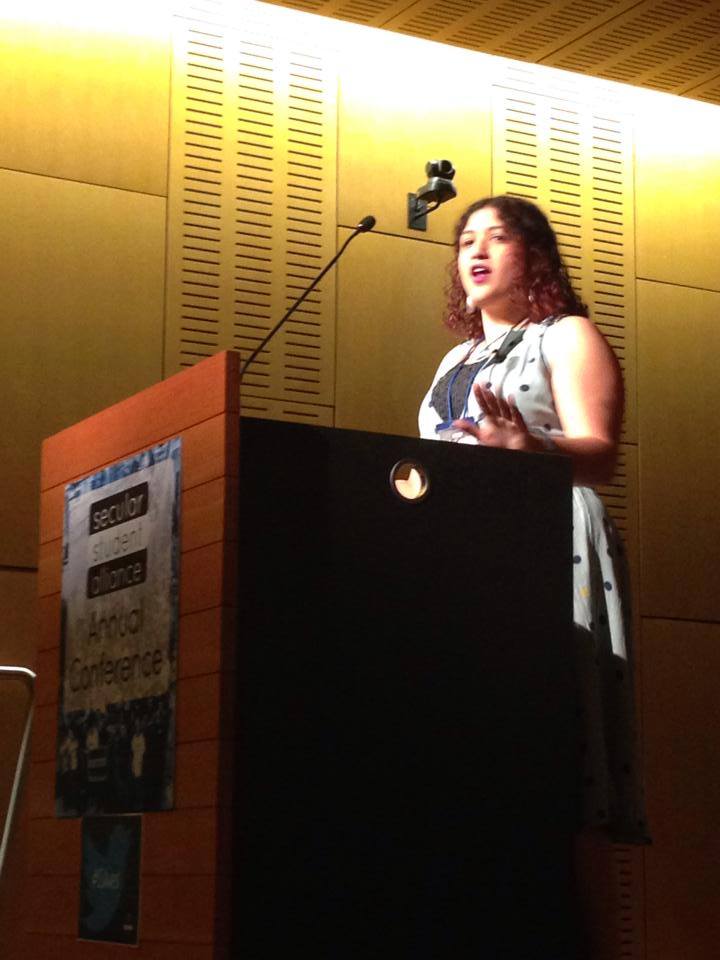
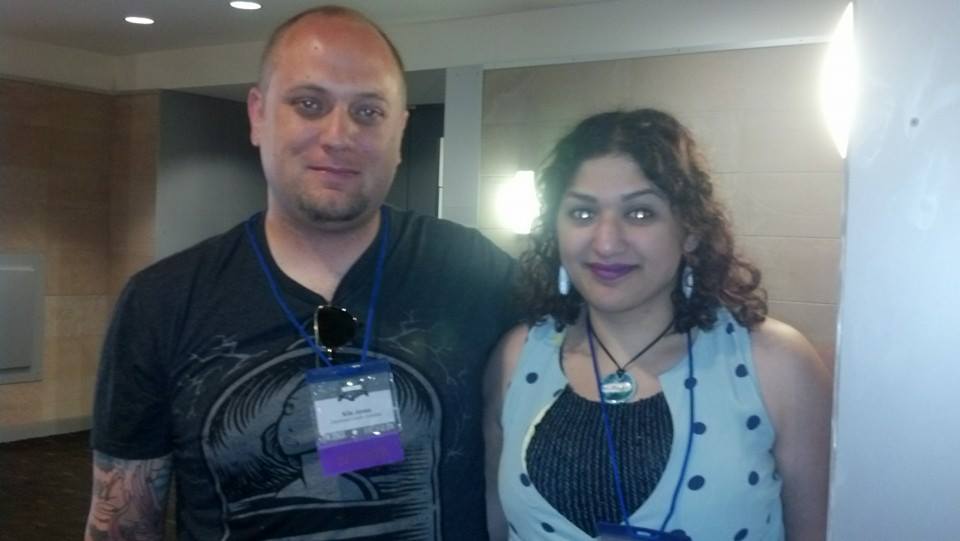
One of them was Heina Dadabhoy.

Heina speaking at SSA
Heina speaking at SSA.

Former Muslim, blogger at Freethought Blogs, and overall bad-ass, Heina spoke about ways in which secular groups can create a more welcoming environment for ex-Muslims and Muslims beginning to doubt.  Her talk, “Of Murtids and Muslims,” (a “murtid” is a public apostate) was not only about her experiences coming out as a secular humanist, but considered some of the absurd questions people ask her (and other ex-Muslims) about leaving Islam.  “So did your parents try to honor kill you?”  “Have you gone through FGM?”  It was disturbingly humorous.

What I considered to be Heina’s main point, was that we should respect each others’ individual differences and not generalize and caricature all Muslims with the depictions of some.  “Just because you read Ayaan Hirsi Ali’s book,” Heina notes, “does not make you an expert on Islam.”  Heina made sure to emphasize the radical diversity that exists in Islam.  She also spoke of the some of the issues that people go through when they leave Islam: How do I create a new identity when my old one was intricately tied up in my Muslim community, family, and culture?  How do I navigate popular culture when I have missed a bunch of it?  How do I find myself in this new secular world?  Heina’s answers were refreshingly honest and insightful.

P.S. Aisha (one of Muhammed’s wives) should not simply be reduced to the young person Muhammed married; she was also a war leader, influential Muslim thinker, and someone who contributed greatly to early Islam.  This is, of course, Heina’s insight.

Me and Heina at SSA
Me and Heina at SSA

Another awesome secular woman I met, was Sarah Morehead.

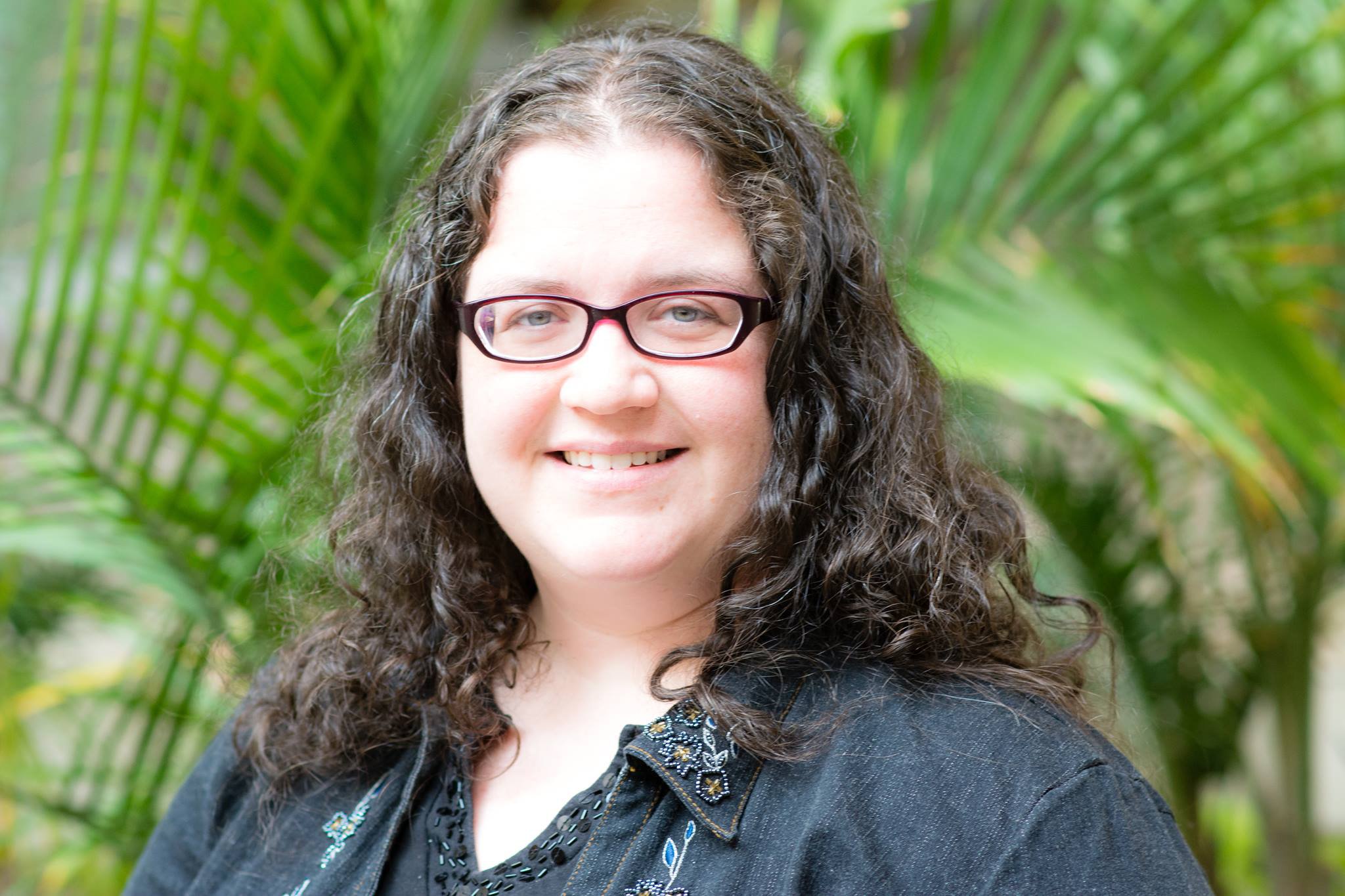
Sarah. Photo from Apostacon.

Sarah is a former evangelical Southern Baptist, Executive Director of the “Recovering From Religion” project, and another overall bad-ass.  She spoke on how to start up a Recovering From Religion group on your campus.  Here is a blurb about Recovering From Religion,

“If you are one of the many people who have determined that religion no longer has a place in their life, but are still dealing with the after-effects in some way or another, Recovering From Religion (RR) may be just the right spot for you. Many people come to a point that they no longer accept the supernatural explanations for the world around them, or they realize just how much conflict religious belief creates. It can be difficult to leave religion because family and culture put so much pressure on us to stay and pretend to believe the unbelievable. If this is you, we want to help you find your way out. Don’t let people convince you that you just didn’t have ‘enough’ faith, or that you just haven’t found the “right” religion.”

Sarah and I chatted (and often laughed) about our old experiences as conservative Christians.  We discussed some of the funny language (Christian-eze) we used to use, the various levels of guilt and shame that were cast upon us, and how science helps explain some of the interesting displays of piety often seen at Pentecostal services.  Sarah’s jovial and welcoming demeanor was calming, and as an Executive Director for a project aimed at helping people “recover” from religion, I cannot think of a better person for the job.

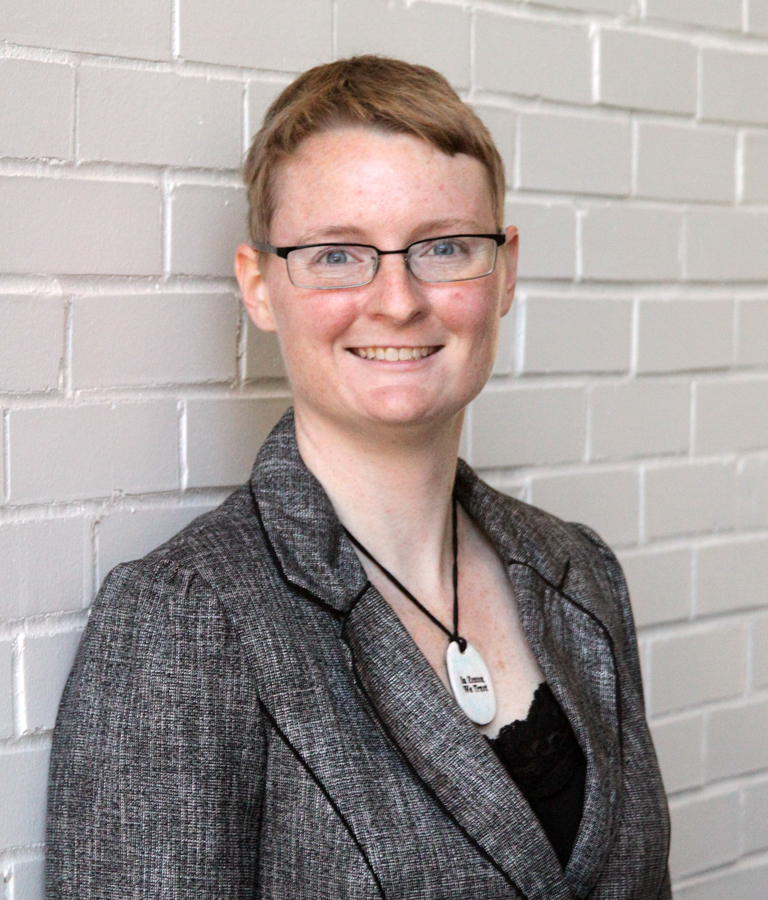
Lyz.  Photo by SSA.
Lyz. Photo by SSA.

The last woman I have in mind is Lyz Liddell.

Lyz is the Director of Campus Organizing for the Secular Student Alliance.  I have an interview I did with her a while back, on this very blog!  Besides running around with her headset on, standing on chairs for announcements, and generally keeping the world of SSA from not crumbling into oblivion, Lyz is a great motivation and example.  If you are ever interested in starting a SSA group on your campus, talk to her.

To all those who attended this years SSA West, or who are involved with helping secular students: Unite!

Kile Jones holds a Bachelors of Theology (B.Th.) from Faith Seminary, a Masters of Theological Studies (M.T.S.) and a Masters of Sacred Theology (S.T.M.) from Boston University, and is a current Ph.D. in Religion student at Claremont Lincoln University.  He also holds a Certificate in Science and Religion from the Boston Theological Institute.  Mr. Jones has been published in Zygon: Journal of Religion and Science, Philosophy Now, Free Inquiry, World Futures, Human Affairs, and the Secular Web.  He is the Founder/Editor-in-Chief of Claremont Journal of Religion (www.claremontjournal.com), and is the Founder/Director of Interview an Atheist at Church Day (interviewatheists.wordpress.com).

Mid-Life Genesis by Natalie Weaver

Natalie Weaver

My mother-in-law, quoting her mother, has often said, “a woman who tells her age will tell you anything.”  I think the “anything” here she is referring to is sexual disclosure.  She may be correct because I am not above or below talking about that, but that is not what I am talking about today.  Today, I am talking about age, since I am on the cusp of my fortieth birthday.

Still two months out, I am surprised that this birthday registers for me as much as it does.  The experience has caused me to plumb my mind in search for vanities that I had not previously noticed.  In the depths as on the surface, I have observed, for example, subtle changes in my skin and muscle tone.   I will catch a glimpse of my profile and see my mother or my sister, occasionally even one of my grandmothers.  My feet look a little, well, bonier somehow.  I had to buy glasses recently.  However, when I go spelunking, it is not really these things that trouble me.  I actually like myself more as an adult than I did as a child or very young woman.  I developed a wonderful sense of my body’s strength when I bore and nursed children as well as a compassion for its limitations when I had surgery.  I seem more suited to my own flesh these days, and sometimes I actually feel sorry for my younger self who did not know how to appreciate herself.  In twilight moments, I occasionally drift backward mentally to a previous iteration just to offer her a little affirmation.  It is not really the getting older that I find myself snagging upon nor (and I think I am being honest here) the loss of youth per se.  What is it then? Continue reading “Mid-Life Genesis by Natalie Weaver”