Sleeping: Thinking about Bodily Practices, Pt. 2 by Elise M. Edwards

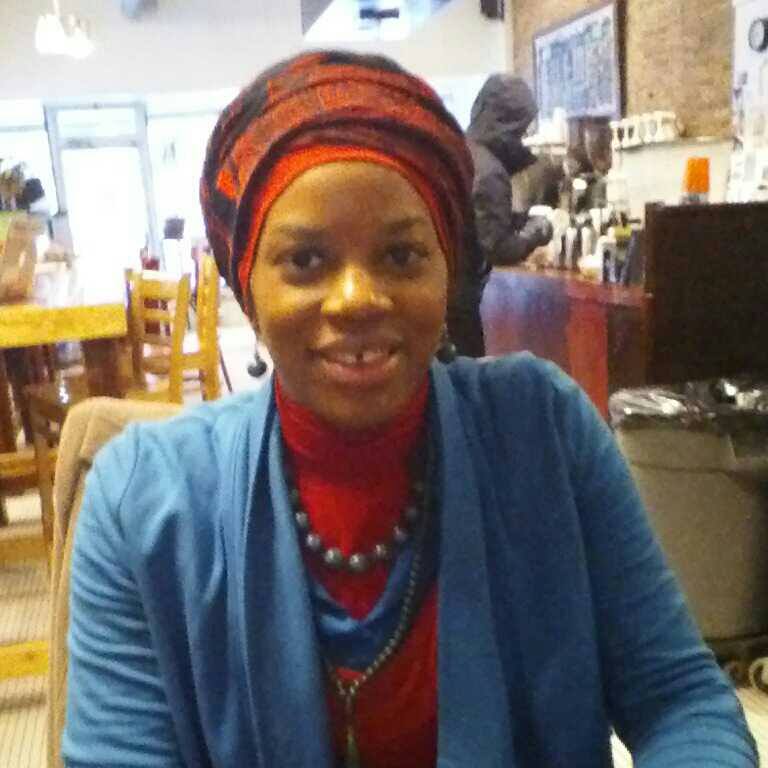
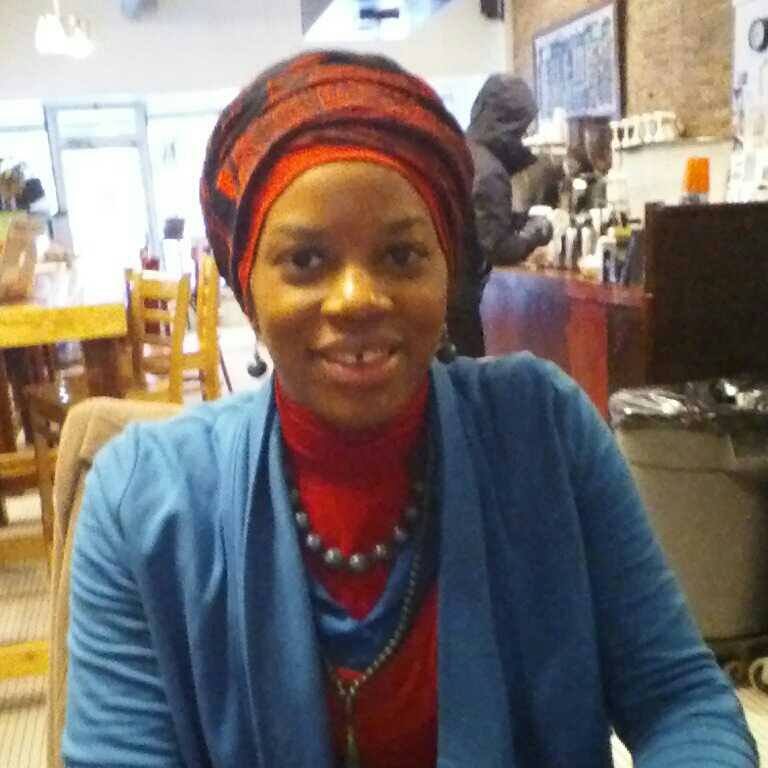
Elise EdwardsAs I mentioned in my previous post, I’ve been reflecting on bodily practices–especially those that are not typically associated with feminism and religion. Our lives as embodied persons are so multi-dimensional! There is so much we perceive and experience through our senses, through our movements, and through the places we locate ourselves. So I have decided to use this blog to think through some ideas and learn from you in this community of readers, contributors, and commenters. Over the next few months, I will continue to discuss the ways I am becoming more intentional about connecting habits surrounding the body to feminist and religious concerns. Once again, I’ve glossed on only a few of the many connections we could make about women, religion, and bodily practices. Today I write about sleep. I would love to hear your thoughts in the comments below.

Do feminism and religion have anything to do with sleep?

Sleeping is as vital to human survival as food and water. But lamentably, getting the proper amounts of sleep is not one of those healthy goals that is fiercely defended. It is much more common to hear someone brag about how productive she can be on a few hours of sleep than to boast about her productivity after a full night’s rest. I have to admit, I am always a little suspicious of those people who proudly proclaim they only need 4 or 5 hours of sleep, and I’m a little antagonistic to those who want to recruit the rest of us into their sleepless world: “There is so much else you could be doing with your time than sleeping!” They say, “I’ll sleep when I’m dead!” I have even heard “Sleep kills dreams!” Um, actually, dreams come when you sleep. Sleep breeds dreams, you could say. More on that below.

As you might be able to tell, I am the type of woman who loves sleep. I love climbing into my bed at night. I enjoy the feeling of waking up with a rested body and a renewed spirit and a groggy-but-fresh mind. I especially love naps for that reason. The most enjoyable and perhaps “productive” seasons of my life have been those when I could take a nap after class, after work, or after the gym.

Sleep is vital because it allows the body to rest. In the Christian tradition, we claim that rest is part of the creation of the world. That God marveled at the wonderful world God created, and when the work was done, God rested. This rest inspires the Sabbath. Sabbath is a day set aside for rest, worship, and contemplation of the holy. It is regrettably observed less and less in contemporary American Christianity. Since we have let go of the need for the Sabbath, it certainly no surprise we have also lost sight of the importance of daily rest, too.

Although my thoughts are little uncharitable towards those who preach the gospel of little sleep, I am very sympathetic to those who feel they do not have enough time to sleep. To those who feel like sleep is a luxury they cannot afford. Certainly many women tasked with numerous responsibilities often feel this frustration. They make do with less sleep because they have to complete more tasks in their waking hours. Yet it has been my experience that even those who are overworked and overscheduled appreciate the uncommon times when they can sleep a little longer than usual.

For me, times of sleep are very much connected to gratitude. In the past year or so, I have retrieved the practice of nightly prayer, which sadly got left behind in my childhood years. In all honesty, it was not a renewal of spiritual piety that led me to resume these bedtime prayers. It was insomnia. As much as I love sleep, I am often kept from it by anxieties and thoughts of the coming day. I started using bedtime prayers as a way of turning my cares over to God. These silent prayers become conversations about what is important to me and what concerns me. I talk to God about what I am grateful for. I talk to God about my family and my friends, about their lives and concerns that weigh on me. And then I let it go–at least for the night–and trust my soul to the divine power who cares for me while I sleep.

These nightly prayers have not only promoted peaceful sleep (for most nights, at least) but also the experience of vivid dreams. Dreams, like other visions, are honored in many religions as a place where the divine communicates with humanity. But this too, seems absent from contemporary American Christianity. Perhaps it is because dreams are associated with the intuitive senses, and therefore the feminine, that they are overlooked. Dreams are less clear and presumably more open to speculative interpretations than the texts we read during the day. I cannot say whether I meet God or whether I meet my deeper self in dreams, but I do know I am connected to powerful ways of being in my sleep, and that this is important for my spiritual life.

My final reflection about sleep is an acknowledgment that we often do not sleep alone. While sleep itself takes us to a solitary place, we often share our beds with lovers, children, and other family members and friends. Like those bedtime prayers, the words we speak under the covers in those moments before sleep connect us to our bed-mates. Whether they are ghost stories or secrets or incoherent ramblings about the day to come, these nighttime words prepare our minds for the sleep that will soon overtake us. Unless, of course, we are next to someone who snores or kicks.

Elise M. Edwards, PhD is a Lecturer in Christian Ethics at Baylor University and a graduate of Claremont Graduate University. She is also a registered architect in the State of Florida. Her interdisciplinary work examines issues of civic engagement and how beliefs and commitments are expressed publicly. As a black feminist, she primarily focuses on cultural expressions by, for, and about women and marginalized communities. Follow her on twitter, google+ or academia.edu.
Women at the Secular Student Alliance Conference by Kile Jones

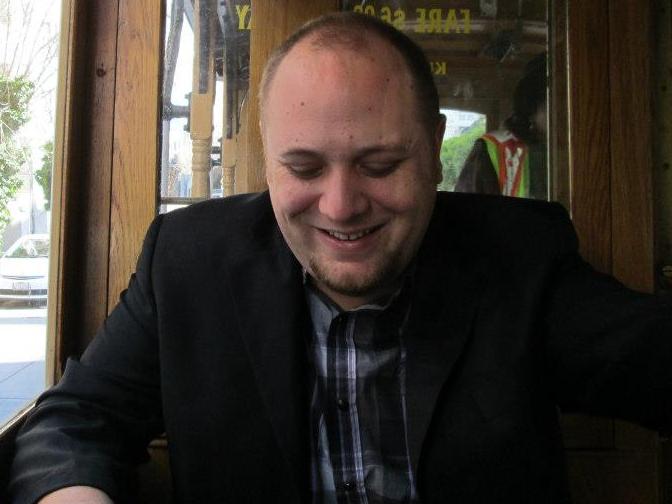
KileA few days ago I had the pleasure of giving a talk at the Secular Student Alliance Conference on how non-believing persons can work with Churches.  Amidst the chaos of conferences–managing your time, deciding which talks to attend, and making sure you have enough water (it was a Burning Ring of Fire outside in Tempe, AZ)–I got to meet some pretty incredible secular women.

One of them was Heina Dadabhoy.

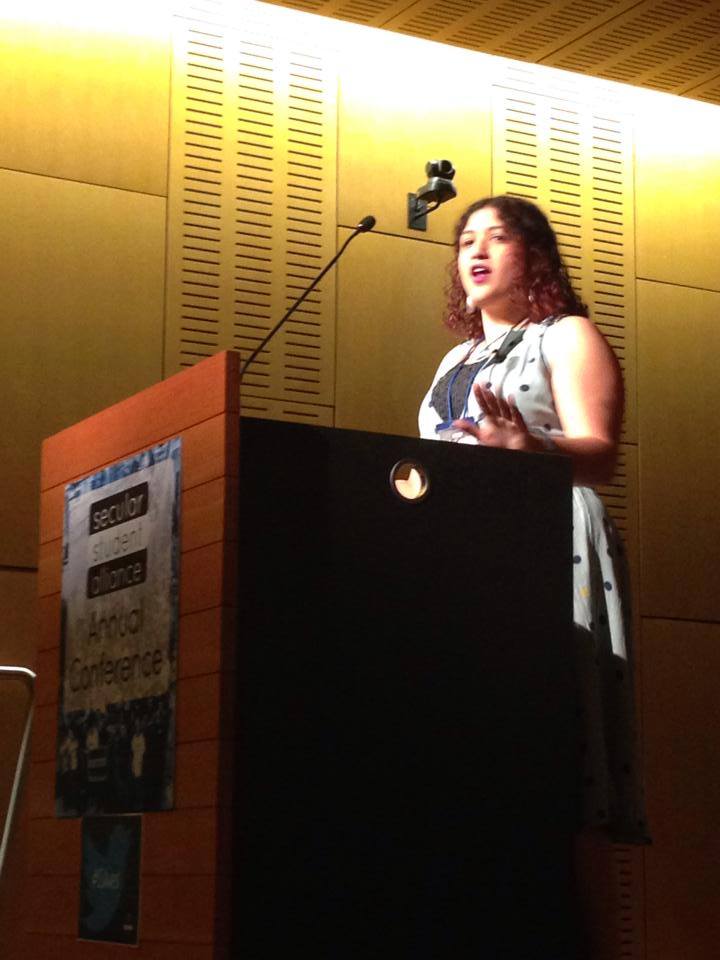
Heina speaking at SSA
Heina speaking at SSA.

Former Muslim, blogger at Freethought Blogs, and overall bad-ass, Heina spoke about ways in which secular groups can create a more welcoming environment for ex-Muslims and Muslims beginning to doubt.  Her talk, “Of Murtids and Muslims,” (a “murtid” is a public apostate) was not only about her experiences coming out as a secular humanist, but considered some of the absurd questions people ask her (and other ex-Muslims) about leaving Islam.  “So did your parents try to honor kill you?”  “Have you gone through FGM?”  It was disturbingly humorous.

What I considered to be Heina’s main point, was that we should respect each others’ individual differences and not generalize and caricature all Muslims with the depictions of some.  “Just because you read Ayaan Hirsi Ali’s book,” Heina notes, “does not make you an expert on Islam.”  Heina made sure to emphasize the radical diversity that exists in Islam.  She also spoke of the some of the issues that people go through when they leave Islam: How do I create a new identity when my old one was intricately tied up in my Muslim community, family, and culture?  How do I navigate popular culture when I have missed a bunch of it?  How do I find myself in this new secular world?  Heina’s answers were refreshingly honest and insightful.

P.S. Aisha (one of Muhammed’s wives) should not simply be reduced to the young person Muhammed married; she was also a war leader, influential Muslim thinker, and someone who contributed greatly to early Islam.  This is, of course, Heina’s insight.

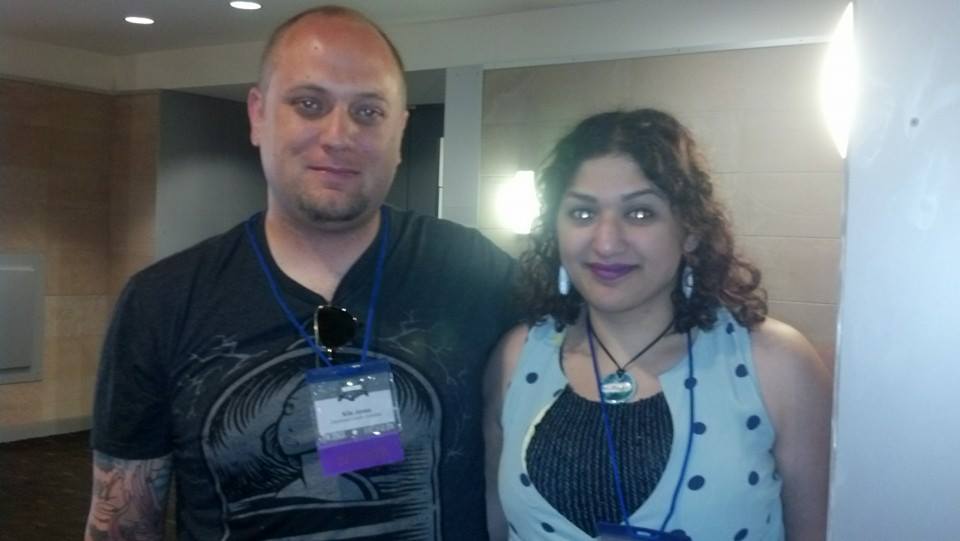
Me and Heina at SSA
Me and Heina at SSA

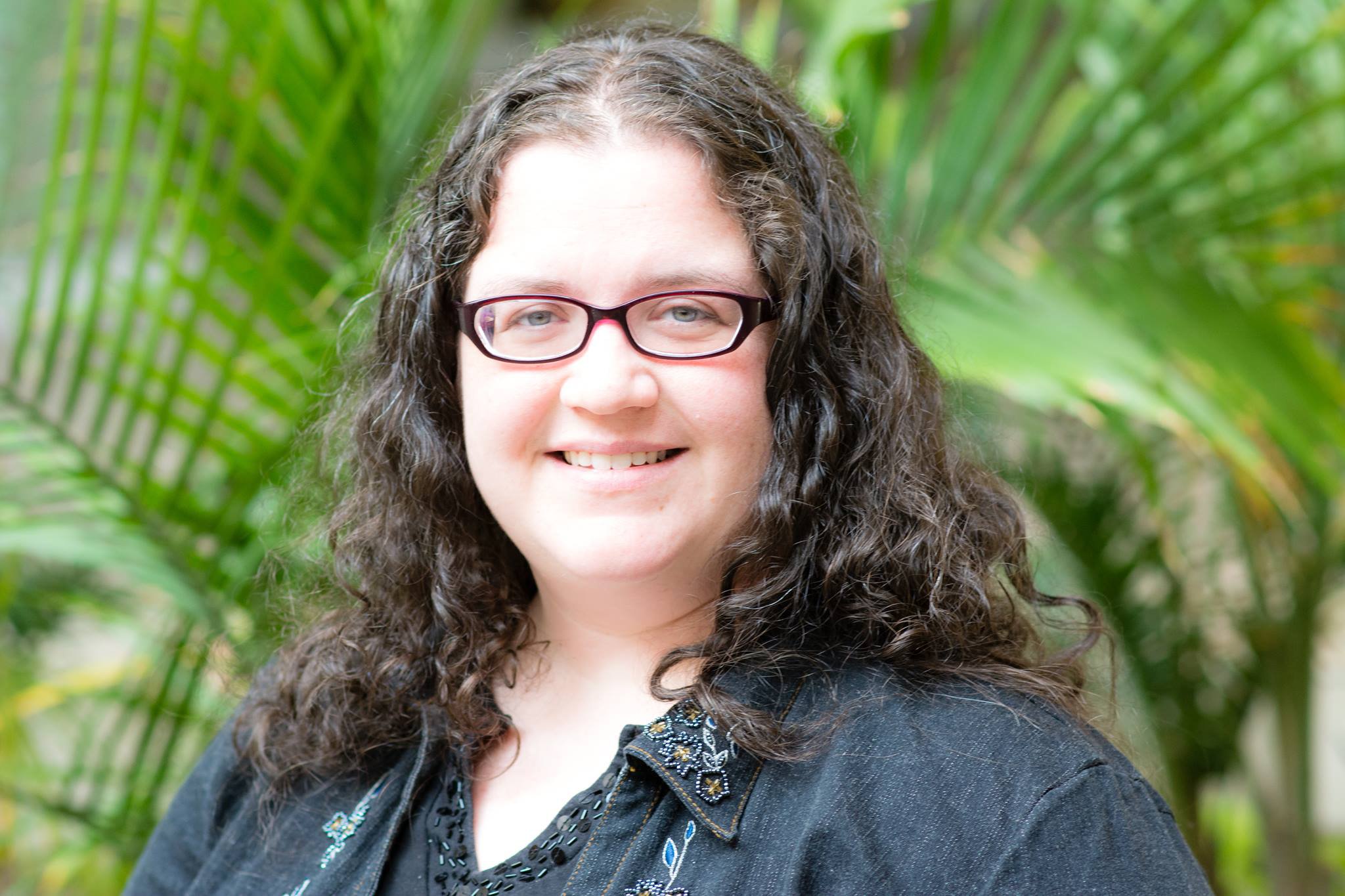
Another awesome secular woman I met, was Sarah Morehead.

Sarah. Photo from Apostacon.

Sarah is a former evangelical Southern Baptist, Executive Director of the “Recovering From Religion” project, and another overall bad-ass.  She spoke on how to start up a Recovering From Religion group on your campus.  Here is a blurb about Recovering From Religion,

“If you are one of the many people who have determined that religion no longer has a place in their life, but are still dealing with the after-effects in some way or another, Recovering From Religion (RR) may be just the right spot for you. Many people come to a point that they no longer accept the supernatural explanations for the world around them, or they realize just how much conflict religious belief creates. It can be difficult to leave religion because family and culture put so much pressure on us to stay and pretend to believe the unbelievable. If this is you, we want to help you find your way out. Don’t let people convince you that you just didn’t have ‘enough’ faith, or that you just haven’t found the “right” religion.”

Sarah and I chatted (and often laughed) about our old experiences as conservative Christians.  We discussed some of the funny language (Christian-eze) we used to use, the various levels of guilt and shame that were cast upon us, and how science helps explain some of the interesting displays of piety often seen at Pentecostal services.  Sarah’s jovial and welcoming demeanor was calming, and as an Executive Director for a project aimed at helping people “recover” from religion, I cannot think of a better person for the job.

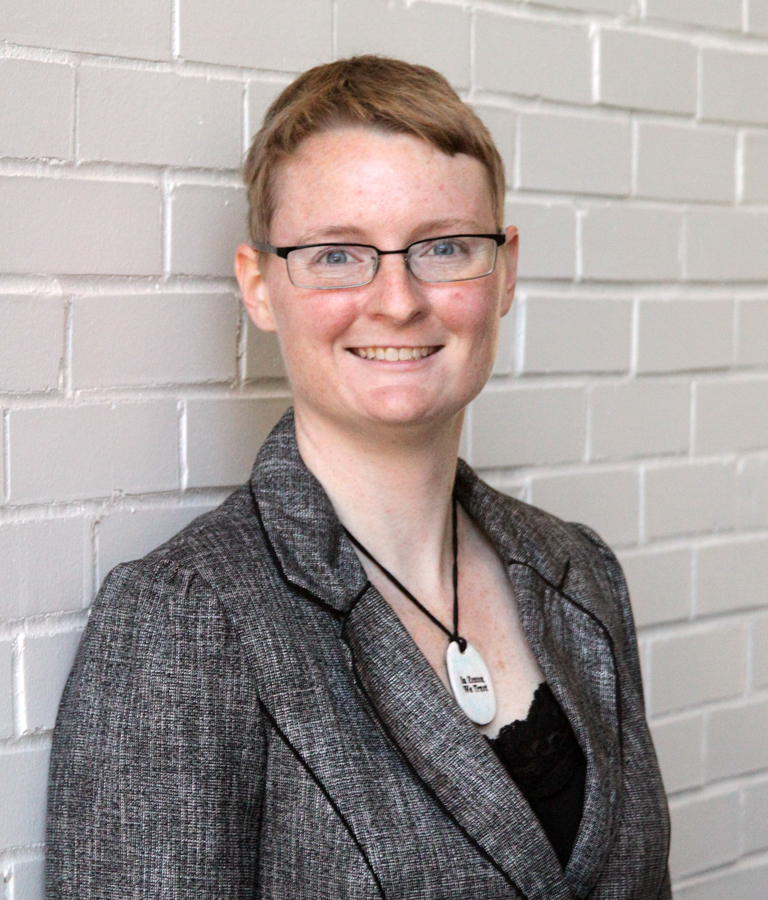
Lyz.  Photo by SSA.
Lyz. Photo by SSA.

The last woman I have in mind is Lyz Liddell.

Lyz is the Director of Campus Organizing for the Secular Student Alliance.  I have an interview I did with her a while back, on this very blog!  Besides running around with her headset on, standing on chairs for announcements, and generally keeping the world of SSA from not crumbling into oblivion, Lyz is a great motivation and example.  If you are ever interested in starting a SSA group on your campus, talk to her.

To all those who attended this years SSA West, or who are involved with helping secular students: Unite!

Kile Jones holds a Bachelors of Theology (B.Th.) from Faith Seminary, a Masters of Theological Studies (M.T.S.) and a Masters of Sacred Theology (S.T.M.) from Boston University, and is a current Ph.D. in Religion student at Claremont Lincoln University.  He also holds a Certificate in Science and Religion from the Boston Theological Institute.  Mr. Jones has been published in Zygon: Journal of Religion and Science, Philosophy Now, Free Inquiry, World Futures, Human Affairs, and the Secular Web.  He is the Founder/Editor-in-Chief of Claremont Journal of Religion (www.claremontjournal.com), and is the Founder/Director of Interview an Atheist at Church Day (interviewatheists.wordpress.com).

Mid-Life Genesis by Natalie Weaver

Natalie Weaver

My mother-in-law, quoting her mother, has often said, “a woman who tells her age will tell you anything.”  I think the “anything” here she is referring to is sexual disclosure.  She may be correct because I am not above or below talking about that, but that is not what I am talking about today.  Today, I am talking about age, since I am on the cusp of my fortieth birthday.

Still two months out, I am surprised that this birthday registers for me as much as it does.  The experience has caused me to plumb my mind in search for vanities that I had not previously noticed.  In the depths as on the surface, I have observed, for example, subtle changes in my skin and muscle tone.   I will catch a glimpse of my profile and see my mother or my sister, occasionally even one of my grandmothers.  My feet look a little, well, bonier somehow.  I had to buy glasses recently.  However, when I go spelunking, it is not really these things that trouble me.  I actually like myself more as an adult than I did as a child or very young woman.  I developed a wonderful sense of my body’s strength when I bore and nursed children as well as a compassion for its limitations when I had surgery.  I seem more suited to my own flesh these days, and sometimes I actually feel sorry for my younger self who did not know how to appreciate herself.  In twilight moments, I occasionally drift backward mentally to a previous iteration just to offer her a little affirmation.  It is not really the getting older that I find myself snagging upon nor (and I think I am being honest here) the loss of youth per se.  What is it then? Continue reading “Mid-Life Genesis by Natalie Weaver”

Enlivened Truth by Safa Plenty

aqua and red


My joy is rebellion, and so is my passion,
my excitement, and even my sexuality,
but only here where truth is kept secret.

Where joy exploding in my vocal cords
and coursing through my limbs is
silenced or censored looked upon as foreign
in this house haunted by sad spirits.


Where my passion rising above the lull
of everyday existence, more in tune with
childlike exuberance is drowned out by
the endless buzz of television noise.

Where my excitement for learning is
relegated to four walls of my blue bedroom,
and conversation and connection propels
me from our first floor to my sister’s
basement apartment.

Where my sexuality is cloistered inciting
fear that even its refined expression would
lead to some mythical disaster in which
men would prey on my delicate femininity.

Where my mind has constricted from being,
asked why I can’t force myself to be satisfied
with a linear spiritual existence or someone’s else
fears and expectations for my life.

My joy is rebellion, and so is my passion,
my excitement, and even my sexuality,
but with love as my fuel, I will be
a rebel with a cause and that cause
will be enlivened truth.

Safa N. Plenty ©2014


Postlude:
As an American Muslim women of African Caribbean, Native American, and European decent, this poem is a reflection on the remnants of both historical trauma and being partially raised in an ultra-conservative community . An experience I am still continuing to heal from. In essence, this is a deeply personal and poetic reflection on my own experience of how intergenerational trauma is often compounded by the practice of literalist interpretations of religion, particularly in my case, Islam. I am continuing a ten year journey in rediscovering my true cultural and spiritual heritage that had been partly denied me.  In writing this piece, I hoped to gain clarity on my path to heal and becoming a healer through a more fluid engagement with my own faith, while learning and benefiting from other faith traditions. Through a full engagement with  Sufism, an integral part of Islam’s sacred tradition, also known as the science of purification (Ihsan), I hope to continue on my journey of spiritual renewal and healing and to aid the world in healing from the fear and numbness that plagues us as moderns.

Safa N. Plenty is an educator and mental health counselor, who will be pursuing a Ph.D at Claremont Lincoln School of Theology with a focus in spiritual formation and peacebuilding.  She holds a Masters of Social Work from Columbia University and an undergraduate degree in interdisciplinary studies with a minor in Africana Studies. For the past two years, she has worked as a K-12 educational contractor and assistant counselor at a local community college. Her research interest include Sufism, Attachment to God, indigenous cosmology, particularly Native American and Somatic psychology. She is also interested in religious mysticism, mindfulness practice in Buddhism and the role of feminism and religion in cultivating a peacebuilding capacity among young Muslim women. She is currently working to develop a faith based healthy relationships program for Mothers and daughters. She enjoys writing poetry, research, and contemplative practice in art.


Book Review: Hild & The Patron Saint of Ugly by Mary Sharratt

OLYMPUS DIGITAL CAMERA

Literature touches our spirit in a way that film, television, and even art cannot. Instead of presenting the passive viewer with a visual image, good writing demands our participation and co-creation. The words become the springboard for our own imagined vision of other worlds and other lives. In this imagined space, we can experience profound insights and revelations–soul-growing experiences we carry with us forever.

Books that try too hard to be spiritual can have the opposite effect. Discerning women demand books that respect us instead of preaching to us. Too often religion has been interpreted by and for men, but when women writers reveal their spiritual truths, a whole other landscape emerges, one we haven’t seen enough of.

Marie Manilla’s The Patron Saint of Ugly (Houghton Mifflin Harcourt, June 17, 2014) and Nicola Griffith’s Hild (Farrar, Straus and Giroux 2013) are two such transporting novels. They both draw on the lives of female saints in fresh and evocative ways.

Continue reading “Book Review: Hild & The Patron Saint of Ugly by Mary Sharratt”

Love Facing by Safa Plenty

aqua and red

This piece titled, ‘Love Facing’ is a meditation on the intergenerational dynamics of family violence and our need to move beyond labels in order to understand the complexities of American violence. It begins with a narrative critic of spanking as a corrective measure and its propensity to escalate into other forms of violence. The poem continues with reflection on how male privilege and power impact the disempowerment of women and girls. It signals forgiveness as a possible means of understanding intergenerational trauma and stress, however.  The piece advocates an understanding of male privilege and dynamics of power and control, as a means of empowering women and children, affected by family violence. Furthermore, it examines our societies failure to raise healthy men and boys, who are comfortable openly expressing their emotions. In the end, the poem signals our human need for unconditional love, respect, and honor and need for religious and spiritual practice imbued with compassion, mercy, and kindness, or feminine attributes of the Divine.

“When the power of love overcomes the love of power, the world will know peace.” ― Jimi Hendrix

Continue reading “Love Facing by Safa Plenty”

Monkey See…by amina wadud

amina 2014 - cropped

When I was a little girl the Washington D.C. Zoo did not have that extra security fence between gawking spectators and the cages of certain animals.  My mother used to climb up onto the cage and hand peanuts to the monkeys.  I don’t know, maybe that was the beginning of my lifelong love of monkeys.  When I moved to Malaysia as Assistant Professor at the International Islamic University I was driving down a main roadway and along the side of the road I saw a monkey scurrying along much like we see squirrels in the US.  A new phase in my life began.  How many ways to repeat my mother’s antics?  Could I possibly top that? This introduction might seem silly but I just have to share one of the most sublime experiences of my life and for that I need to give you a feeling for just how much I love monkeys.

When monkeys are in the wild they are not always amenable to such antics as we humans can do or imagine.  I think that’s probably part of survival, don’t you?  Anyway, in Malaysia, even though they were as plentiful as squirrels and just as accessible, like squirrels they are not at our beck and call either.  We were pretty much limited to the evenings at a local park when they would come down from the trees and let us feed them. Like children do with Canadian geese at Merritt Lake Park here in Oakland, or any where they roam.  Once we climbed up more than 1000 stair-steps to the top of the Batu Caves a Hindu temple and tourist spot, to see the sights and feed the monkeys.  That time one wily monkey snatched the whole bag of food from my daughter’s hand while she wasn’t looking and that was the end of it.  No way to go back to the car and run back with more!  Continue reading “Monkey See…by amina wadud”

Whose Sharia Is It? by Kecia Ali

dissertation, Advising, feminism and religionIt has been a lousy month for Islamic law.

First, there was the kidnapping and threatened sale of Nigerian girls by Boko Haram, which claimed religious acceptability for their acts. As Muslim theologian Jerusha Lamptey opined, this is not my sharia.

Then, the Sultan of Brunei’s horrific new penal code came into effect. Unlike the Nigerian girls, where a social media campaign garnered White House attention, the Brunei law gained visibility because the Sultan–who is dictating law that his track record suggests he does not observe–indirectly owns the famous Beverly Hills Hotel. Hollywood figures have objected to the rules, due to come into effect next year, which would punish proven male-male anal sex with death. (As far as I know, the code does not prescribe any particular punishment for lesbian acts, though the rhetoric has become that the new law prescribes “stoning gays and lesbians.”)

Claims like that of the Sultan or Boko Haram that “Islam” demands implementation of “sharia” ignore the complex reality in which there is not now nor has there ever been a uniform set of identifiable rules that Muslim scholars have agreed on much less that governments in Muslim majority countries have implemented over the centuries. As I wrote elsewhere, so-called sharia laws on the books in Brunei, Nigeria, Pakistan, Iran, Saudi Arabia, or Morocco are not directly revealed by God. They are human products with human histories negotiated in human contexts. The pretense that these laws are straightforward implementations of God’s will not only serves to justify these otherwise unjustifiable rules but also feeds the demonization and dehumanization of Muslims. Though happening on two continents and perpetrated by two quite distinct sorts of actors – a multibillionaire monarch enmeshed in global capitalism and a militant anti-Western, anti-government insurgency – the Nigerian kidnapping and the Brunei law became exhibits A and B for the vilification of sharia. Continue reading “Whose Sharia Is It? by Kecia Ali”

Songs for the Soul by Elise M. Edwards

Elise EdwardsDuring the Christian season of Lent, many Christians focus on spiritual practices or disciplines that bring them closer to God. This year, I did not really engage in this type of reflection until the end of Lent. I have been wrapping up my first year teaching college students full-time, I’ve been focused on several writing projects, and I’ve been traveling. I did not intentionally think about spiritual practices until I participated in a silent retreat before Holy Week and traveled first to spend the holiday with my family and then again to mourn and remember the life of my aunt.  I reflected on them when I most needed them.

Continue reading “Songs for the Soul by Elise M. Edwards”

A Family Conceived, Lost, and Resurrected by Gina Messina-Dysert

Gina and SarahGood Friday marks the second anniversary of one of the most significant dates in my life – the adoption of my daughter, Baby S – who by the way is no longer a baby (she will be turning 5 this May).  On Easter Sunday, 2012 I wrote about the resurrection of my family.  In the last few years that I have been blogging, this is by far my favorite post and I have been so grateful for the many wonderful responses I have received from it.  With today being Good Friday, it seems an appropriate time to revisit this incredible experience and once again, give thanks for the blessings in my life.  Continue reading “A Family Conceived, Lost, and Resurrected by Gina Messina-Dysert”