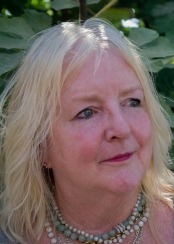
Sometimes You Can Go Home Again. . . Because I Did by Elisabeth Schilling

I am tired and a bit emotionally exhausted, yet hopeful and in calm spirits as I have returned from my 8 months of traveling through Europe. I left in a rather dramatic impulsivity with little planning other than to leave the States for as long as I could and focus on writing poetry. I suppose I wanted to stay indefinitely, but now I realize that there are good and bad elements to everywhere.

In Basque Country, the beaches were beautiful but you might have to sunbathe in clouds of burning cigarette smoke because everyone seems to be lighting up everywhere you go. In Sicily, the history and fashion and food are intoxicating, but a lot of the buildings are crumbling and the landscape is parched in many places. In Ireland, it is green and lush, every corner a fairytale, but in the town centers, the air in winter is suffocating with the smoke of coal burning in houses as if it were London in the 1800s so much that I mostly refused to walk outside where I stayed. Continue reading “Sometimes You Can Go Home Again. . . Because I Did by Elisabeth Schilling”

I Shall Make Prayer of It by Natalie Weaver


This is a poem I published almost ten years ago. It is as if I wrote it yesterday.  The image is more or less of the same sentiment as the poem.

I publish these again here in memory of my father.


~~~~

I am always cleaning
though not fast enough
to really organize
what I cannot put away.
It is messy in closets
that cover the appearance of order.
I am still sitting on wool carpet watching

The dusts dance in little beams of hope.
The same ones that lighted by wonder
in warmth and youth a beauty made
of windows and particles.
Probably the same ones that caused dirt and flu.
But what matter is it in the world that is merely
the simultaneity of being in which at once
the limos and the hearses depart for the church. Continue reading “I Shall Make Prayer of It by Natalie Weaver”

Eve is the Hero of the Garden of Eden, Part 2 by Janet Maika’i Rudolph

The serpent in the Bible is treated as Eve’s partner in crime, a malevolent seducer who is responsible for humankind’s expulsion from paradise. But did you know there are serpents who figure positively in the Bible? There are serpent priests, a feathered serpent and a healing serpent. Check out this passage:

Be ye therefore wise as serpents

Matthew 10:16

Levites were serpent priests as evidenced by the etymology of their name. The root word levi is seen in the name of the creature “leviathan,” the giant serpent. This is reminiscent of the Pythia, the oracle from Delphi whose title is derived from the root word python.

The feathered serpent referenced in Isaiah 30:6 is a seraph, usually translated as a “fiery flying serpent.”

Continue reading “Eve is the Hero of the Garden of Eden, Part 2 by Janet Maika’i Rudolph”

Longing to Heal Family in our Differences and Distances by Elisabeth Schilling

I can’t even save myself. I make bad decisions just like the ones in the world – bombs and wars and the industrial revolution with chains of greed. But then I go on and, without even knowing any part of the story, want to save others. Carol Christ’s post yesterday on family brought me to tears and I instantly had to write a poem. First, it made me think of the memory of my own mother telling me to wait for my dad to get a belt and him saying it will hurt him more than it does me.

Except when I told my mom this, she said it never happened, so I don’t understand the vivid visions in my head that I have being little and hearing the words and being afraid, and why the sight of men’s work belts make me nauseous. I believe my mother. It doesn’t matter either way, I guess, now, in my opinion about my own experience. What I mean by that is I don’t want to do the work of being suspicious or thinking about what is at stake at the moment. I’m okay with shelving it. Let’s just say I believe and don’t feel like trying to explain those visions. I suppose everyone will have an opinion about my decision and perspective on this. Feel free to voice it if it makes you feel better. Continue reading “Longing to Heal Family in our Differences and Distances by Elisabeth Schilling”

Emotional Labor, Elastigirl, & Me by Kay Bee

Last year, I turned 40 and started grad school while working part time at the public library as the Children’s Services Manager, living in a cohousing community, volunteering with my Sisterhood, and raising three teenagers. I’m between semesters at the moment and I’ve had a chance to do some reading by choice instead of reading by syllabus. One of the titles I picked up during this semester break was Fed Up: Emotional Labor, Women, and the Way Forward by Gemma Hartley.

I’ve also had the chance to curl up with my family and watch a few movies. In addition to our epic Marvel chronology review project, we decided to snag the library’s copy of Incredibles 2 (2018) for family movie night. Despite the fact that the original movie released when our eldest child was only a year old, my teenagers have always been fans of Baby Jack-Jack and were excited to see this sequel fourteen years in the making.

I was about halfway through Hartley’s book when we sat down to watch the Parr family pick up right where they left off at the end of The Incredibles (2004). And less than a quarter of the way through the film when Fed Up and Incredibles 2 collided spectacularly inside my head. I spent the rest of the film thinking about emotional labor, parenting, and midlife career change. Continue reading “Emotional Labor, Elastigirl, & Me by Kay Bee”

Mantra and Meditation in Buddhist Hospice Chaplaincy to Alleviate Anxiety by Karen Nelson Villanueva

Karen Nelson Villanueva has recently successfully defended her doctoral dissertation, “Invoking the Blessings of the Tibetan Buddhist Goddess Tara Through Chanting Her Mantra to Overcome Fear,”

Mantras are not just the prescribed sound formulas or sentences found in Eastern religions, but they can also be thought of as the words or phrases that we continually repeat to ourselves. The word mantra comes from Sanskrit and its roots are manas-, meaning “mind,” and -tras, which can be translated as “tool.” Thus, mantra is a tool to protect the mind.

How often do we engage in negative self-talk like “It’s my fault” or “I’m to blame for what’s happened to me” or “No one loves me”? These expressions can become mantras, as we believe their messages from constant repetition. In hospice and hospital settings, one often finds patients who have convinced themselves that “This is God’s punishment” or “Everyone has forgotten me” or “I’m so scared.” These phrases, rather than protect the mind, become what is believed by the mind and may lead to increased anxiety, stress, and depression, and consequently the need for spiritual and emotional support.

Chaplains, as members of the care team in hospice and hospitals, provide spiritual and emotional support to patients and their families. Most often, chaplains attentively listen to patients and their caregivers (often family members) about the patients’ life story, their relationships, their dreams unfulfilled, and their wishes for those whom they are leaving behind. Chaplains take part in family meetings where decisions are made about patients’ care, sometimes interjecting to ask for clarification of medical terms and to ensure that the family understands. Sometimes, the chaplain will lead prayer with the patients and their families, and at other times, the chaplain will pull other tools from her toolbox such as mantra meditation.

Continue reading “Mantra and Meditation in Buddhist Hospice Chaplaincy to Alleviate Anxiety by Karen Nelson Villanueva”

Eulogy for My Father by Natalie Weaver

Fourteen years ago, I was pregnant with William Valentine.  I had no idea what to expect.  I knew only that I was in a body, and it was pregnant.  Things happened to me, to my body, that seemed extrinsic to my person, so much so that for most of those forty weeks, I felt as though the doctor’s office was having the baby, and I was a mere observer.  But, when the time came to deliver the baby, I realized it was my body that was trying to make passage for another’s.  The particularities of myself and the baby’s self seemed to fade away into something more vital and primordial in the process of the transmission of life.  After a safe delivery, I felt a deep and curious gratitude that was beyond the gratitude I had for my child or for our health.  This strange gratitude was born of the passage I had been so fortunate to experience, that is, this novel yet ancient, essential yet unparalleled dimension of human being-ness.  I had given live birth, and I was grateful to know what that was like.  In that experience, I was more connected to my human brothers and sisters than I had ever been before, including to this new baby, who I knew in my deepest self was more fundamentally a brother human than even he was my own child.  I knew that in this transmission, I had helped a fellow traveler, and that transmitting life was simple even while it was giant in scope.  The experience was and would always be about walking with each other, from the cradle to the grave, in our vulnerability, in our fragility, in our humility, and in that walk, to find our strength, our dignity, and our luminescence, as persons, as creatures that think and speak and love.  To have been a party to another’s coming to be, this was an occasion of the greatest gratitude I had known.

In accompanying my father in this final stage of his life during these challenging and difficult months as he journeyed toward his death, I felt that same vital and primordial passage of being that I had in giving birth.  While it was not my body that this time labored and worked, I was party to his experience.  I witnessed his courage and another kind of transmission of life.  For, I saw a man go from self-concern to other-concern; from hope of getting well to hope to of making things better for others; I witnessed a man move from verbal complaint to silent focus; and I heard his relocation of worry for himself to concern for me because he knew I was hurting as I was watching him, mostly powerless to do anything but sit next to him. I saw a man graduate from a regular man to an elder and then to naked spirt in God’s care, and I was honored to be one of his midwives on that journey.  In his final hours, he became full of grace, and he fulfilled the trajectory of becoming the father and man he always intended to be.  It was an honor to behold, and I am grateful.

Continue reading “Eulogy for My Father by Natalie Weaver”

Christmastime for the Self by John Erickson

We’ve all been there.

Sitting around the tree watching the kids open presents.  Attempting to enjoy a holiday meal with extended and immediate family that you may or may not have traveled thousands of miles to see.  Trying with every fiber of your being to not talk about the elephant, or red hat, in the room.

We’ve all been there.
Sitting around the tree watching the kids open presents.  Attempting to enjoy a holiday meal with extended and immediate family that you may or may not have traveled thousands of miles to see.  Trying with every fiber of your being to not talk about the elephant, or red hat, in the room.

Alyssa Edwards

I get it.  It is hard to not go home for the holidays. It’s also hard to sit at home and watch every one of your friends post online about their dinners, get-togethers, and other joyous events while you sit at home.  I also understand that many of us, as a result of our sexual and/or gender identity, or maybe our political preference, don’t feel comfortable going home or, can’t go home.  This is not ok and that is why it is so important that we all have our chosen families to be with during these times of communal gathering or more importantly, ways to cope while we are at home in these uncomfortable situations to make sure we take care of ourselves and make it out the other end.
Because this blog comes out on Christmas Day, I wanted to give you a few tips that I do to self-care in these situations.  Remember, there is no right or wrong thing to do.  I encourage you all to make your own list.  The only thing that matters is you take care of yourself!
John’s Top 5 Tips for Dealing with “Those” People
  1. Your car is your friend – Seriously, I cannot count the # of times that I have found myself driving around for that extra 5 minutes to just collect my thoughts or calm myself down.  If you need to, jump out to your car and sit back and relax for a second or drive to a gas station (Kwik Trip in Wisconsin is my go-to) and pick up a soda to drink.
  2. Drink (if you can)  – look, I know not everyone drinks (or is from Wisconsin) but sometimes you just need to make yourself a cocktail (responsibly).  However, if you are going to drink, remember that old adage: loose lips sink ships.  If you get too loose, you may say something you regret (or didn’t plan on saying; I’ve been there).
  3. Bathroom Sanctuary – Sometimes you may not need to use the restroom but you need a place to go and just lock the door, check Facebook, call a friend, or simply breath.  The bathroom is the perfect place to do that.  Find it.  Use it (even if you don’t have to).
  4. Dinner Conversation – Before I go anywhere, I always brush up on a few facts.  How are the Packers doing? How about the Milwaukee Bucks?  Can you believe they STILL haven’t finished that construction?  No matter if you’re traveling somewhere near or far, if you think you need to make sure you can participate in dinner conversation without bringing up the two forbidden topics (Politics and Religion), then do so!
  5. Push Back – Ok, sometimes it is ok to engage.  I mean, how are we ever going to get out of this great divide if we don’t talk to each other.  Now, that doesn’t mean it will go over or there will be some type of magical aha moment but it is ok to say something, especially when your crazy Aunt/Uncle/Cousin/Second Cousin/Random Friend of Cousin who no one invited starts spouting off some nonsense (like Mexico 1nlYpaying for Trump’s wall because that just isn’t going to happen).  If you feel safe enough to push back and say something, especially when someone if being completely and totally rude and inappropriate, always make sure you have an exit strategy. That is either a friend you can call, a room you can go to, or a nap you suddenly want to take.  No matter what, if you do choose to engage always remember to a.) Speak calmly and slowly at all times (Republicans are triggered when you yell and provide them with too many facts too fast); b.)  Make direct eye contact; c.) Make sure you always have something to take a long sip from afterward to prove you made your point.

I have to admit, I am quite lucky.  I know I have written a lot on this site about what has happened to my family since the election of the Fascist-in-Chief.  Luckily for me, I surround myself during these times with people who openly love me, my views (for the most part), and allow me to be myself, or simply, we just don’t talk about “it” because they clearly know now that we were right about Trump and his cronies. I don’t have to use these tips because the people they apply to, don’t really come around our holiday gatherings.
However, if there is one thing that I learned, it is that this election has cost us each something.  Whether that was a friend, family member, or a part of yourself that you never think you’ll be able to get back, we need to respect these losses and the pain that comes with them.  I promise you that it will get better (heck, better starts on January 3, 2019).  We have a long way to go until 2020 (I mean, a LONG way to go) but I know we will all get there together, one way or another because there are better Christmas and holidays to come where we won’t have to use these tips and tricks to survive anymore.
So, from my family to yours, Merry Christmas and Happy Holidays!  I’m thankful for each and every one of you this holiday season (unless you voted for Trump).
2155509_1

John Erickson is a Ph.D. Candidate in American Religious History and holds two MA’s from Claremont Graduate University. John serves as a commissioner on the California Commission on the Status of Women. He is President of the Hollywood Chapter for the National Organization for Women, a boardmember for the City of West Hollywood’s Lesbian and Gay Advisory Board, a board member for the ACLU of Southern California, the Legislative Action Chair for Stonewall Democratic Club, and a board member for the National Organization for Women.

Moving On by Carol P. Christ

Last year when I was newly in love, I found myself wondering if my boyfriend would ask me to move to Crete to be closer to him. Pondering this possibility, it suddenly dawned on me that I was ready to move on. I had been living in Lesbos for twenty years, and I never expected to leave such a stunning island. I have an incredibly beautiful home that I renovated at great emotional cost. Nonetheless, I had been mildly depressed for a number of years and seriously distressed for three.

I consider myself intelligent and charming and fun to be around. Though I am highly educated and involved in environmental work and politics, I can also talk about the weather, people, and television programs. Despite the diversity of my interests, I find myself isolated in my village.

I have many Greek friends, but we rarely socialize together. Greek men in my village still often go out with each other, leaving their wives at home. The women meet for coffee parties in the winter, but because Greeks are very family oriented, they rarely develop the kinds of close female friendships we cherish in North America.

In the summer when the days are long and lovely, most of the locals are working day and night in the tourist industry. In the winter, they rest and spend time with their families. Since the economic crisis that began in 2009, most Greeks cannot afford to go out on a regular basis. Continue reading “Moving On by Carol P. Christ”

Vayigash: Lessons from Joseph’s Behavior by Ivy Helman

29662350_10155723099993089_8391051315166448776_oParshah Vayigash covers Genesis 44:18 to 47:27.  It involves the reunification of Joseph with his brothers and his father, the immigration of Jacob’s entire family to Egypt and Joseph successfully leading Egypt through famine.  In other words, the parshah provides the backdrop for how the Israelites become slaves in Egypt.

Any mention of women is confined to verses 46: 14-26.  They are not active participants, but are remembered as mothers and (a few) daughters and help explain the size and development of Jacob’s family.  It is most striking that they are mentioned at all as the text is heavily preoccupied with sons.  Nonetheless, according to the account, Jacob’s family has 70 members and a seemingly very small number are women and daughters.

Clearly it comes as no surprise that this text is highly influenced by its patriarchal roots and we could dismiss it for that reason.  Nonetheless, it has become a project of mine in this blog over the past few months to find redeeming qualities and food for thought within these texts.  In other words, despite its sexist pitfalls, there are still holy insights and life lessons as my previous blogs attest. Continue reading “Vayigash: Lessons from Joseph’s Behavior by Ivy Helman”