

 It’s only been a month and I am still reeling from the US presidential election. I feel like I’m just beginning to emerge from the sense of loss and futility that has cloaked me. But I am beginning to move forward.
I don’t feel better. I’m still confused and discouraged about why people voted for Donald Trump. I’m very concerned about his cabinet picks and his proposed policies. But I am actively seeking a path forward and a path of resistance. I’m finding support in my spiritual practices and communities.
In the Christian calendar, we are in the season of Advent. Advent carries profound symbolism, and this year it is especially poignant for me. The word advent bears meanings of arrival, birth, and emergence. It’s the beginning of the Christian year, which is patterned on the life of Christ, but the year does not begin Jesus’ birth. That celebration is observed at Christmas, four weeks into the church year. The weeks preceding Christmas are a time of preparation and reflection on the need for the Incarnation. The Incarnation of God in the Christ Child may be a distinctly Christian doctrine, but I believe the need for it–even the idea of it–is found in other spiritual and religious teachings.
Continue reading “Moving Forward and into a New Season by Elise M. Edwards”
 Be still, and know that I am God.
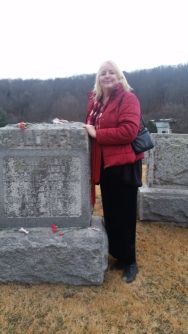 In the past week I visited Cherry Ridge, Honesdale, Wayne, Pennsylvania in the Pokonos, where I was welcomed by my third cousin Marcia Perry Gager whose family never left the place where our ancestors settled. Marcia and I have been corresponding about our family’s history since Ancesty.com connected us about three years ago. During that time, together with another cousin, Debra Ball, we have managed to decipher the complicated history of
  At Thanksgiving and the solstice holidays many of us are reminded that we are the “black sheep” of our families. In my case this means that I am too “assertive,” too “aggressive,” too “demanding,” too “political,” too “willing to upset my father,” too “opinionated,” too “feminist,” and so on.
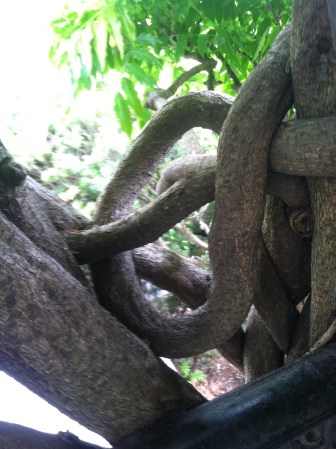 Isaac Luria, a Jewish mystic in the city of Sfat, told this tale of creation in the seventeenth century. It caught the Jewish imagination and has been wildly popular as a Jewish creation myth ever since. It captures our longing for wholeness and our experience of brokenness. It also offers a parallel with the Big Bang (a hot seed of light that expands into the universe as we know it) that many find quite compelling. I have loved this story for a long time. To me, it is reminiscent of the story of birth: an empty space that becomes full, then leaks out into the world as a new being. Yet as a feminist who is also committed to sustainability, as more news of our planet’s scorching rolls in, I find this myth is beginning to crack.
  Continued from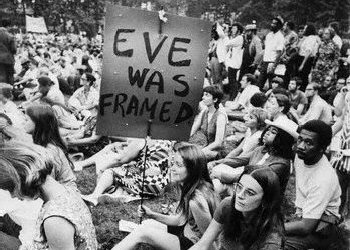

 Many women are drawn to the image of the Sacred Marriage—perhaps especially those raised in Roman Catholic or Protestant traditions where sex is viewed as necessary for procreation but nothing more, and who learn that the naked female body as symbolized by Eve is the source of sin and evil. In this context, the positive valuing of sexuality and the female body found in symbols of the Sacred Marriage can feel and even be liberating.
 Feminism and Religion