Connection to Ancestors in Earth-based Theology by Carol P. Christ

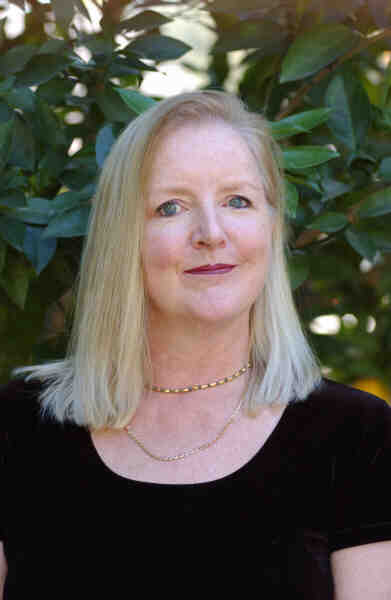
carol p. christ 2002 color“I am Carol Patrice Christ, daughter of Jane Claire Bergman, daughter of Lena Marie Searing, daughter of Dora Sofia Bahlke, daughter of Mary Hundt who came to Michigan from Mecklenburg, Germany in 1854.  I come from a long line of women, known and unknown, stretching back to Africa.”

Like many Americans, my ancestral history was lost and fragmented due to emigration, religious and ethnic intermarriage, and movement within the United States.  Though one of my grandmothers spoke proudly of her Irish Catholic heritage and one of my grandfathers acknowledged his Swedish ancestry, I was raised to think of myself simply as “American,” “Christian” and “middle class.”  Ethnic and religious differences were erased, and few stories were told. 

Over the past two years, I have begun to discover details of my ancestral journey, which began in Africa, continued in the clan of Tara, and was marked by the Indo-European invasions.  In more recent times, my roots are in France, Holland, England, Germany, Ireland, Scotland, and Sweden.  In the United States, my family has lived in tenements in New York City and Brooklyn, in poverty in Kansas City, and on farms in Long Island, Connecticut, upstate New York, Michigan, and Pennsylvania.  My parents and grandparents settled in northern and southern California during the 1930s.  I have lived in southern and northern California, Italy, Connecticut, New York, Boston, and now Greece.

Learning details about family journeys has created a shift in my sense of who I am.  Continue reading “Connection to Ancestors in Earth-based Theology by Carol P. Christ”
On Love, Theodicy and Domestic Violence by Ivy Helman

ivyandminiLast week, I introduced my students to the theological concept theodicy.  Theodicy is a theological explanation of why suffering and evil occur that usually includes some kind of defense of divine attributes.  For example, if G-d is all-knowing (omniscient), ever-present (omnipresent), all-powerful (omnipotent) and all-loving then how do we explain hurricanes, illness, mass murder, airplane crashes and other forms of evil and suffering?  This is quite difficult because, as my students point out after a few minutes of discussion, most explanations are often unfulfilling or inadequate.  The discussion turns quite quickly to two reactions.  Either, G-d isn’t what we thought G-d was or science does a better job explaining these examples of evil and suffering.  Science explains that hurricanes happen because of various environmental factors or a plane crashes because of mechanical problems. Even the concept of humanity’s freewill as the cause of evil often circles back to G-d’s creation of humanity and leaves students unsettled.  If G-d created within humanity the possibility of evil, how, then G-d can be all-loving?

The love/evil dichotomy is often the real conundrum of theodicies in monotheism.  This has been pointed out by numerous theologians throughout the ages.  How do we account for evil when there is only one divine Being?  How can an all-good, all-loving Being clove-1345952464afLreate or even be responsible for evil?  Which leads to the next question, is evil the absence of love?  These are extremely difficult philosophical and theological questions.

To explore then, we should start where it is often suggested that we learn most about love: family, close friends and intimate relationships.  Take this for example.  Continue reading “On Love, Theodicy and Domestic Violence by Ivy Helman”

Painting Fatima by Angela Yarber

 She performs ablutions, prays, and mends shoes for years, only to don her death shroud upon her back and place a symbolic tombstone upon her head.  With death cloaking her compassionate body, she begins to twirl, invoking the name of the Beloved within her heart.  She is a whirling dervish and her name is Fatima.  The daughter-in-law of the esteemed Sufi poet, Rumi, joins with the myriad other Holy Women Icons with a folk feminist twist that I write about each month:  Virginia Woolf , the Shulamite, Mary Daly, Baby Suggs, Pachamama and Gaia, Frida Kahlo, Salome, Guadalupe and Mary.

Fatima is best understood when placed in an historical context.  So, I begin with a very brief history of the whirling dervishes, while also offering glimpses into women’s roles in the Mevlevi Order.  The primary Islamic sect that proclaims that dancing is a way of connecting with the divine—for both men and women—is the Sufi Order.  Over eight hundred years ago, Mevlâna Jalâluddîn Rumi inspired faithful Muslims to whirl in harmony with all things in nature.  The whirling dervishes of Turkey unite the mind, heart, and body, and help to usher peace into the world through their dance by dedicating their lives to service and compassion.  After Rumi’s death on December 17, 1273, his followers responded by whirling.  These followers of Rumi are known as the Mevlevi Order, or more popularly, the whirling dervishes.  Until around the fourteenth century women were included in the practice and leadership of turning.  As Muslims in Turkey became more and more conservative, however, women were forced to the sidelines and not allowed to whirl.  And even with the secularization of the country with the reign of Mustafa Kemal Ataturk, women were still denied access to the turning path because Ataturk essentially made whirling illegal in an attempt to take away as much religion from Turkish life as possible.  Ataturk banned tekkes, or dervish homes, in 1925 as he secularized the state.  By the 1970s the Turkish government allowed turning once again, but only if it was a performance and not a prayer.  There were even reports of an old dervish being arrested because they saw his lips mouthing “Allah” as he turned in a theatre performance for tourists. Continue reading “Painting Fatima by Angela Yarber”

Luke 12:51-53: On the Verge of a Paradigm Shift by Elisabeth Schilling

BeachI remember being quite happy when my values about body, faith, and purpose lined up with those of my parents. With the support of my Protestant evangelistic community as well, I was “bold and fearless,” not caring who might judge me or disagree with me because I was not standing on my own. The anxiety of becoming embarrassed or having my world crashing down because of the ideas I expressed did not exist. My beliefs seemed special and right, and I had constant reaffirmation from family and community that they were.

But now I hold perspectives about spirituality and humanity that I can no longer discuss with ease in front of my family–not without my mother crying and feeling as if she did not know or like the person I had become. This may matter to me more than it might to other people since I have, for over a year now, returned to that home to write my dissertation. I am constantly challenged with the task of creating a space where I can honor my desires, needs, and truths. Like Judith Butler says, if I am a person who exists by doing, when I cannot express/speak/give an account of myself, I cannot fully exist. Family is important, but what gets sacrificed by pretending and silence? It is not only the self, but the chance for deeper, more authentic bonds. Continue reading “Luke 12:51-53: On the Verge of a Paradigm Shift by Elisabeth Schilling”

Textual Religion and the Marginalization of Two Huldas by Dirk von der Horst

DirkI am a Protestant in large part because I like to read.  Even after grappling with feminist critiques of patriarchal religions, a spirituality rooted in the Word (capital “W”) is very deep-seated in me.  One reason I think of my faith as biblical is that a scriptural religion engages me in my favorite activity.  At the same time, there are real connections between exclusive dependence on written records and the erasure of women’s history, as well as various ways in which women have been excluded from literary production.  The opposition between text and world often becomes a manifestation of the hierarchy of mind and body that many feminists have seen as damaging.  It’s like the question of “why are there no great women composers?”  The problem with this question is not only that it ignores great women composers such as Hildegard of Bingen, Barbara Strozzi, Louise Farrenc, or Thea Musgrave.  As feminist musicologists Marcia Citron and Suzanne Cusick have shown, the question reinforces a hierarchy in which composers, those who create musical texts, have precedence over those who perform and listen.  It also relegates places where women’s contribution has been essential to the production of music – educating children, for example – to irrelevance. Continue reading “Textual Religion and the Marginalization of Two Huldas by Dirk von der Horst”

Winds of Change in the Roman Catholic Church by Michele Stopera Freyhauf

Michele FreyhaufIn 2007, I had a conversation with a professor who felt that change was in the air for the Roman Catholic Church. The basis of this opinion was based on language. The words and the context used in writings that emerged from the Vatican were changing and somehow different – a difference that went beyond personal writing styles of Pope John Paul II and Pope Benedict XVI. This professor was hopeful that positive change for women could be coming. He was right about change in the Church, however, the changes surrounding women that emerged have not been positive.

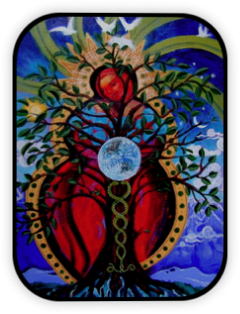
As I continue to reflect on these words, I ponder the issue of language; specifically the impact words have and the way they are used to facilitate subtle changes in thinking, opinion, and beliefs. The method of persuasion that seems to be employed is the Aristotelian Rhetorical Theory that utilizes the five canons of rhetoric: invention, organization, style, delivery, and memory.

An example of this can be seen clearly in the changes in the liturgy that occurred last year. First, the teaching comes out with the rationale as to why the liturgy needs to change. From there a discussion, especially through the media, addressing the upcoming modifications are followed by subtle changes in the liturgy beginning with the call – response and the language in the creed. Next, the language of the celebrant began to change. Finally, the full implementation of changes is made with the addition of new gestures or movements. When I discussed the mass changes with a family member, there was an admittance that the changes no longer affect them – the changes were no longer noticeable. Their memory was impacted because the routine is now second nature.

In order to come to grips with the issue of language and the observation of my professor, I wanted to do a cursory review of the writings issued by the Vatican during this period. Admittedly, with a blog post, there is a limitation as to the depth and breadth of information that can be disseminated. It is my hope to eventually complete a thorough review of the modification of language used during Pope Benedict XVI’s papacy. For now, I want to address a few observations.

Continue reading “Winds of Change in the Roman Catholic Church by Michele Stopera Freyhauf”

Patterns for the New Year by Sara Frykenberg

Sara FrykenbergLife last year continually pushed me to figure out how I should care for those close to me while also caring for myself.  I have been pushed to see the difference between myself and other people: their choices and my own.  This is perhaps, the most difficult challenge I faced in the first year of the Age of Aquarius… and life has been an unrelenting teacher. 

Happy 2013!  Or a statement more accurate to my feelings: Happy end of 2012!  Last year around this time, I wrote a post entitled: Celebrating the Beginning of the Aquarian Age.  The push to evolve was and is very exciting to me.  This shifting astrological paradigm challenges us to break away from those habits and patterns that no longer serve us.  But excited as I am, I have to admit that the first year of the Age of Aquarius really kicked my butt.

Did last year feel exceptionally difficult for anyone else out there?  I really felt like I couldn’t catch a break for the entirety of 2012.  This is not to say that my year was simply filled with loss and grief, though I am dealing with loss and a great deal of grief.  But some really great things happened last year too, which I celebrated, but also found extremely difficult to manage.  Many of my roles and relationships radically changed in ways that were more difficult than I expected or wanted.  Riding the Aquarian tides, I felt tossed about and was often confused.  I kept telling myself: just hang on.  Just hang on, because you are not alone riding these cosmic waves.  Hang on, because you will learn how to swim in these new waters.

Therefore, in honor of the New Year, I would like to take this opportunity to evaluate and strategize for my how.

I am not usually one for making new years’ resolutions.  The cultural rhetoric surrounding resolutions either presupposes failure or relates success to the amount of money you spend to achieve a goal.  Yet today I find myself considering how I approached last years’ challenges, successfully and unsuccessfully.  I have concluded that I need to create more life giving patterns and habits in 2013.  Many things I am doing now, my coping mechanisms and my defenses, can no longer meet my needs.  So, I guess I am making resolutions.  I, however, prefer to say that I am actively hope-ing to evolve my praxis of living. ;) Thus, I set the following intentions for 2013: Continue reading “Patterns for the New Year by Sara Frykenberg”

Blessings for the New Year on Feminism and Religion by Marie Cartier

I remember being in Korea for the 2009 International Women’s World Congress with Hye Sook Hwang and Inhui Lee and many (many) others and realizing then in ways I had not before, how crucial feminist scholarly friendships are to not just my work –but my sanity. The way we see things and the way we talk about things makes sense in a way that many times the rest of the world does not make sense. I re-member, to use Mary Daly’s phrasing, Hye Sook’s Magu scholarship that awakened in me and many others the Goddess magic of Korea. I re-member Inhui’s work with the female shamans of Korea and their rituals to honor and memorialize with honor the “comfort” women—Korean women used as sexual slaves by the Japanese during World War II. I went to that conference on the urging of Hye Sook and came home from that conference with new lifelong friends—among them Inhui. At that time none of us were doctors—now we all are. Continue reading “Blessings for the New Year on Feminism and Religion by Marie Cartier”

Imix: Primal Mother and Dawn of a New Age by Michele Stopera Freyhauf

Michele FreyhaufIf you are reading this, then we survived another apocalypse.  People are fixated on end-times; especially predictions, prophecies, etc.  Specials on Nostradamus, the Book of Revelation, TV Evangelists looking for end signs plague television shows, movies, and writings.  Countdown clocks and reminders to repent are all around us.

Original image found at http://www.dwayneedwardrourke.com/Pages/TIMEWAVE0728/page21/page21.html

What is unnerving is how we obsess about the end of the world instead of living in the world we have right now.

I would like to share a Mayan poem that I came across.  It is called “Imix”- a Mayan Oracle Interpretation translated by Ariel Spilsbury and Michael Bruner and I am drawn to it due to the imagery and symbolism:

I Am Imix, Primal Mother.

Still, dark womb of the patterned potential of becoming, sacred, interstellar genesis, I Am.

Nourishing, fertile abyss, I birth you.

Benevolent, my mighty cauldron of primal waters, enveloping the living seed. Eternal is my embrace. Continue reading “Imix: Primal Mother and Dawn of a New Age by Michele Stopera Freyhauf”

Solstice Comes But Once A Year, Now It’s Here! by Carol P. Christ

carol p. christ 2002 colorActually it comes twice, once in midsummer, the longest day of the year, and once in midwinter, the longest night.  Winter Solstice is also known as the first day of winter.
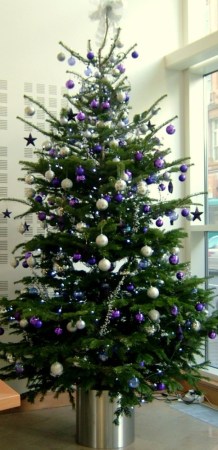
For those of us attuned to the cycles of Mother Earth, Winter Solstice is a time to celebrate the dark and the transformations that come in the dark. Many of the customs associated with Christmas and Hannukah, including candles, Yule logs, and trees decorated with lights were originally associated with Winter Solstice.  The extra pounds put on during winter feasting were insulation against the cold winter nights.

Those who fear that many of the customs of the Christmas season might be pagan are right.  As we learn again to honor our place within the cycles of birth, death, and regeneration, we can return these customs to their roots in the circle of life.

ChristmasTrees20060001

Continue reading “Solstice Comes But Once A Year, Now It’s Here! by Carol P. Christ”