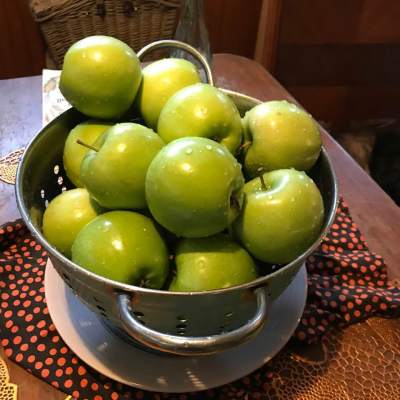
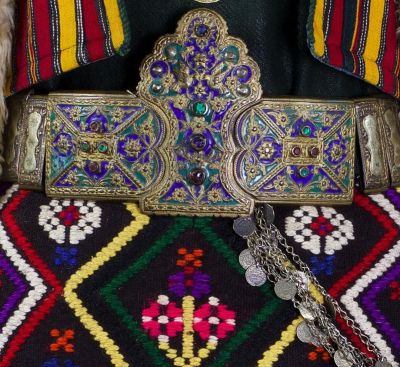
The Gifts of Life: Do We Remember? by Carol P. Christ

Strawberries shaped my view of a world full of gifts simply scattered at your feet. A gift comes to you through no action of your own, free, having moved toward you without your beckoning. It is not a reward, you cannot earn it, or call it to you, or even deserve it. And yet it appears.

Sweetgrass belongs to Mother Earth. Sweetgrass pickers collect properly and respectfully, for their own use and the needs of their community. They return a gift to the earth.

That is the fundamental nature of gifts: they move, and their value increases with their passage. The fields made a gift of berries to us and we made a gift of them to our father. The more something is shared, the greater its value becomes. This is hard to grasp for societies steeped in notions of private property, where others are, by definition, excluded from sharing.

The essence of a gift is that it creates a set of relationships. The currency of a gift economy is, at its root, reciprocity.

Robin Wall Kimmerer, Braiding Sweetgrass, 27-28

Thanksgiving has come and gone. We gave thanks for the food placed on the table and for the family or friends who shared it with us.

In our culture giving thanks can feel forced: I remember how my brothers and cousins and I hated to be asked to say grace at Grandma’s house. When we have not been taught, it can be difficult for us to understand that nothing is ours by right. Continue reading “The Gifts of Life: Do We Remember? by Carol P. Christ”
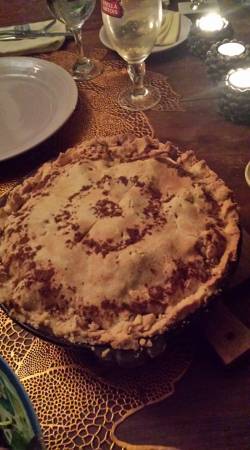
And the Pies! Ongoing Grateful Thanks for Tradition by Marie Cartier

In November 2017 I wrote about pie baking. 

And in November 2015 I also wrote about pie baking.

Photo by Lisa Hartouni

In November 2016, I was destroyed by the “election” and wrote a post in November of that year “For Strong Women” just to help many of us keep going.

Continue reading “And the Pies! Ongoing Grateful Thanks for Tradition by Marie Cartier”

My Original Uncultured Mother by Deanne Quarrie

Deanne Quarrie

In the earliest of times, I believe humans did not see themselves as separate from all that was around them.  All of life was interdependent.  I see this in my own practice today.  When we are born, we are born to a mother.  Our lives are solely dependent on her for survival.  We are birthed by her, nourished by her, protected by her, and sometimes forced out to experience on our own, by her.  She is at first, our own Original Uncultured Mother.  Once we move from her shelter, we begin to experience our world in the same way, looking not only for what nourishes, what protects and what shelters, but also for what we need to be mindful of for our own safety, those forces far out of our control.  Those forces, which were uncontrollable, the ancients held in high esteem, and honored with reverence.

Continue reading “My Original Uncultured Mother by Deanne Quarrie”

Identity Politics by Gina Messina

Version 2This past week my daughter, Sarah and I had a conversation about God:
Sarah: Dad says God is a myth. He doesn’t exist.
Me: Well none of us really know who God is because we’re humans. And besides, God is definitely not a man.
Sarah: I really think that God is a monkey.

Me (trying to keep a straight face): Why do you think God is a monkey?
Sarah: Because all people came from monkeys and God created us so that makes a lot of sense. It also explains why God is doing such a bad job.
Me: Why do you think God is doing a bad job?
Sarah: Well, Donald Trump is president…

At nine years old, my daughter is quite the critical thinker and very invested in knowing what is happening in our country. She has strong feelings about Trump — especially his treatment of women and policy to separate families at the border. She asks why someone gets to be president if s/he does not care about everyone in the nation. It is a good question. I’d like to take credit here, but Sarah is simply paying attention to our world and making her own conclusions — logical ones at that. 

***

While Trump supporters chant the political slogan “Make America Great Again,” women are wondering when there was ever a time where our human rights were acknowledged, and especially those of women of color. Women have been consistently disenfranchised throughout history and have had to fight for the most basic rights granted to white men.  Continue reading “Identity Politics by Gina Messina”

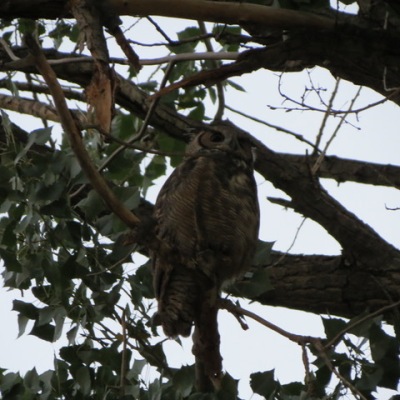
Witness by Sara Wright

Witness


It was dark

when I first heard Her

whooing overhead

bearing witness,

ushering in

the First of the

Harvest Moons.

The seasonal wheel turning towards

ripe fruit and swelling seeds.

Summer’s Bounty.

This goddess

is cloaked

in feathery mole brown splendor

a Sphinx flying

through the night.

S/he heralds the

Gift of Water

answering earnest prayers…

As ‘Changing Woman’ she brings rain

to soften cracked desert ground…


Hidden in a tangle of branches

Owl observes my approach…

When I pass

under the Cottonwood tree

she takes flight in silence.

lands on a snag –

luminous eyes glowing.

Fiery embers

sweeten the night.

Her beneficent

Presence floods me

with wonder –

Oh, I know Her well.

Love seeps through

a body punctured by holes.

Seen at last by my Beloved

I give thanks for Owl

whooo calls my name.

Continue reading “Witness by Sara Wright”

Let Us Proclaim the God Who Bleeds Now by Carol P. Christ

we need a god who bleeds now

we need a god who bleeds now
a god whose wounds are not
some small male vengeance
some pitiful concession to humility
a desert swept with dryin marrow in honor of the lord

we need a god who bleeds
spreads her lunar vulva & showers us in shades of scarlet
thick & warm like the breath of her
our mothers tearing to let us in
this place breaks open
like our mothers bleeding
the planet is heaving mourning our ignorance
the moon tugs the seas
to hold her/to hold her
embrace swelling hills/i am
not wounded i am bleeding to life

we need a god who bleeds now
whose wounds are not the end of anything

–Ntozake Shange

Continue reading “Let Us Proclaim the God Who Bleeds Now by Carol P. Christ”

The Hate U Give by Esther Nelson

These days I live in a perpetual state of simmering outrage given the popular support of the “goings on” and happenings within our current administration.  The lies, the deceit, the xenophobia, the racism, the misogyny, the homophobia, the anti-intellectualism—things that have been around a good long time, but now seem to have settled in comfortably with those who have the power to keep it all in place.  I’m discouraged.

But then, there’s this:

The Hate U Give, a YA (Young Adult) novel authored by Angie Thomas, spent 50 weeks at the top of the New York Times bestseller list after its publication in February 2017. The book has received numerous awards and also has enjoyed an immense popularity.  It has also generated considerable controversy.

The following is the author’s profile from Amazon’s website:  “Angie Thomas was born, raised, and still resides in Jackson, Mississippi as indicated by her accent. She is a former teen rapper whose greatest accomplishment was an article about her in Right-On Magazine with a picture included. She holds a BFA in Creative Writing from Belhaven University and an unofficial degree in Hip Hop. She is an inaugural winner of the Walter Dean Myers Grant 2015, awarded by We Need Diverse Books.”

Continue reading “The Hate U Give by Esther Nelson”

Women’s Ritual Dances and the Nine Touchstones of Goddess Spirituality – Part Four by Laura Shannon

In Rebirth of the Goddess, Carol P Christ offered Nine Touchstones of Goddess Spirituality as an alternative to the Ten Commandments. The Nine Touchstones are intended to inform all our relationships, whether personal, communal, social, or political.[1] In this four-part blog (here are parts 1-3 Part 1, Part 2, Part 3) I am exploring ways in which these Nine Touchstones are inherently embodied in traditional women’s ritual dances of the Balkans, which has been my spiritual practice for over thirty years.

Carol’s Fourth Touchstone is: ‘Speak the truth about conflict, pain, and suffering.’ Many women’s dance songs which allow the women to speak and sing their grief and pain. When we bring that pain into the healing container of the circle, sharing simple steps, Dancers in the circle simultaneously give and receive support for their own and others’ sorrow. Ultimately, the sense of community  and solidarity in the circle transforms our grief so that the burden becomes manageable. Many historical songs, too, tell stories of women being abducted or abused, and how they fought back or got away – or not – so that they are remembered and honoured by future generations.

Continue reading “Women’s Ritual Dances and the Nine Touchstones of Goddess Spirituality – Part Four by Laura Shannon”

Women’s Ritual Dances and the Nine Touchstones of Goddess Spirituality-Part Three by Laura Shannon

Women’s apron from Pentalofos, Greek Thrace

In Rebirth of the Goddess, Carol P Christ offered Nine Touchstones of Goddess Spirituality as an alternative to the Ten Commandments. The Nine Touchstones are intended to inform all our relationships, whether personal, communal, social, or political.[1] In this series of blogs I am exploring ways in which these Nine Touchstones are embodied in the traditional women’s ritual dances of the Balkans, which I have studied as a spiritual practice for more than thirty years.

Carol P Christ’s Second Touchstone is: ‘Walk in love and beauty.’ As she says, ‘love and beauty are the great gifts of bounteous earth’.[2] Dancing women of the Balkans walk in love and beauty each time they put on their festive dress to dance together in the courtyard or the village square. Their ceremonial costumes are created from the bounty of the earth – just a couple of generations ago, this was literally the case, as the women tended the sheep, prepared and spun the wool, wove, sewed, embroidered and ornamented their garments with the work of their own hands. Even now, the cloth they buy is purchased with money they have earned from working and harvesting the land.

Continue reading “Women’s Ritual Dances and the Nine Touchstones of Goddess Spirituality-Part Three by Laura Shannon”

Lei by Elisabeth Schilling

Mauro Drudi’s installation of LEI (SHE/HER/YOU – formal) in the Chiesa de San Cristoforo on the Sicilian island of Ortigia where I usually take a bus to daily has become the shrine of women I’ve been searching for. Each time I cry, I am glad I can feel something: those tears are a mixture of communion, comfort, and recognition.

When one enters the church, there are two converging walls. On either side, a woman’s face is painted in shadow and light, gazing off toward the light, is reproduced over and over so that the number of women looks almost countless. They are the same face, a reproduction of Antonello da Messina’s “Annunziata” in the mode of pop art. The difference is not in expression. They all wear the same thoughtful, complicated, neutral countenance, holding deep thoughts and experiences of suffering and wise knowing, both acceptance and maybe resistance; they have lived and might be any age, although I see in our connection my own. The difference is between glossy, unblemished surfaces of wood vs. surfaces weathered, slightly ragged, sometimes scribbled on with ink. The former, found on the right when one enters supposedly represents the “positive” woman, the “western woman [. . . representing someone] happy, gorgeous, well-kept.” On the left, about these representations, Drudi says, “Which artist can paint the skin of a woman who has been abused, beaten, exploited, captivated or disfigured with acid? In my opinion, nobody, and so I let the material speak: the wall of a beach hut destroyed by a storm; woods and materials used and abused [. . .]; exhausted panels deriving from carrying tons of goods, tables, packagings, production wastes.”

Continue reading “Lei by Elisabeth Schilling”