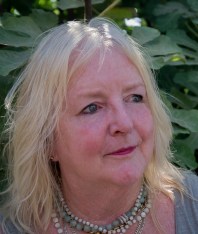
Learning Gratitude for the Gifts of Life on the Goddess Pilgrimage to Crete by Carol P. Christ

In Crete we are always being given gifts—fresh cherries, ice cold bottles of raki, yogurt swimming in honey, and so much more. Over the years it finally hit me that this spirit of great generosity is a living remnant of the ancient Cretan egalitarian matriarchal tradition of gift-giving.

In egalitarian matriarchal cultures gift-giving is not something reserved for birthdays and holidays. It is a way of life rooted in the primary understanding that life is a gift that is meant to be shared.

Our lives are a gift from our mothers. Our individual lives have are not something we create or created for ourselves. We all emerged from the body of a mother. We were all given the gift of care and feeding by a mother or others. Our mothers did not create themselves. They emerged from the bodies of mothers and were cared for and fed by mothers or others. And so on back to the original mother of the human race, known as the African Eve.

Continue reading “Learning Gratitude for the Gifts of Life on the Goddess Pilgrimage to Crete by Carol P. Christ”

Consideration by Valentina Khan

Yesterday I sat in my car, buckled and ready to reverse just when I looked out my side window to see the people getting into their car next to mine.

There was a very elderly lady being seated in the back ever so gingerly. Her caretaker (that is what she appeared to be) carefully buckled her in, and then offered her a sip of ice water. Meanwhile I was in mid reverse, my engine running, on the go, and yet the ladies didn’t notice anything around them.

Simultaneously the elderly lady’s wheelchair didn’t have its brakes on and rolled into my rear side door. Instantly, I thought OK a little rude, these people aren’t really being considerate of the tight space we are sharing, should I roll down my window and say with as much patience as I can “excuse me”? Or should I let it go? I let it go. Those immediate feelings of impatience and annoyance washed over me, because I made myself stop and observe the situation, and the details of these ladies. Continue reading “Consideration by Valentina Khan”

The Spirit and Jarena Lee: Inspiration to Break Boundaries by Elise M. Edwards

elise-edwardsI am so frustrated that we are still fighting to affirm women’s place in leadership.  I’ve been thinking about this struggle in the context of church ministries (especially preaching) and social activism, seeing a stark contrast between the way institutional churches and universities promote and subvert women’s authority and the ways movements like Black Lives Matter do.

Particularly, I’ve been struck by the ways that more radical movements employ language and practices that are based in spirit more than hierarchical authority.  I have found a theme emphasizing equality in humanity’s access to spirit in both historical and contemporary movements and writings about religious experience.  I’m certainly not the first one to notice or discuss how appeals to Spirit have empowered those excluded from dominant systems of power to challenge constrictive social structures, but I would like to share how this dynamic has become more visible to me so that, together, we might find encouragement, inspiration, and food for thought.

Continue reading “The Spirit and Jarena Lee: Inspiration to Break Boundaries by Elise M. Edwards”

Cleaning and Cleansing: Rituals of Embodied Life by Carol P. Christ

While the world is falling apart all around me, I have been slowly engaged in a major cleaning and cleansing of my home.

It started when I began to move my summer clothes to my main closet in June.  Here in Greece we have no tradition of second-hand stores, Goodwill, or Salvation Army. This makes it difficult to get rid of anything: often the garbage can is the only option. Still, I began with my clothes, tossing out even some much loved and still beautiful things that no longer fit. My Greek-Albanian cleaning lady took all of them, and I didn’t ask her what she did with them.

Then I moved on to the kitchen. Continue reading “Cleaning and Cleansing: Rituals of Embodied Life by Carol P. Christ”

SHEELA-NA-GIG by Carol P. Christ

On a trip to Ireland several years ago, I was fortunate to have been able to see the Sheela-na-gigs in the National Museum of Dublin.  Two of these Sheelas including the one removed from the Seir Kieran Church of County Offaly, pictured below, are currently on display.  They stand at the doorway of a room dedicated to items from the medieval period and easily missed.  As there was little interest in them and they are not in cases, I was able to silently commune without interruption.

Continue reading “SHEELA-NA-GIG by Carol P. Christ”

Are These Three Novels Prophetic? Part 2: Woman on the Edge of Time by Marge Piercy by Barbara Ardinger

Members of this community (and others) have been feeling that the world is out of balance since the 2016 election. There’s a feeling that people are becoming less kind and that some men (following the model that lives and tweets in the White House when he’s not at one of his golf resorts) are more misogynistic. I’ve heard that Orwell’s novel Nineteen Eight-Four is more popular than ever before. We seem to be living in a new dystopia. It’s very sad and very scary.

I’ve recently reread three novels that I think may be both prophetic and inspiring. I’m hoping that if you read them, too, you’ll inspired by their brave heras to keep on resisting. The novels are Gibbon’s Decline and Fall (1996) by Sheri S. Tepper, Woman on the Edge of Time (1976) by Marge Piercy, and The Fifth Sacred Thing (1993) by Starhawk.

The woman who is on the edge of time is Consuelo (Connie) Ramos, a Mexican-American who lives in a New York barrio and has a life so dreadful that even as Piercy describes the poverty and the abuse in exquisite detail, I can’t really see it…though I bet any homeless person who lives on or under a freeway overpass could add more horrific details. Connie’s father beat her, two of her three husbands beat her, her daughter’s pimp beats her. Her brother has anglicized himself by changing his name from Luis to Lewis. Her third husband was a blind black musician named Claud; it was while she was deep in mourning (and withdrawal) that she struck out at her daughter and injured her, which led to her first imprisonment (Lewis signed the committal forms) in an insane asylum that is immeasurably worse than, say, Dotheboys Hall in Oliver Twist. The bureaucrats who run the asylums have zero interest in their patients. If a patient complains of a burnt back (the pimp knocked Connie into a hot stove) or a headache, that patient is accused of making a “medical diagnosis.” The favored treatment? Huge doses of Thorazine, which has terrible side-effects. Connie finds herself “stymied, trapped, and drugged with Thorazine that sapped her will and dulled her brain and drained her body of energy.”

Continue reading “Are These Three Novels Prophetic? Part 2: Woman on the Edge of Time by Marge Piercy by Barbara Ardinger”

Missing a Teachable Moment: The Purple Dress by Marilyn R. Freedman

Intelligent and impish eyes took in my approach, and the little girl moved away from the post office doors. But not before I saw her sweet face with round cheeks still full of baby fat squished against the glass. With slightly messy, curly blond hair and wearing a shiny, deep purple, ruffled dress-up dress, she looked pretty, happy, and confident. This was her world, wherever she was. When I smiled, though, she turned away, shy of a stranger.

I got into the long line with my kid and listened to the little girl’s dad discuss gift card values with her older brother. The boy named an amount, and the dad commented about how expensive it was. “What a great way to teach a little economics and finance,” I thought.

Continue reading “Missing a Teachable Moment: The Purple Dress by Marilyn R. Freedman”

A Marriage Blessing by Carol P. Christ

Asked the secret of her long and happy marriage, Dorothy Hartshorne, wife of the philosopher Charles Hartshorne, posed a question:  “What do you think you must never do in a marriage?” The young woman thought for a moment and replied, “Never hurt each other?” “Oh no,” Dorothy responded, “you will hurt each other all the time. What you must never do is bore each other.”

In the years since I first heard this story, I have come to understand that a good marriage requires that both partners have their own interests and be willing to share them, and that each partner be interested in at least some of the interests of the other. Happy people share an interest in life in all of its diversity and difference. A person who is interested in life may ask herself why her neighbor is so unhappy and offer an ear to listen to her story. Or he may ask about the birds that come into his garden—learning their names and behaviors, while delighting in their beauty. It doesn’t matter if the things you are interested in are large or small, but you must be interested in life.

Second, each you must be interested in yourself and in your partner. If conflicts are to be resolved, if hurts are to be assuaged, you must always be willing to ask: why was I angered or hurt in this situation, and why did my partner act or react in a particular way? This will not always be easy. Often one of the partners will feel more comfortable talking about feelings. Patience and deep listening may be required of one of you, and moving into unfamiliar territory of the other. If you are not interested in your own feelings and those of the other, your relationship is likely to founder—not only in hurt and anger, but also in boredom.

Dorothy’s husband Charles Hartshorne was fond of saying that the golden rule to love your neighbor as yourself implies that you love yourself. This is wise counsel. We are often told that marriage involves loving another, but less often that it requires loving yourself as well.

As you, Shelby and Mark, enter into marriage, I offer you these blessings:

May you always retain your interest in life.

May love yourself as well as the other.

May you never bore each other.

May you have many long and happy years together.

* * *

 Carol gave this blessing at the wedding of Shelby Carpenter and Mark Miller on August 3, 2017 in Molivos, Lesbos.
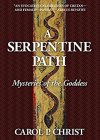
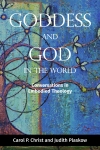
a-serpentine-path-amazon-coverGoddess and God in the World final cover design


Carol’s new book written with Judith Plaskow, is  Goddess and God in the World: Conversations in Embodied Theology.

FAR Press recently released A Serpentine Path: Mysteries of the Goddess.

Join Carol  on the life-transforming Goddess Pilgrimage to Crete. Space available on the fall tour.



In the Words of the First Poet and Historian: “I am” by Michele Stopera Freyhauf

These days I find it hard to write – I feel plagued with negativity, and the news and violence and overall hateful actions of others have weighed deeply on my soul.  While I personally am ready to celebrate a milestone birthday, am another year closer to completing my Ph.D., witnessed the graduation of one daughter, experienced the independence of another, a milestone for my twins, as well as my father’s successful completing of another orbit around the sun after a year plagued with health issues – rather than joy, my heart is filled with pain – pain of the election, pain of the failure of our political system’s supposed checks and balances, pain of violence and bigotry like that enacted in Charlottesville, pain of terror attacks in England, Spain, Finland, France, etc.  Where we ought to be united, we are divided. Thus, I write from a place of remembering – a place of strength – a place to say I count (as you count) – and I begin this blog in the voice of Enheduanna, where she becomes the first voice in history to reveal herself – her name, by simply stating – – “I AM.” Continue reading “In the Words of the First Poet and Historian: “I am” by Michele Stopera Freyhauf”

Talking Gender and Islam at the Grassroots by Vanessa Rivera de la Fuente

In my current trajectory linked to community development —  via both activism and my professional field —  I’ve learned that popular education is a very useful practice and methodology to decentralize all types of knowledge. Since I embraced Islam, part of my activity has focused on creating spaces for the production, discussion, and appropriation of religious knowledge for women at the grassroots. Religion is not separated from the daily life of believers, therefore, each of them carries knowledge that has been deliberately obliterated by hegemony.

The feminist hermeneutic of Islam is a paradigm that aims to provide Muslim women with skills and concepts that allow them to boost their agencies in their respective contexts, encouraging a transformation in the understanding of religious phenomena and its trajectory towards gender justice.  For this transformation to be possible, knowledge must be accessible in language, methodology and location.

Paulo Freire’s pedagogy of liberation is a tool I consider to be critical and necessary for feminism, including Islamic feminism, at a time when debates about decolonization are very fashionable in academia. Freire’s methodology is democratizing because it allows, on one hand, to transfer knowledge from privileged circles to the margins and, on the other, to make visible the experiential knowledge produced in the periphery — to include them in the spectrum of what we understand and as such subvert, in this way, the dynamics of power, representation and discourses.

During my time in South Africa, I have engaged with popular education on topics related to Islam and Gender with Muslim women from the Cape Flats. These women have different backgrounds, races, life trajectories, and religious journeys. They exist in the geographic, cultural and epistemological margins of the social reality of Cape Town. Their experiences as Muslims do not appear in academic journals, nor are they even “noticed” by their highly androcentric communities of belonging.

For the past 7 months, I have met with them on a regular basis to talk about Gender and Islam. “Talk” is a methodological definition that means that we are placed in equal and interchangeable positions of teacher-student during our dialog — assuming than rather than learning something new, we are facilitating for each other a way to communicate things we already know. Muslim women of the Cape Flats know, indeed. But they have been told that they do not know by a system of privilege formed for the ulemas, for academia, or for the Islamic institutions. Continue reading “Talking Gender and Islam at the Grassroots by Vanessa Rivera de la Fuente”