
Resisting Shame and Choosing to Live through the Loving Eye by Stephanie N. Arel

This week, I finished reading The Politics of Reality: Essays in Feminist Theory by Marilyn Frye, a text I had not encountered in my studies of feminism (in literary theory, psychology, philosophy, or theology) until now. In some ways, I wish I would have read it sooner. In other ways, I am grateful for this more recent rendezvous. From my current position and perspective – theoretical and personal – I was, I think, more able to hear the core message Frye conveys than I would have been years ago. I have less to protect now, and my ego is less fragile. In the text, she names the mechanisms around which Western – and patriarchal – cultures are founded. Her argument is fluent and cogent, even as it threatens the stability this culture offers. Our lives are embedded in it, even if our personal ethics point to alternative, feminist ways of living. Frye pushes her readers to live alternatively, so that we can recognize the times that we conspire/feed into/comply with patriarchal messages and clean the residue of servitude off of our skin.


For the purposes of this post, I engage two opposing concepts Frye presents in the text: the arrogant eye and the loving eye. Located in the chapter entitled “In and out of Harm’s Way: Arrogance and Love,” Frye investigates how men in phallocentric culture exploit and enslave women. The opposing, contradictory eyes of arrogance and love directly relate to the experience of shame which effectively serves to subjugate women in patriarchal culture.


Shame functions within what I call a logic of exposure. Shame relates intimately to the concept of being seen.  Affectively, shame results from our interest/excitement being partially truncated. For instance, we are drawn to someone (real or imagined); we are interested in their response to us, and somehow something interferes with the desire to connect. Contact is cut off, and interest/excitement partially halted. Shame ensues. We experience that someone (real or imagined) seeing us as other, different, foreign, maligned, wrong, or worthless. We are seen wrongly. This misperception alleviates joy and relates to the gaze of the arrogant eye under which (as the default gaze of phallocentric culture) we often find ourselves seeking approval.

Continue reading “Resisting Shame and Choosing to Live through the Loving Eye by Stephanie N. Arel”

Do All Religions Teach Love and Justice? Or Do Some Religions Teach Domination? by Carol P. Christ

Recently at a discussion of Goddess and God in the World, Judith Plaskow and I were asked if the dialogue across religious difference we embody and advocate in our book is a “liberal thing.” Can it, the questioner wondered, occur with those who do not have a liberal view of religion and religious meaning?
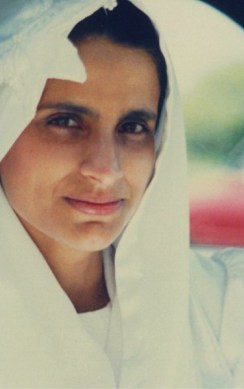

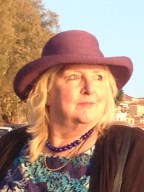
I answered that Judith and I identified two principles that made our dialogue possible. The first and most important is that we share the conviction that individuals and communities always interpret their texts and traditions from particular standpoints, deciding with aspects of text or tradition they will make central and which they will criticize or ignore.

For example, those who advocate Lev. 18:22’s injunction that “you shall not lie with a male as with a woman” (NRSV) generally expand its meaning to include female as well as male homosexuality. They ignore the fact that extending this text to a prohibition of lesbianism is an “interpretation” not found in the original Hebrew. At the same time, they ignore other provisions in the text–including that it condones slavery under certain conditions as the notorious letter to Dr. Laura “Why Can’t I Own a Canadian?” attests. Continue reading “Do All Religions Teach Love and Justice? Or Do Some Religions Teach Domination? by Carol P. Christ”

Recalling the Courage of Shamima Shaikh by Vanessa Rivera de la Fuente

If this be Madness

Shamima Shaikh’s name may be unfamiliar for you and many who are not deeply informed about Islam and gender issues in South Africa or who tend to identify Muslim women and/or activism for women’s rights in Islam with the Arab region. Why should you know about her? Because Shamima Shaikh was one of the most notable Muslim anti-apartheid activists and advocates for the rights of Muslim women in her country—a prominent feminist, journalist, radio producer, movement builder, trailblazer, and fearless activist.

This year—2017—marks the 20th anniversary of her death, and I think it’s a special occasion to recall her brave legacy, not only because twenty is a special number. In the context of violence against women in South Africa and worldwide—in particular the violence against and exclusion of Muslim women in Syria, Palestine, Yemen, and Saudi Arabia—as well as the gendered Islamophobia that targets our sisters in Europe, claiming the courage and spirit of resistance of Shamima Shaikh as part of our ethos as women living in a patriarchal world that hates us is absolutely necessary. Continue reading “Recalling the Courage of Shamima Shaikh by Vanessa Rivera de la Fuente”

Earth Dreaming, Water Dreaming: How Elemental Dreams Offer Healing for the Earth and Us by Jill Hammer

I once dreamed I was giving a lecture on a spiritual philosophy called magmatheism.  The literal meaning, I thought when I awoke, would be something like “belief in the divinity of molten rock.”  I had the sense this dream was trying to tell me something about what I had come to believe and know.  When I asked my friends what they thought magmatheism was, they gave answers that delighted and intrigued me.

One said: “the belief that God/Goddess dwells below the ground and every once in a while erupts out gloriously.”

Another said: “By studying the ways in which rock is liquid, we can understand the oneness of all things… Our separation is an illusion.  We are part of the whole.”

A third said: “Honoring the magnetic pull to earth.”

A fourth said: “The unmanifest that creates the foundation of all life.”

The dream told me something real about the power of dreaming. It let me know that a life physically and spiritually connected to the earth—the life I was trying to live and to encourage others to live—did not only occur when I was awake, but when I was asleep.  The dream told me that the earth was speaking to me in my dreams.  As dream tender Stephen Aizenstat writes, “Dream images are not representations of our personal nature only, but are also informed by the subjective inner natures of the things and creatures out there in the world. (Aizenstat, S. Dream Tending: Awakening to the Healing Power of Dreams. New Orleans, LA: Spring Journal, Inc. (2011), pp. 149-150).

Continue reading “Earth Dreaming, Water Dreaming: How Elemental Dreams Offer Healing for the Earth and Us by Jill Hammer”

The Mountain Mother: Reading the Language of the Goddess in the Symbols of Ancient Crete by Carol P. Christ

Before he told the story of how his people received the sacred pipe, Black Elk said:

So I know that it is a good thing I am going to do; and because no good thing can be done by any man alone, I will first make an offering and send a voice to the Spirit of the World, that it may help me to be true. See, I fill this sacred pipe with the bark of the red willow; but before we smoke it, you must see how it is made and what it means. These four ribbons hanging here on the stem are the four quarters of the universe. The black one is for the west where the thunder beings live to send us rain; the white one for the north, whence comes the great white cleansing wind; the red one for the east, whence springs the light and where the morning star lives to give men wisdom; the yellow for the south, whence come the summer and the power to grow.

But these four spirits are only one Spirit after all, and this eagle feather here is for that One, which is like a father, and also it is for the thoughts of men that should rise high as eagles do. Is not the sky a father and the earth a mother, and are not all living things with feet or wings or roots their children? And this hide upon the mouthpiece here, which should be bison hide, is for the earth, from whence we came and at whose breast we suck as babies all our lives, along with all the animals and birds and trees and grasses. And because it means all this, and more than any man can understand, the pipe is holy. [italics added]

In this passage Black Elk illustrates the multivalency of symbols: the sacred pipe does not have a single meaning, but many meanings, in fact, more meanings than anyone can understand. Continue reading “The Mountain Mother: Reading the Language of the Goddess in the Symbols of Ancient Crete by Carol P. Christ”

Ending Suffering for the Sake of Others by Oxana Poberejnaia

I have recently noticed an interesting thing: just like the Buddhist goal of ending suffering requires consideration of others, so often feminist change requires thinking about other women.

I often had conversations with people on both these subjects. I heard actual people say: “I do not want to end my suffering, the reason being…” And the reasons can differ. Some consider suffering to be part of genuine human experience, some find a spiritual advantage in having suffered. While some simply say that they are fine with their suffering; they are used to it; change would bring even more suffering. Continue reading “Ending Suffering for the Sake of Others by Oxana Poberejnaia”

Beginning with Death on the Goddess Pilgrimage to Crete by Carol P. Christ

Our first ritual on the Goddess Pilgrimage to Crete is a death ritual in which we honor the memory of those who have gone before us. Like so many things on the pilgrimage, the death ritual evolved. I did not consciously plan to begin with death. Rather, the death ritual inserted itself at the beginning of the tour. Now I understand that the timing is right.
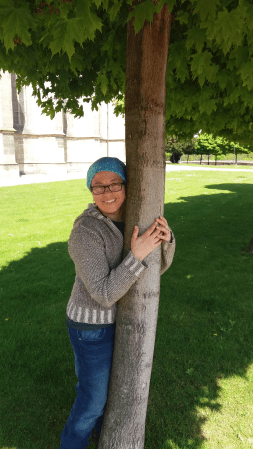
As we begin our pilgrimage, seeking new insight about the meaning of our lives, about the meaning of life and death, we pause to remember those who have gone before us.

Before the ritual begins, I discuss the communal burials in round tombs of the ancient Cretans, sharing my belief that the purpose of their rituals was not to secure immortality or eternal life for the individual, but rather to affirm and ensure the regeneration of life in the community and in nature. I add that though I have no desire for personal life after death, I care deeply about the continued flourishing of life for human and other than human beings.

I like to keep rituals simple. First, we create an altar. Two stones mark the place. We decorate them with flowers and fruits from our Mother Earth and small images of the Goddess. Continue reading “Beginning with Death on the Goddess Pilgrimage to Crete by Carol P. Christ”

Sirens, Thunderstorms, and Bowling: The Divine on this Mother’s Day by Ivy Helman

untitledLet’s see if the following course of events makes sense.  A few Wednesdays ago, I was thinking about possible topics for this post considering it would be Mother’s Day.  In the midst of thought, the warning sirens in Prague began.  They were only being tested but, nontheless, I immediately thought of tornados.  You see tornados, as awful and devastating as they are, make me think of thunderstorms and lightning.  I love a good thunderstorm, the louder the better.
A Wisconsin childhood supplies plenty of thunderstorms.  I cannot tell you the number of times as I was growing up that I stood outside watching the sky turn into that distinctive greenish-purple and smelling the storm on the breeze.  Nor could I count the umpteen times we gathered in the basement as the tornado sirens blared and the radio advised its listeners in no uncertain terms to seek shelter.  Nor could I recall how many times I sat with my mom during more recent summers watching the storms come in or the lightning blaze across the sky like a spider’s web.  We’ve been lucky.  Never once did a tornado hit our neighborhood although a house or two has been hit by lightning. Continue reading “Sirens, Thunderstorms, and Bowling: The Divine on this Mother’s Day by Ivy Helman”

Moonlight Reflections by Elise M. Edwards

As I post this, May 10, a full moon, known as the “Bright Moon” or “Flower Moon” is in the sky. This full moon occurs during a season of transition when living thing things renew and bloom. For those of us in the Northern Hemisphere, it’s spring, but another transition is already underway. For many of us, spring is nearing close to summer in temperatures; in plant, animal, and insect life; and in our schedules. I am concluding a long, demanding spring semester and yearning for summer. Even though I welcome the transition, I know that like all change, it holds both opportunity and challenge. The full moon prompts me to look at the upcoming summer with clear, examining eyes

elise-edwardsAs I post this, May 10, a full moon, known as the “Bright Moon” or “Flower Moon” is in the sky.  This full moon occurs during a season of transition when living thing things renew and bloom.  For those of us in the Northern Hemisphere, it’s spring, but another transition is already underway.  For many of us, spring is nearing close to summer in temperatures; in plant, animal, and insect life; and in our schedules.  I am concluding a long, demanding spring semester and yearning for summer.  Even though I welcome the transition, I know that like all change, it holds both opportunity and challenge.  The full moon prompts me to look at the upcoming summer with clear, examining eyes.

It’s strange–perhaps downright heretical–for a Christian to talk about the power of the moon. Continue reading “Moonlight Reflections by Elise M. Edwards”

Shakespeare’s Sister Revisited: A Circle of Female Lineage by Mary Sharratt

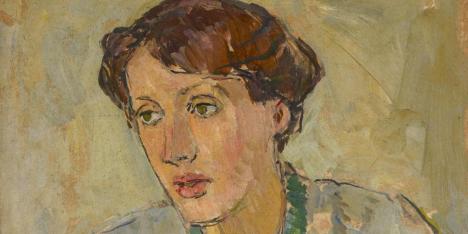
Vanessa Bell’s painting of her sister, Virginia Woolf

What do groundbreaking 17th century poet, Aemilia Bassano Lanier, and 20th century feminist icon, Virginia Woolf, have in common? A lot actually.

In her 1929 essay, “A Room of One’s Own,” Woolf imagines the tragedy of Shakespeare’s brilliant sister, Judith, barred from the grammar school because of her sex and forced to hide her writing from her family. To escape a forced marriage to a man she hates, she runs away to London to seek her fortune in the theatre, only to end up pregnant, abandoned, and destitute. Out of despair, she kills herself. Continue reading “Shakespeare’s Sister Revisited: A Circle of Female Lineage by Mary Sharratt”