Marion Woodman and Mary Daly – Soul Sisters? by Susan Gifford

Susan Gifford Conscious Femininity was the first book by Marion Woodman that I read August 2010; it is a collection of interviews with Woodman from 1985 to 1992. Marion Woodman was eye-opening to me – I started seeing a connection between the feminine side of “God,” mostly missing in our world today, and the ecological disasters that are looming.

Additionally, I recently read Mary Daly’s book, Beyond God the Father (I was enticed to read it because Sarah Sentilles wrote so movingly about Mary Daly on this forum).  Daly’s writing convinced me, at a deep “gut” level, that any possible “solving” of Earth’s current ecological crisis is directly related to an evolution in human spiritual consciousness – from a patriarchal, hierarchical view of all life to an equalitarian view.  And, this change in consciousness must be preceded by women’s liberation.  These three vital issues (ecological crisis, spiritual consciousness and women’s liberation) are inextricably linked.   Although Woodman connects these issues in a manner very similar to the way Daly links them, evidently I wasn’t ready to “get it” until I read Beyond God the Father. Continue reading “Marion Woodman and Mary Daly – Soul Sisters? by Susan Gifford”
Reading “Women” by Laury Silvers

My friends make my life difficult. They make me see what I could not see before. Kecia Ali, Aisha Geissinger, Karen Ruffle and Kathleen Self taught me how to read for gender in the classical texts I use for my academic work. It’s a way of doing close readings by paying attention to the way gender shows up in the text. Aisha sat with me one afternoon and walked me through my own sources pointing out references to gender in the sources. She showed me how the sources I was reading used gender to express social norms. She kept asking me, “What work is gender doing in the text?”
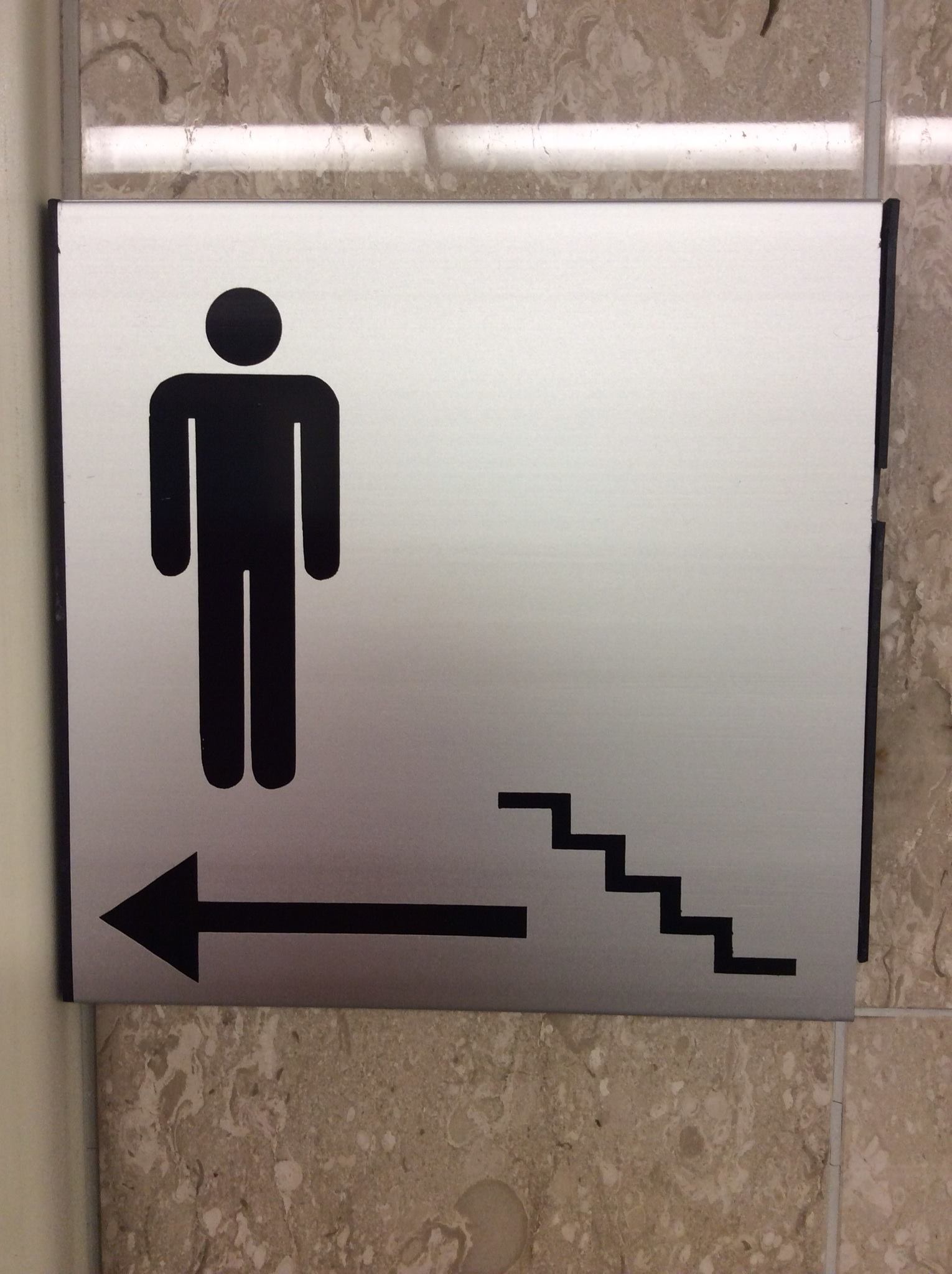
Don’t laugh you been-reading-gender-forever-and-a-day people! Okay laugh. I was a bit slow to pick up this gender thing at first, but I caught up okay. Now I cannot unsee it. I see it everywhere. For instance, I was heading to the stairs at work after a long day and was brain tired. I saw this sign at the stairs:

I nearly kept walking past the stairs thinking for a second that it meant they were for people that society designates as having “male” bodies only. I actually thought that. Then I started laughing at myself. I took a picture and posted it on social media with a story complaining how my friends have absolutely ruined me! Continue reading “Reading “Women” by Laury Silvers”

Revolution Through Rituals by Jann Aldredge-Clanton

Jann's pictureA revolution is happening through Divine Feminine rituals! More and more faith communities are reclaiming the power of the Divine Feminine in sacred rituals.
Rituals move feminist theory and theology/thealogy from the head to the heart. Words and visual symbols in rituals shape our deepest beliefs and values, which drive our actions. Multicultural female divine images in our sacred rituals affirm the sacred value of females throughout the world who continue to suffer from violence, abuse, and discrimination. For feminism to transform our culture, we need Divine Feminine rituals in faith communities. In Women-Church: Theology and Practice, Rosemary Radford Ruether writes: “One needs communities of nurture to guide one through death to the old symbolic order of patriarchy to rebirth into a new community of being and living. One needs not only to engage in rational theoretical discourse about this journey; one also needs deep symbols and symbolic actions to guide and interpret the actual experience of the journey from sexism to liberated humanity” (p. 3).

As I was growing up in the Baptist tradition, hymns were my favorite part of our rituals. One of the hymns I loved singing was “He Lives,” increasing in volume along with the congregation as we came to the refrain which repeated over and over the words “He lives.” Not until many years later could I even imagine singing or saying, “She lives.” I had learned to worship a God who was named and imaged as male. But while studying in a conservative seminary, I was surprised to find Her. I discovered female names and images of Deity in scripture and in Christian history. As an ordained minister, my call has included writing, preaching, and teaching to persuade people that we need multicultural female divine names and images in rituals if we are to have social justice, peace, and equality. My call expanded to writing Divine Feminine rituals, including lyrics to familiar hymn tunes. Continue reading “Revolution Through Rituals by Jann Aldredge-Clanton”

A Women’s Mosque: An Interfaith Space for Feminist Spirituality by Vanessa Rivera de la Fuente

Vanessa Rivera de la Fuente. A Women MosqueIf you thought that all I could do in regards to feminism and religion is challenge Patriarchy and tease around ladies and gentlemen of good temper and better reputation with my corrosive comments, this post may change your mind.

As I said in a previous article, this year I started, with a small group of people, a social project called Imaan, whose goal is centered on inter-faith dialogue and better visibility of the actions and contributions of women in Islam (and religion in general,) plus critical thinking on religion from a feminist and progressive perspective.

As part of the activities of Imaan, we are developing “A Women’s Mosque” project; an initiative that aims to create a meeting place for women and our spirituality. The idea came after a reunion to talk on Islam and inter-faith dialogue with women from different denominations. At one point in the discussion, they asked me about sex segregation in mosques, which led us to a broader reflection on the position of women in the religious space, both material and symbolic, and how uncomfortable we were with that.

We realized that, in a variety of ways, places of worship displace women. Whether they relegate us to separate rooms, or refuse to allow us to speak, limiting our participation to “strictly female” issues such as maternity, caregiving, the role of wife and – of course- clothing, these prohibitions are always from a patriarchal “canonical” perspective.

So we decided to join together to create our own space. Continue reading “A Women’s Mosque: An Interfaith Space for Feminist Spirituality by Vanessa Rivera de la Fuente”

Death with Dignity by Carol P. Christ

Carol Christ in LesbosIn the summer of 1960 when I was 14 years old my much loved grandmother Mae Inglis Christ died of a cancer that affected her brain. The last time I saw my Nannie was shortly after her diagnosis in the early spring. While we were visiting, the cancer affected her back, and she took to her bed. In those days children were not allowed in hospitals. I never saw my grandmother alive again, but my mother told us that our grandmother was hooked up to tubes much longer than she should have been. Mother vowed, “This will never happen to me.” I was driven to the funeral in a limousine with my grandmother’s girlfriends. They spoke about my grandmother’s last days, describing how (because her mind was affected by cancer) my little grandmother had screamed and screamed at them for not visiting–even though they were with her every day. They found my grandmother’s outbursts so traumatic that they said they were relieved to see her looking so peaceful in her coffin. Continue reading “Death with Dignity by Carol P. Christ”

Writing: Changing the World and Ourselves. By Ivy Helman

I still remember the first tim20140903_180423e I read Mary Daly’s Gyn/Ecology. It awoke something within me. Her use of language, the power of her writing and the ease with which she created new words taught me so much about the world around me and about the way the language, and subsequently its use in writing, shapes lives, choices, abilities and destinies. She also taught me about myself.

I was hooked, but not just on Mary Daly. Shortly after I finished her book, I moved onto other feminists writing about religion like Katie Cannon, Judith Plaskow, Alice Walker, Carol Christ, Rita Gross, Gloria Anzaldua, Audre Lorde, Adrienne Rich, Margaret Farley and Starhawk to name just a few. All of them, in fact every feminist I’ve ever read, has shown me the way in which words have power and how words speak truth to power. Ever since, I’ve wanted to be the kind of writer whose words carry a power that not only affects people but also inspires a more just, more equal, more compassionate and more humane world. In other words, I wanted to be a writer activist.

Yet, I’ve always carried around with me a sneaky suspicion that people don’t consider writers true activists. If you aren’t holding a sign, screaming or participating in some sort of public demonstration or civil disobedience, then you have no right to call yourself an activist. Is that really true? Continue reading “Writing: Changing the World and Ourselves. By Ivy Helman”

Halfway… by Sara Frykenberg

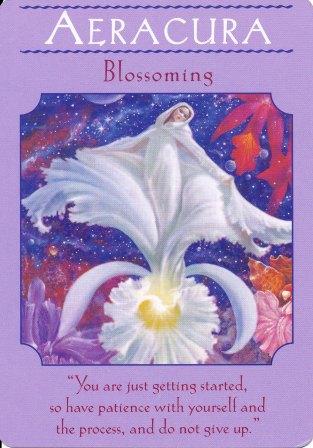
Sara FrykenbergThe title of this post is meant to reflect where I am in the semester, temporally speaking: halfway. Actually, the idea that I am halfway is a bit of a shock to me, considering I feel like I just started! I have a goddess oracle card sitting on my desk that reads: “Blossoming: You are just getting started,” reminding me to be patient with myself as my work takes shape this semester. But seven of fifteen weeks in, I think its time to pull a new card.Aeracura
When the word “halfway” popped into my head, though, I realized this is also a struggle I am having right now. I feel halfway—I answer “yes and no” to every emotional question. I sleep halfway, working even in my dreams. I am halfway okay: one week I am very down and the next, I feel just fine. And sitting on my patio this weekend, unable to sleep, I thought to myself: you are less than halfway full; and realized I that didn’t know what to do to fill myself up.

Continue reading “Halfway… by Sara Frykenberg”

A New Perspective on the Story of Ruth by Ivy Helman

20140903_180423When I think about having returned to the Judaism of my family, I often think about a short phrase that is on almost all of the conversion documents I’ve seen. “Your people shall be my people and your G-d shall be my G-d.”  It comes from the Book of Ruth and is a powerful phrase in and of itself.  Imagine choosing a journey to a foreign land and being so committed to the person you are traveling with that you are willing to forsake the religion and practices of your people to join hers, even when she extorts you to return to your home.   Think about the kind of trust one needs in another to be able to leave everything behind and follow another path.  That is ideally what the convert to Judaism has chosen: to leave behind their past, setting out on a new religious path.  In fact, it is often frowned upon to ask a convert about their religious past because it is as if it never existed.

Besides these documents, I’ve also encountered the Book of Ruth early in my training as a feminist scholar of religion.  I read many commentaries on the story of Ruth, but what I read never spoke to me.  Yes,  two women were bonded in a deep friendship (perhaps as lovers) struggling to survive and avoid bouts of harassment from men. They also defied patriarchal standards of the day.  Sweet and touching, yes.  A good example of the importance of friendship between women, definitely!   What I 20140904_125500didn’t get then that I do now are the values elevated in these two women.

First, what struck me is just how much our pasts are an important part of who we are.  In many ways, they help to shape our futures.  Ruth’s past built within her the values necessary to make the decision to journey to a foreign land with another woman and without what, could be thought of, as adequate protections.

Continue reading “A New Perspective on the Story of Ruth by Ivy Helman”

From Evangelical Christianity to Feminist Evangelism by Andreea Nica

AndreeaI always knew I was a feminist, despite my lack of knowledge in the movement and philosophy growing up. I did, however, have the religious support of my family and community to be an Evangelical Christian. I knew all the right words, mannerisms, and behaviors to represent myself as the proper Christian woman. I went on mission trips abroad, wore purity rings, attended sexual purity retreats and church camps, prayed fervently, spoke in tongues (glossolalia), contributed 10 percent of my meager earnings, and above all, fell in love with God.

As a first-generation college student, I was thirsty for knowledge and ready to take on the world. Some of my favorite courses during my undergraduate career included: “Psychology of Women,” “Women, Gender, and Ethnicity,” and “Psychology of Sexuality.” My coursework in gender, sexuality, and the social sciences compelled me to pursue graduate studies in gender, culture, and media at a university abroad. My studies in gender theory and feminist philosophy, and how it intersects with religion and social institutions ignited my spirit.

As a result, my relationship with god suffered. My newfound feminist beliefs were not solely to blame, however. Rather, a variety of reasons contributed to my detachment from god and the Evangelical church which I explain in my post, “Leaving Behind My First Love.” My new feminist identity was the main driver for questioning my relationship with god. Everything from the male-dominated language and rhetoric used in the church, to the discrimination and prohibition of female pastors, to the stringent gender roles expected of congregants. Continue reading “From Evangelical Christianity to Feminist Evangelism by Andreea Nica”

A letter to feminists…from a 70-year-old white guy by Peter Wilkes

Peter Wilkes - CopyHello everyone —

I’m new at this, so be gentle…  I’m also aware that some might believe this letter to be “mansplaining” (a term I just learned).  I trust it won’t be.

First, I’m not a theologian, and definitely not an academic.  I’m just a guy, like any guy you might see on the street.

But I believe that feminism – defined as true and honest equality – is the only thing that’s going to save this messed-up world.  I’m also convinced the biggest obstacle to this happening is organized religion.  However, most importantly, I’m distressed that other guys don’t get this.  So, before I leave this life, I’m determined to do something about that.

I didn’t always think this way but, in my fifties, as I was kicking and screaming and going down for the third time, I reached for Merlin Stone’s book, When God was a Woman.  Only then did things start to make sense.  I’ve always been told I’m a late bloomer.  I never realized how late “late” would be.

But really, it’s just logical that early man watching a child grow inside the body of a woman – then seeing it emerge from that same body – must have found something amazing, wondrous, and worthy of great praise and adoration.  And also worship, for something like that to happen was, and always will be, a true miracle.  Continue reading “A letter to feminists…from a 70-year-old white guy by Peter Wilkes”