A Problem of Design by Laura Casasbuenas


When I was invited to create this post, a number of topics came to mind. But I decided to start our conversation with my response to the question: why do I write?

I am a Colombian woman designer who promotes venture projects in a region in which it is difficult to grow a business. In my daily work life, I ask entrepreneurs why they do what they do; why do they take the risk of possible failure? Usually, once we know the why, finding the how is much easier.

Continue reading “A Problem of Design by Laura Casasbuenas”

An Untitled Poem for Unanswerable Questions by Eva Espinoza

Thinking about the discourse between spiritualists and victims of harm
Thinking about accountability and prison abolition
Thinking about how white supremacy tells us people are disposable
That they–that we, don’t matter
Thinking about “don’t speak ill of the dead”
Thinking about “honor your ancestors”
Thinking about what else is possible beyond prisons, cages, and borders
Thinking about abusers who refuse to take accountability
Thinking about where that leaves us when we die
Throat’s closed
Stories Untold
Thinking about how death is possible for the living
Thinking about how redemption is possible for the dead
Thinking about, what the fuck even is Salvation, anyway?
Thinking about binaries and how exhausting it is to think of these two things as mutually exclusive to each other
Thinking about how many of us are dissociating because cognitive dissonance is hell on earth
Thinking about the waging of war and how it lives in the body
Thinking about how rage turned inwards is depression
Thinking about the will to live and the will to die
Thinking about the sleep of death and the dreams that come from dying
Thinking about regret
Thinking about when an abuser becomes an ancestor
Thinking about where the guilt goes in the afterlife
Thinking about hell
Thinking about eternal suffering
Thinking about conversations of the reconciliation that is possible between an abusive ancestor and those they’ve abused
Thinking about who the hell said this shit was tied to the land of the living

This poem is a birthing after months of sitting in grief circles and bible studies and with the ancestors.This poem is short but holds so many wrestlings. It holds the wrestling between me and my daddy, now an ancestor, who I could never come out to while he walked this earth. It holds the waiting for my biological father’s passing to reconcile the ways in which he harmed me and my mother and my sister, the ways in which he abandoned and neglected us. It holds the wrestlings of iconizing Kobe Bryant after his death while also naming and recognizing him as the sexual predator he was. It holds the wrestlings of what happens in the afterlife, blending theologies of indigeneity and christianity.

Continue reading “An Untitled Poem for Unanswerable Questions by Eva Espinoza”

Feminist Holy Week Vaginal Christology Devotional, Part 1 by Trelawney Grenfell-Muir


Monday:

Thought for the day:

In Matthew 21, Jesus rides a mother donkey, her baby beside her, into Jerusalem in blatant condemnation and contrast to the militaristic entry of Roman military leaders and soldiers on war horses through a different gate. The point of Palm Sunday was activism: a political protest against war and the domination systems of oppression. The symbol Jesus chose for his protest was a mother and child. When the people shouted “Hosannah,” which means “save us,” they were asking to be liberated from the terrible economic and political oppression of imperial injustice. Jesus’ message of egalitarian Common Good and a kin-dom of JustPeace brought people hope and inspiration for a better future of mutual thriving and wellness.

Prayer:

Divine Source, You who Conceive and Birth and Nourish all Creation, open our hearts to the Way of Salvation that will bring liberation and mutual thriving to our Earth today. To honor Christ with Palm branches, may we protect Palm forest habitats for the orangutans who cry “Hosanna! Save us!” To honor the mother donkey and her baby, may we advocate for mothers everywhere, who are the most impoverished people in our society. May we always remember that You are Mother of All, ever ready to embrace us, cradle us, tend our wounds, nourish our spirits, and remind us that we, ourselves, are the Way of Salvation, growing over and over from your Dark Soil to your Light and back, nourished and nourishing, healed and healing, always giving away the Love we receive, and becoming our true, Divine selves through the power of healing Love.

Continue reading “Feminist Holy Week Vaginal Christology Devotional, Part 1 by Trelawney Grenfell-Muir”

How I Learned to Love Snakes (a poem) by Marie Cartier


Can I recall a time when my resilience surprised me?

My mother always said, “If you feel bad, go out into the garden and eat worms.” Sigh. We didn’t have a garden. My resilience. My head hits the counter, as my father’s hand slams into the back of my head. I am locked in a closet. I am. That would be my mother as I grew up. Kicked up. Weeds grow. They do. What is surprising to me at sixty is not my resilience, but the fact that I never leaned back. Stopped. Being resilient is the inside and out of my blood type—moving through all of my veins. I am surprised if I cut myself there is blood left. But there is. I still bleed.

This is resilience.

Can I recall a time when resistance was the only option?

My father. I am twelve. My best friend is over. I go in the other room with him. I have to. She hears this, my best friend. I resist shame like a knife blade I hold. I leave the room with the blade held out. Shame then holds out a cloak promising me something. A space to hide maybe. I resist. I am in a cold fever. My best friend and I sit; we are watching a documentary on TV. My mother sits behind us. She says to no one, “Things happen at everyone’s house. I bet things happen at your house, too.” My best friend and I say nothing. I resist feeling. On the TV are flamingoes and I will hate flamingoes for the rest of my life.

This is resistance. Continue reading “How I Learned to Love Snakes (a poem) by Marie Cartier”

Sappy modern carols won’t cut it; Gritty Advent Hope is what we need this year. — by Trelawney Grenfell-Muir

As we careen toward ever more terrifying surges in the Covid pandemic, with experts predicting apocalyptic catastrophes by Christmas time, I find myself reacting to the vast majority of modern Christmas songs, stories, movies, and cultural norms with increasing distaste. In these scary, painful weeks leading up to Christmas, my culture has very little to offer other than distraction and superficial jollity. Ho ho ho, Santa Claus is comin’ to town.

Distraction does help, a little. It’s addictive, of course. We turn more and more to social media, with its carefully designed dopamine boosts from each “like” and “love” reaction, each funny cat video, each smug political joke, to keep us from confronting the terror and trauma of our current reality. It’s a legitimate coping mechanism, a crutch that can be useful in many ways. Continue reading “Sappy modern carols won’t cut it; Gritty Advent Hope is what we need this year. — by Trelawney Grenfell-Muir”

Feminist Parenting, Part 2 — What are Children? Are Children Human? by Trelawney Grenfell-Muir

The first thing I do in parenting courses is ask students their most basic beliefs about children. Students are startled by this opening slide, “what are children?” The obvious, knee-jerk response to the question, “Are children human?” is “Of course!” It seems like an unnecessary, bizarre question to ask.

However, many parents and societies treat children as though they are not fully human. Children are valuable, but they are not given the respect, trust, and basic human rights that we generally say humans should receive. Actually, most people treat children with coercion, humiliation, and distrust – as though children are willfully bad and thoughtless. Every time parents give a “consequence” (imposed punishment) for “bad behavior,” they are telling the child that she is a bad person, who needs to be “kept in line” by punitive measures. Every time parents tell children to eat this before they can eat that, or that they must put on a coat if they are to go outside, parents are sending the message that children do not deserve bodily autonomy, do not have the right to make basic decisions about their own bodies, are incompetent. That is anti-feminist parenting. Continue reading “Feminist Parenting, Part 2 — What are Children? Are Children Human? by Trelawney Grenfell-Muir”

Kamala Harris! “I Feel Heard” by Carol P. Christ

Shortly after Kamala Harris was announced as Joe Biden’s choice for his Vice Presidential running mate, a panel of black women were asked, “How do you feel right now?” “I feel heard” was the simple yet profound response of one of them. As is well-known to those who follow the polls, black women voters are the backbone of the Democratic party. In the primary election, black women in South Carolina delivered the Presidential nomination to Joe Biden. Yet all too often black women have felt that their votes were taken for granted.
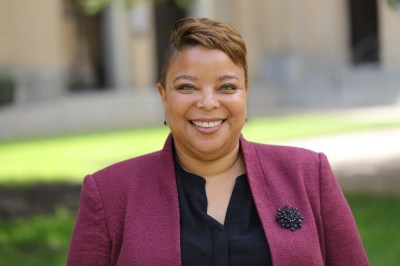
Instead of focusing on the needs and priorities of black women and their communities, all too often the Democratic Party’s strategy has been to reach out to other groups—for example working class white men or white suburban women. To feel heard at this moment means to be taken seriously as a political actor and as a person. Right now, the fact that a black woman was selected is what matters most. There were other qualified women and out of all of them. a black woman, Kamala Harris was chosen. And because of this, black women feel heard. It’s about time. Period. Continue reading “Kamala Harris! “I Feel Heard” by Carol P. Christ”

What’s Changed? by Elise M. Edwards

An image of Elise Edwards smiling outdoorsFriends, it has been a few months since I’ve posted in this community.  I’m amazed at how much our world has changed since then.  Here in the northern hemisphere, spring came and went.  It felt like a tide of turmoil rolled in, leaving debris all along the shore and now we are trying to clean it up while keeping our eyes on the sea for more dangerous waves that are coming.
The issues we now face began before March, but for many of us, that was when the COVID-19 pandemic began to alter our patterns of daily existence. In-person instruction at my university and most schools was suspended and spring semester courses shifted online.  In March and April, we quarantined, self-isolated, and sheltered in place.  While a gradual re-opening of businesses and services has occurred in the months since then, I don’t know anyone who has resumed daily life as it was before. The virus continues to spread and the death toll rises.

Continue reading “What’s Changed? by Elise M. Edwards”

Pandemic Grace: A FAR Message from Xochitl Alvizo

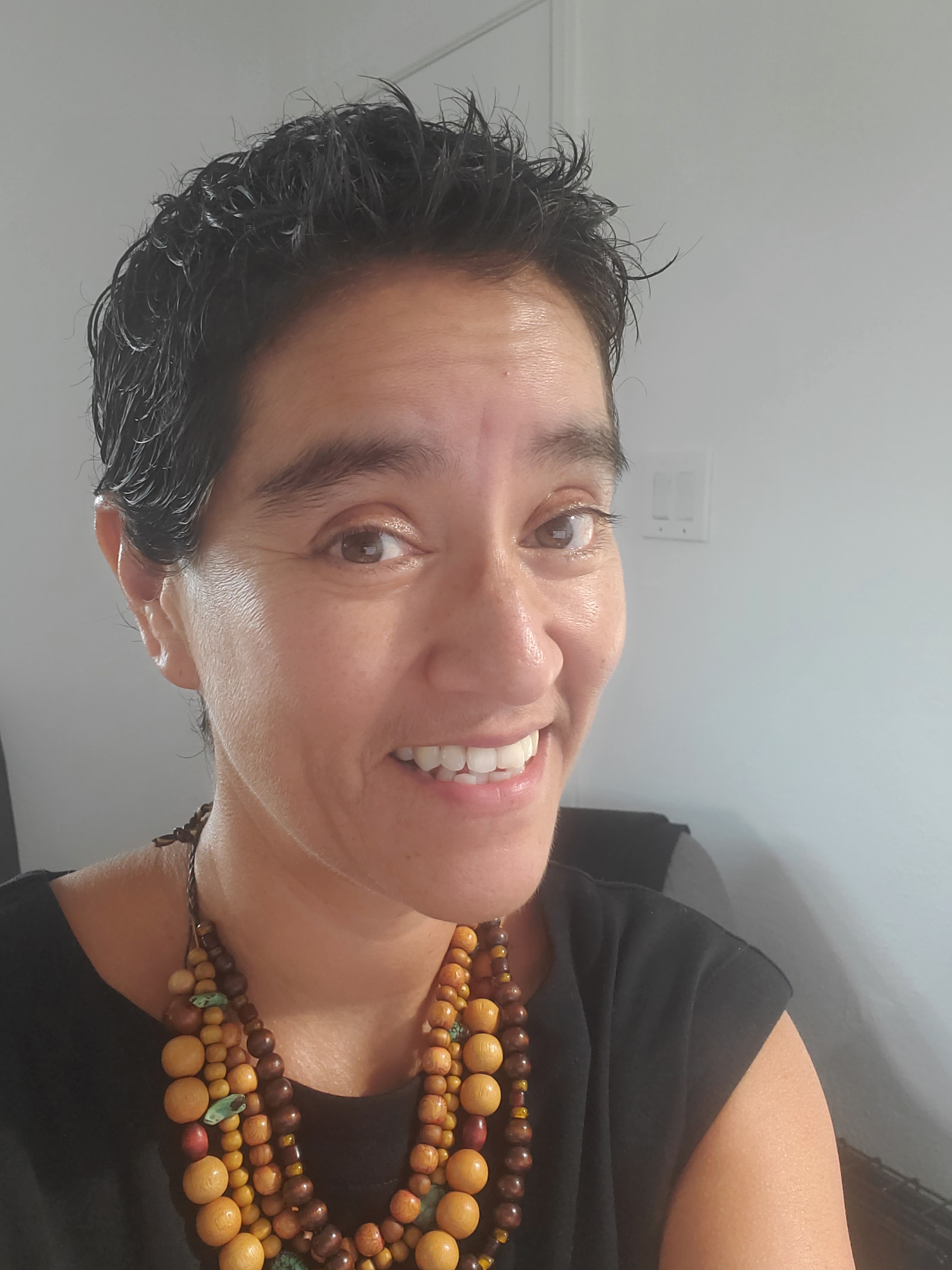
Xochitl with hairHello FAR friends,

I hope you are each doing well – that you are holding up ok during these trying times. It’s Xochitl here. I’m the behind-the-scenes co-weaver keeping things afloat (to varying degrees!) on this collaborative endeavor we call Feminism and Religion.

You may have noticed some gaps in our postings these last couple of months; I want to reassure you that it’s all ok. The gaps are an indication that we are giving one another a lot of pandemic grace. These are tough times and we are all doing what we can to make it through.

FAR will keep publishing as our contributors are able to submit their pieces. We always also welcome new voices and contributions to join in. I will do my best to keep up with the correspondence, but I do appreciate your patience. We are an all-volunteer project and everything we do is done out of our heartfelt commitment. And for all of it, I am grateful.

May we all be well, may we be safe, and may we find our peace.

Rage on, friends!

~ Xochitl


P.S. I’m growing my hair out! I figured quarantine time was a good time to experiment…we’ll see how it goes :)


“Side of the Angels Statement” by Natalie Weaver

As a feminist, I have learned how important it is to limit the scope of my claims to a reasonable space, demarcated by some genuine historical or current investment, connection, or participation.  There are many things in this world about which I passingly feel or think something.  And, even if I think about something quite a bit, if I have nothing but opinion, even an informed one, I find it best to keep to myself.  I therefore tread lightly here.  Nevertheless, I do have some opinions born out of years of studying the relationship between Christianity and slavery, professional risk in dealing with these subjects, and my own different, but very real, history of abuse by which I analogically understand some measure of pain and exploitation.

I am dismayed by the overuse of written, right-side statements of position in times of crisis.  I really feel as though they serve to say something like, “Hey, Everyone, We, the __________  (Church, School, Charity, Business), are on the side of the angels.  We have the right attitude about this thing, and we’re putting it out there publicly so that everyone knows we’re legitimate.  Keep trusting us.” Continue reading ““Side of the Angels Statement” by Natalie Weaver”