Blodeuwedd, Celtic Flower Goddess by Judith Shaw

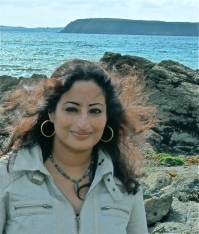
judith Shaw photoBlodeuwedd, also known as the Ninefold Goddess of the Western Isles of Paradise, was a Goddess like no other in the manner of her birth.  She is one of the main figures in the Mabinogion, the Welsh cycle of stories of the early Celtic Goddesses and Gods.  But to understand Blodeuwedd, her short life, her actions, and her death we must look back to the story of Arianrhod, Celtic Sky Goddess.

Continue reading “Blodeuwedd, Celtic Flower Goddess by Judith Shaw”

Reflections on Researching the Goddess Movement in Britain by Kavita Maya

KavitaMayaI’ve been asked by both academics and Pagans what inspired me to pursue doctoral research on the British Goddess movement: of the many ways that people first click with feminist politics, a story entwined with a ‘spiritual’ impulse might seem unusual, given the slow-to-change secular assumptions of mainstream feminism.

When I reflect on my history, two threads at the core of my early feminist identity leap out: one, the value of thinking and asking questions; the other, ‘feminist spirituality’, which for me describes a profound emotional, intellectual and creative investment in the struggle for a fairer, more inclusive world. Two early ‘click’ moments: as a child, asking persistent questions about the sexist gender roles modeled by those around me (and being told “You’ll understand when you’re older,” which I now recall with a grim irony), and—perhaps unusually—coming across the concepts of patriarchy, feminism and the Goddess by way of 1990s teen fiction about witches. Continue reading “Reflections on Researching the Goddess Movement in Britain by Kavita Maya”

Sisterhood is . . . (Well) Complicated by Carol P. Christ

When I wasCarol Molivos by Andrea Sarris 2 a girl, the women in the neighborhood looked out for each other, and my mother had a wide circle of women friends. My grandmother lived nearby, and she and my mother spoke on the telephone nearly every day. My mother and I had a close relationship cemented by caring together for my baby brother.

In graduate school when I was one of a few women in a male-dominated field in a hostile environment, I discovered that “sisterhood is powerful” when I joined a group of women who came together to share experiences and change our lives. Having grown up in a community in which women supported each other, I found it relatively easy to support and seek support from women in a feminist environment.

At the same time, my newfound feminist identity deepened a rift that had opened in my relationship with my mother when I decided to go to graduate school. Continue reading “Sisterhood is . . . (Well) Complicated by Carol P. Christ”

Mixing Work and Faith: Redefining my Relationship with the United Methodist Church by Katey Zeh

photo-1457049946030-985b401546ce

The United Methodist Church (UMC) General Conference, the denomination’s legislative body that meets every four years, is currently underway in Portland, Oregon. For self-avowed “MethoNerds” this is a highly anticipated event akin to watching the Olympics. Meanwhile I’m doing my best to keep my distance from the happenings there.

For six years I worked in the public policy and advocacy office of the UMC, the church into which I had been baptized as a teenager. My position was one coveted by many and for good reason. I got to write, speak, and travel the country, connecting with congregations and training people of faith in advocacy for women and girls. But I was also required to witness the political infighting of General Conference in 2012, which left me in tears and with little hope for a more just, compassionate church.

After that experience my work in the church began to lose its luster. The daily grind of halfheartedly upholding an institution that didn’t align with my theological values, especially around LGBTQ inclusion and abortion care, took its toll. And my life circumstances changed dramatically: I moved from DC to North Carolina, got married, and had my daughter (without any paid time off, which is another matter needing attention.) As a breastfeeding mom of a newborn, many of the aspects of the work that once appealed to me—constant travel, trainings, speaking engagements—were now logistical nightmares. I decided it was time to move on. Continue reading “Mixing Work and Faith: Redefining my Relationship with the United Methodist Church by Katey Zeh”

Interpretations, Interpretations, Interpretation by Carol P. Christ

Carol Molivos by Andrea Sarris 1The Pope’s call for a new study of the possibility of ordaining women as deacons in the Roman Catholic Church and the impasse in the United Methodist Church over homosexuality and abortion, once again ask us to recognize that theories about interpretation and interpretations underlie each of these hotly contested issues. It is not only that individual texts and traditions are subject to conflicting interpretations about their meaning in their own times or in ours. The decision to cite a particular text or tradition, is itself based on an interpretation about which texts and traditions are important or reliable enough to be cited.

The Pope may be convinced that Jesus chose only twelve male disciples, and he may cite certain texts in the Bible, centuries of tradition, and recent church decisions. But others would counter that there is evidence that Jesus had many more than twelve disciples, and that Mary Magdalene was among them. Those arguing that United Methodists should not ordain homosexuals as clergy or permit the sanctifying of homosexual marriage may feel they are on firm ground when they cite Leviticus 18:22 in support of their view that the practice of homosexuality is contrary to Christian teaching. But those on the other side ask why this particular passage is held to be binding on today’s Christian communities, while (for example) the many others affirming a man’s right to have more than one wife are not.

When traditionalists cite the Bible or traditional church teachings as definitive, others may counter that their alternative reading is the “true” interpretation of these same texts or traditions. What is often lost is the fact that all interpretations of texts and traditions are situated. Although it may not be easy to convince traditionalists that the widely accepted theory of situated interpretation is true, at minimum, we should not forget it as feminists.

Thus, if we hope to change inherited traditions, feminists have two tasks. One is to bring forward texts, traditions, and interpretations that have been ignored by those who support traditional (male dominant, anti-homosexual, anti-abortion) positions. But, in doing so, we should not succumb to the temptation to conclude that our new interpretations are unequivocally “true.”

To do so would be to ignore the feminist “first principle” that all interpretations of texts and traditions are situated. If we wish to argue that traditional teachings on the priesthood, abortion, and homosexuality are situated in standpoints we might call “patriarchal” or “anti-queer,” then we must also acknowledge the relativity of our own positions as well.

When this is recognized the ground beneath us shifts. We are no longer arguing about the “true” meaning of inherited traditions. We are no longer asking: “What does the Bible say?” or “What does God say?” Instead we are asking a more nuanced question that begins with the recognition that there is not only more than one interpretation of the meaning of a text, but also more than one interpretation of which texts should be considered central to the meaning of a particular tradition. It is in recognition of the principle that every interpretation is situated that Biblical scholar Elisabeth Schüssler Fiorenza always insists that the idea that Mary Magdalene was among the disciples of Jesus is true from the perspective of women (or wo/men) seeking liberation.

When we recognize the relativity of all standpoints including our own, we recognize that the right question is not “what God has revealed,” but rather, what kind of communities we wish to create and transmit to future generations.  It is our responsibility, individually, and as communities, to answer this question.  If we wish to create communities that are more inclusive than those we have inherited, then we can choose as “true from our perspective” and even as “divinely inspired in our experience and understanding” those interpretations of texts and traditions that support the kinds of inclusive communities we believe Goddess or God calls us to create.

As feminists, we must present new interpretations of texts and traditions. But this is the beginning not the end of the task before us. We must also insist loudly and clearly that all interpretations are situated. The interpretations we advocate are not any more “objectively true” than the interpretations of our adversaries. We cannot avoid naming and examining our standpoints and justifying our interpretations in relation to them.

Recognizing that all interpretations are situated does not mean that all interpretations are equal. We can and must justify our interpretations on linguistic and historical and other grounds. We can and must reflect upon our standpoints, asking what kind of communities and worlds are justified and envisioned from the perspectives of our own standpoints and those of others. And we can and must discuss contested questions about the meaning of traditions and the nature of divinity.

Though I have been speaking about interpretations of Christian tradition, the principles discussed here apply to every religion, including those newly discovered or created. Recently I have been noticing a tendency among some contemporary Neo-pagans to assume that mythic traditions are “true” and to make definitive statements that begin with the phrase “our tradition teaches.”  But there is no reason to believe that pagan traditions are inevitably true–especially since many of them reflect patriarchal points of view–or that they are not subject to a variety of interpretations. While we can learn from traditions, we inevitably interpret them from our own standpoints. We can and must take responsibility for our standpoints and for our interpretations of every tradition.

Carol P. Christ is author or editor of eight books in Women and Religion and is one of the Foremothers of the Women’s Spirituality Movement. She leads the Goddess Pilgrimage to Crete in Spring and Fall: Sign up now for spring tour and save $100. Follow Carol on Twitter @CarolP.Christ, Facebook Goddess Pilgrimage, and Facebook Carol P. Christ.  Carol speaks in depth about the Goddess Pilgrimage to Crete in an illustrated interview with Kaalii Cargill. Photo of Carol by Andrea Sarris.

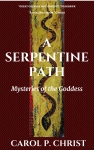
A Serpentine Path Cover with snakeskin backgroundA Serpentine Path: Mysteries of the GoddessGoddess and God in the World final cover design will be published by Far Press in 2016. A journey from despair to the joy of life.
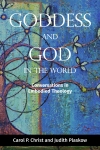
Goddess and God in the World: Conversations in Embodied Theology with Judith Plaskow will be published by Fortress Press in August 2016. Exploring the connections of theology and autobiography and alternatives to the transcendent, omnipotent male God.

Moving Away from Normative Maternal Roles in the Catholic Church by Michele Stopera Freyhauf

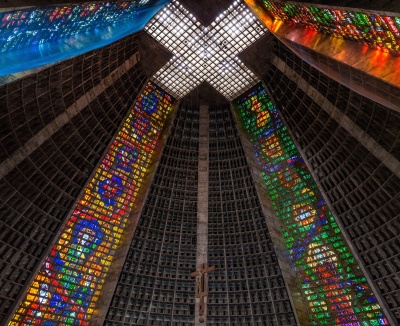
FreyhaufEarlier this week, social media was all abuzz about the Pope’s investigation into restoring women to the diaconate. In the complete transcript of the Pope’s comments,  the traditional notion of women’s maternal role in the church is mentioned in relation to the Church.  Certainly this is nothing new.  Here the Pope describes important “maternal” work such as working with the marginalized, catechesis, and caring for the sick – once again, nothing new.

However, in the next sentence, a very subtle shift is seen when it comes to normative gender roles:

…. there are men who do the same [work as consecrated women], and it is good…..and this is important.

What does this mean – a change in language?  a laying of groundwork? or nothing at all?

imgres

It is no secret that cultural constructs of women as maternal and how a mother is defined as or even does has radically changed in today’s society; but, the Church continues to remain steadfast in normative roles between the priesthood and the “motherhood” of the Church (and therefore “motherhood” in general).

Continue reading “Moving Away from Normative Maternal Roles in the Catholic Church by Michele Stopera Freyhauf”

Holy Women Icons Contemplative Coloring Book by Angela Yarber

angelaAround the time Microaggressions in Ministry: Confronting the Violence of Everyday Church was published, I was under contract and furiously trying to finish yet another book project, a coloring book of all things. On the heels of such imperative justice work as microaggressions, why on earth was creating a coloring book on my radar? Feminist academic-activists don’t dabble in such seemingly insignificant projects as coloring books, do they? As I wrote about my potential coloring book for the first time with FAR, I realized the time is ripe for such work—a coloring book that fuses feminism, arts, and spirituality—so I graciously took the feedback offered here and shared them with my publisher.

Coloring is a fast growing trend among over-stressed adults. “Soothing coloring pages” is a top Google search item. Amazon.com lists over 3,000 adult coloring books, some even featured on their bestsellers list.

Articles—popular and academic—whose authors range from psychologist to spiritual director purport the power of coloring to calm anxiety, relieve stress, and provide a creative and spiritual outlet. Is this a feminist issue? I’d say so. In fact, part of the problem of microaggressions is the difficulty in coping with the stress, depression, and anxiety caused by them. Hear me clearly, I’m not saying that coloring in my coloring book will rid the world of microaggressions and usher in a utopian paradise where every person is treated equally and justly. What I am saying is that, since studies have proven that coloring is a valid mode of relieving stress and anxiety and microaggressions create stress and anxiety, coloring pages filled with bold, revolutionary women, many of whom are women of color and/or queer, can provide a balm, a method of empowerment, a window into what that utopian world could be. Continue reading “Holy Women Icons Contemplative Coloring Book by Angela Yarber”

American Renaissance Festivals and the Yearning for Merry England

mary costume arden forest
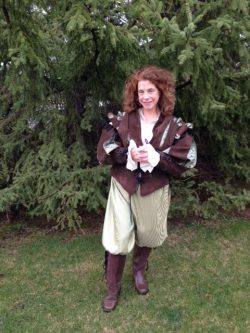
Mary sporting Elizabethan attire during her recent book tour for The Dark Lady’s Mask.

When I was a student in the 1980s, I spent my late summer weekends in another realm. Donning a green gown I had sewn myself, I became a Renaissance woman, or a low-budget facsimile thereof, my cheap, silver-plated goblet hanging from my belt to save me from the indignity of drinking from a paper cup.

For three summers from 1983 to 1985, I was a performer at the Minnesota Renaissance Festival, in those days a much more low-key and grassroots affair than it is today. My character was a historically inaccurate hybrid between a village minstrel and a faery queen out of A Midsummer Night’s Dream.  (I was trying very hard to channel Stevie Nicks.) I even spoke in a fake British accent, largely informed by Monty Python.

For the most part, I was unpaid, although I did earn minimum wage the summer I worked in the information booth. This involved giving directions and handing out site maps. The most exciting part was when some unsuspecting person asked the way to the restroom. Continue reading “American Renaissance Festivals and the Yearning for Merry England”

What Does Mother’s Day Mean in a Patriarchal and Matricidal Culture? by Carol P. Christ

Carol Molivos by Andrea Sarris 2When we seek immortality or spiritual “rebirth,” are we not saying that there is something wrong with the “birth” that was given to us through the body of our mothers? In She Who Changes and in “Reading Plato’s Allegory of the Cave as Matricide and Theacide,” I asserted that our culture is “matricidal” because it is based on the assumption that life in the body in this world “just isn’t good enough.”
What is so wrong with the life that our mothers gave us that we must reject it in the name of a “higher” spiritual life? The answer of course death.

Can we love life without accepting death?

Can we love our mothers if we do not accept a life that ends in death? Continue reading “What Does Mother’s Day Mean in a Patriarchal and Matricidal Culture? by Carol P. Christ”

Dance of Persephone: The Trata of Megara by Laura Shannon 

Laura Shannon square cropIn a previous post on FAR I explored Greek Easter customs which interweave Christian and pre-Christian beliefs.  Today I would like to take a closer look at one of these customs, the women’s ritual dance known as Tráta, ceremonially performed on ‘Bright Tuesday,’ the Tuesday after Easter. Versions of Tráta survive in the towns of Mégara and Elefsina just west of Athens, on the island of Salamína directly across from them, and in the surrounding area as far as Thebes.

Elefsina, of course, is Eleusis, where for over 2,000 years the Eleusinian Mysteries enacted the story of Demeter and her daughter Persephone’s descent to the Underworld. Choral dance was a central part of the ceremonies at Eleusis – as at other sacred sites including Delphi, Knossos, Athens, and Vravrona – and the ‘Well of the Beautiful Dances’ can still be seen at the archaeological site. It is a a visible reminder of the circle dancing which was a part of the initiatory experience, bringing cosmic order – symbolised by the circle – into the human world. This is still one of the functions of the Tráta as performed today.

Eleusis
Eleusis
Eleusis – ‘Well of the Beautiful Dances’

Continue reading “Dance of Persephone: The Trata of Megara by Laura Shannon “