Omnipotence: The Ultimate Homage to Male Dominance as Control by Carol P. Christ

The concept of divine omnipotence is the ultimate expression of male dominance as control.  Divine omnipotence is the view that everything that happens in the world happens according to the will of a divinity, who is in control of everything that happens in the world. When someone dies or great suffering occurs, we are told, “everything happens for a purpose,” “it was meant to be,” or “everything happens according to the will of God—or Goddess.” In our recent book Goddess and God in the World, Judith Plaskow and I criticize and reject this view on both rational and moral grounds.

The doctrine of divine omnipotence is widely assumed, not only in Christian theologies, but in Islam and to a lesser extent in Judaism. Moreover, it is also to be found in western metaphysical and mystery traditions and in the many New Age and Goddess theologies based upon them. Thus we not only hear that whatever happens in the world must be “the will of God,” but increasingly that it must be the “will of the Goddess.” Traditional views of divine omnipotence create and fail to resolve the theological conundrums known as “the free will problem” and “the problem of evil.” Continue reading “Omnipotence: The Ultimate Homage to Male Dominance as Control by Carol P. Christ”

A Return to Light by Judith Shaw

judith shaw photoSpring is here in the northern hemisphere and with it the return of light in the yearly round of seasons. Today is Earth Day. Flowers bloom, new seedlings emerge and birdsong fills the air. As the cold and dark of winter gives way once again to warmth and light, cultures across the world celebrate fertility and the rebirth of life and light.

Continue reading “A Return to Light by Judith Shaw”

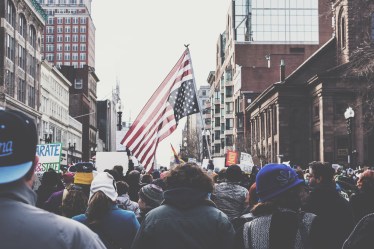
Patriarchy is Killing Us by Vanessa Rivera de la Fuente

FemicideLA

And not softly..

More than 2000 died by feminicide … More than 700 disappeared in Argentina … And more in Latin America and the world.

A few days ago they found Micaela dead. Her family, friends and my fellow activists searched for her for days, campaigned on social networks, shouted her name everywhere, without quitting and  accepting her death—totally avoidable. Micaela Garcia, a 21-year-old girl, raped and murdered by a repeat sexual offender who was questionably released by Judge Carlos Alfredo Rossi in Argentina. Micaela is one more victim of the depredation with which colonial and capitalist patriarchy attacks the lives of women in Latin America.

I just completed my first six months in South Africa. I live in Cape Town. I love this city, I am delighted by its colors and flavors. I am studying a Master’s in Women and Gender Studies—a goal I had longed struggled for.

In my trip from my home to the university, I think of Micaela Garcia and also of Stasha Arend and Tracy Roman—two girls killed in Cape Town recently. Their lives were violently interrupted while they were returning home. At the end of each of my days, 27 women will be raped, likely by someone they know. Some of them will be killed and thrown in the garbage or into a soccer field, or half-buried in an abandoned house; even in death it seems that we have no right to some dignity.

No matter where, death is my guest and part of my landscape; the scenario of its violence has as background the Andean Cord or Table Mountain. It is the same, because it is the same indolence when it comes to the life of a woman, here or there. And I think: I can move my city and even change the country, and start a new life, even with another name, and my life will remain insignificant because I am a woman—a woman of color, from the south, with all the oppression surrounding me in the air.

How to deal with that pain? Well, I have enrolled as a Rape Crisis facilitator. It is not only for solidarity; it is for survival. Do you see what I see? How could I just watch?

The body of a murdered woman is becoming something so common that daily dead had to receive their own name to describe this horror: FEMICIDE. In Mexico, Susana Chavez coined the slogan “Ni Una Más” (Not One More) to lead the fight against femicides. The writer and activist was herself found murdered in 2011.

About two years ago, women from all over Latin America got together to claim “Ni Una Menos, Vivas nos Queremos” (Not One More, We Want Us Alive). And I wonder why this clamor is not yet worldwide, if everywhere patriarchy is killing us, one by one, on our way home and in broad daylight, with no shame or remorse.

Patriarchy is killing us and many murders only matter while selling magazines and newspapers. Then, the rest is silence, as the silenced femicides of indigenous women whose bodies oppose the last stronghold in territorial conflicts against agro-business or mining corporations, as silenced as those women murdered in the “tranquility of their houses” in the name of love for their jealous partners, as silenced as the girls kidnapped on the way to school to appear later killed with their hands and feet tied, with signs of having been raped.

It is no longer just about reporting and visibilizing, but also about counting them: 57 femicides in the first 43 days of 2017 in Argentina, 3 this week in Chile, 27 rapes per day in Cape Town, all of those lost in the trafficking networks. The hunting of women is systematic. Human beings have bad memories, and who has no memory tends to repeat the horrors. As Karina Bridaseca says:

We must check the systematicity. The bodies, found, disappeared, the bones in the desert, are claimed today and always. Our strength is to have managed to gather them all, to alter the regime of the invisible. This feeds the hope of making the account closed. What is important is that today we all share the same language and demand that the account closes.

Patriarchy is killing us … and not softly. Every time the news reports another woman or girl dead, I check my mother, my sister, my daughter, my friends in Chile. I double check my close friends in Cape Town, to know that they are as I saw them last time: OK. And then I can sleep, knowing that they have returned home.

In Santiago de Chile and in Cape Town we must count, dead or alive. Hope for the figthers and memory for those who are no longer here. We won’t stop asking about all of you. We want to know you have returned home. Our lives must matter.

Vanessa Rivera de la FuenteVanessa Rivera de la Fuente works in community development, gender equality and communication for social change. She has led initiatives for women’s empowerment in Ecuador, Peru, Argentina, Morocco and South Africa. As a Gender Justice advocates with a broad scope of interests, she is a social and digital entrepreneur committed with the strengthening of grass roots organizations and the developing of an independent pathway of thinking, research and academic writing around Gender, Politics and Religion. Loyal lover of books, cats and spicy chai.

Photo: Artivism installation. Crosses represent the women dead and shoes, the gender bias of femicide. Shoes are one of the first things found at the site of a murder.

The Coming of Spring: Reflections on Pesach and Judaism by Ivy Helman

meandminiIt is, I think, quite common knowledge that most Jewish holidays relate to the seasonal cycles of the Earth.  Sukkot celebrates the fall harvest.  Chanukah sheds light on the winter darkness.  Tu B’Shevat marks the end of the dry season and so begin the prayers for rain in Israel.  For Purim, we throw off our winter doldrums and let off a little steam to settle our cabin fever.  Pesach is no exception: welcome spring: birth, renewal and even creation.  The leaves return to the trees, baby animals are born, flowers bloom, warmer weather arrives and somehow the possibilities of the coming summer are endless.

In fact, the associations between Pesach and spring are many.  Arthur Waskow in Seasons of Our Joy explains the origins of the connections (pages 133-139).  There were probably two different seasonal celebrations – one of shepherds and one of farmers – that came together around the time of the Babylonian exile into one festival which we can see in Exodus 12 – 13: Pesach.  Farmers in preparation for the harvest of spring wheat cleared out the old crumbs and fermentations of the last year to make room for the new.  Shepherds celebrated the arrival of baby sheep and their flock’s fertility in general by slaughtering a sheep, putting its blood on their tents and dancing around a fire.   Continue reading “The Coming of Spring: Reflections on Pesach and Judaism by Ivy Helman”

Modern Matricide by Sara Frykenberg

Many feminist theologians powerfully and convincingly ague that racist, capitalistic hetero-patriarchy is matricidal, as are its religions. Mother-murder takes a variety of forms, including:

  1. Suppression of mother goddesses/ the mother goddess through establishment of patriarchal religion,
  2. Erasure and appropriation of goddesses and female power figures in myth and historical accounts (i.e. the goddess Eostre),
  3. Recasts of goddesses into monster roles—the ‘monsterization’ of female power (i.e. Medusa, Kali, Dark Pheonix, etc.),
  4. Description of “original,” “world building” matricide, vivid with violent dismemberments, mythically and psychologically (i.e. Tiamat),
  5. Allegorizing of androcentric philosophical ideals through gendered symbols which demonize the mother, contrasting her “dark cave” with “the light of reason” (i.e. Plato’s Cave – thank you Carol for this insight),
  6. The demonization, discrediting, and, in some cases, extermination of midwives/ midwifery (i.e. through ‘witch’ burnings),
  7. Medicalization of pregnancy and childbirth—the disabling of childbirth, etc..

This is a too short list for a wealth of feminist knowledge on the subject of matricide: its pages and exemplars filling up books, databases and blogs with evidence for a misogyny, matricide and “theacide,” that the mainstream media is quick to trivialize and ignore.

In the wake of “Trumpcare’s” (or “Ryancare’s” if you prefer) recent false start,* I find it necessary to re-member this crime and re-contextualize matricide in the battle for health care rights.

In a recent CNN Politics article, Tami Luhby describes, “Essential health care benefits and why they matter.” The Affordable Care Act (aka Obamacare) required insurance plans to cover several “essential benefits,” including things like hospitalization, prescription drug coverage, pediatric services, and, maternal and new born care. Trumpcare, unsurprisingly, is working to dismantle these regulations.

Multiple liberal media sites circulated an image of the POTUS and VPOTUS’s meeting with the conservative Freedom Caucus regarding the health care bill, captions of which captured the gross irony: a room full of (mostly white) men in suits is debating women’s health care with nary a woman in sight. A patriarchal power decides (again) what to do about its mothers, and they propose: no more mandatory prenatal care or new born care. The reasons for which go straight to the heart of white supremacist, capitalist kyriarchy.

Republican Representative John Shimkus explains, responding to a question regarding what he “took issue with” in the ACA by asking in turn, “What about men having to purchase prenatal care… I’m just, is that correct… and should they?” Why should men have to pay? Made infamous for his remarks in many circles, Shimkus’ comments betray a common understanding of reality:

We shouldn’t have to pay for each other—capital is the priority.
We shouldn’t have to take care of each other (like mothers care)
We are not responsible for you (like mothers are)
We are independent, not dependent (upon a mother)
We are individual (not interrelational)
We should not have to care about the “other” (even if that “other” is more than half the population and literally “bears” the future of of our species.)
“We,” is not concerned with/ is not a woman, a child, a mother.

 If the United States lead the way in maternal health, if women had paid leave, if their partners/ spouses also had leave to help raise the next generation, I would still find the repeals of these protections reprehensible. But the fact of the matter is, the US is falling fall behind other industrialized nations—its maternal death rates rising despite the opposite global trend. The national average was 28 deaths per 100,000 live births in 2013, and 25 in 2015. Texas has a particularly high maternal death, growing alarmingly from 18.6 to 30 deaths per 100,000 live births from 2011-2014. USA Today provides important comparative data, reporting “That’s significantly higher than Italy (2.1 deaths per 100,000 live births), Japan (3.3) and France (5.5), and more in line with Mexico (38.9) or Turkey and Chile (15.2), according to World Health Organization statistics.” In light of this data (and other facts of the bill), I cannot respond to Trumpcare with anything but rage and disgust.

Reading different articles about this mortality trend, I was struck by one article in particular that reminded its readers that 25, 28 or 30 in 100,000 isn’t really that many people. ‘Not that many people’ are needlessly dying in a country that has the technology and resources to prevent such death. Not that many people’s lives are impacted—so why should I have to pay for them? Matricide and misogyny are alive and well in our health care system.

I am reading an important book this semester called, Love the Sin: Sexual Regulation and the Limits of Tolerance by Janet Jacobsen and Anne Pellegrini for one of my classes. In the text the authors remind us that people are selectively minoritized to serve particular political ends and uphold notions of a false dominant majority who is actually the minority.

I also read a powerful the chapter, “Looking Back But Moving Forward: The Radical Disability Model,” in Diability Politics & Theory, by AJ Withers—a work of Crip Theory. Here, Withers problematizes the category of “disability” as an arbitrary and socially constructed label (as opposed to impairment) which extends benefits to some in such ways as to deny benefits for many. Withers then warns readers that as long as the label exists, those who were once considered disabled (women, homosexuals and racialized people) are under constant threat of being reclassified and restigmatized in this way. I found the warning particularly chilling and eye opening, recalling how I (and other parents) accessed my own benefits when on maternity leave: by going on disability.

Trump(anti)care didn’t pass. But rather than read this as a victory, I want to reiterate a colleague’s post the day after the ‘defeat:’ the bill didn’t pass because it wasn’t ‘conservative’ enough for the Republican dominated Senate. This was a false start* in the modern renewal of ancient matricide.

Facing the realities of this death-dealing impulse, however, I want to declare that I re-member these mothers, women and goddesses. We re-member; and we will resist.

Miriam the Prophetess as Guardian and Healer by Jill Hammer

jill hammer cropped

The biblical traditions of Miriam the prophetess have captured the imaginations of Bible-readers throughout the ages.  Miriam, Moses’ sister, watches over Moses in his cradle (Exodus 2), and leads the Hebrew women in dance at the shore of the Sea of Reeds to celebrate redemption  (Exodus 15).  Rabbinic lore identifies Miriam with Puah, the midwife who saved Hebrew babies from Pharaoh, and depicts her as the herald of Moses’ birth (Exodus Rabbah 1:13; Babylonian Talmud, Sotah 12a). Contemporary Jewish feminists have established traditions of singing to Miriam the prophetess on Saturday night, parallel to the tradition of singing to Elijah the prophet at that time.   It has also become popular among some feminist/egalitarian Jews to place a cup of Miriam on the seder table at the time of Passover.  This cup is usually filled with water in order to recall the ancient legend that a well of water followed Miriam through the wilderness, quenching the thirst of the wandering people (cf: Babylonian Talmud, Taanit 9a).  It was even said that healing herbs grew near this well, so that Miriam’s prophetic power became a source of healing.

The veneration of Miriam is especially deep in Sephardic Jewish traditions—those Jewish traditions stemming from the Spanish Jewish diaspora, which may be found everywhere from North Africa to Holland to Greece and Bulgaria.  Sephardic women used incantations along with various rituals involving salt, herbs, and other substances, as healing for various ailments and troubles; women skilled in these practices were called precanteras or precantadoras.  Some of their healing incantations invoke Miriam as the ancestress of all women healers, as in the following prayer:

Continue reading “Miriam the Prophetess as Guardian and Healer by Jill Hammer”

When You are Called to Her Service by Deanne Quarrie

Deanne QuarrieWhen I came to Goddess, I was in my mid-forties and I suddenly had this huge fire burning in my soul. I felt like I had missed opportunities to practice my “calling” for forty-five years. I finally knew what I was born to do and couldn’t get there fast enough. There was a part of me that felt that, because of my age, I had to hurry up and “get there.” Come to find out, we do not ever “get there!” We are simply always “getting there!”

I wrote this for one of my students, recalling my own “fervor” in the beginning and I offer now it to every woman who has suddenly found Goddess and her burning desire to serve. Continue reading “When You are Called to Her Service by Deanne Quarrie”

Darkness and Light by Judith Shaw

judith shaw photo“Deep in their roots, all flowers keep the light.” – Theodore Roethke

“Returning violence for violence multiplies violence,
adding deeper darkness to a night already devoid of stars.
Darkness cannot drive out darkness; only light can do that.
Hate cannot drive out hate; only love can do that.”
– Martin Luther King, Jr.

Continue reading “Darkness and Light by Judith Shaw”

Coexist or Contradict? How about Resist Instead by Katey Zeh

Version 2

While stopped at a red light on my way home one day I noticed that the two cars immediately in front of me had the same “Coexist” bumper sticker. You’ve probably seen one like it. Each of the letters of is a symbol representing a major religious or spiritual ideology. For example, the “C” is a crescent moon symbolizing Islam, and the “X” is a Star of David symbolizing Judaism.

This was a particularly long traffic light, which gave me time to realize that I was mistaken. In actuality the bumper sticker on the car just ahead of me did not read “Coexist” but “Contradict.” Underneath that it read, “They can’t all be true-John 14:6.” Despite my early days of earnest scripture memorization I couldn’t recall this particular passage, but I had a hunch it was the verse in which Jesus said, “I am the way, the truth, and the life.” I was right.

I’ll admit my eyes rolled back in my head over this display of Christian moral superiority. Continue reading “Coexist or Contradict? How about Resist Instead by Katey Zeh”

Out of the Darkness by Gina Messina

Gina and SarahToday is Spring Equinox in the Northern Hemisphere, a time to celebrate moving into light and abundance after the darker cold winter. While many of us are lucky enough to have shelter and access to food out of season, this is a time that continues to be a resurrection in countless ways. Not only is it a literal shift from darker days to increasing light, but a symbolic time that allows us to reflect on changes, that while seeming to be hopeless can blossom into new life.

I have been consumed in a time of shifting ground and deep darkness as my sixteen year marriage has come to an end.  Choosing to divorce rather than remain committed to good times and bad is a frightening and soul crushing event. To walk away from what seems to be stability in favor of a questionable future and to defy one’s foundational understanding of family as dictated by society and religion is beyond terrifying.  Continue reading “Out of the Darkness by Gina Messina”