Gray is the New Black by Jamila Sumra

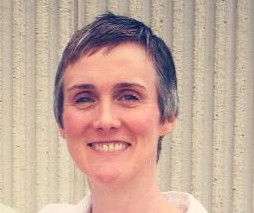
1-jamilasumra 043 I am 47 and I have gray hair.  I decided to stop coloring my h​air some months ago. A decision that was and should be a personal one, set me up, like a badly dressed starlet in the pages of a fashion magazine, for commentary from everyone.

This includes my mother  and assorted sisters in law, cousins and stepson, friends and even salespeople.

Perfect strangers.

I was prepared for my mother’s reaction who is in her late 60s and starts getting restless when a minuscule amount of hair roots begin to show their natural colour every couple of weeks. Who still has her eyebrows threaded in that ultra thin style that was (thankfully) only fashionable in the 1970s.  Obviously then, when I first announced to her that I was going to abandon the hair dye, she wasn’t thrilled.

Imagine being confronted with a powerful and disturbing image illuminating the vagaries of time beside a daughter, your child, with a head of gray hair, when your own is burgundy brown.

Or at least that is what it says on the box.

A stranger, a woman in hijab, stopped me in a supermarket aisle and told me I was ‘brave’.

“I wear the hijab and I wouldn’t ever stop coloring my hair,” she further stated.

A gorgeous friend, always perfectly manicured, expressed confusion, “but why, baby?”

One of my cousins, to whom I sent a selfie, text back, aghast, “Ya Allah!”

In Cape Town, a fashion conscious young woman who works for my mother in law caught me alone one day and approached me warily.

“Can I ask you a personal question?” she asked.

“Yes”

“Is your hair natural or did you pay to get it done?” she continued.

“It’s all natural”

Continue reading “Gray is the New Black by Jamila Sumra”

Christian Sex Ain’t So Vanilla by Andreea Nica

Andreea Nica, pentecostalismMy recent literary digests have included memoirs and nonfiction audiobooks on sex, relationships, and non-monogamy. A recent listen, Open: Love, Sex and Life in an Open Marriage by feminist activist Jenny Block, provides insight into the paradigmatic features of open marriage drawing on the personal experiences of a bisexual woman. Currently, I’m musing over my latest read: The Ethical Slut: A Practical Guide to Polyamory, Open Relationships & Other Adventures written by psychotherapist Dossie Easton and author and sex educator Janet W. Hardy. Through my literary adventures, I can’t help but reflect on my own sexual conditioning and upbringing in the Pentecostal church.

The authors of these feminist-friendly, sex-positive books and social movements did not exist in the church I grew up in, and I feel quite saddened by this. While my sexual conditioning in the church was far from liberating, these reads have helped me realize that the religious community wasn’t as mundane as I thought. My early sex education which was conservative consisted of the anatomical and biological basics (Arizona education system, need I say more?) and early conditioning of sex morals and ethics in the church. The latter was more influential to my perception of sex, gender, and relationships. Of course the media and my peers constructed my views of sexual culture and gender norms, but the church had the greatest impact during my childhood and adolescence. Continue reading “Christian Sex Ain’t So Vanilla by Andreea Nica”

Feminist Musings on Mother’s Day.

photo1Happy Mother’s Day!

Yes, I said it, but Mother’s Day invokes within me a certain hesitancy. Now before you say, “Well that’s because you don’t have children of your own so you don’t understand what it is like to be a mother or because your relationship with your own mother is awful, you hate the day.” I would respond that that is an unfair assessment of the situation. First, Mother’s Day doesn’t bother me because I don’t have children. (By the way, I find the idea that I don’t truly understand love or commitment and/or motherhood because I don’t have kids unbelievably condescending. Yes, motherhood can give one gifts and insights but those can also come from other areas of one’s life and/or other experiences.) I am also not hesitant about Mother’s Day because my mother and I have an awful relationship.  We don’t. In fact, it is quite good.

Rather, Mother’s Day bothers me for three reasons. First, it often seems fake. People seem to go through the motions because it is expected and not because they sincerely want to honor their mothers. Second, I often wonder if Mother’s Day isn’t just some consumer-driven, capitalist, patriarchal creation asking us to buy expensive cards and “remember” all our mothers have done for us this one very special day of year.

Third, what are we celebrating about mothers?  Most of the cards at the store and advertisements on television (if we would take them as research on what the general sentiments on Mother’s Day are) honor a mother’s love, support, guidance and acknowledge the child’s needs.  They thank mothers for all they do.  Continue reading “Feminist Musings on Mother’s Day.”

Songs for the Soul by Elise M. Edwards

Elise EdwardsDuring the Christian season of Lent, many Christians focus on spiritual practices or disciplines that bring them closer to God. This year, I did not really engage in this type of reflection until the end of Lent. I have been wrapping up my first year teaching college students full-time, I’ve been focused on several writing projects, and I’ve been traveling. I did not intentionally think about spiritual practices until I participated in a silent retreat before Holy Week and traveled first to spend the holiday with my family and then again to mourn and remember the life of my aunt.  I reflected on them when I most needed them.

Continue reading “Songs for the Soul by Elise M. Edwards”

Grading in Purgatory? How about a Change of Scenery? (A Little Levity and Thought for the End of the School Year) by Sara Frykenberg

Sara FrykenbergI am sitting on the patio in front of my apartment as I write this blog. It’s hot-ish and windy. Ventura is always windy. The jasmine vine in my garden (also known as my strip of dirt, or ‘the facilities’ for all neighborhood cats) is in full bloom and my potato bush is covered in purple flowers. When I planted this bush, that is now taller than my head, it was just a stick—a stick that can apparently become a tree-size monster; but, it is my favorite plant monster and it hosts the loudly buzzing, giant black bees that visit my home. No bees today though, just a badly needed change of scenery…

Many of the teachers and professors who read this blog can probably empathize with me when I say that I have been trapped in my office for weeks grading. The last day of classes this semester was Friday of the past week. I’m not quite sure how I managed to so fully and completely overestimate my ability to read, comment on and score hundreds of pages, but I did, and so, I am sentenced to ‘hard time’ at my desk. As the Arcade Fire song The Well and the Lighthouse goes, “I’m serving time all for a crime I did commit.”

My twin sister rubbed this in a bit. She called me as I sat in my office Monday morning after a long weekend of grading and asked me what I was doing. I told her, “grading,” and she promptly started laughing at me and bellowed, “You’re in purgatory!!” She continued to laugh for some time; and then proceeded to post references to purgatory on my Facebook page throughout the day. (Consequently, she later noted my lack of response to her posts. Of course, I had been too busy to reply—see above comments on overestimating, end of semester and grading.) Continue reading “Grading in Purgatory? How about a Change of Scenery? (A Little Levity and Thought for the End of the School Year) by Sara Frykenberg”

The Physician Luke, the Virgin Mary and the Poet Sappho by Stuart Dean

Stuart WordPress photoSince my last contribution to Feminism and Religion my interest in Sappho and her influence has led me to a detailed analysis of Luke 1:27-45 (hereafter, the “Conception Story”).  I want to share two observations from that analysis that I think will be of interest to readers of this blog.  Both relate to the generally agreed upon fact that Luke was a physician and in particular to knowledge he can be assumed to have had of female anatomy based on evidence from approximately contemporaneous sources.

My first observation relates to the fact that Luke lived during a time when the existence of ovaries in women had only recently been discovered and their function correctly understood.  While this had obvious implications for Greek medical theory, it would appear to have affected how Luke himself interpreted the source material he had for the Conception Story and hence how he told that story.  My second observation, based on what is known of Greek gynecology, is that Luke would have correctly understood that although as a medical term ‘virginity’ does refer to the physical fact that sexual intercourse has not occurred, it does not necessarily or even often have an anatomical meaning.  That observation leads directly to investigating whether ‘virgin’ as used by Luke may have a primarily metaphysical rather than physical meaning.

Though in general the ‘glory days’ of Classical Greece belonged to the centuries well before Luke’s time, that is not true of Greek medicine.  Notwithstanding promising origins in a sexual egalitarianism that was in principle consistent with modern medicine, Greek medicine regressed substantially with Aristotle, who introduced the notion that the male’s contribution to reproduction was the active one and the female’s merely the passive provision of the material for its success.  Not only did Aristotle not know of ovaries, even after their discovery it is far from clear when exactly their function was fully understood (the best evidence is about a half century after Luke).  Once that happened, however, Greek medicine moved back towards the sexual egalitarianism of its origins (the ‘two seed theory’ of reproduction), repudiating Aristotle’s theory (the ‘single seed theory’ of reproduction). Continue reading “The Physician Luke, the Virgin Mary and the Poet Sappho by Stuart Dean”

Creativity as our Primal Instinct

JassyYears of patriarchy and masculine domination, rapid technological advances, exclusivist religious dogma, separation from nature, materialistic attitudes and the daily course of our busy lives have left women (and men) largely disconnected from their essential primal feminine energies. We get so caught up in all these “doings” that we fail to tend, nurture or even recognize the primal part of our self that is essential to our being. Women from all walks of life are seeking ways and means to connect back to their core, primal feminine self. But who is she really? Moreover, how do we connect to, or awaken her? Continue reading “Creativity as our Primal Instinct”

Ask me No Questions by amina wadud

amina 2014 - cropped

In some alternate universe I would have complete control of what becomes part of discourse about me and about my work.  In THIS universe, I just try to set some minimal standards even when it might sometimes not seem generous to the persons who send requests to interview me.  Must be some alignment of the stars that I’ve been inundated with requests of late, so I will share some of the “types” of request to ask you–my community at Feminism and Religion blog-sphere–what you make of these, or how better to respond? I seriously contend that all people deserve dignity even when this might clash with the dignity of another human being at times.

First, there are the curiosity seekers from the world of fast pace media sensationalism, perhaps in order to keep up with the latest, hippest media hype they rush in with their requests.  While they often include the deadline they are up against, they simultaneously ignore that I might be up against my own deadlines, or just LIVING my life.  I’m clear from way back…the kind of work I do is not well suited for the 30 second sound bites, one second for each of the 30+ years I’ve spent to develop coherent reconstruction of Islamic thought and practice, away from the dominant patriarchal paradigm developed during its classical period and maintained until today.  By the time I explain even that previous sentence my 30 seconds are up!

Next would be sincere but slightly naive students of modern Islamic thought, Islamic reform or Islamic feminism. At one end they define the parameters of their research problem or their term paper (also on deadline) and then they ask me for references, despite particular interests that may be slightly outside my area of expertise.  I usually think and sometimes reply: I am not a reference librarian.  At the other end are graduate students who have more detailed inquiry to make and thus send along complex questions each one, in my mind, deserving a mini-dissertation in order to do justice with.  I have to temper my desire to assist them with a realistic assessment of how long I can be at their disposal. It is not uncommon to answer one set of questions only to be sent another set. Continue reading “Ask me No Questions by amina wadud”

Danu, Celtic Mother Goddess by Judith Shaw

judith Shaw

Danu, of the flowing waters, Queen of the fertile land – Danu, the Great Mother Goddess of the Irish Celts, known as Don by the Welsh Celts, is the Creator Goddess of the Tuatha De Danann, the first wave of Celtic tribes to invade Ireland.   She is also known as Danann, Ana, and Anann.  She gave birth to all life in the land of the Celts.

No stories of Her survive but Her power remains strong. She is the most ancient of all the Celtic deities. In a silver flash of iridescence she appears in my mind’s eye.

As the “Flowing One” She is associated with the seas, wells, springs and the Danube River, gifting Her children the magic of transformation, inspiration, and wisdom. As an Earth Goddess, She bestows abundance and earth mysteries. She embodies the wisdom of living in balance with the Earth. She is sometimes associated with Flidais of the cattle and deer. She is also connected with Brigid, Goddess of Healing, Poetry and Smithcraft, who the original Neolithic people of Ireland worshiped long before the Celts arrived. Continue reading “Danu, Celtic Mother Goddess by Judith Shaw”

The Tyranny of Obliviousness by Marcia Mount Shoop

Marcia headshotThe Supreme Court’s decision to uphold the Michigan voter-determined ban on Affirmative Action in college admissions decisions is just the latest example of how white obliviousness suppresses America’s collective capacity to heal from the wounds of racism.

This obliviousness (a dynamic well described in Mary McClintock Fulkerson’s Places of Redemption) often manifests itself with pronounced potency among those who understand themselves as the well-informed stewards of fairness in our society. The Court’s decision in the Michigan case is a bewildering example of the self-perpetuating nature of obliviousness. When the ethos of a society is fed regularly with the pabulum of color-blindness, and when the affliction of racism is addressed most prevalently with the placebo of fairness then the conditions are ripe for obliviousness around race to flourish. This obliviousness becomes tyrannous when it is backed up and propped up by the sources of power in our society sanctioned as arbiters of justice—justice that is sought after because it is color-blind and fair. I am dizzy from the circularity of it all.  Continue reading “The Tyranny of Obliviousness by Marcia Mount Shoop”