From the Archives: Slavery and God/dess by amina wadud

Moderator’s note: This marvelous FAR site has been running for 10 years and has had more than 3,600 posts in that time. There are so many treasures that have been posted in this decade. They tend to get lost in the archives. We are beginning this column so that we can revisit some of these gems. Today’s blogpost was originally posted January 28, 2014. You can visit it here to see the original comments.
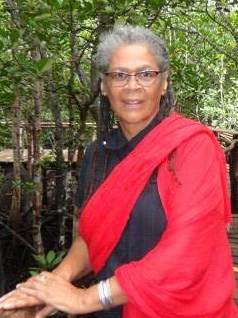
Well the Golden Globe awards have been handed out.  I don’t have a television, so I didn’t actually watch, but a quick google search gives the results.  Highest honors go to a movie about blacks as slaves and whites as criminals.  That’s appropriate. 

But this is feminism and religion, so let me get to the point.  It’s about a chance discussion on social media about the “merciful god” and historical institutions like slavery (holocaust, or oppressions like misogyny, homophobia, Islamaphobia and others…).

My view of the divine, the cosmos and of the world is shaped by my slave ancestry.  Recent area studies about Islam in America estimate that one third of the Africans forced to the Americas were Muslim.   My first African relative on US soil identified as Moor (another term used for “Muslim”).  But Islam did not survive slavery.

Continue reading “From the Archives: Slavery and God/dess by amina wadud”
From the Archives: Gods of War by Barbara Ardinger

Moderator’s note: This marvelous FAR site has been running for 10 years and has had more than 3,500 posts in that time. There are so many treasures that have been posted in this decade that they tend to get lost in the archives. We are beginning this column so that we can all revisit some of these gems. Today’s blogpost was originally posted March 3, 2013. You can visit it here to see the original comments.

Let’s talk about Mars and Ares. It’s common to think the Greek and Roman pantheons were identical and the gods and goddesses just had alternate names. This is not true. The Roman gods and goddesses personified civic virtues, whereas Greek mythology was largely philosophical.

I’ve been thinking about Carol Christ’s two excellent blogs about patriarchy and its connection to war and our so-called heroes. We read or watch the news today and learn about “our heroes” serving in the Middle East, about warriors who’ve come home and are suffering from deep wounds both physical and emotional. Yes, these men and women do indeed deserve our support…but, still, I ask, Why are people who are trained to kill other people called heroes? It’s a very thorny problem, and I must set it aside as I write this blog.

Continue reading “From the Archives: Gods of War by Barbara Ardinger”

On Devarim: From a Feminist Perspective Problematic, but not Irredeemable by Ivy Helman

This week’s Torah portion is Devarim (Deuteronomy 1:1-3:22).  In it, the Isrealites are preparing to enter the Promised Land, as the last of the sinful generation have died.  Most of the parshah consists of Moses recalling the divinely sanctioned wars they undertook and the mass murder they committed in order to possess the land.   

Needless to say, this emphasis on war is difficult from a feminist perspective. Starhawk argues, in “Why We Need Women’s Actions and Feminist Voices for Peace,” that, “Patriarchy finds its ultimate expression in war.” In other words, a parshah ripe with war is ripe with patriarchy.

Yet, it is more problematic than that. The deity is understood to be a warrior as are the Israelites. Verses 1:30 reads, “The L-rd, your G-d, Who goes before you… will fight for you, just as G-d did for you in Egypt before your very eyes.” In addition, this warrior mentality requires the Israelites to fight as well. G-d hardens the hearts of Sihon which requires the Israelites to fight (1:27). Thus, war and mass murder become divinely sanctioned methods which G-d and the Israelites use to further the sacred promise of the Land.

Continue reading “On Devarim: From a Feminist Perspective Problematic, but not Irredeemable by Ivy Helman”

God’s Womb by Joyce Zonana

The first time I came across the phrase, I thought I must be making a mistake. “Que Dieu l’enveloppe dans sa matrice,” the passage read in French, “May God’s womb enfold her.” or possibly, “May God enfold her in His womb.” His womb?

Joyce Zonana
The first time I came across the phrase, I thought I must be making a mistake. “Que Dieu l’enveloppe dans sa matrice,” the passage read in French, “May God’s womb enfold her,” or possibly, “May God enfold her in His womb.” His womb?

I’d just started translating Ce pays qui te ressemble [A Land Like You], Tobie Nathan’s remarkable novel of Egypt’s Jews in the first half of the twentieth-century, and I couldn’t be sure I was correct in thinking that “womb” was the proper rendering for “matrice.” But a quick search confirmed my hunch. Matrice (from the Latin matrix < mater) might be translated as “matrix” or “mould,” but that made no sense here. “Uterus or womb” was the anatomical meaning, and it was the first meaning listed in my French dictionary.

The phrase, or something very like it, kept turning up, always after a dead person was named:  

Que Dieu accueille son âme en sa matrice.

Que Dieu l’enveloppe dans sa matrice.

Que Dieu la berce dans sa matrice. 

May God’s womb welcome his soul.

May God’s womb enfold him.

May God’s womb cradle her.

In all, “God’s womb” is mentioned seven times in this novel set in Cairo’s ancient Jewish quarter, Haret al-Yahud. Each time, it’s part of a ritual prayer, a formulaic wish for the wellbeing of a departed soul. But what extraordinary wellbeing is wished for here, what a remarkable envisioning of God as the possessor of a welcoming, warm womb. Continue reading “God’s Womb by Joyce Zonana”

The Religious Aspects of Star Trek: Discovery Season 1, by Ivy Helman.

I have been watching more television than usual.  Perhaps, the reader has too. Two weeks ago, while I was rewatching Star Trek: Discovery, I thought to myself, “wouldn’t it be nice if I could write something about this series?”  

After all, I want to acknowledge how grateful I am for the ways the series celebrates diversity with: women of color in leading roles; the normalization of gay relationships; and, in the latest season, the inclusion of non-binary and transgender identities. Not only that, it has strong female characters that are empowered, supported and mentored by each other and other crew members. I am also glad that it expresses ecological sustainability, the interconnectedness of life through the mycelial network, and the ethical treatment of animals.  Finally, I have appreciated the way this series questions violence and war.  Notably, it contends with the question: how does a united planetary organization committed to peace find itself in the midst of war?  The answer: war and violence are learned behaviors.  That has a very feminist ring to it, doesn’t it?

However, the show is not perfect.  It contradicts itself in one major area: Starfleet’s hierarchical ranks and the corresponding requirement to follow orders.  Captain Lorca in season 1 episode 3 reminds the crew that they are not part of a democracy.  Yet, the Federation preaches equality and freedom and often touts itself as utopian, where hunger, wants and needs no longer exist.     

Continue reading “The Religious Aspects of Star Trek: Discovery Season 1, by Ivy Helman.”

A Time for Reflection by Gina Messina

We are experiencing much grief and fear in this moment. Many of our loved ones have become ill, or passed on. We struggle with theodicy questions; why would God allow such devastation to occur? However, instead of asking why, as our eyes are being opened to the realities of our world, this is a moment that calls for deep reflection.

This Easter was a challenging time for many of us. I could never have imagined that my daughter Sarah and I would end up spending the holiday at home alone — or that we would have hot dogs and tater tots for Easter dinner  (I let Sarah pick – I should have seen that coming!). Although we were physically separated from family, we connected in other ways. I am grateful for the many suggestions on opportunities to remain engaged with each other even though we are not sharing the same physical space. 
Easter is a celebration of Resurrection; it is a time of new beginnings and I can’t think of a more relevant theme for this moment. We’ve been told to stay home, to rethink the ways we live our daily lives, and to do so knowing that our individual actions have life and death consequences. We’ve found that much of what we thought we couldn’t live without is actually insignificant and that our choices do matter beyond our own purview. 

Continue reading “A Time for Reflection by Gina Messina”

Monotheism and the Shema: Lessons on Oneness and Unity by Ivy Helman

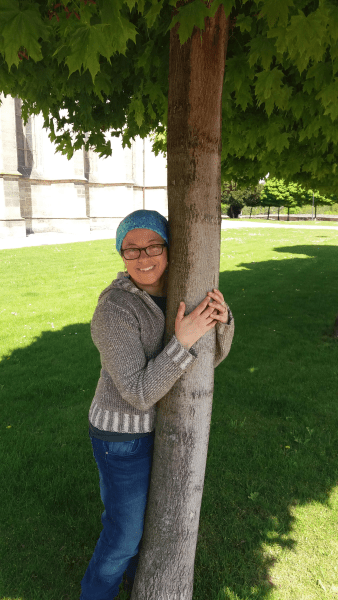
ivy tree huggingIn my last blog post, I explained what we lost when the Israelites became monotheists.  That post looked at the move to monotheism from a more historical, feminist perspective.  In this post, I want to understand monotheism from a more modern, feminist lens.  Using the Shema as a starting point for modern Jewish monotheistic thinking, my question is: how do we honor the deity based on who we understand that deity to be?  In my opinion, Jewish monotheism requires we honor G-d by moving away from one-sided gendered depictions of the deity and think about how we act in light of the interconnectedness of life.

Judaism highlights the Shema as the description of the divine.  It reads, “Hear, O Israel! The L-rd is Our G-d, The L-rd is One!,” (Deut. 6:4).  The key aspect of this verse is twofold. First, we have a relationship with the deity hence the description of the deity as “our,” and, second, this deity is one. 

Oneness used to imply that no other deities count, and perhaps also that no other deities literally exist.  For example, if one were to read the Torah, one would understand the deity differently.  On the one hand, the deity is one of many possible deities one could worship. On the other, it is quite clear that no matter what the deity is called, there is one specific deity that chose to help the Israelites.  In the Torah, the divine is always referred to as he, using only masculine pronouns for the deity. In addition, he is often called king, lord, and master. G-d is depicted as powerful, wrathful, jealous, and even scary.   Continue reading “Monotheism and the Shema: Lessons on Oneness and Unity by Ivy Helman”

When Life Hands You Lemons… by John Erickson

“When life hands you lemons, sometimes you have to make applesauce.”

I’ve been thinking a lot about something my grandmother would always tell me: “When life hands you lemons, sometimes you have to make applesauce.” I know, it sounds crazy, but life right now appears to be more on the crazy than the sane side.

We’re all in a state of uncertainty right now. The news is scary. Twitter is scary. Heck, even TikTok is losing parts of its humor. Everywhere we seem to turn, it’s more information about COVID-19, new cases, new lockdowns, and new things that we shouldn’t do for the foreseeable future. Continue reading “When Life Hands You Lemons… by John Erickson”

Grief, Disappointment, and the Big Comforting White Guy Who Can Make It All Right by Carol P. Christ

As the results from America’s Super Tuesday election primaries came in, I found myself feeling disoriented. I could not focus on any task and found myself obsessively reading the news and checking my Facebook timeline. Many of my friends who had supported Elizabeth Warren were embracing Biden as the next best hope to defeat Donald Trump. Sometime on Thursday, I came across Starhawk’s Facebook post on the grief and disappointment so many of us were feeling following the latest primary results.
In the post, Starhawk spoke of her disappointment that Bernie and Elizabeth did not do better and that Biden did so well. She spoke first of her grief that Elizabeth’s campaign never took hold. No doubt she, like me and many of you, had heard feminist friends express the fear that a woman could not win, saying that as much as they wanted to vote for her, they probably would not. Starhawk said that we simply do not have enough archetypes of female power to enable people to imagine a woman as President. Continue reading “Grief, Disappointment, and the Big Comforting White Guy Who Can Make It All Right by Carol P. Christ”

What We Lost When We Became Monotheists by Ivy Helman

imageThe Tanakh, Jewish scriptures, predominately call the deity king and lord and use the masculine pronoun.  These images evoke a certain level of power. Just how powerful the deity is in then multiplied when “he” is addressed as  “G-d of Gods,” “Lord of Lords,” judge, almighty, all-powerful, and warrior-like with vengeance, fury and flaring nostrils. Events like war, army invasion, disease, drought,  and famine are often described as divine punishments for wrongs done throughout the Tanakh.

All of these images bring forth a certain mindset regarding who the divine is and what “he” does.  Indeed, such images may well have been crucial in those ancient days when famine, drought, war, and disease  were ever present and, day-to-day survival was often extremely difficult. People sought understanding as to why they were suffering, and the workings of divine beings offered such explanations.   Continue reading “What We Lost When We Became Monotheists by Ivy Helman”