All Hail a New Priestess! by Marie Cartier

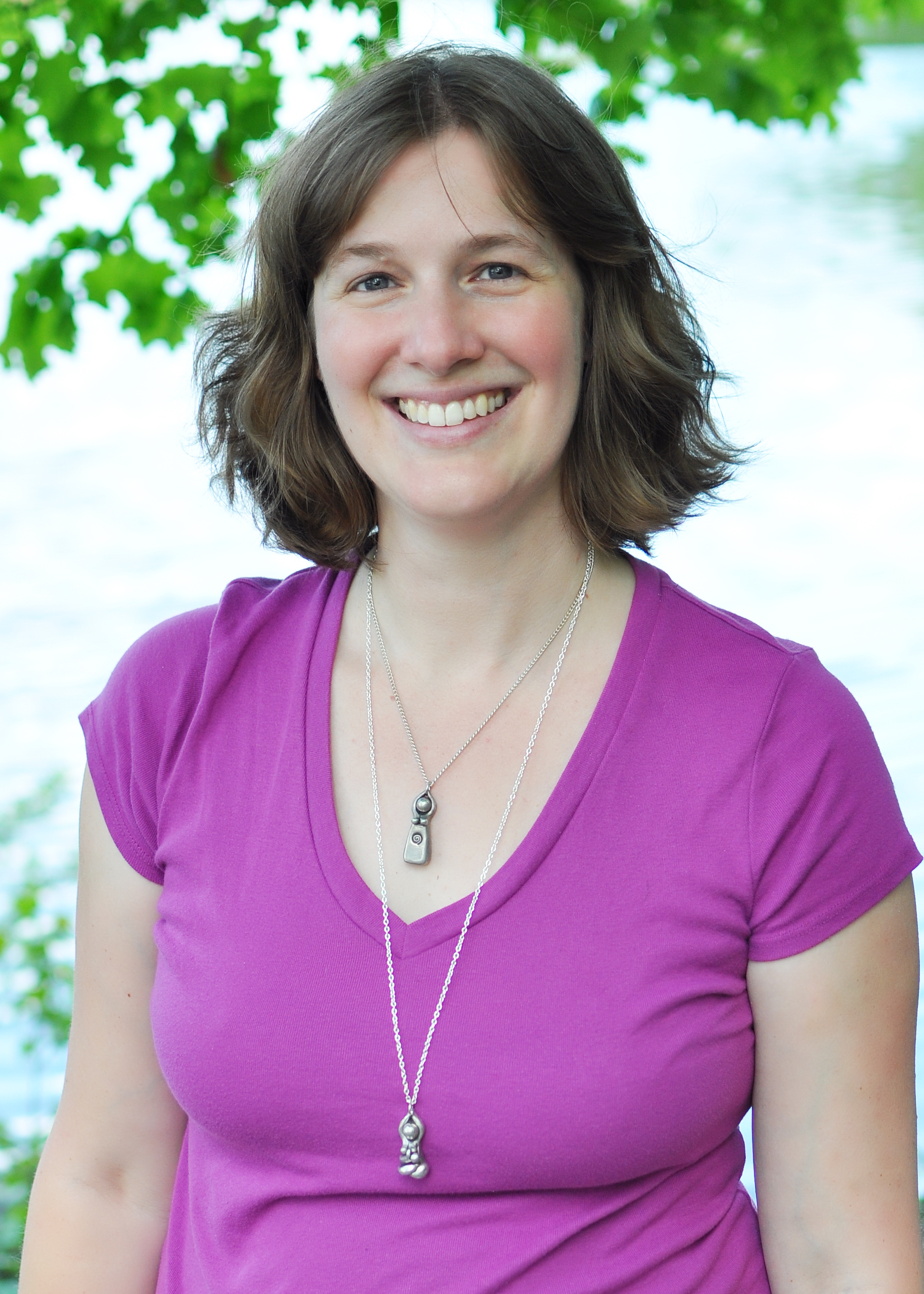
ordination photo
“All hail- the new priestess!” they all shouted at the end.  I was recently ordained near Midsummer Eve (June 20, 2015) as a priestess with the Temple of Isis, Los Angeles and Fellowship of Isis. As befits feminism and religion — I felt it important to share the document read by my scribe – the person who did a lengthy interview and wrote up a summary of why I should be accepted into ordination. I am sharing this with her permission with the Feminism and Religion community. Why do we choose the paths we choose? Why did I choose this Goddess path? The document that explores those reasons follows:

~~~~~~~~~~~~~~~~~~~~~~~~~~~~~~~~~~~~~~~~~~~~~~~~~~~~~~~~~~~~~~~~~~~

June 20th 2015 – 4:00 p.m.
Ordination of Dr. Marie Cartier into the Fellowship of Isis,
Temple of Isis Los Angeles and the Temple of Isis Long Beach.

Our dear sister has reached a point in her life that our ancient mothers of old have been preparing for her and she is ready to be dedicated to and be an emissary of the Goddesses.  She is ready to take on the responsibilities of Priestess and is very honored and proud to be accepted by her Priestess Sisters who she dearly loves and admires. 

Dr. Marie Cartier is a scholar, visual/performance artist, queer activist, writer and theologian. She has been active in many movements for social change. Marie teaches at UC Irvine in the Film & Media Studies Department and CSU Northridge in Gender and Women’s Studies and Queer Studies. She received her Ph.D. in Religion from Claremont Graduate University, 2010, in Women Studies in Religion, with an emphasis on theology, ethics, and culture. She published in 2013 through Routledge the book Baby, You Are My Religion: Women, Gay Bars and Theology Before Stonewall and created the concept of “theelogy” a religion of friendship for people in exile, particularly lesbians prior to 1975. Continue reading “All Hail a New Priestess! by Marie Cartier”

Grainne – Sun Goddess/Winter Queen by Judith Shaw

judith Shaw photoIn the ancient Celtic world the Goddess was the One who expressed Herself through the many.  Grainne is such a one. She is both Winter Queen/Dark Goddess, nurturing seeds through winter, and Solar Sun Goddess, welcoming the rebirth of spring.  She is Aine’s sister or another aspect of Aine. She, like Aine, was honored at the summer solstice and the first grain harvest of early August with bonfires and torchlit processions on top of her sacred hill at Leinster, Ireland.  Remnants of these festivals are still found in folk ritual today.

Continue reading “Grainne – Sun Goddess/Winter Queen by Judith Shaw”

Stoneflower by Molly

Molly 180

Like flower growing from rock
the world is full of tiny, perfect mysteries.
Secrets of heart and soul and landscape
guarded tenderly
taking root in hard crevices
stretching forth
in impossible silence.

Sleeping
resting
waiting
watching
knowing
that all one needs
is a crack in stone
and a seed of possibility…

One spring evening during my year-long woodspriestess experiment , I went for a walk through the woods with my husband and daughter and we discovered something that delighted and thrilled me. It was rock with a small, perfect flower growing out of it and it was a powerful symbol of what I learned from my time in the woods. Continue reading “Stoneflower by Molly”

Book review: Merlin Stone Remembered: Her Life and Works by Barbara Ardinger

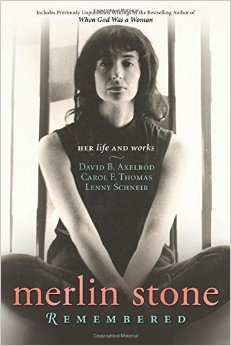
Barbara ArdingerWhen Merlin Stone’s book, When God Was a Woman, was published in 1976, it was a lightning bolt of feminist scholarship that told the world that before there was a Judeo-Christian god there were goddesses, and before there were goddesses, there was the Goddess. If you’re reading this review and you have not read When God Was a Woman, buy the book. Right now. As you sink into Stone’s book, try to imagine what it was like before we knew about Isis or Inanna or Astarte, before we knew that the tree in the Garden of Eden was probably a sacred fig and that the serpent was a symbol or aspect of the Goddess and that people (mostly women) who ate figs or worked with serpents were honored priestesses and prophets. Just imagine! The work of the second wave feminists added to the work of scholars like Merlin Stone and Marija Gimbutas, but it didn’t begin until the second half of the 20th century. Before that? All there was, was God the Father, maker of heaven and earth. Yes, Merlin Stone hurled lightning bolts into our hearts and minds and bookshelves.

Merline StoneMerlin Stone Remembered is a new book edited by Dr. Carol F. Thomas, Dr. David B. Axelrod, and Stone’s life partner Leonard Schneir, with an introduction by Gloria Orenstein, professor emerita, USC. Orenstein opens the book by putting Stone’s work in context. Before the 60s and 70s, she writes, no one was ever taught anything about the matristic cultures. Yes, a few books had been written. She cites G. Rachel Levy’s The Gate of Horn (published in England in 1948, republished in the U.S. in 1963), Helen Diner’s Mothers and Amazons (1973), and Elizabeth Gould Davis’ The First Sex (1971). These books gave us some of our foundational myths, but, Orenstein writes, “we can see that although there was some writing that had already attempted to reconstruct a history of women …, much more expertise and authority were needed” (p. 8). “Once Merlin Stone provided us with her careful scholarship and a truly feminist (not biased, patriarchal) accounting of ancient Goddess cultures, I and all who found Merlin’s work were finally able to understand our herstory…” (p. 9).

Continue reading “Book review: Merlin Stone Remembered: Her Life and Works by Barbara Ardinger”

‘Anjea’ – A Prayer in Paint for the the Protection of this Ancient Sacred Land by Jassy Watson

JassyANJEA is an Australian Aboriginal fertility Goddess. She is an animistic spirit known to the tribesman of the Pennefather River, Queensland, Australia that is located on the Western Cape York Peninsula.

 Not much is known about this Goddess or spirit. I happened to come across her when researching Australian Aboriginal Mother Earth Goddesses. I followed up with numerous inquiries including a member of our local indigenous community and spoke to a curator at an Aboriginal art gallery, and no one had heard of her. Continue reading “‘Anjea’ – A Prayer in Paint for the the Protection of this Ancient Sacred Land by Jassy Watson”

Aphrodite in Bagram Afghanistan & The ‘Friend of the World’ of the Flower Ornament Scripture by Stuart Dean

Stuart WordPress photo

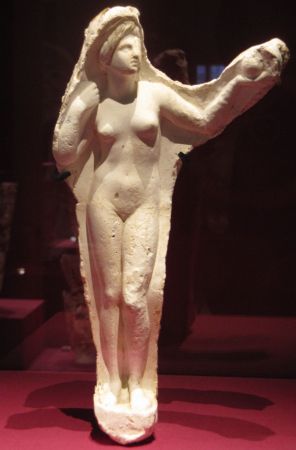
 In the 1930s two ancient storerooms in Afghanistan near what is now the Bagram US Air Base were discovered by French archaeologists and unsealed for the first time in about two thousand years.  They contained artifacts from all over the ancient world, evidencing just how active trade then was along the complex network of routes known collectively as the Silk Road.  Among the artifacts in one of the storerooms was a plaster statuette of Aphrodite (‘Bagram Aphrodite’).

BagramAphroditeThough it is not known what the motivation originally was for acquiring the Bagram Aphrodite, its presence in Afghanistan arguably evinces an interest in female spirituality–if not in the owner of the storerooms then among some of the people in the market for which she may have been destined.  Evidence of such interest among Buddhists is to be found in the Flower Ornament Scripture (FOS), a compendium of sutras dated to approximately the same time (and possibly the same region) as the storeroom containing the Bagram Aphrodite.  Female spiritual figures, both mortal and immortal, some portrayed as having official positions, others without any, are prominent in the final chapter of the FOS, so prominent that one scholar suggests Buddhist women of the time in some way influenced its composition (see Douglas Osto, Power, Women and Wealth in Indian Mahayana Buddhism).
Continue reading “Aphrodite in Bagram Afghanistan & The ‘Friend of the World’ of the Flower Ornament Scripture by Stuart Dean”

Does God have Cleavage? The Avengers and Why the Sheroe We Need is Goddess by Trista Hendren

trista_bkgr_greenMost days I am not certain that anyone really cares about what happens to girls. As a mother of a soon-9-year-old daughter, this burns me.

Because I also have a 12-year-old son, I often end up watching movies I wouldn’t chose on my own. Last Friday, we went to see The Avengers sequel, and I left feeling angry. There were two sheroes shadowed by testosterone; both were highly sexualized. After all the hype over Joss Whedon and his “strong female characters” I began to wonder if the Sheroe we really need is Goddess.

Saturday night we had a lively discussion after dinner with my son’s best friend. I shared my observations on the movie and asked for feedback. They told me the only girl heroes they could think of had “huge boobs.” I asked them why they thought there was not equal amounts of sheroes in movies like this and whether they could think of any movies that were comparable in budget to the Superman, Batman, and Spiderman movies that continue to come out year after year. Continue reading “Does God have Cleavage? The Avengers and Why the Sheroe We Need is Goddess by Trista Hendren”

The Grimm Brothers’ “The White Snake”: A Feminist’s “Adam & Eve”? by Jeri Studebaker

Me, 2013I was trying not to fidget as I sat on the hard, unforgiving walnut pew.  It was a gorgeous summer day out, and I was locked inside breathing stale air and with nothing to look at but the dreary speaker, and, behind him, a life-sized, picture of a sweet-looking man about to be hung from nails driven through his hands.  I was visiting my parents, who love to take me to church, and I just wasn’t able to say no.

As I sat I daydreamed about our indigenous European ancestors.  They did “church” outdoors, in fragrant, airy forests with wild bluebells, warbling birds, and gentle breezes caressing their skin, ears and eyes.  Instead of doing hard time on walnut benches, they got to dance, chant, hold hands and jump through fires.

Continue reading “The Grimm Brothers’ “The White Snake”: A Feminist’s “Adam & Eve”? by Jeri Studebaker”

Restored in Beauty by Carol P. Christ

Carol Christ in LesbosThe path leading to the Klapados Waterfall begins at the edge of an open meadow in the pine and oak woodlands of a mountain in the island of Lesbos. After driving several miles on a very rutted dirt track, we parked under an oak tree, crossed the meadow and scrambled down a winding path. After about 20 minutes, it ended at a stream surrounded by plane trees. From there, we climbed over rocks to reach a pool created by the seasonal waterfall.

waterfall at klapados 1On the day we visited it, the waterfall was only a trickle of cascading drops that moistened its moss-covered path to the pool. The roots of a plane tree growing at the top of cliff followed the path of the water, weaving a web over the rockface all the way down to the pool.

Sitting on a rock at the edge of the pool I realized that the cliffs that embraced it on three sides were the remains of a crater formed twenty million (or so) years ago when a finger of molten lava pushed its way through the earth, exploding in clouds of dust and projectile rocks.

In Lesbos the volcanic activity came not from a single source–for example, from the highest mountain. Rather, like the plane trees in whose shade we rested, the volcano’s trunk with roots in the molten lava of the earth’s core, had many branches from which it erupted at different times. Huge boulders thrown out in the explosions can be seen in the meadows, while the trees in the forest curve their roots around them to reach the soil. The mountain was also shaped by the settling of volcanic dust that crumbles again into tiny fragments when exposed.

As I was thinking of all of this my friend Cristina climbed over the roots of the plane trees that surrounded the pool, removed her clothes, and slipped into the water. Soon I followed her. We sensed that we were in a sacred place, and as we have done rituals together many times before, our ritual emerged spontaneously: it almost seemed as if our minds and bodies were moving as one.

We renewed ourselves in beauty, submerging our bodies under the water three times, while floating in the embrace of the pool, gazing up at the rock formations, admiring trees that looked like dancing women, moss that looked like pubic hair, and blue black damselflies that all together had created a most beautiful place that called to something deep within us on that day.

Later we would sing the English version of the song of the Navajo Beautyway:

klapados waterfall 056


I walk with beauty before me.
I walk with beauty behind me.
I walk with beauty all around me.
As I walk the beauty way.
I walk with beauty above me.
I walk with beauty below me.
I walk with beauty inside me.
As I walk the beauty way.

We are the creative process of life.

We are restored in beauty.

Blessed be!


Carol leads the life-transforming Goddess Pilgrimage to Crete (facebook and twitter).  Carol’s books include She Who Changes and and Rebirth of the Goddess; with Judith Plaskow, the widely-used anthologies Womanspirit Rising and Weaving the Visions and forthcoming next year, Goddess and God in the World: Conversations in Embodied Theology. Explore Carol’s writing.

Demeter – Mother of Creative Potential

JassyThis short paper was part of a series of assessment pieces for university where we had to imagine ourselves as people living in a number of ancient cultures. It addresses a very direct question: “Imagine you are in Ancient Greece sometime during the 5th century BCE and a family member is preparing to be initiated into the Mystery Rites at Eleusis. You have come to support them and join in the festival. Briefly describe your experience?”

It is the month of Boedromion (Late September/Early October) and the sixth day of the Eleusinian festivities held annually in the great city of Athens. I travelled some distance to take part in the nine-day festival held in honour of the ‘Greater Mysteries’ for which my niece prepared as an initiate. The city is alive with women, men and children from near and far. Many have come to take part and fulfil the countless functionary roles associated with the festival, along with the great crowd of initiates who have spent the past three days fasting and ritually preparing. Continue reading “Demeter – Mother of Creative Potential”