Mor is an ancient Celtic Goddess of the Sea and the Sun, bringing to mind the shining days of summer and the abundance of the harvest. Yet in a typical Celtic paradox in which opposites exist as one whole she is also a Dark Goddess of Death and Rebirth.
She is depicted sitting on a throne, revealing her association as a sovereignty goddess. But no ancient stories of courtship and marriage are associated with Mor, no making of a king through marriage to Her. So She must have been a sovereignty goddess in the most ancient sense – as a protector and guardian of the land, as the spirit of Earth itself. Continue reading “Mor, Celtic Goddess of Sun and Sea by Judith Shaw”
“The serpentine path is the path of life, a snakelike, meandering path, winding in and out, up and down, with no beginning and no end, into the darkness and into the light.”
As the year draws to a close, I am putting the finishing touches on A Serpentine Path: Mysteries of the Goddess. In the spring of 2016 it will be published by the Far Press, founded by Gina Messina-Dysert. A Serpentine Path is the original title of the memoir of my journey from despair to the joy of life on the first Goddess Pilgrimage to Crete. It was published in 1995 as Odyssey with the Goddess,a title chosen by the publisher.
A Serpentine Path marked a turning point in my life and in my career as a writer. During the time described in my memoir I had fallen into a deep despair, sparked by the end of a marriage, the end of a love affair, and disappointment in my career. Hoping to make a fresh start, I moved to Greece. Not surprisingly, my despair followed me there. Nonetheless, as I would learn, I made the right decision, for as my Greek therapist was to tell me, I needed to learn to live in my body, not my head, and Greece was the place to learn that.
I was at a crossroads in my spiritual quest. I left Christianity for Goddess feminism, yet I felt the Goddess had abandoned me. I had a contract to write the first Goddess thealogy, but as I said in a speech at I gave at Harvard Divinity School just before I made the decision to move to Greece, I was not sure of the meaning of the symbol of the Goddess. Is Goddess a personal being who cares about the world? Or the name we give to the cycles of birth, death, and regeneration in nature? My inability to answer this question led my editors to return draft of my Goddess thealogy with the comment that something was missing. Continue reading “Announcing A Serpentine Path: Mysteries of the Goddess by Carol P. Christ”
“The tools are unimportant; we have all we need to make magic: our bodies, our breath, our voices, each other.”
–Starhawk
As November drew to a rainy close, we had a small family full moon ritual on our back deck and incorporated a simple gratitude ritual into it. The sky was overcast so we couldn’t actually see the moon, but my four-year-old daughter wanted to get out glow sticks left over from Halloween. We had so much fun dancing around with them and making patterns together in the dark night. We sang a chant I recently made up:
Hallowed evening
Hallowed night
We dance in the shadows
We offer our light.
We did a simple gratitude practice by placing corn kernels in a jar, one for each thing we are grateful for from the past month. We started out slowly and taking turns and then we sped up and the gratitude offerings came tumbling out, over one another. Even the one-year-old added corn, rapidly yet with great concentration to make it actually go in the jar. We drummed and called out, “We are ALIVE! We are GRATEFUL! We are POWERFUL! We are CREATIVE!” When we finally decided to close our ritual and go back inside, the moon peeked out from behind the clouds to briefly say hello and it felt like a blessing on the magic we’d just created together.
As we went back inside, I felt relaxed, happy, and connected. For being something very simple, not particularly pre-planned, and semi-chaotic, it felt like one of our deepest and most connected personal family rituals. The quote above from Starhawk floated back into my mind and I reflected that when I try “too hard” to get things ready for a perfect ritual, I often end up feeling a disappointed. Sometimes I feel like giving up on holding ceremonies with my children entirely. Last year, as we prepared to walk our Winter Solstice Spiral, the baby had a poopy diaper that extended up his back. I often end up snapping critically at whomever isn’t doing it “right.” My boys make fart jokes. My husband gives long-suffering sighs. Our circle looks more like a lopsided peanut. Our humming together discordant and off-key. As we lie on the ground together on the Spring Equinox to do our “Earth Listening” practice together, the kids wiggle and fight, pushing one another off the blanket and exclaiming in loud voices so no one can hear what we’re listening for. We listen to a shamanic drumming CD, but the only one to reach a trance state is the baby as I pace back and forth with him in a baby carrier. The four year old ends up crying because she doesn’t see anything and she wanted to see something cool. Martyrpriestess emerges to complain that she doesn’t know why she even bothers trying to do nice things for anyone if this is how you’re all going to act.
I recently finished reading Under Her Wings: The Making of a Magdalene, by Nicole Christine. A theme running through the book was the concept of “As Above, So Below and As Within, So Without.” I read this book as part of my research for my dissertation about contemporary priestessing and as I read, I kept thinking, I want to hear from the Mamapriestesses, from the Hearth Priestesses! Where are the other practicing priestesses with children at home? I noticed in Christine’s book that the bulk of her work took place after her children were grown and, to my mind, she also had to distance or separate from her children and her relationships in order to fully embrace her priestess self. I notice in my reading and my research group that many women seem to come to priestess work when the intensive stage of motherhood has passed, or they do not have children. Is there a very good reason why temple priestesses were “virgins” and village wise women were crones? Where does the Mamapriestess fit?
As I read Christine’s book and witnessed her intensive self-exploration, discovery, and personal ceremonies and journeys, I realized that in many ways personal exploration feels like a luxury I don’t have at this point in my parenting life. How do we balance our inner journeys with our outer processes? Christine references having to step aside and be somewhat aloof or unavailable to let inner processes and understandings develop, since our inner journeys may become significantly bogged down in groups by interpersonal relationships, dramas, venting, chatting, and so forth. For me, this distance for inner process exploration isn’t possible in the immersive stage of life as a mother. And, yet, I also know in my bones that I’m not meant to give it up. How does the As Within and the So Without actually work?
I return to our Full Moon gratitude ritual. My oldest son, 12, whose height is rapidly extending into manhood, totes his tiny brother on one hip with practiced ease, offering his own glow stick and helping my little one hold his into the air. He expresses gratitude for the fun he’s been having this month with his new video game and, “I’m grateful for you for doing things like this with us, Mom.”
My second son, 9, my bravest child, crawls willingly into the darkness under the deck to retrieve lost glow sticks, poked purposefully down porch cracks by the one year old. He returns, triumphant, holding the bundle of sticks aloft.
My daughter, nearly five, tips her face back, looking up at me with eyes alight, “I’m glad to be a Goddess Girl!” she calls out…
Molly has been “gathering the women” to circle, sing, celebrate, and share since 2008. She plans and facilitates women’s circles, seasonal retreats and rituals, mother-daughter circles, family ceremonies, and red tent circles in rural Missouri. She is an ordained priestess who holds MSW and M.Div degrees and she is currently writing her dissertation about contemporary priestessing in the U.S. Molly’s roots are in birth work and in domestic violence activism. She has worked with groups of women since 1996 and teaches college courses in group dynamics and human services. Molly is the author of Womanrunes: a guide to their use and interpretation, Earthprayer, Birthprayer, Lifeprayer, Womanprayer, and The Red Tent Resource Kit. She has maintained her Talk Birth blog since 2007 and writes about thealogy, nature, practical priestessing, and the goddess at her Woodspriestess blog. Molly and her husband Mark co-create original birth art jewelry, figurines, and goddess pendants at Brigid’s Grove.
Note: If you have children at home, I’d love to hear from you about the Mamapriestess topic! If you do not have children by choice, how does this play into your spiritual work? If you do not have children and that is not by choice, how does this play into your spiritual work?
In a recent blog describing conversations with my friend Rita Gross, I said that I think of myself as a “kind of a Buddhist” because I have given up a great deal of the ego(tism) described by Buddhists. I also remarked that “I must be a Buddhist after all” because I accept my finitude and do not fear death. At the same time, I said that the idea of a relational world coheres with my experience and is more satisfying to me than the Buddhist theory of nondualism. When I speak of a relational world, I am referring to the worldview of process philosophy.
One of the central insights of Buddhism is the concept of “dependent origination.” This means that “no thing” exists in and of itself: “all things” are related to and dependent upon “other things.” One of the key assumptions of western philosophy is that “things” exist in and of themselves: all things have an single, unchangeable “essence” or “nature.” Buddhism considers this assumption to be false: if all things are dependent on other things, then they cannot finally be separated from the web of dependence in which they exist. Buddhism insists, moreover, that the interdependent world is in flux. This means that what a thing-in-relationship is in one moment changes in the next.
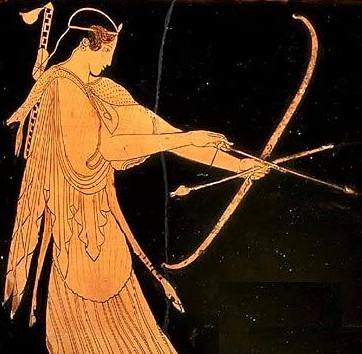
The 2015 Nobel Prize for Medicine was awarded in part to a Chinese woman (Tu) for her identification and isolation to treat malaria of a chemical known as Artemisinin. The name of that chemical derives from the fact that it is found in varying amounts in the ‘family’ (technically, genus) of plants known as Artemisia. The name of that family derives from its association with the goddess Artemis.
Because Tu’s work began in China in the 1960s it is understandable that even if she knew this about Artemisia (a term I use to refer to any one plant or all of the plants of that family) it would not have been a ‘careerbuilder’ for her to point it out to those for whom she was working. It was bad enough that she was a woman. At that place and time, however, if she had said or done something that could be associated with Western culture her name might not even be known today.
Nevertheless, because those awarding the Nobel Prize are free from discrimination or intimidation, it is startling that in the explanation provided for the award no mention is made of the Western legacy of Artemisia. To begin with, the very fact that the Prize was being awarded to a woman for a plant named after a goddess should have elicited at a sense of uncanniness that arguably deserved mention. Be that as it may, the failure to mention that Artemisia has a long history of being used medicinally in the West not only as an insect repellent but also to treat fever–a common symptom of malaria–is simply inexcusable.Continue reading “Artemis As Artemisia: Ancient Female Spirituality & Modern Medicine by Stuart Dean”
I have recently been looking at the Goddess Ananke. Ananke and Her consort Khronos, were primal energies emerging from chaos, producing the world egg and then wrapping themselves around it causing it to burst. Out of that egg came the world and all that it contains. Just imagine, the world being formed by two energies – those of Inevitability or Necessity and by Time. How simple and yet how complex.
The story of Ananke and Khronos is large. Those ancients who held onto this story were not speaking of small things. This is the creation of a Universe. And yet, in the theory of “as above – so below”, we can look and see Ananke and Khronos at work in our lives all the time.
Time and Inevitability – perhaps everything can be broken down into these two principles. With Time and Inevitability, we are born, we age and we die. A life is led, perhaps filled with love, perhaps many things. As children we play and learn and eventually become adults. We marry. We have children. Some step into careers and choose not to procreate, rather putting their energies into work and other kinds of relationships, still creating, just not procreating. Also, it is possible that some of those lives will follow a darker path into poverty, criminality, envy and greed. It is hard to know at birth, the path that will be followed by a child. And yet there is a certain amount of inevitability that when a child is born into a life containing a dark poverty of spirit, that the child may not thrive in healthy wholesome ways in adulthood. Continue reading “Ananke’s Promise by Deanne Quarrie”
Dahut Ahes, Breton goddess of Love and Sensuality is a Celtic Goddess whose origins are obscured by patriarchal tales which cast Her as wanton and depraved. By weaving together the tales as they are today with an understanding of the life-affirming nature of the old pagan ways Dahut emerges as more than a glittering goddess of beauty; She is revealed as an ancient goddess in a long line of goddesses who holds the rebirth of the old ways in Her loving arms.
When Rita Gross visited me in Lesbos two summers ago, we spent many long hours discussing our lives and work. Rita and I met at the Conference of Women Theologians at Alverno College in June, 1971 when we were young women. We did not know it then, but our lives would continue to be intertwined through our common interests, first in the Women and Religion section of the American Academy of Religion, and then through our work on Goddesses and feminist theology.
Having spent the past year and a half immersed in the study of Celtic Goddesses, I am intrigued by the sharing of many of their attributes, symbols, and associations – shape-shifting, magical birds, and apple orchards in the Otherworld to name just a few. One other common thread found in so many Celtic Goddesses is the existence of many contradictory folk tales about them. Their stories, like the otherworldly mists of the Celtic countryside, which materialize suddenly, obscure reality and then melt away again, exist on the frontier of myth and reality.
Chlíodhna (pronounced Kleena), Celtic Goddess of Beauty, the Sea and the Afterlife, is such a Goddess.
Fall, the time of the Day of the Dead and All Souls Day, is a perfect season for us to contemplate “fearless spirituality” as we face our most essential fear, that of death. Though humans have celebrated these days for millennia, fear with a religious veneer pervades our culture, whether in hate towards women and the LGBTQ community, lies that demonize followers of other religions, terror of eternal punishment and spiritual unworthiness, and more.
When I seek guidance for cultivating spiritual fearlessness, I look to ancient Sumer’s Inanna and her willing descent into death. Her story cycle begins in fear of the Sky and Air gods and her desire to destroy her huluppu-tree, Earth’s first life. Gilgamesh hacks it apart to rid it of a serpent, a bird, and Lilith. The tree’s remains are made into Inanna’s throne and bed. In the next story she takes all the divine powers of her father, Enki, the God of Wisdom, and then joyfully celebrates her body and sexuality in her marriage to Dumuzi. Continue reading “Inanna’s Autumn Gift: Fearless Spirituality by Carolyn Lee Boyd”


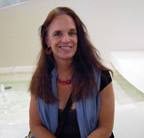 Mor is an ancient Celtic Goddess of the Sea and the Sun, bringing to mind the shining days of summer and the abundance of the harvest. Yet in a typical Celtic paradox in which opposites exist as one whole she is also a Dark Goddess of Death and Rebirth.
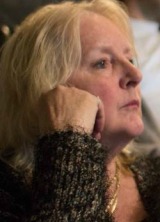 “The serpentine path is the path of life, a snakelike, meandering path, winding in and out, up and down, with no beginning and no end, into the darkness and into the light.”
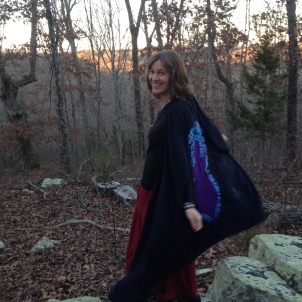
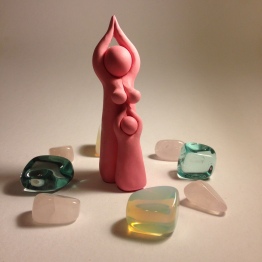

 I have recently been looking at the Goddess Ananke. Ananke and Her consort Khronos, were primal energies emerging from chaos, producing the world egg and then wrapping themselves around it causing it to burst. Out of that egg came the world and all that it contains. Just imagine, the world being formed by two energies – those of Inevitability or Necessity and by Time. How simple and yet how complex.
 When Rita Gross visited me in Lesbos two summers ago, we spent many long hours discussing our lives and work. Rita and I met at the Conference of Women Theologians at Alverno College in June, 1971 when we were young women. We did not know it then, but our lives would continue to be intertwined through our common interests, first in the Women and Religion section of the American Academy of Religion, and then through our work on Goddesses and feminist theology.
 Fall, the time of the Day of the Dead and All Souls Day, is a perfect season for us to contemplate “fearless spirituality” as we face our most essential fear, that of death. Though humans have celebrated these days for millennia, fear with a religious veneer pervades our culture, whether in hate towards women and the LGBTQ community, lies that demonize followers of other religions, terror of eternal punishment and spiritual unworthiness, and more.
