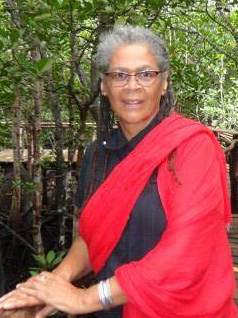
The other day, someone on twitter said she would not allow ISIS (known as the Islamic State of the Levant) use the name of “her” religion. In fact, scholars in Egypt had proposed that they be called “the Separatist movement” and take the word “Islam” out of it. This question raised here is: what exactly is “Islamic” about what they are doing and how they are doing it?
I have contended for at least 2 decades that people use the word “Islam” anyway they want to make any point they want. More importantly, whoever has the power to assert their definition of the word “Islam” controls how it is used. I say the past 2 decades because I used to think I could somehow determine “pure” “Islam”—as opposed to cultural reflections, human imperfections, and intellectual genuflections. I came instead to see that everyone has a definition of Islam and whose definitions held sway was less a matter of epistemology and more a matter of power.
So, I followed one of my intellectual mentors and agreed that for any discourse about Islam, a definition had to be established, agreed upon, and then consistently maintained. He suggested that a simple criteria referent be applied based on Islam’s two primary sacred sources: the text of the Qur’an and the normative practices of the Prophet Muhammad, called sunnah. He juxtaposed these to “little traditions” in the multiple ways Muslims experience or live out their understandings of these two.
Part of the methodology of Islamic feminism and reformed Islamic thought has been to demonstrate a direct link to the two primary sources but with a different paradigm about key principles espoused there in- like justice, human dignity, and compassion. From that point forward, I tend to provide my definition of Islam, give evidence to support that definition from the primary sources and then elaborate how it would work in application to whatever issue is at hand. Continue reading “Muslim Separatists and The Idea of an “Islamic” State by amina wadud”
I had an entire blog ready to go for posting this week, but as news broke of Jennifer Lawrence’s stolen pictures, I couldn’t bring myself not to speak up.
If you have not heard yet, hackers broke into Jennifer Lawrence’s personal accounts and uploaded quite a stash of private photos on to the internet. They are currently threatening to upload stolen videos as well. You can find the story chronicled here. I’ve decided to link to a feminist website that is withholding the photos because, trust me, you do NOT want to wade the waters of what is out there in regards to this story. It is rage inducing. Continue reading “We Are All Jennifer Lawrence by Martha Cecilia Ovadia”
No doubt about it, the news of late has been dismal, heart breaking, soul crunching. Pick a place or theme and see where you end up: Ebola in parts of Africa, Israel and Hamas; Ferguson, Missouri; Ukraine, U.S., and Russia; unaccompanied minors from the south crossing over into U.S. borders; the assault of the Islamic State of Iraq and Levant (ISIS) on Christians, Kurds, Yazidis, Shi’ahs and journalists. This list could (should) be augmented by many other conflicts and areas of strife which have been on-going for longer than the last several weeks.
I don’t know about you, but I draw my weary attention to the latest news each morning with knots in my stomach and a heavy weight on my shoulders. Meanwhile, even if I am not directing my attention to the news per se, the same events are all over social media and I confess I check into facebook and twitter each day even when I try to maintain a casual posture over usage and to keep upbeat attitude in how I engage (or ignore) the latest hash tag or hot button issues.
For weeks I have been thinking I should blog about an important lesson I have learned as best articulated in the book by Sharon Welch: A Feminist Ethic of Risk. In a world riddled with problems of proportions greater than can be solved by any one person, one group, one country or over one life time, how does one continue to be ethically engaged, avoid crippling despair and pointless cynicism, or just plain fall into apathy? Continue reading “Good Muslim, Bad Muslim by amina wadud”
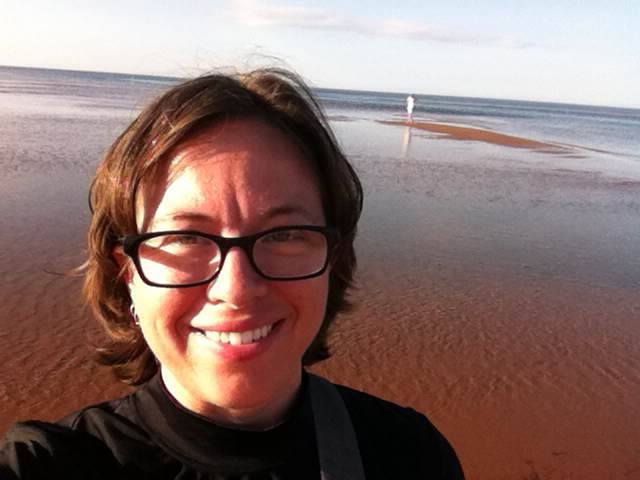
I’m moving to Prague in the Czech Republic at the end of August. (In case anyone is concerned, I will still be a regular contributor to this blog.) In part, moving to Europe feels like diving headfirst into the unknown. At the same time, it also feels right.
A full-time teaching job still did not materialize again this year despite my best efforts. I’m beginning to see the blessing in that since a full-time job would have made the decision to go that much harder. Yet, the decision to move wasn’t easy either.
My plan in Prague is to teach English to local business people as well as feminism and ecology at Charles University. Neither of these plans is solid. I don’t have any job offers yet. I could go there and everything could fall through or I could go there and decide to do something totally different. In many ways, it’s up to me. I’m not sure if I have ever placed myself into a situation in which I have so much freedom. At the same time, I’m also quite nervous about the entire situation. At least I’m not moving to Prague alone. Continue reading “Choosing Well by Ivy Helman”
Rita M. Gross in her book Buddhism After Patriarchy presents portraits of prominent women from Buddhist history. Some stories are extraordinary for the brutal details they contain. For example, Yeshe Tsogyel was raped, kidnapped and beaten by her suitors to the point that her back was a bloody pulp. She subsequently escaped to meditate in a cave.
In a patriarchal society, religious fervour is not recommended for women. Submission and obedience – yes. The life of an ascetic, a wanderer or a hermit – no. A son is relatively free to pursue religious activities (especially if he is one of the younger children and the issue of inheritance is sorted out). However, all daughters are better off tucked into a marriage. Supporting your husband and sons on their spiritual path – yes. Independent striving away from family life – no. Continue reading “Women are like countries: both need to fight hard for independence by Oxana Poberejnaia”
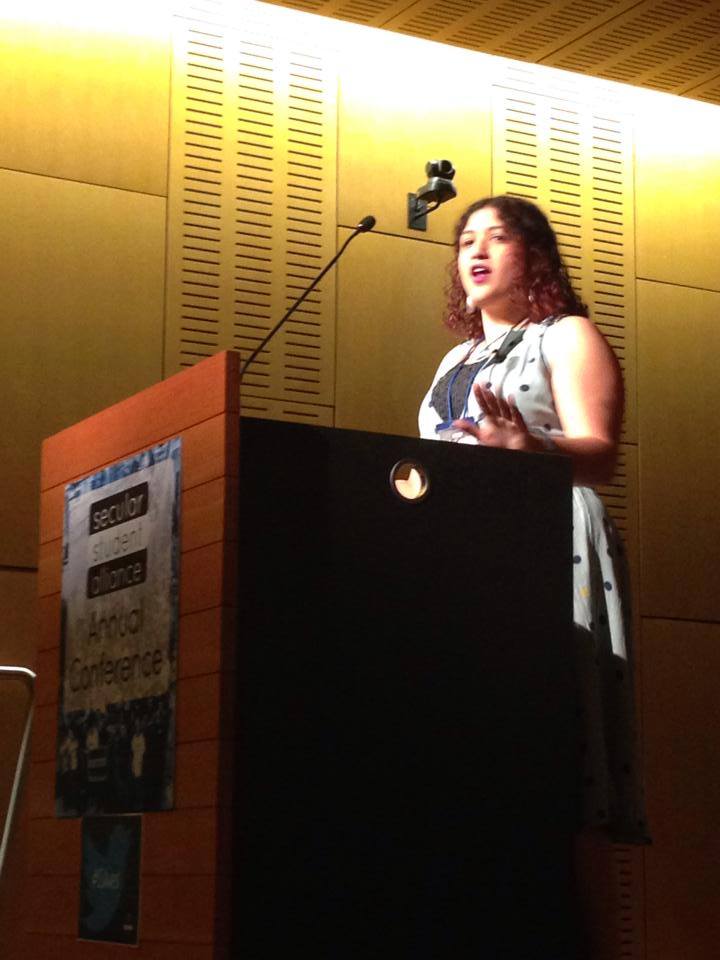
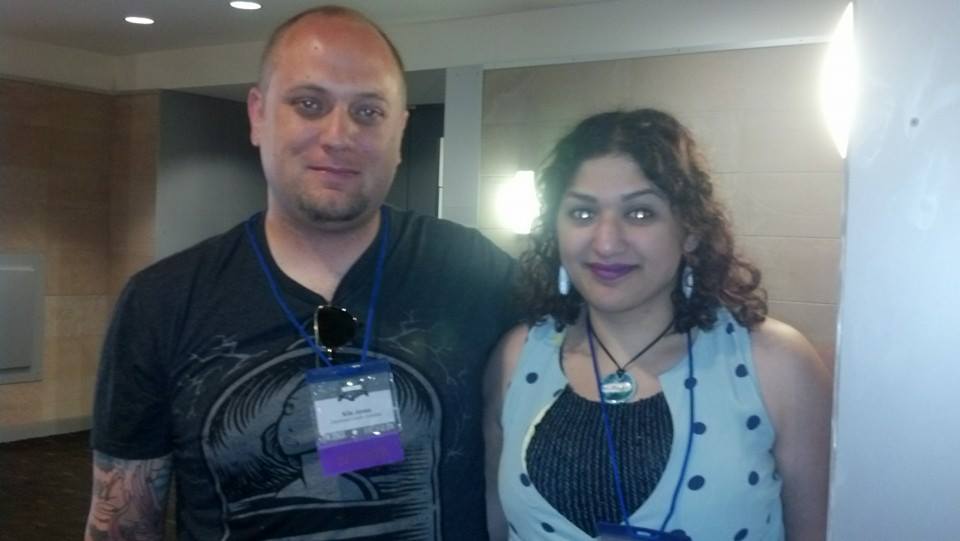
A few days ago I had the pleasure of giving a talk at the Secular Student Alliance Conference on how non-believing persons can work with Churches. Amidst the chaos of conferences–managing your time, deciding which talks to attend, and making sure you have enough water (it was a Burning Ring of Fire outside in Tempe, AZ)–I got to meet some pretty incredible secular women.
One of them was Heina Dadabhoy.
Heina speaking at SSA.
Former Muslim, blogger at Freethought Blogs, and overall bad-ass, Heina spoke about ways in which secular groups can create a more welcoming environment for ex-Muslims and Muslims beginning to doubt. Her talk, “Of Murtids and Muslims,” (a “murtid” is a public apostate) was not only about her experiences coming out as a secular humanist, but considered some of the absurd questions people ask her (and other ex-Muslims) about leaving Islam. “So did your parents try to honor kill you?” “Have you gone through FGM?” It was disturbingly humorous.
What I considered to be Heina’s main point, was that we should respect each others’ individual differences and not generalize and caricature all Muslims with the depictions of some. “Just because you read Ayaan Hirsi Ali’s book,” Heina notes, “does not make you an expert on Islam.” Heina made sure to emphasize the radical diversity that exists in Islam. She also spoke of the some of the issues that people go through when they leave Islam: How do I create a new identity when my old one was intricately tied up in my Muslim community, family, and culture? How do I navigate popular culture when I have missed a bunch of it? How do I find myself in this new secular world? Heina’s answers were refreshingly honest and insightful.
P.S. Aisha (one of Muhammed’s wives) should not simply be reduced to the young person Muhammed married; she was also a war leader, influential Muslim thinker, and someone who contributed greatly to early Islam. This is, of course, Heina’s insight.
Me and Heina at SSA
Another awesome secular woman I met, was Sarah Morehead.
Sarah. Photo from Apostacon.
Sarah is a former evangelical Southern Baptist, Executive Director of the “Recovering From Religion” project, and another overall bad-ass. She spoke on how to start up a Recovering From Religion group on your campus. Here is a blurb about Recovering From Religion,
“If you are one of the many people who have determined that religion no longer has a place in their life, but are still dealing with the after-effects in some way or another, Recovering From Religion (RR) may be just the right spot for you. Many people come to a point that they no longer accept the supernatural explanations for the world around them, or they realize just how much conflict religious belief creates. It can be difficult to leave religion because family and culture put so much pressure on us to stay and pretend to believe the unbelievable. If this is you, we want to help you find your way out. Don’t let people convince you that you just didn’t have ‘enough’ faith, or that you just haven’t found the “right” religion.”
Sarah and I chatted (and often laughed) about our old experiences as conservative Christians. We discussed some of the funny language (Christian-eze) we used to use, the various levels of guilt and shame that were cast upon us, and how science helps explain some of the interesting displays of piety often seen at Pentecostal services. Sarah’s jovial and welcoming demeanor was calming, and as an Executive Director for a project aimed at helping people “recover” from religion, I cannot think of a better person for the job.
Lyz. Photo by SSA.
The last woman I have in mind is Lyz Liddell.
Lyz is the Director of Campus Organizing for the Secular Student Alliance. I have an interview I did with her a while back, on this very blog! Besides running around with her headset on, standing on chairs for announcements, and generally keeping the world of SSA from not crumbling into oblivion, Lyz is a great motivation and example. If you are ever interested in starting a SSA group on your campus, talk to her.
To all those who attended this years SSA West, or who are involved with helping secular students: Unite!
Kile Jones holds a Bachelors of Theology (B.Th.) from Faith Seminary, a Masters of Theological Studies (M.T.S.) and a Masters of Sacred Theology (S.T.M.) from Boston University, and is a current Ph.D. in Religion student at Claremont Lincoln University. He also holds a Certificate in Science and Religion from the Boston Theological Institute. Mr. Jones has been published in Zygon: Journal of Religion and Science, Philosophy Now, Free Inquiry, World Futures, Human Affairs, and the Secular Web. He is the Founder/Editor-in-Chief of Claremont Journal of Religion (www.claremontjournal.com), and is the Founder/Director of Interview an Atheist at Church Day (interviewatheists.wordpress.com).
Supreme Court Justice Ruth Bader Ginsburg said it best when she quoted Planned Parenthood of Southeastern Pennsylvania vs. Casey court case expressing her dissent on the Hobby Lobby decision made on Monday, June 30, 2014.
“The ability of women to participate equally in the economic and social life of the nation has been facilitated by their ability to control their reproductive lives.”
The Supreme Court ruled 5-4 in Burwell v. Hobby Lobby that closely held companies with religious objections can opt out of providing contraception coverage under the Affordable Care Act. The Supreme Court’s majority also rejected the Obama administration’s argument that for-profit companies cannot assert religious rights under Religious Freedom Restoration Act. As the RFRA only refers to persons, closely held companies are designating themselves as persons in the case. Closely held companies such as Hobby Lobby are owned by one person or are family owned business and are not a publicly traded company. Justice Sonia Sotomayor agreed with Justice Ruth Ginsburg’s dissent that companies do not have such rights – publicly traded on not.
The Burwell v. Hobby Lobby was about asserting patriarchal power and retaining profit–not about religious freedom. The Obama administration argued that the contraception requirement was not a mandate because companies could have dropped their insurance coverage and offered their employees another insurance option. The truth to Hobby Lobby is they wanted to have the privileged advantage of tax breaks offered under the Affordable Care Act while securing more money by skirting the contraception requirement under the cloth of religious freedom. Continue reading “Hobby Lobby, Not Invited at the Spiritual Negotiating Table by Qumyka Rasheeda Howell”
On June 11, 2014 the New York Times made waves in the world of Mormondom with their breaking news that two members of the Church of Jesus Christ of Latter-day Saints (LDS) are facing excommunication on the grounds of apostasy. Active Church members Kate Kelly and John P. Dehlin both received letters from their local church officials in early June summoning them to participate in scheduled Church hearings to discuss their so-called heretical public activism. By many accounts, this appears to be Dehlin’s first notice of formal disciplinary action for his faith-mending work with Mormon Stories, but Kelly has been under official fire from the LDS Church since late May for her efforts in founding and operating Ordain Women (OW)—a pro-women’s ordination group of active believers—more than a year prior. The excommunication threats came on the heels of a church-wide trend that preaches acceptance and diversity among members and beyond, but sends a mixed message to those who, like Kate Kelly, find themselves asking sincere questions only to be either silenced or rejected by their Church and cut off from communal worship of their God.
Ever since the New York Times story broke, the web has seen a swarm of responses in the form of news, interviews, blog posts, and social media discussion; watching everything unfold has been a fascinating study in feminist thought. Kelly herself responded publicly to her disciplinary letter here, saying that she had been transparent about Ordain Women with her bishop from the group’s inception and that not once had she been called in to discuss her work. The formal letter came only after Kelly had moved across the country, and the disciplinary hearing is scheduled to occur with or without her on June 22, 2014. On June 23, Kelly received the word that the trial had resulted in her excommunication.
As I’ve read through the slew of ideas and arguments surrounding what amounts to Kate Kelly’s spiritual fate, I can’t help but notice a strong underlying theme of patriarchy at work in squelching what Kelly believes are sincere questions about the lives of Mormon women. Commentators have tried hard—in classic anti-feminist fashion—to discredit Kelly’s work with Ordain Women, making certain that readers see her as a disingenuous religious deviant worthy of silencing. Throughout the spill of voices about Kelly’s Church standing the underlying point seems to be that as a Latter-day Saint she has no right to contest her Church’s doctrine or its patriarchy, that she is imagining inequality into the Church, that the Church’s discipline will be for her own spiritual good, and even that her group, Ordain Women, is lying in its claims about inequality. Continue reading “Anne Hutchinson, Sor Juana, and Kate Kelly: Reflections on Equality and Excommunication by Erin Seaward-Hiatt”
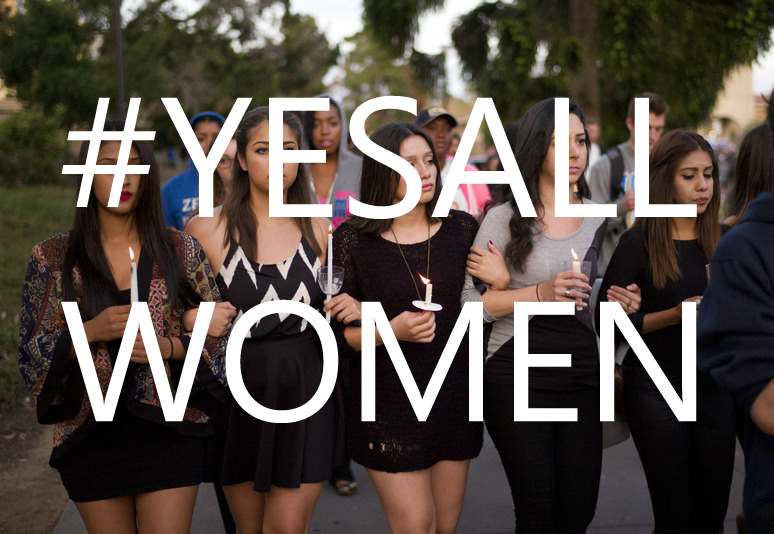
#YesAllWomen proved that although not all men commit horrible crimes against women, the men that often get the headlines and create the most controversy are the ones that need to be watched out for.
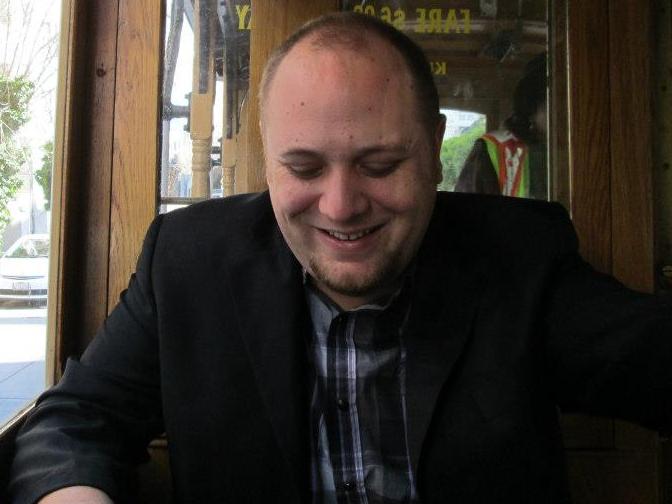
The one thing I typically will choose to do on the rare occasion that I’m able to sit down and relax is to watch a documentary. While some people may go to the gym, read a book, or hang with friends, I typically choose to stay in, nestle up on my couch, and learn. While on my last bout of relaxation, I chose to watch the HBO documentary Questioning Darwin. Although it offers very little new insight into the evolution vs. creationism debate, it does offer an interesting new way to look at the recent social media hashtag war feminists, allies, and supporters found themselves in over the #YesAllWomen movement that took the world by storm.
Now, before I discuss #YesAllWomen, I have to admit that I did not enter into the safe space women created for themselves to tell tales of the horrible things they have and have had to face on a daily basis. I firmly believe that men should not have entered into the digital space Continue reading “#YesAllWomen, the Darwin Debate, and the God Complex by John Erickson”
As I return home from a busy day signing off on proofs and churning out cutesy paper patterns, I find my husband, Neil, at the kitchen table. He wears a complicated frown as he pores over a score of tiled browser windows telling various iterations of a singular story. “Come here,” he says, flipping to a second tab, “you’ve got to see this.” It’s The Daily Show, and as I poise for Tea Party zingers and Obamacare barbs, I see instead a girl in hijab, a brilliant smile, and a whole new hope for world politics.
The story was all about a girl. Malala Yousafzai achieved international fame one day when she took a Taliban bullet to the head. Her vocal support for girls’ education had earned her a spot on the Taliban’s hit list. It’s a group with an all-too-familiar radical bent that thrives, among other things, on the cultural ideal of women’s inferiority and silence. One moment Malala was boarding a bus and the next, she faced a hopeful assassin, eager to erase her words and her work from the world. Continue reading “The Girl Who Lived: Reflections on Malala, the Middle East, and Feminism by Erin Seaward-Hiatt”


 The other day, someone on twitter said she would not allow ISIS (known as the Islamic State of the Levant) use the name of “her” religion. In fact, scholars in Egypt had proposed that they be called “the Separatist movement” and take the word “Islam” out of it. This question raised here is: what exactly is “Islamic” about what they are doing and how they are doing it?




 Feminism and Religion