

 The last young adult fantasy book series I will be looking at is Sarah Maas’s Throne of Glass. Sarah Maas’s Throne of Glass is a combination of all the elements which we have looked at in the previous two series, Girl of Fire and Thrones and Daughter of Smoke and Bone. Throne of Glass was originally conceived of as a remake of Cinderella but mingled with action. It is so much more than, weaving fantasy with gripping action, hard emotions, and love stories to revel any romance novel. And like the previous two series, it has been picked up to be turned into a TV series. Continue reading “Part Three: Magic, Destiny, and Acceptance by Anjeanette LeBoeuf”
Category: Literature
Contemplative Education: A Pedagogical Approach of Compassion by Elisabeth Schilling
 Even though I encountered wisdom literature when specializing in Hinduism during my Religious Studies doctoral program, through reading the works of Christian female mystics and the liberation theologies of feminist spiritual guides, it took a book I never encountered in my academic studies to give me a spiritual foundation that feels complete after my departure from Christianity: Eckhart Tolle’s The Power of Now. It led me to the place where I am now, practicing mindfulness, being aware of the ego, and attempting to live in the present. Now I can return to wisdom literature with a lens that helps it make sense. Although I did not know it when I began utilizing these ideas in the classroom, there is an entire pedagogy based on them.
Contemplative education is based on the observation that the world is in need of healing and the majority of people have not encountered helpful ways to deal with their suffering. Why not use the classroom for healing and to create healers? Contemplative education has five goals or elements: 1. deep, or critical, thinking, 2. constructive communication, 3. awareness of the global impact of our behaviors, 4. personal development/well-being, and 5. a non-sectarian admiration for and inclusion of wisdom literature and traditions. This last element is what really distinguishes this pedagogy from others. And I see how it shares a great deal with feminist practices as well, especially as feminist pedagogy honors experiential knowledge, self-reflection, and activism. Continue reading “Contemplative Education: A Pedagogical Approach of Compassion by Elisabeth Schilling”
Part Two: Hope has Power by Anjeanette LeBoeuf
 Journeying into the worlds of young adult fantasy enters another dimension with the second series I will be looking at: Laini Taylor’s series Daughter of Smoke and Bone. The series premiered in 2011 and contains three books. Both Daughter of Smoke and Bone and the second book, Days of Blood and Starlight (2012) were on the lists of “Best Teen Book” for Amazon and the New York Times. The first book has already been sent into movie production. This series explores ideas surrounding good versus evil, tolerance, fear, grief, violence, and redemption. Continue reading “Part Two: Hope has Power by Anjeanette LeBoeuf”
Part One: Young Adult Fantasy is on Fire by Anjeanette LeBoeuf
 As per my last month’s FAR post, I will be looking at book series from the Young Adult Fantasy genre. The first series of young adult fantasy that I will be looking at is Rae Carson’s trilogy The Girl of Fire and Thorns. This series heavily centers around religion, empowerment, and agency. The trilogy explores fanaticism, fate and free choice, and even xenophobia. Also, found amongst its pages are positive female friendships, daring adventures, and yes, a blooming love story. Continue reading “Part One: Young Adult Fantasy is on Fire by Anjeanette LeBoeuf”
Entering the World of Young Adult Literature by Anjeanette LeBoeuf
 Young Adult Fantasy provides a new realm for exploring feminism and religion. It provides an avenue to which female characters can achieve and influence change. What is Young Adult Fantasy within literature? YA fantasy is a sub-genre of Young Adult Fiction, which is a category of literature whose audience can range from 12-18 years. Recently studies and publishing houses believe that now, YA can consist of an audience from 12-45. The majority of YA readers are female. Interestingly enough, females also are the majority of authors. It is a booming enterprise. Continue reading “Entering the World of Young Adult Literature by Anjeanette LeBoeuf”
Dystopian Fiction Inspiration and Religious Lessons by Ivy Helman
 We live in a dystopia. This world is filled to the brim in dichotomies: poverty and extreme excess, hunger and mountains of food, disease and cutting-edge medicine, materialism and an immense environmental crisis, and hour-long walks for water and hour-long luxurious baths. There are so many parts of our world that are not just unfair, unequal, broken and undesirable, but violent, traumatic and deadly. And, sometimes it feels like it is only getting worse, or at least, again teetering on the edge of yet another catastrophe.
Most of the world’s religious traditions agree that this is not the way the world should be. My own religious tradition, Judaism, traces this separation between the Creator’s utopia, the Garden of Eden, and our current situation all the way back to the beginning of humankind. The actions of the first two humans resulted in exile from the Garden: enter the world diametrically opposed: dystopia. Nonetheless, the Jewish religious tradition’s call for tikkun olam (repairing the world) suggests that it is possible to lift the veil between the Divine and us and consequently recreate the utopian Eden once again. One could say it is why we are here.
That being said, while the dystopian genre has been around for many decades, I have noticed a recent rise in the popularity of dystopian fiction. While I have always had a keen interest in science fiction, from Star Trek to FireFly and beyond, I myself have, as of late, become an avid reader of dystopian novels. I blasted through the Divergent series by Veronica Roth, have reread The Fifth Sacred Thing by Starhawk more times than I can count and just began my dip (25 pages) into The Mandibles by Lionel Shriver – not so action-packed as the others. I’ve also been, one could say, addicted to dystopian films (yes many were books first) like The Hunger Games, Maze Runner, Gattaca, The Fifth Element and Serenity to name just a few.
Continue reading “Dystopian Fiction Inspiration and Religious Lessons by Ivy Helman”
Solitary Marriage by Esther Nelson
 I’ve been married for most of my life. Marriage, along with all our institutions, is influenced by and therefore takes shape from the culture/society in which it exists. When I got married, I had certain expectations that I’d absorbed from my environment. Attaining “marital bliss” by achieving an indistinguishable oneness with my spouse was part and parcel of it all. Popular thought tells us that marriage (especially heterosexual marriage) brings about the completion of two individuals. How often do we hear about people searching for, and sometimes finding, a person they label as their soulmate? People seem to long for that one human being they think will make them happy.
I recently picked up Rainer Maria Rilke’s (Bohemian-Austrian poet and novelist, 1875-1926) short book, LETTERS TO A YOUNG POET, and found his thoughts about marriage liberating. A few months after he married Clara Westhoff he wrote, “I am of opinion that ‘marriage’ as such does not deserve so much emphasis as has fallen to it through the conventional development of its nature. It never enters anyone’s mind to demand of an individual that he be ‘happy’,–but when a man marries, people are much astonished if he is not!” Continue reading “Solitary Marriage by Esther Nelson”
In the Beginning by Natalie Weaver
 Dear Friends,
Every year on New Year’s Eve, I read creation stories to my family. We light candles, sit in a circle, eat, drink, and read. This little ritual began as my protest to the vulgar commercialization of the New Year and the ponderous weight of trying to be/do/achieve something new every twelve months. Last year, I discovered, however that I felt like the ancient creation myths and the new ways of bringing in the new year messaged similar things. I wrote about it in my blog post from January 2015, committing to write my own creation myth to read this year. I like where it is going… even this little exercise is causing me to think differently about sacred literature. I am becoming Inspired, I gasp to myself, to write my own Scripture, my own sacred truth. Here’s what I’ve got so far. I hope you enjoy it. Happy New Year!
 1 The beginning could not be reckoned in the time before time was reckoned. 2 For, what was had yet to know itself, and it could not know itself alone. 3 But, for its love, it could not be known. So it was that the beginning that could be reckoned was not the beginning but the beginning of loving, which was the beginning of knowing, which was the beginning of being. 4 And, in that beginning, a great ellipsis had already become of particle and light, and the particle and light thrummed through darkness forming a whole body. 5 Of the great ellipsis of particle and light, a body and a body and a body were formed, in and of the great ellipsis, thrumming through darkness. 6 The thrumming ellipsis pushed forward so far that its particle and light extended beyond itself and then beyond itself and then beyond itself, as though it were to separate, but it did not. 7 A whole body was formed, which was the beginning of the simultaneity of what was and what is and what will have been. Continue reading “In the Beginning by Natalie Weaver”
Howl: A Mashup Story by Barbara Ardinger
 Howl!
Howl!
For centuries, the wolves were the lords of the forests, ruling wisely and carefully culling the herds of the dumber animals, which actually helped to preserve many species. The wolf packs, led by their alpha females, worked to maintain the balance established by Great Mother Earth. But now a new predator was coming into the forests. Men were cutting down trees and making farms and towns and cities. They were forgetting the stewardship assigned to them by Great Mother Earth, upsetting the natural balance, making enemies of the wild creatures.
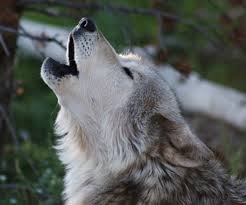
Something had to be done to save the wild places and the wild creatures. The great wolf packs called a World Parliament of Lupine Peoples, which met in a secret location in Mitteleuropa. The werewolves who attended had their own breakout session later in the week, but the men who cast wolf whistles at young women were chased away, as were all wolves in sheeps’ clothing and all wolves of Wall Street. Although there was some discussion about admitting the medieval English queens called she-wolves after a queen in one of Shakespeare’s plays (if you’re curious, it’s in Henry VI, Pt. 3), they were admitted because they were intelligent, brave, and cunning women. The Princess Lupa, stepmother of Romulus and Remus, was a special guest.
Popeye as Deity by Barbara Ardinger
If you’ve read any of my posts here (or my books), you know that I’m not a friend of the fellow I call the standard-brand god. This is the “man upstairs” who goes by such names (in alphabetical order) as Allah, El Shaddai, Jehovah, and Yahweh. He’s the guy who’s snoopier than Santa Claus—he knows when we’re sleeping, when we’re awake, when we’ve been bad or good, and what we’re doing in any state of consciousness. At least that’s what his priests and preachers tell us. His holy books were written by men and his stories are told from the male point of view. (But how did Ruth and Esther get in the canon?) He has priests, but no priestesses that I know of, and even the named angels are male. I mean no disrespect to people who honor this god, but he’s just not my kind of deity.
But hark! There is a charming fellow. We all know him. Continue reading “Popeye as Deity by Barbara Ardinger”

