

This is an embarrassingly revealing post, please forgive my younger self for her naiveté.
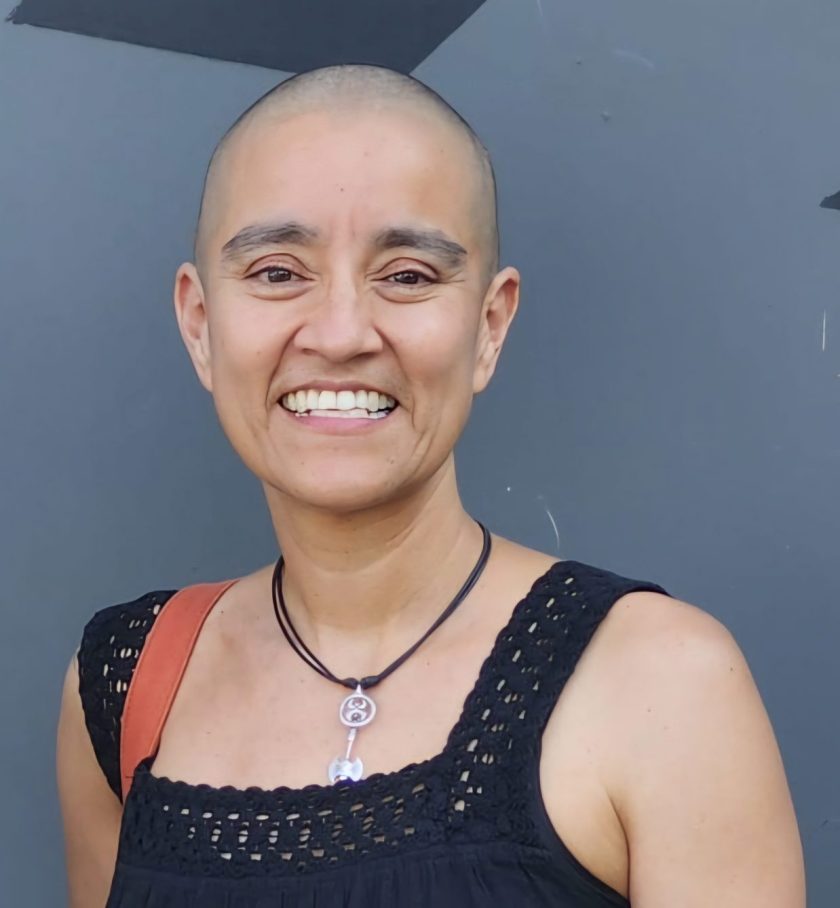
I grew up a proud American. I even had a collection of American flag pins, one of which said “1o1% American!,” and a giant 4×6 foot size U.S. flag hanging in my bedroom wall, which I took with me when I went off to college for undergrad. I was part of the glee club in my junior high school and proudly performed Neil Diamond’s “America” as we all process into the auditorium waving flags from all around the world. Convinced this was a beautifully diverse country of immigrants. My parents were both recent immigrants and were vocal about their appreciation of the opportunities this country provided for them. My dad always said this country gave him more than his country of origin ever did. And I bought the narrative, “hook, line, and sinker!”
But today, I’m more likely to wave a flag of whatever country from Abya Yala is playing in the World Cup, than the one of this country. I reflected on this as I watched all the different people celebrating the World Cup and waving the flags of their various countries during and after each game.
I think my younger self’s love for the flag was possible because I never had first-hand experience of this symbol being used against me or my community (a very insulated experience!). I had only positive associations tied to it, both within my family and my broader context, including my educational one. Even at school, my educational system was able to successfully sanitize the country’s origins such that I could still hold its flag in high esteem. My schooling was able to somehow frame the reality of our country’s violent, racist, and genocidal roots as if it was a thing of the past and was now redeemed and transformed. It fundamentally failed me, for this country’s roots are alive and well, and flouting its ugliness with ever more boldness.
Sociologists of religion Michael O. Emerson and Glenn E. Bracey II lead a three-year research project conducting over 100 interviews with “scholars and practitioners with expertise in religion and race,” followed by the creation of a national survey of over 100 questions that resulted data from almost 3,000 people across the United States. Their research resulted in the publication of their book, “The Religion of Whiteness: How Racism Distorts Christian Faith” (Oxford University Press, 2024). In the book they argue and show evidence that “two-thirds of white practicing Christians are not following Christianity. They’re following a different religion. And [they’re] calling it the religion of whiteness,” or ROW for short. As with other religions, Emerson and Bracey outline the beliefs and practices of ROW, six beliefs and five practices. I’ll offer just three of each here:
- belief that whiteness is to be venerated, worshipped, and defended
- belief that whiteness is natural, normative–God’s ordained order
- belief in White Christian Nationalism, the “political ideology and cultural framework that idealizes and advocates a fusion of symbols of Christianity with American civic life, including nativism, white supremacy, divine sanction for authoritarian control and militarism, and allegiance to a national–red white racial–identity” (pg. 51).
- practice a highly selective use of Christian scriptures (52)
- practice epistemology of ignorance – not knowing as a tool of preserving the status quo (53)
- practice the veneration of sacred symbols, key of which are a white Jesus and the merging of the cross and the flag (whether U.S. or Confederate) (53)
The last practice is the point I’m trying to get to, the one that most changes my experience with the flag today. Images of the cross and the flag fused into a single symbol abound—online, at MAGA rallies, and on T-shirts and hats—with the flag waving behind the cross or draped across it. Today, this is the dominant image the U.S. flag evokes for me: its merger with the cross as a visual representation of white Christian nationalism. This fusion embodies a central tenet of the Religion of Whiteness, one that reinforces and sanctifies the racist and colonial foundations of the United States. This is what the symbol of the U.S. flag has come to represent.
Symbols are meaningful because we infuse them with meaning as they point us to something beyond itself. The U.S. flag is currently a symbol actively being used against so many of us. It is negatively storied, and far from the meaning it had for me in my youth.
There is one place, though, where seeing the U.S. flag being carried in stirs, if not positive, at least neutral feelings for me…in the grand entry of a Powwow.

For 40 years now, CSUN (where I teach) has been host to an annual Powwow. I have been attending Powwows since I was exposed to them as a first year undergrad at my alma mater, USC. And there, when carried by indigenous people, the flag is transformed and takes on an entirely different meaning. The context making all the difference.
There is much more to say about this, but for now, I’ll continue to enjoy the festive celebrations surrounding the World Cup—where flags can still be expressions of joy, belonging, and play—and take comfort in the fact that the cross and the flag fused into a single symbol is nowhere to be found.
Discover more from Feminism and Religion
Subscribe to get the latest posts sent to your email.


Powerful and necessary. Learning consciousness is huge. As an american who is caucasian and a hippie since the beginning, never had a flag fetish except maybe upside down. I remember 911 caused a flood of flag waving which we finally got past, thanks God. Only the trumpers now, and some military.
LikeLiked by 1 person
Oh my god Xochitl – you nail it – the Religion of Whiteness. I have the same response to the flag that you do – maybe worse – because I am truly repulsed by what this distorted image is telling me – The Fourth of July celebrations have just passed – leaving me with yet another round of PTSD trauma after the bombs and fireworks split the nights into steel fragments – I need medication to survive this cyclical abuse – and the rest of nature – well – we can’t even imagine. Fireflies disappear, birds stop singing – could go on here – takes them days to recover. Like you “My schooling was able to somehow frame the reality of our country’s violent, racist, and genocidal roots as if it was a thing of the past and was now redeemed and transformed. It fundamentally failed me, for this country’s roots are alive and well, and flouting its ugliness with ever more boldness” What garbage. Thank you.
LikeLiked by 1 person
It’s so true, Sara, the impact of the fireworks on our animal friends is just criminal. The very idea of “celebrating” with an imitation of bombings and shootings is absolutely crazy -plus, the environmental impact – ugh. I know that’s not how people think of fireworks, but it really is not a good thing on every level. I hope you are feeling back at peace.
LikeLiked by 1 person
Yes fireworks are a real horror story in our neighborhood and also a HUGE fire danger. And the part in the US national anthem about “and the bombs bursting in air” was horrifying to me.
Why do we have a national anthem about bombs and war. When we have the charming “America the Beautiful?”
LikeLike
Thanks Dear Xochitl – this firework/bomb stuff is insane. But of so typical of the times we are living through.
LikeLike
Your younger self and my younger self would have had fun waving flags together! Also embarrassing for me. I used to dress in red, white, and blue every 4th of July, wake my family by playing “The Star Spangled Banner” on the piano, and proudly wave miniature American flags at parades. Now I regard the American flag in the same way you do — as a symbol of those who are proud of the cruelty and hatred being carried out in the name of White Christian nationalism. My disregard for the flag is nothing new. It began during the Vietnam War and has continued ever since. Thank you for the perspective of the powwow. I know several Native Americans who have proudly served in the US military. As for the flag, here in Minnesota at rallies and marches and at people’s homes, I see more and more people proudly waving the Minnesota state flag which has become a symbol of the resistance to the current administration and its oppressive tactics. It’s a flag I’ve come to love.
LikeLiked by 2 people
Such a great connection, Beth, the way that the Minnesota state flag has taken on even more meaning. I love that-it makes perfect sense! I’d wave that one with you too :-)
LikeLiked by 2 people
Since I did not grow up in the USA, I don’t have your experience of flag-waving in my younger years. My American, missionary parents, though, did get homesick for the US and painted a picture of their homeland as one of near-perfection. So, we kids longed to settle into this paradise-like image of a land far away. Vietnam did a number on that image. I am curious, Xochitl, about the use of the American flag at Powwows since you write “… when carried by indigenous people, the flag is transformed and takes on an entirely different meaning. The context making all the difference.” Am hoping at some point that you will elaborate on this. Great essay, BTW.
LikeLiked by 1 person
Ah, yes, there is so much more to say about the American flag at powwows. This is not something I’ve researched in any way, but just how it lands on me when I witness it. So, in terms of the context making the difference…when I see the American flag held as part of this particular ceremony/ritual, with original people of this land, I see them as having more rights than others to their claim and relationship to the land, this country. So if they claim the flag that has come to represent this land, then, more power to them. It is theirs to do. I see too how I part of why I can feel this way is that they are not doing so in a power-hungry way; they are survivors of what this country has done to them. It’s such a different context than the way white christian nationalist hold the flag – the claim there is postured out of a sense of superiority and power hoarding. I think that’s my thinking at this point, but I’d love to learn more, and will have to do a little research on this. Thanks for the encouragement!
LikeLiked by 2 people
Context is everything. It’s like the 1619 Project vs. The Mayflower. American flags always have contexts, they can scare you to death when tiki torch carrying white supremacist men are waving them, or when a neighbor from Mexico flies the American flag changes the context.
When people were protesting that horrifying proposition 187 back in the 90s I saw the protest marches and everyone was carrying Mexican flags. Fine, but I went out to talk to the protestors and said carrying American flags would give you power and I know I was humored, but there you have it.
LikeLike
I’m not a fan of large stadiums with men screaming and yelling and waving flags anywhere.
I HATE sports, and I HATE male supremacy and patriarchy, the global religions throughout time.
So I’m pretty cynical about the whole thing. What is necessary is finding out the truth throughout time in history, who rules who doesn’t. Early education around the world is basically indoctrinating little kids in whatever mythology the country creates. But unless you live in a place that is totally different from wherever you grew up, it is hard to figure this out. So don’t be so hard on yourself Xochitl. Your family had its origin story, but that is just the beginning. One book that is HUGE and I recommend everyone here read it is called “Darkology: Blackface and the American Way of Entertainment” by Rhae Lynn Barnes. It talks about how the northern states pretty much invented blackface and it is not a southern invention. Japanese were exposed to blackface when the US ships arrived in the Meiji era Japan in 1854 or so. It was stunning learning about this, and also shocking to find out the Japanese prison camps set up by FDR thrived by having the Japanese in the camps perform blackface as comfort and indoctrination tools. The Santa Anita Racetrack was a camp round up for Japanese and Japanese Americans, and Al Jolson of “The Jazz Singer” talkie actor had a booth there. I really hate drag shows and drag queens, men prancing around in womanface. And Prof. Barnes brings both of these creepy forms of “entertainment” and interconnects them. Of course, even lesbians, loads of them sold out to the womanface drag queen story hour creepiness, so wave those rainbow flags or any flags actually. Putting this all together bit by bit, I stand by what women do worldwide to break free of the horror story that is George WASINGTON , and the lies nations and their male leaders use to control the masses. My $222.00 of inflation adjusts cents for today. I don’t fly any flags anymore. I don’t cheer on the bread and circuses for today’s masses, aka The World Up and soccer flag waving mania.
LikeLiked by 1 person
I’m definitely interested in the book you mention, and just borrowed the audiobook from my library. The reviews for it are great.
LikeLiked by 1 person
Darkology is just mind blowing Xochitl!! And SO WELL researched, and well written.
I can’t put it down, it is over 500 pages and I have to read it slowly, and underline things that strike me. Not to brag, but my analysis has always compared what is considered horrifying aka blackface and what is not considered horrifying womanface, and why would this be?
I’m cynical, when it only demeans women, it’s ok but if men are ever demeaned by themselves it is considered horrifying, if men and women are demeaned (racist stereotypes, kkk, Mexican hating tropes for example) then it gets critiqued. EVERY TIME LIKE CLOCK work.
LikeLike
Beautiful post, Xochitl. Says it all.
LikeLiked by 2 people
Thank you,Elizabeth.
LikeLike
Thanks for introducing me to the label ROW. I have been .pulling over this concept for too many years within the context of being white and a Christian.
The ROW has a way of stereotyping different visible minority groups to denigrate what ever group fits their political/ social needs for controlling a particular narrative.
It’s shameful to see how too many people fall for it.
LikeLike