Another Season of Reflection and Review by Elise M. Edwards

elise-edwardsI turn inward and become reflective at this time of year.  It’s the Advent season in the Christian liturgical year, which encourages practices of piety focused on preparation, examination, and hopeful longing.  It’s the end of a semester and a calendar year, which provokes review of the months before.  In the northern hemisphere, it’s a time of darker days and longer nights, which suggest a retreat indoors, in silence or in stillness.

During this time of year, I’m typically exhausted, and so I seem to enact annual rituals with a recurring sense of ambivalence.   I really love the celebration of Christmas, but preparing for it takes a lot of energy.  So I do some decorating, but not as much as I planned.  I attend some parties and celebrations, but end up missing or cancelling others.  I start a new devotional book, only to set it aside within a week or so.  I want this time of year to be both reflective and celebratory.  I want it to be spiritual and religious.  I want to be sociable with friends and family and also find time to rest and recover in solitude.  At some point, those goals seem too contradictory to be realizable and then I start practical negotiations:  How much decorating will I do? What kind of time will I set aside for solitude and self-care?  Will I have enough energy to be joyful and present with my family and friends?

“Some, but not enough” is the answer I seem to come to every year.

Some decorating, but not enough.  Some time for solitude and self-care, but not enough.  Some energy for social occasions, but not enough.  This year, I want to let go of that voice that says it’s not enough.  That voice that says I am not enough.

To help myself let go of the guilt and self-deprecation, while retaining the reflective focus of the season that may be life-affirming, I reviewed my previous years’ December writings on this blog.  What might I discern from this pattern of yearly reflection?

In 2012, I wrote about why women might be tempted to cancel Christmas.  I was in my final year of the Ph.D. program when I wrote that, and was prompted to do so when I heard that friends and colleagues were planning to skip Christmas preparations or scale them back dramatically.  That year, I sought to maintain “religious and social rituals associated with Christmas” so that I could be “spiritually grounded, emotionally provoked, mentally rested, and physically fed.” I don’t have a vivid memory of that year’s holidays, but as I read it again, I wonder if I was carrying a sense of religious obligation rather than release.  Did I feel free or beholden to social custom? I’ve learned that I will only be able to let that “not enough” voice go when I let go of the expectation that Advent and Christmas should look a certain way or I should be present to it in a certain way.  I’m more willing this year to let peace and joy ebb and flow  in celebrations and moments of sadness and mourning that accompany the season, too.

In 2014 and 2016, my Advent reflections were more focused on justice and peace at the societal level than in the household.  They were mournful.  In December 2014, I was trying to stave off despair after Michael Brown’s killer was not indicted by a grand jury.  The police officer would not stand trial for killing the black teen.  That year, I was mourning Michael Brown and Trayvon Martin and the loss of my own naivete as I became more conscientized about racial violence. I had a similar wake-up call last year when Hillary Rodham Clinton lost the US presidential election and I working through the anger and dread I felt at 45’s approaching presidency.  This year, the struggle continues as we anticipate changes to the tax code and DACA.  But at least Roy Moore lost.  We do continue to work for progress and systemic change, and sometimes, it works.

Feminists have long asserted that the personal is political and that the political is personal.  I’m acknowledging this holiday season that my perpetual weariness during Advent and Christmas is legitimate, as it emerges from personal and political struggle.  I am frustrated with the injustices and hardships I encounter at home, work, and the broader community.  I would not be weary if I was not awakened to the suffering.  This year, I accept that the exhaustion is part of the cost of my work and my calling.  The weariness will ebb and flow, as will joy and peace. Being able to teach and write is a blessing that allows me to help others become more aware of injustice and more involved in addressing it.  This year, I’m acknowledging that I’ve done what I can do.  I’m resisting the impulse to assess whether it was enough.  In previous years, I’ve been trying to hold on to hope; this year I’m resting in God’s grace.

As Christmas approaches, I’m embracing the Christian teaching that the divine meets humanity where we are.  The beauty of the Incarnation is that the eternal meets the temporal and that God unites with human to bring light to a suffering world.  That’s a gift for me this year, a comfort to be able to shift the focus from my own action and being to divine action and being.

I can see the sacred work and presence in this online community and other communities of faith.  Holiday blessings to you all.

Elise M. Edwards, PhD is a Lecturer in Christian Ethics at Baylor University and a graduate of Claremont Graduate University. She is also a registered architect in the State of Florida. Her interdisciplinary work examines issues of civic engagement and how beliefs and commitments are expressed publicly. As a black feminist, she primarily focuses on cultural expressions by, for, and about women and marginalized communities. Follow her on twitter, google+ or academia.edu.

The Spirit and Jarena Lee: Inspiration to Break Boundaries by Elise M. Edwards

elise-edwardsI am so frustrated that we are still fighting to affirm women’s place in leadership.  I’ve been thinking about this struggle in the context of church ministries (especially preaching) and social activism, seeing a stark contrast between the way institutional churches and universities promote and subvert women’s authority and the ways movements like Black Lives Matter do.

Particularly, I’ve been struck by the ways that more radical movements employ language and practices that are based in spirit more than hierarchical authority.  I have found a theme emphasizing equality in humanity’s access to spirit in both historical and contemporary movements and writings about religious experience.  I’m certainly not the first one to notice or discuss how appeals to Spirit have empowered those excluded from dominant systems of power to challenge constrictive social structures, but I would like to share how this dynamic has become more visible to me so that, together, we might find encouragement, inspiration, and food for thought.

Continue reading “The Spirit and Jarena Lee: Inspiration to Break Boundaries by Elise M. Edwards”

Self-Care is a Feminist Issue: Holy Women Icons Project’s 7-Day Online Self-Care Retreat by Rev. Dr. Angela Yarber

Several years ago, I was pastor of a welcoming and affirming church. As a queer clergywoman, I thought that such a place would be the perfect place to flourish and thrive as a pastor. And yet, because of heterosexist and sexist microaggressions, I found myself anxious, depressed, and in need of physical, emotional, psychological, and spiritual care.

After a three-day retreat filled with self-care and soul-nourishment at a non-profit retreat center that catered to activists and artists , I felt as though a tremendous weight was lifted off my shoulders, that I could focus and find clarity in my vocation. Pausing to care for myself gave me the courage to leave my toxic job and live more fully into my calling. This experience taught me the vital importance of self-care.

Womanist Audre Lorde once proclaimed, “Caring for myself is not self-indulgence, it is self-preservation, and that is an act of political warfare.” Because caring for the self violates the patriarchal norms that traditionally dictate that you should be the one caring for everyone else. Yes, everyone needs to pause to care for the self. But oppressed minorities have a particular need for self-care, not simply as a way of refreshing oneself in order to do the work of justice, but as a vital part of the work of social justice. Because caring for yourself in a society—and a church—that wishes for you to do otherwise is an act of political warfare. When feminists care for themselves, it is a radical act of soul redemption, spirit rejuvenation, and a political and spiritual act of acknowledging your holy and innate self-worth. In case anyone has told you that you are not worthy, let me reassure you. You are worthy. And you deserve to care for yourself.

Continue reading “Self-Care is a Feminist Issue: Holy Women Icons Project’s 7-Day Online Self-Care Retreat by Rev. Dr. Angela Yarber”

Moonlight Reflections by Elise M. Edwards

As I post this, May 10, a full moon, known as the “Bright Moon” or “Flower Moon” is in the sky. This full moon occurs during a season of transition when living thing things renew and bloom. For those of us in the Northern Hemisphere, it’s spring, but another transition is already underway. For many of us, spring is nearing close to summer in temperatures; in plant, animal, and insect life; and in our schedules. I am concluding a long, demanding spring semester and yearning for summer. Even though I welcome the transition, I know that like all change, it holds both opportunity and challenge. The full moon prompts me to look at the upcoming summer with clear, examining eyes

elise-edwardsAs I post this, May 10, a full moon, known as the “Bright Moon” or “Flower Moon” is in the sky.  This full moon occurs during a season of transition when living thing things renew and bloom.  For those of us in the Northern Hemisphere, it’s spring, but another transition is already underway.  For many of us, spring is nearing close to summer in temperatures; in plant, animal, and insect life; and in our schedules.  I am concluding a long, demanding spring semester and yearning for summer.  Even though I welcome the transition, I know that like all change, it holds both opportunity and challenge.  The full moon prompts me to look at the upcoming summer with clear, examining eyes.

It’s strange–perhaps downright heretical–for a Christian to talk about the power of the moon. Continue reading “Moonlight Reflections by Elise M. Edwards”

The Nature of Communal Pondering by Elise M. Edwards

elise-edwardsLast week, I listened to an episode of Krista Tippett’s series On Being that featured an interview with poet Marilyn Nelson.  I am not very knowledgeable about the world of modern poetry, but I am familiar with Nelson’s work.  A couple years ago, I wrote about Fortune’s Bones: The Manumission Requiem, Nelson’s poetic composition about Fortune, an enslaved man whose owner rendered his body into a skeleton for medical training.  Fortune’s identity and history had been erased across centuries as his remains were displayed.  Community concerns eventually led to a multi-disciplinary academic, artistic, and community effort to honor the man and, in 2013, put his bones to rest.  Isaye M. Barnwell, a musician formerly of Sweet Honey in the Rock, developed a cantata and choral work for Fortune’s Bones. These developed into a series of artistic performances and community events that demonstrate the power of art to speak through and for those who are marginalized—even in death.  Disparate communities joined together to ponder Fortune’s life, and it was powerful.

In the On Being interview, Nelson spoke about “communal pondering,” and I’ve been repeating this phrase to myself since then.  It identifies a form of creative activity and a spiritual way of being that I am deeply committed to, and have not been able to name.  Communal pondering occurs when a group of people are listening together and are opening up new paths for discourse and action by the engaged reflection that takes place within that listening.

Continue reading “The Nature of Communal Pondering by Elise M. Edwards”

Chants of Help and Self-Compassion to Heal the World by Elisabeth Schilling

green path
Recently I have cultivated a meditation practice. I only meditate for about 20 minutes, usually taking a comfortable position on a sunlit patch of carpet near an open window in the late afternoon when no one is home. My meditation is simple. It just consists of being aware of my breath, feeling my body, and a chant. The chant for this week is what I would like to share. It is a chant of help and self-compassion that may nourish you as it has me.

Camakam is a Vedic chant that comes from one of the four Vedas, Yajurveda, meaning prose mantra (yajus) and knowledge (veda). I have come to knowledge of a portion of it through Nicolai Bachman’s audio Chants Asking for Help. It is a prayer for the fulfillment of wishes, the description to this one says. Below is a sample with the translated lyrics in italics:

Om

[. . .] śam ca me [. . .] and peace to me,

mayaśca me and delight to me,

priyam ca me and love to me,

‘nukamaśca me and proper desire to me,

kamaśca me and desire to me,

saumanasaśca me and positive thoughts to me,

bhadram ca me and a blessing to me,

śreyaśca me and the best for me,

vasyaśca me and better (things) for me,

It may seem arrogant or selfish to express these thoughts. But this is not a situation of wanting power-over or to boost the ego. I don’t feel individualistic or prideful when I pray these wishes in meditation. It is more of a feeling of healing, being courageous enough to speak good into the universe for myself, being a supportive mother to myself. Continue reading “Chants of Help and Self-Compassion to Heal the World by Elisabeth Schilling”

Moving Forward and into a New Season by Elise M. Edwards

elise-edwardsIt’s only been a month and I am still reeling from the US presidential election.  I feel like I’m just beginning to emerge from the sense of loss and futility that has cloaked me.  But I am beginning to move forward.

I don’t feel better.  I’m still confused and discouraged about why people voted for Donald Trump.  I’m very concerned about his cabinet picks and his proposed policies.  But I am actively seeking a path forward and a path of resistance.  I’m finding support in my spiritual practices and communities.

In the Christian calendar, we are in the season of Advent.  Advent carries profound symbolism, and this year it is especially poignant for me.  The word advent bears meanings of arrival, birth, and emergence.  It’s the beginning of the Christian year, which is patterned on the life of Christ, but the year does not begin Jesus’ birth.  That celebration is observed at Christmas, four weeks into the church year.  The weeks preceding Christmas are a time of preparation and reflection on the need for the Incarnation.  The Incarnation of God in the Christ Child may be a distinctly Christian doctrine, but I believe the need for it–even the idea of it–is found in other spiritual and religious teachings.

Continue reading “Moving Forward and into a New Season by Elise M. Edwards”

Calling on the Muse: A Meditation for Creative Spirits by Mary Sharratt

mary sharrattThe world at large might view artists and writers as free spirits rocking la vie bohème, but creative people know that it’s much more complicated than that, especially if we’re striving to earn even a modest living from our work. As a writer, I often fall into the trap of measuring my success or failure on factors completely beyond my control, such as the ups and downs of a fickle book buying market.
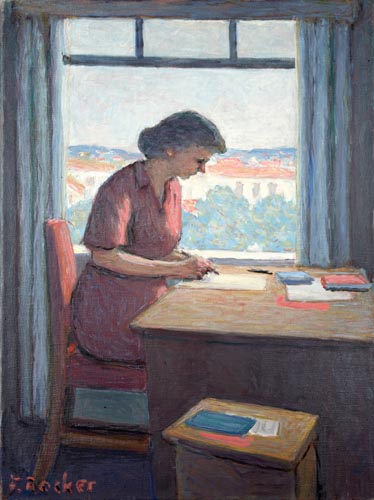
I know that I’ve often wrestled with the feeling that I’ll never be enough. Never be big enough, never be a bestseller. Sometimes it’s hard not to succumb to a flailing sense of helplessness—why are any of us doing all this? Worst of all is my fear of creative dryness—that my inspiration will turn to dust and I’ll never write—let alone publish—another book.

woman_writing

Continue reading “Calling on the Muse: A Meditation for Creative Spirits by Mary Sharratt”

Blessed Are They by Barbara Ardinger

Barbara ArdingerThere has been so much hate on display in the world so far in the 21st century that it’s easy to fall into despair. Not only are there wars in the Middle East, beginning with the Bush-Cheney invasion of Iraq, passing through the general failure of the Arab Spring, and continuing into the work of sociopathic terrorists of the so-called Islamic State, but we have also seen a multitude of murders in the U.S. I’m almost afraid to turn on the news! We have insane, mostly young, men who buy guns and ammunition and invade movie theaters, churches, hair salons, regional centers, and schools. We have murders of black men by (usually) white police, then the murder of police by an angry black man, and then more murders. As some protesters are now saying, “All lives matter.” Right on!

PeacemakersLet’s turn off the news for a little while. Let’s set aside our devices and all those pesky social media. Instead, let’s consider one of the best known (and, alas, probably most ignored) teachings of Jesus—the Sermon on the Mount as given in the Gospel of Matthew. I especially like the Beatitudes (verses 3-12): Continue reading “Blessed Are They by Barbara Ardinger”

Holy Women Icons: Arts and Spirituality on Retreat by Angela Yarber

angelaI’ve noticed some growing trends in feminist spirituality. Recently, I’ve encountered several feminists who have attended virtual retreats from the comfort of their homes. I’ve also been overwhelmed by the number of clergy, scholars, and feminists who have begun coloring. Psychologists claim that coloring can soften stress, relieve anxiety, and be source of playful meditation for adults in an otherwise chaotic world. Similarly, doctors have long pointed to the emotional and physical importance of meditation, spirituality, or prayer in remaining balanced, relieving stress and anxiety. As feminists dwelling in a cisheteropatriarchal world, the need for such balance is even more important. It is these noticings that have led me to write this post.

A fabulous church that cares deeply about inclusion, social justice, and the arts is hosting an exhibition of my Holy Women Icons with a folk feminist twist for the month of October and throughout the month, I’m leading several retreats. While planning these retreats, I couldn’t help but think of the Feminism and Religion community. We are spread throughout the world, offering encouragement and challenge online every day. We have different struggles, spiritual paths, and backgrounds, but we gather on this blog to reconcile two seemingly paradoxical parts of our beings: feminism and religion. I have yet to develop these thoughts fully and I’d like to rely on you to share your input and ideas in the comments section about how we can “retreat” together virtually. With this in mind, I’d like share a bit about the Holy Women Icons Arts and Spirituality retreat I’m leading and invite you to participate at home. The entire retreat takes about 3 hours, or you can break it into 4 sections for shorter periods of time. So, if you’d like, play some music to set the mood, light a candle, and get out some paper, scissors, writing utensils, and crayons/markers, and let’s “retreat” together…

Continue reading “Holy Women Icons: Arts and Spirituality on Retreat by Angela Yarber”