

 The forest calls me. I long for her lush coolness, her sheltering trees, her world filled with life.
Category: Paganism
Hekate, Goddess of Liminality and Intermediary by Deanne Quarrie
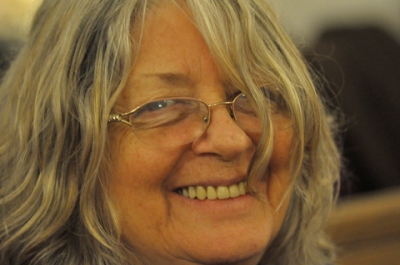
Let me share with you the Goddess most honored as the Goddess of liminal time and space. It is our beloved Hekate, Great Goddess of the Three Ways, bridging Earth, Sea and Sky as we travel between worlds.
In modern times, She is seen by many as a “hag” or old witch stirring the cauldron. This idea was popularized by Roberts Graves’ book, The White Goddess. In early writings, however, she is portrayed as a beautiful and powerful maiden goddess.
“I come, a virgin of varied forms, wandering through the heavens, bull-faced, three-headed, ruthless, with golden arrows; chaste Phoebe bringing light to mortals, Eileithyia; bearing the three synthemata [sacred signs] of a triple nature. In the Aether I appear in fiery forms and in the air, I sit in a silver chariot.” (Chaldean Oracles)
She was the only one of the ancient Titans that Zeus allowed to retain her power after the Olympians seized control. She shared with Zeus, the awesome power of granting all wishes to humanity (or withholding, if she chose).
Continue reading “Hekate, Goddess of Liminality and Intermediary by Deanne Quarrie”
Crow/Raven – A Messenger of Magic and Mystery by Judith Shaw
Caw! Caw! calls Crow. Gronk! Gronk! honks Raven. Magic and mystery are in the air. Ancient cultures saw birds as spiritual messengers, whose gift of flight gave them access to the spirit realm.
Continue reading “Crow/Raven – A Messenger of Magic and Mystery by Judith Shaw”
A Review of Decembers Past before We Move into the New Year by Marie Cartier
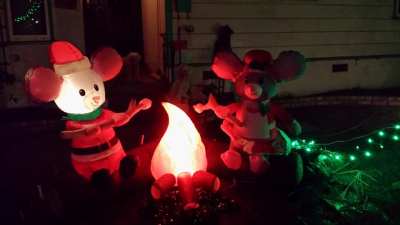
Last month I looked back over six years of postings I have done for FAR. In November, I noticed that I usually during that month tend to review the year and find something to be grateful for.
I decided this month to follow that up by looking back at the posts I have done for the past six years at this time of year, right before the wheel turns into the New Year. I have the privilege of writing for FAR usually right after Thanksgiving and right after Christmas and before New Year’s. I tend to think of this time as a time of looking forward, and Thanksgiving as a time of looking back.
Continue reading “A Review of Decembers Past before We Move into the New Year by Marie Cartier”
Celebrating the Winter Solstice by Barbara Ardinger
Even though Jesus was born during the reign of Augustus, first Roman emperor, the empire didn’t celebrate that birth until three centuries later when his birth date was moved to mid-winter to match the birth date of the sun god Mithra. The Romans already had a long tradition of celebrating the winter solstice. This celebration was called the Saturnalia. Here are three days in December, taken from my daybook, Pagan Every Day. (When I wrote this book in 2003, I wrote longer days. The publisher demanded that I reduce every day to 300 words. I edited them all down to 301 words.)
December 17: Saturnalia begins
Saturn, who was conflated with the Greek Titan, Cronus, was an ancient Latin agricultural god whose name may derive from satur, “stuffed,” or sator, “a sower”; in either case he stands for abundance. He was a working god who oversaw viniculture and farming, the king of Italy during the golden age. When Jupiter conquered him, he hid himself (latuit) in the region that came to be called Latium. The Romans said Saturn’s body lay beneath the Capitol in Rome. Because his reign brought prosperity to the city, the state treasury and the standards of the Roman legions were kept in his temple when the army was at home. Saturn’s statue was bound in woolen strips to keep him from leaving Rome.
Continue reading “Celebrating the Winter Solstice by Barbara Ardinger”
Bear Spirit Guide by Judith Shaw
Bear has been important to human mythology and story for thousands of years. Some feel that Bear is the oldest European deity, as bones and skulls of bears have been found lovingly arranged on niches found in caves across Europe. The first written sentence from the Old Europe Script, invented around 6,000 years ago reads, “The Bear Goddess and the Bird Goddess are the Bear Goddess indeed.
Lifting the Veil – #WontBeErased by Joyce Zonana
Samhain is upon us. Halloween. The Day of the Dead. All Saints’ Day. All Souls’ Day. That liminal time of year when the doorways to what the Celts called the Otherworld, Annwn in Welsh, are open. In New York City, we have the 45th annual Village Halloween Parade, a queer extravaganza of puppetry, masquerade, and cross-dressing that draws some 60,000 participants and over 2 million onlookers. Elsewhere, we have children in costume and lawns covered with plastic skeletons and illuminated ghouls. Everywhere, if we’re lucky, we might catch a glimpse of “the piper at the gates of dawn,” the vision granted Rat and Mole in Kenneth Grahame’s The Wind in the Willows: “something very surprising and splendid and beautiful”—Pan the goat-god, boundary-crosser, Friend and Helper, trans-being.
 Just last week—a few days after the New York Times reported on the Trump administration’s efforts to define transgender out of existence—I read for the first time Welsh writer Arthur Machen’s 1894 novella, The Great God Pan, today considered a classic of horror fiction. Condemned as “morbid” and “abominable” by most critics when it was first published, the tale was hailed as “un succès fou” by Oscar Wilde, recuperated in the 1920s by H. P. Lovecraft, and particularly praised more recently by Stephen King, who called it “maybe the best” horror story “in the English language.”
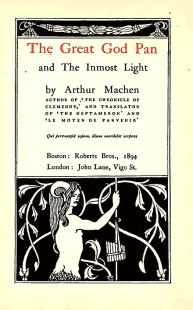
The “queer” tale (the word “queer” recurs frequently throughout) is told by a series of straight-laced Victorian men, each of whom is horrified by the unspecified behavior and bearing of a mysterious woman, Helen Vaughan. Readers are led to suspect that Helen is guilty of some sort of sexual excess or transgression, but nothing is specified until after her suicide, when the medical examiner reports that he was “privileged or accursed” to see the “skin, and the flesh, and the muscles, and the bones, and the firm structure of the human body that I had thought to be unchangeable, and permanent as adamant, beg[i]n to melt and dissolve”: Continue reading “Lifting the Veil – #WontBeErased by Joyce Zonana”
Pig/Sow – Animal Spirit Guide by Judith Shaw
Pigs, who were called boars in the wild, were the first animals to be domesticated. Pig domestication occurred about 9,000 – 10,000 years ago in two places – central China and Neolithic Anatolia in modern day southwestern Turkey.
Around 7,000 years ago when the Anatolians moved into Europe with their domestic animals and plants, they interacted with the indigenous Mesolithic hunter-gatherers and facilitated an interbreeding of their domestic pig and the local wild boar. The European swine descends from this interbreeding.
The mythical and cultural associations assigned to Pig in all its forms is very contradictory – sacred and beneficial to some, demonic and unclean to others. For our purposes here, we will concentrate on the positive associations. Continue reading “Pig/Sow – Animal Spirit Guide by Judith Shaw”
Singing up the Dawn, a poem by Sara Wright

My walk to the river
is a joyful entrance
into the eternal Now.
The water flowing,
crushed fresh mint,
trilling bird song
desert air so sweet
my body vibrates
drumming with all that is…
Returning under
the bowing cottonwoods
I touch a heart shaped leaf
in reverence…
For Life. Continue reading “Singing up the Dawn, a poem by Sara Wright”
Sweet Honey Bee – Animal Guide, by Judith Shaw
Bees have been part of the human community since the days of prehistory. Cave paintings created by Neolithic people in Spain from between 6000 and 8000 BC show them gathering honey from wild bee colonies.
The earliest record of beekeeping in human-made hives dates back to Egypt of 2400 BC.
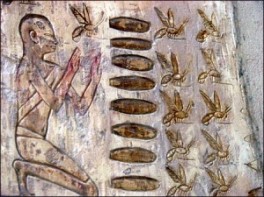
Bees themselves have been around for even longer than their association with humans. The oldest bee fossil was found in Myanmar enclosed in amber. It is 100 million years old.
Worldwide, Bee is a symbol of good luck, abundance, hard work and community. The ancients believed that the bees’ ability to make honey was a gift from the divine. Bees who give us their sweet honey – used for food, drink and medicine – are found in myth and story all around the world. Continue reading “Sweet Honey Bee – Animal Guide, by Judith Shaw”
 Feminism and Religion