

 Bear has been important to human mythology and story for thousands of years. Some feel that Bear is the oldest European deity, as bones and skulls of bears have been found lovingly arranged on niches found in caves across Europe. The first written sentence from the Old Europe Script, invented around 6,000 years ago reads, “The Bear Goddess and the Bird Goddess are the Bear Goddess indeed.
Category: Paganism
Lifting the Veil – #WontBeErased by Joyce Zonana
Samhain is upon us. Halloween. The Day of the Dead. All Saints’ Day. All Souls’ Day. That liminal time of year when the doorways to what the Celts called the Otherworld, Annwn in Welsh, are open. In New York City, we have the 45th annual Village Halloween Parade, a queer extravaganza of puppetry, masquerade, and cross-dressing that draws some 60,000 participants and over 2 million onlookers. Elsewhere, we have children in costume and lawns covered with plastic skeletons and illuminated ghouls. Everywhere, if we’re lucky, we might catch a glimpse of “the piper at the gates of dawn,” the vision granted Rat and Mole in Kenneth Grahame’s The Wind in the Willows: “something very surprising and splendid and beautiful”—Pan the goat-god, boundary-crosser, Friend and Helper, trans-being.
 Just last week—a few days after the New York Times reported on the Trump administration’s efforts to define transgender out of existence—I read for the first time Welsh writer Arthur Machen’s 1894 novella, The Great God Pan, today considered a classic of horror fiction. Condemned as “morbid” and “abominable” by most critics when it was first published, the tale was hailed as “un succès fou” by Oscar Wilde, recuperated in the 1920s by H. P. Lovecraft, and particularly praised more recently by Stephen King, who called it “maybe the best” horror story “in the English language.”
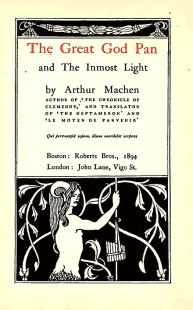
The “queer” tale (the word “queer” recurs frequently throughout) is told by a series of straight-laced Victorian men, each of whom is horrified by the unspecified behavior and bearing of a mysterious woman, Helen Vaughan. Readers are led to suspect that Helen is guilty of some sort of sexual excess or transgression, but nothing is specified until after her suicide, when the medical examiner reports that he was “privileged or accursed” to see the “skin, and the flesh, and the muscles, and the bones, and the firm structure of the human body that I had thought to be unchangeable, and permanent as adamant, beg[i]n to melt and dissolve”: Continue reading “Lifting the Veil – #WontBeErased by Joyce Zonana”
Pig/Sow – Animal Spirit Guide by Judith Shaw
Pigs, who were called boars in the wild, were the first animals to be domesticated. Pig domestication occurred about 9,000 – 10,000 years ago in two places – central China and Neolithic Anatolia in modern day southwestern Turkey.
Around 7,000 years ago when the Anatolians moved into Europe with their domestic animals and plants, they interacted with the indigenous Mesolithic hunter-gatherers and facilitated an interbreeding of their domestic pig and the local wild boar. The European swine descends from this interbreeding.
The mythical and cultural associations assigned to Pig in all its forms is very contradictory – sacred and beneficial to some, demonic and unclean to others. For our purposes here, we will concentrate on the positive associations. Continue reading “Pig/Sow – Animal Spirit Guide by Judith Shaw”
Singing up the Dawn, a poem by Sara Wright

My walk to the river
is a joyful entrance
into the eternal Now.
The water flowing,
crushed fresh mint,
trilling bird song
desert air so sweet
my body vibrates
drumming with all that is…
Returning under
the bowing cottonwoods
I touch a heart shaped leaf
in reverence…
For Life. Continue reading “Singing up the Dawn, a poem by Sara Wright”
Sweet Honey Bee – Animal Guide, by Judith Shaw
Bees have been part of the human community since the days of prehistory. Cave paintings created by Neolithic people in Spain from between 6000 and 8000 BC show them gathering honey from wild bee colonies.
The earliest record of beekeeping in human-made hives dates back to Egypt of 2400 BC.
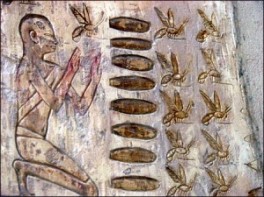
Bees themselves have been around for even longer than their association with humans. The oldest bee fossil was found in Myanmar enclosed in amber. It is 100 million years old.
Worldwide, Bee is a symbol of good luck, abundance, hard work and community. The ancients believed that the bees’ ability to make honey was a gift from the divine. Bees who give us their sweet honey – used for food, drink and medicine – are found in myth and story all around the world. Continue reading “Sweet Honey Bee – Animal Guide, by Judith Shaw”
A Silhouette of a Woman, the Menorah, and a Pillar of Light: Discovering the Origins of the Goddess in Judaism by Alaya A. Dannu

2.24.2017
During a meditation before bed, I saw an image of a candelabra similar to what Jewish people use for Hanukkah. It was yellow/gold in color, engraved/etched onto a surface. All at once I saw the imagery of a star, a silhouette of a woman, and a beam of light move from the base of the candelabra through the top and beyond.
In these moments, I did not understand the significance of or the relationship between these images. What did a feminine figure have to do with the Jewish candelabra? What is the name of their candelabra? I could not even recall the name of it. It was something I grew up knowing the name of, as it was an image that I frequently saw beside the kinara of Kwanzaa in my school-aged years.
Because I was sheltered from the Abrahamic religions, my mother opted for participating in Kwanzaa as a means to shield me from any potential bullying from my classmates, and to celebrate a part of my diverse heritage. It was already a problem for my peers and the adult staff at school that I chose to identify as a Jamaican-American or a mixed person, as opposed to African-American. To tell a group of African-American Christians or those with an Afro-centric view that I didn’t celebrate Christmas or Kwanzaa, or that my mother taught me to listen to my dreams and intuition, would only serve as a means to further isolate myself; and by extension, my little sister. So celebrate Kwanzaa we did, until I began high school.
Women Can Change the World by Judith Shaw
These are dark days for those of us who believe in democracy, social justice, environmental stewardship/protection, and connectivity. A rise in authoritarian rulers – from the U.S. to pockets of Europe to Turkey and beyond – are threatening the values upon which democracies are founded.
Continue reading “Women Can Change the World by Judith Shaw”
The Forgotten Art of Integration by Kay Bee

It’s suddenly mid-July. I’m in the throes of managing my library’s Children’s Summer Reading Program. My own children are galavanting about through the swirling, time-bending vortex that is summer break. My grad school program starts in 22 days. Each sun-soaked hour seems to both last forever and zip past at the same time. The calendar is packed, the laundry & dishes are overflowing. We’re constantly running out of something. There are endless balls in the air at work, at home, within and around me. I worry I am going to fail to catch and release one (or more) at just the right time. There is so much in motion, I often feel poised on the brink of.… Well, I’m not even sure what of, but it certainly feels precarious more often than not.
My life is bountiful and blessed right now. It is also chaotic and anxiety-producing. And I’m trying to get a handle on myself somewhere within all that. I have learned, after just shy of a decade’s worth of practicing the Avalonian Tradition as a member of the Sisterhood of Avalon, that what I need right now is a little dash of Integration. Continue reading “The Forgotten Art of Integration by Kay Bee”
Swan – Guide to Love and Spiritual Evolution by Judith Shaw
Swan glides gracefully across the mirror-like surface of the lake, stirring sensibilities of purity, loyalty and love in our hearts. Her long, curved, delicate neck reflects in the water as gentle ripples spread out behind her. Swan evokes feelings of peace and can signify self-transformation, intuition, sensitivity, and the soul.
Continue reading “Swan – Guide to Love and Spiritual Evolution by Judith Shaw”
Fox Wisdom – Cunning, Camouflage and Persistence by Judith Shaw
Fox, as a member of the Canidae family, is related to wolves, jackals and dogs. But unlike these animals who hunt in packs, fox hunts alone.
Fox is intelligent, clever and cunning. While it is persistent, fox is gentler and less aggressive than wolf. Fox is associated with feminine magic, offering the power of the feminine to both men and women.
Continue reading “Fox Wisdom – Cunning, Camouflage and Persistence by Judith Shaw”

