Family Ties by amina wadud

amina 2014 - croppedSome of you may be familiar with the time honored curse: “May you grow up to have a child exactly like you…”? I know, no one is exactly alike, but the point is, some of what we put our parents through will likely be revisited upon us if/when we become parents. And so it is, I have joked with my children time and again, “I wonder where you got THAT from?”

Of my five children the one most like me is my middle daughter. Of course from my perspective her version is multiplied exponentially. Take her vegetarian beginnings. When she was 10 years and 10 months old she made the pronouncement that she would no longer eat slaughtered animals. As she was too young to have any kitchen responsibilities besides a weekly dish-washing assignment along with her siblings, I begged her father to intervene on my behalf. He managed to get her to agree to wait until she was older. 2 months later, she had a birthday. Now she was older. She has been a vegetarian ever since! Continue reading “Family Ties by amina wadud”

No Parenting Anxieties (Yet?) About Passing Down the Faith by Grace Yia-Hei Kao

Grace Yia-Hei KaoI’ve recently read Jim Belcher’s In Search of Deep Faith: A Pilgrimage into the Beauty, Goodness, and Heart of Christianity (2013). Even though I had several issues with the book, I couldn’t put it down once I started reading and finished it in the space of one day.

What’s the book about?

Continue reading “No Parenting Anxieties (Yet?) About Passing Down the Faith by Grace Yia-Hei Kao”

The Feminization of Poverty: The Impact on Migrant Mothers in the U.S. by Michele Stopera Freyhauf

Freyhauf, Durham, United Nations, Feminism and Religion, John Carroll, UrsulineI had the honor of speaking at the United Nations during the Commission for the Status of Women this past March about the Feminization of Poverty and the Impact on Migrant Mothers.  Below is the text of my speech delivered.  By posting my speech, it is my hope to use social media to help draw attention to this problem and use our resources to find solutions.

Over the last thirty years, rich countries have grown much richer, and poor countries have become, in absolute and relative terms, poorer. Global inequality in wages are striking and poor countries are turning to the IMF or World Bank for loans, which require “so-called” structural adjustments of devaluing currency, cuts in support for “noncompetitive industries,” and the reduction of public services such as healthcare and food subsidies, which has provided disastrous results for the poor, especially women and children.

The feminization of poverty not only means that more of the world’s poverty is born by women, thanks in large part to globalization of the world economy, but includes a denial of access to fundamental human rights, including health, education, nutritious food, property, representation, etc. Feminized poverty encompasses more than matters of individual suffering – it ensnares a vicious cycle of poverty that impacts their entire family.

Feminization of poverty has no singular cause. The United Nations Development Fund for Women identified 4 key dimensions that indicated a heightened rate of poverty for women:

First is called “the temporal dimension,” which means that women are often the primary caretakers of children and household duties. Women who live in developing nations may also have agricultural or physical responsibilities. With these demands, less time is available to devote to paid employment causing them to earn a smaller income even though they effectively do more work than their male counterparts.

Second is “the valuation dimension” which is defined as unpaid labor that women perform to take care of family members and other household chores. Work that is considered “less than” because formal education or training is not required.

Third, is “The employment segmentation dimension.” Women are natural caretakers and thus corralled into “women’s work”, such as teaching, working with textiles, or domestic servitude that includes caring for children or the elderly.

Finally, “the spatial dimension.” When employment is non-existent or difficult to find, women may have to migrate to other areas to find work temporarily. If a woman has children, she may refuse to take the job and stay to care her family. However, Some opt to leave their families behind, to secure what they consider a better life – a means of support – but this choice often comes a great cost. Continue reading “The Feminization of Poverty: The Impact on Migrant Mothers in the U.S. by Michele Stopera Freyhauf”

Sanctuary of Echoes by Natalie Weaver

Natalie WeaverTomorrow I will have the unique opportunity to hear my son recite a poem I wrote before his class. The students were invited to select a poem to memorize and perform along with props or costumes as suited the material. The only conditions were that the poem be a minimum of twelve lines, published in a book, and in good taste. A poorly chosen poem, he said, would result in perpetual detention.

I was excited when he expressed enthusiasm for the assignment. I asked him what kind of poem he would like to learn. Something humorous? Something dramatic? Something tragic? Something about love? War? I read to him first those famous opening words of Virgil’s Aeneid: Arma virumque cano (I sing of arms and a man…). I thought surely he would be intrigued by the rhythm and the promise of such a tale. He asked for some other options, so I presented favorites from the Medieval Hebrew canon. I taught him Adon Olam, since he was curious about learning poetry in a foreign language. He liked it quite a bit and learned how to pronounce the Hebrew, but this was not his choice. I pulled out selections from Catullus’ eulogies for his brother. I searched Sappho for something playful. We read more contemporary options from the usual suspects in an anthology of poetry that I had used in a college course: Frost, Dickinson, Poe. I even introduced him to the seductive “duende” of the great early 20th century Spanish poet Federico Garcia Lorca in his Poet in New York.

Continue reading “Sanctuary of Echoes by Natalie Weaver”

“Inheriting Our Mother’s Gardens”: Trans/lating, Trans/planting and Trans/forming Life by Sara Frykenberg

Sara FrykenbergThis Friday, March 7, 2014, the Women’s Caucus (WC) of the American Academy of Religion, Western Region will be hosting its annual “Professional Development Panel and Workshop” in Los Angeles, CA.  During the workshop panelists and attendees will consider what ‘gardens’ we have grown in, who our ‘mothers’ are and how this impacts what we bring to the table or what ‘gifts’ we bring to the table when dialoging with and across differences.  Our title and praxis at this event is also meant to honor our feminist mothers.  Specifically I would like to recognize and honor Letty Russel, Katie Geneva Cannon, Kwok Pui Lan and Ada Maria Isasi-Diaz.  Among many other accomplishments, these women edited the 1988 volume entitled: Inheriting Our Mothers’ Gardens: Feminist Theology in Third World Perspective.  This book helps to give voice to women marginalized within feminist theological discourses and is the inspiration for our panel’s title this year. 

Preparing for this panel, I reflected that many of those who contribute to this blog have written about their mothers (biological or non-biological) and mothering.  (Most recently I found myself inspired by Marie Cartier’s meditation on aging, health, her mother and religion.)  I realized that I have said very little about my own mom; my mom, who I am so like, who I look like, and who is both my mother and my friend.  I have definitely ‘inherited her garden,’ so to speak: flowers, herbs, weeds, rocks and all.  So, momma, this blog is for you.

Continue reading ““Inheriting Our Mother’s Gardens”: Trans/lating, Trans/planting and Trans/forming Life by Sara Frykenberg”

“Enlightened Sexism” and The Media: The Cultural Attack on Feminism by Michele Stopera Freyhauf

Freyhauf, Feminism, Religion, Durham, Old Testament, Blogger, Bible, Gender, Violence, Ursuline, John CarrollWhat is a feminist mother of four daughters to do these days?  Look at our media and how girls and women are portrayed to our daughters, teens, and young adults. Then take a look at how media portrays the face of feminism, promoting every negative stereotype out there.  As I scroll through the magazines, listen to songs on the radio, and watch the programming targeted at girls in junior high and up, I cannot help but ask the question – Is the media trying to destroy feminism?

While this introduction might sound drastic, much truth lies behind the questions.  One merely needs to look around and watch former Disney Star, Miley Cyrus, twerk and make lewd gestures with a foam finger while grinding against a man, almost twice her age, as he sings about the blurred lines of sexual consent. When I saw the news stories and yes, watched the video, I was utterly mortified and stunned.  Gloria Steinem, in a statement that seems to condone this behavior stated that Cyrus’ performance (actions) is not a new phenomenon, but a product of American culture.  Instead of looking at it through the lens of degradation and influence, she defended the young star by saying:

 “I wish we didn’t have to be nude to get noticed. But given the game as it exists, women make decisions.  For instance, the Miss America contest… the single greatest source of scholarship money for women in the United States.  If a contest based only on appearance was the single greatest source of scholarship money for men, then we would be saying ‘this is why China wins.’ You know?  But that’s the way culture is.  I think that we need to change culture, not blame the people that are playing the game that exists.”

When Cyrus’ actions are boiled down to being “nude to get noticed,”  and we accept this behavior by merely chalking her performance up to  culture – isn’t it time to change culture?  Continue reading ““Enlightened Sexism” and The Media: The Cultural Attack on Feminism by Michele Stopera Freyhauf”

Liberations of Immigrant Women in Western Religious Conversion by Andreea Nica

Andreea Nica, pentecostalismThe prolonged debate around feminist subjectivity and religious participation continues to evoke much compelling discussion in academia, political arenas, and public space. There have been a number of academic studies around the intersection of gender, religion, and migration, specifically on how gender and immigration assimilation is constructed and managed within western religious systems.

I am currently researching the trajectories of immigrant assimilation and conversion, and how gender relations and religious identities are managed within these processes to further develop my proposal for doctoral study. I find this area of research fascinating as it’s so diverse and pertinent to the progression of gender equity amongst religious participants. Continue reading “Liberations of Immigrant Women in Western Religious Conversion by Andreea Nica”

Truths My Mother Taught Me by John Erickson

I never gave much credence to religion but through my mother, I met G-d, and through her I understood that I’m not a feminist because of the books I’ve read but rather because of the woman I call mom.

Graduation PhotoThe first question I always get asked when I’m in feminist spaces is: “What inspired you to become a feminist?”  Although I could go into the various histories revolving around men’s involvement in the early stages of the women’s movement to the similarities between the LGBTQ and women’s movements, my simple answer has always relied on one person: my mother.
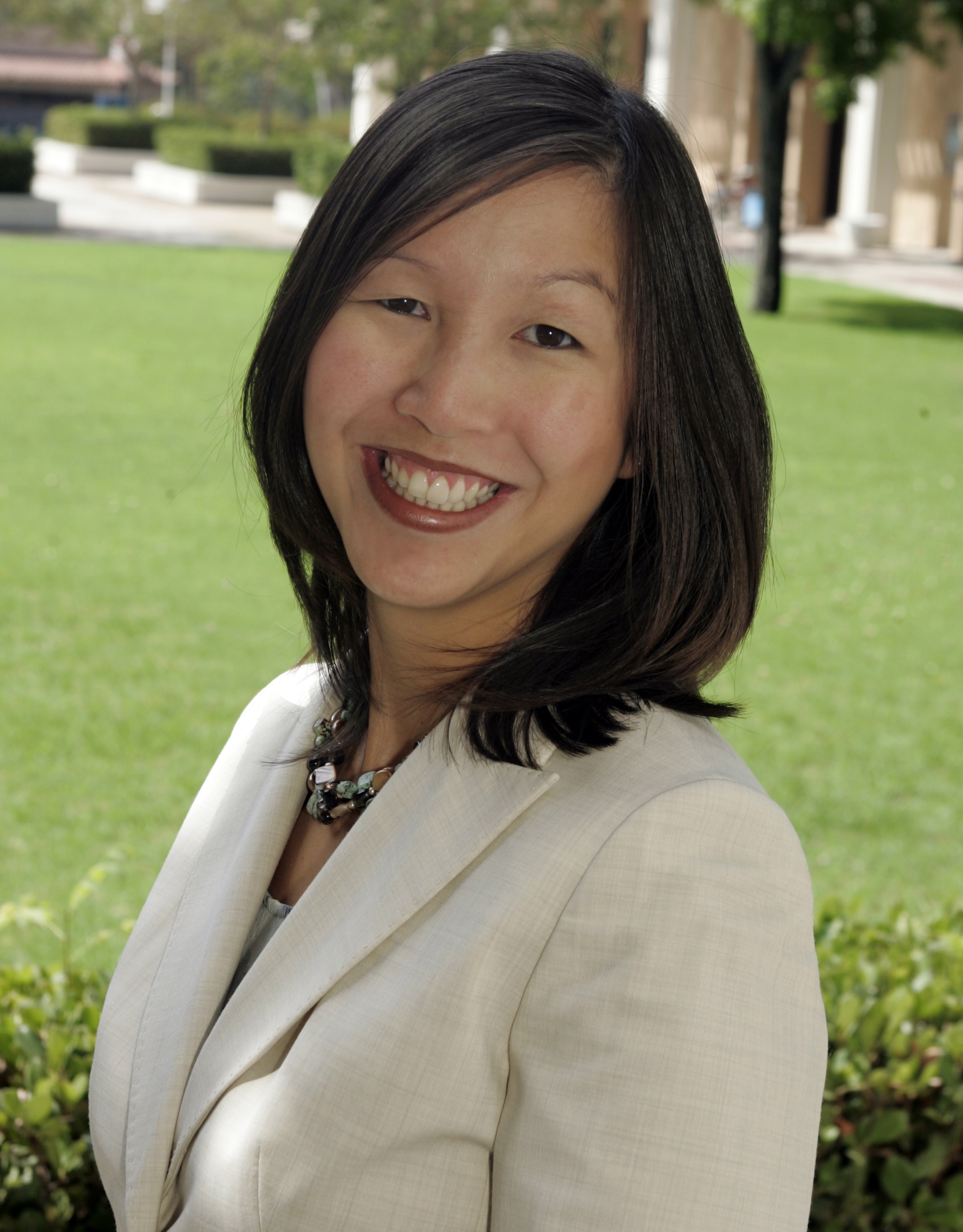
I’ll be the first to admit (as well as many other people who will join me in the same chorus) that my mother deserves Sainthood for having put up with all the shenanigans I have, and still continue to, put her through. From running away from our local Catholic church the moment she dropped me off at Sunday School, to swearing like a sailor on leave at a very early age in front of Father Schmidt (who still fondly remembers me and the list I brought in with me to the confessional booth). Continue reading “Truths My Mother Taught Me by John Erickson”

Mindfulness of Putting Ourselves Down by Oxana Poberejnaia

oxanaFrom the Buddhist point of view, all phenomena are conditioned, i.e. they arise, carry on, and come to an end because of other phenomena. Buddhism does not look at anything we experience as “things”, but rather as processes.

Confusion arises due to various factors, chief among them : 1) vague sense of “ego”, and 2) language. The vague sense of ego is portrayed in Khemaka Sutta as the last delusion that a monk drops before getting Enlightened, so we won’t worry about it now. Where language is concerned, Buddhism stands on similar positions to those of postmodernism and feminism, i.e. our social world is defined by how we speak about it. One can say that we actually create society by the act of speaking.

Continue reading “Mindfulness of Putting Ourselves Down by Oxana Poberejnaia”

Everywhere I am surrounded by tales of violence by Grace Yia-Hei Kao

 Grace Yia-Hei KaoAs I write this blog, I am nearing the end of my week-long family vacation in Palm Desert. While we’ve had lots of fun splashing around in the pool, everywhere I turn I am bombarded by scenes and memories of violence.

Continue reading “Everywhere I am surrounded by tales of violence by Grace Yia-Hei Kao”