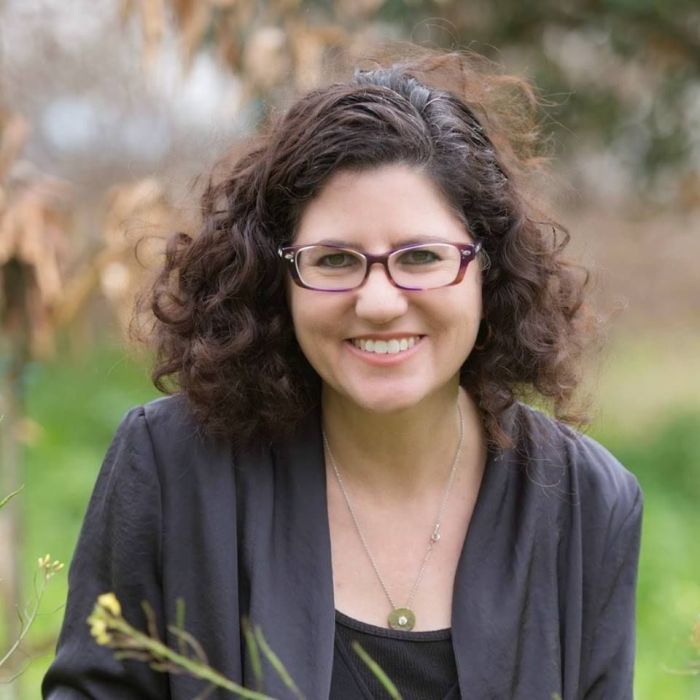
Vayak’hel-Pekudei: On the Contributions and Gifts of Women by Ivy Helman.

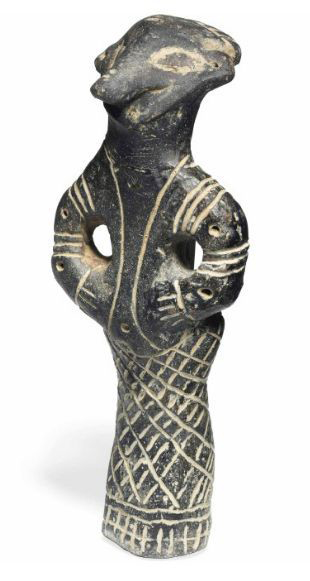
This week’s Torah portion is a double one, Vayak’hel-Pekudei (Exodus 35:1 – 40:38 and Exodus 12:1-20).   Vayak’hel covers the construction of the Mishkan, or the temple that traveled with the Israelites while in the desert, and Pekudel outlines the requirements for Pesach, particularly the sacrificial lamb, the blood on the doorposts, and the requirement to eat unleavened bread. For this post I will focus on Vayak’hel as it is the only portion that makes direct mention of women.  It reminds us of the ways in which religion and religious institutions would not be possible without the contributions of women.

 Vayak’hel centers on the construction of the Mishkan beginning with the general assumption that everyone (here men and women) will donate the items needed to construct the Mishkan.  The text also contains verses in which women are specifically mentioned.  They donate their gold jewelry (35:22) and mirrors (38:8) as well as  spin wool and linen into yarn to be used for the Mishkan’s copious amounts of curtains  (35:25-26).  

Continue reading “Vayak’hel-Pekudei: On the Contributions and Gifts of Women by Ivy Helman.”

Hope Is Giving Birth in the Face of the Dragon by Beth Bartlett

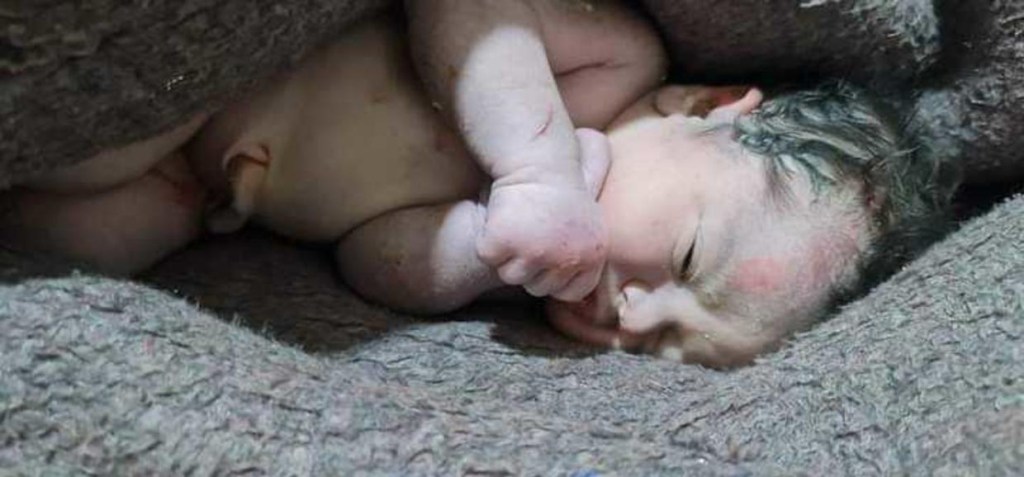
Syrian Baby

The image of the baby born under the rubble of the earthquake in Syria has been haunting me. So has the image in my mind of her mother, giving birth to her baby while trapped after the building, where she, her husband, and their children were sleeping, collapsed.  The baby’s uncle, when digging through the debris hoping to reach his brother and family, found the baby alive, her umbilical cord still attached to her mother. When he cut the cord, the baby let out a cry.  Tragically, her mother had died after giving birth, as had her father and siblings.

Continue reading “Hope Is Giving Birth in the Face of the Dragon by Beth Bartlett”

Women, Blame, and Patriarchy by Mary Gelfand

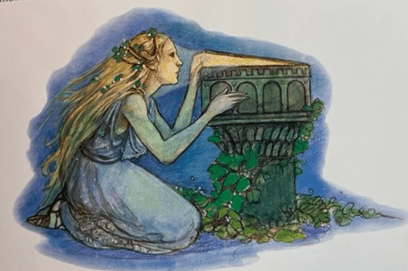
Pandora by Rebecca Guay

Last May I had a vision in the shower. It wasn’t the kind of vision I like to have—where the Goddess and I dance across a meadow with flowers springing up as we pass and cool breezes bringing sweet fragrances. This was the kind of vision I’d rather not have, but probably needed to. This is from my journal.

Something happened during my shower recently that feels relevant. As I stepped into the shower, a phrase thrust itself into my mind: “I was forced to watch them die and it was all my fault.” As I ‘stood’ there with water pouring over my body and that statement vibrating in my brain, it attached itself to a scene where I was the spiritual leader of a community that came under attack. I was forced to watch the women and men who believed in what I taught as they were executed. Many of them were friends and relatives. I was restrained and couldn’t intervene to save them, or join them in execution. Having to witness this was part of my punishment. Instead I was carried to a bigger town, publicly humiliated and beaten, and then executed in some painfully unpleasant way I can’t recall–probably because I don’t want to.

Continue reading “Women, Blame, and Patriarchy by Mary Gelfand”

From the Archives: Storytelling as a Spiritual Practice by Nurete Brenner

This was originally posted on April 10, 2019

“The master’s tools will never dismantle the master’s house.” Audre Lorde

Question: What tools do we have that are powerful enough to dismantle the Master’s house?

Answer: Storytelling.

Storytelling does not belong to the “master.” Storytelling is subversive because it belongs to the collective and not to the individual; it gives agency to the powerless; it is not dependent on time or money, and it makes visible those who are overlooked and ignored in our globalized industrialized system.

We are not seeking to overthrow the patriarchy or “master,” and replace him with a queen. We are seeking something which Riane Eisler (2002) would call a partnership society or a society in which polarities are well balanced, in which the masculine and feminine values which we all hold are given equal weight.  We have become so indoctrinated in the patriarchal master’s way of thinking that we think we need some show of force, some violence, some upheaval to create the more beautiful world. But – truthfully – it won’t look like that. It might actually look like a group of women and men gathering together in a circle, in community, to tell stories. Storytelling is subversive because it belongs to the community; it is a medicine to transmute the toxins of industrialized society; it is a spiritual practice. Storytelling is the antidote to empire.

Continue reading “From the Archives: Storytelling as a Spiritual Practice by Nurete Brenner”

From the Archives: “The Importance of Religion for Ecofeminism,” by Ivy Helman.

Author’s note: Originally published on January 8, 2017, this post still speaks to me 6 years-to-the-day later. Now, when I teach ecofeminism, I dedicate a week to religion as we cannot deny the way in which Western patriarchy and religion have coexisted and often fed off each other. The only distinction I would add to this original post is that not all religions are equal when it comes to patriarchy and its misdeeds. Christianity has had more power and influence than others. However, Christianity is not the only religion to hold patriarchal views. That needs to change. May the New Year bring more of that needed change.

“Why is religion important to ecofeminism?” A student, in the Master’s course I teach at Charles University, asked this as we began the class session dedicated to the topic. Given the overwhelming presence of atheism in the Czech Republic, I wasn’t too surprised by the inquiry.  Nonetheless, the idea has been at the back of my mind ever since: what does religion have to do with ending patriarchy and bolstering the health of the planet? While I may take the connection as obvious, it is clearly not for many feminists out there. Here is how I understand it.

Continue reading “From the Archives: “The Importance of Religion for Ecofeminism,” by Ivy Helman.”

The People Who Have Always Had Questions by Liz Cooledge Jenkins

A few weeks back, author and historian Jemar Tisby tweeted that an acquaintance of his “described their general experience with white evangelicals as ‘people who don’t have any questions.’ I immediately knew what they meant.” The tweet gained some traction, with 62.1k “likes” at the time I’m writing this. The next week, Tisby followed up with a thoughtful reflection piece, expanding on his own experience with white evangelicals needing to have answers to every question, from “How old is the earth?” to “How should Christians vote?” Tisby unpacks the dangers of this kind of arrogant certainty, inviting Christians instead to embrace mystery, curiosity, and learning.

I resonate with many of Tisby’s observations and reflections. From my experience (including thirteen years in evangelical churches and a Master of Divinity degree from an evangelical seminary), I wouldn’t say these things are true of every single white evangelical—but they’re definitely true enough of the movement as a whole that they are very much worth naming, engaging, and challenging. I appreciate Tisby’s work.

Continue reading “The People Who Have Always Had Questions by Liz Cooledge Jenkins”

The Fall of Patriarchy: I Got Scammed by Caryn MacGrandle

I am a few months out of my second marriage. There will be no third. I know my task right now is to become self-sufficient.

Thanks to my second husband, I have valuable Project Management skills. He set up an S-Corporation when he was out of work in Illinois and handed it over to me when he found a salaried job. I gained needed self-confidence over the past eight years and figured out that I am good at Project Management.

Now I need to convince another company of that. Because I am not good at sales and no longer have my main client in my company and with my divorce, I need a steady income.

I thought I had found one.

I was reached out to by a supposedly Swiss company called HAND-Lease that leases and sells extremely large equipment from $25,000 up to $55 million. They had just established a Pennsylvania office and were now opening a Birmingham office. I was phone screened by a customer service employee who said if they were interested, the Human Resource department would reach out to me for a longer interview. 

Continue reading “The Fall of Patriarchy: I Got Scammed by Caryn MacGrandle”

Moses and the Rambo Problem by Janet Maika’i Rudolph

Moses is an interesting character is in the pantheon of religious leaders. He is such a major personage, considered the founder of Judaism and yet there are no extra-biblical accounts of his life and his deeds. He only exists in the bible. You’d have thought that such a major event as leading a whole class of people away from Egyptian slavers, would have shown up on the radar of other written or mythical accounts from the time. Nothing!

Even his name is interesting. When the Egyptian princess gathered Moses out of the waters she said:

She named him Moses, explaining,

“I drew him out of the water.”

Exodus 2:10

This is one meaning of his name. But there are others. In Egypt, the land where he was born and raised, the M-SH (variations: m-s or m-ss) root simply means “son.” Or it can mean “child” in a non-patriarchal sense. We see this in other Egyptian names Ramses is the child of the sun god Ra. Tutmose is the child of Tut. 

Continue reading “Moses and the Rambo Problem by Janet Maika’i Rudolph”

From the Archives: I Believe Anita! by Marie Cartier

This was originally posted on April 7, 2014

During the past week I attended a Los Angeles premiere of a new documentary Anita: Speaking Truth to Power (Dir: Freida Lee Mock USA, 2013). The screening was sold out and I had great seats saved for me– sitting with a friend who works at Samuel Goldwyn, the distributor of this fine film.

In 1991, Anita Hill provided testimony she hoped would serve to dissemble the nomination of Clarence Thomas as a Supreme Court justice. Although the vote would end up being close (52-48) Hill’s testimony did not serve to dissuade the decision — Clarence Thomas’ nomination was confirmed and he was appointed to a life term on the Supreme Court four days after Hill’s testimony concluded. Here is an outline of the debate.

anita-580x857

I remember watching the hearings in 1991 at a friend’s house in Sacramento, CA where I was couch-surfing with another friend while we were in Sacramento from Los Angeles to protest for gay rights—to speak our truth to power. I remember being amazed that she was doing this—and that it was being televised. We were glued to the set before we went off to the protest we were attending.

Continue reading “From the Archives: I Believe Anita! by Marie Cartier”

Inspired by Carol P. Christ: Patriarchy Rules the Supreme Court by Janet Maika’i Rudolph

Along with the words of Justices Sotomayer, Breyer and Kagan.

The Supreme Court ruling overturning Roe was expected, but there was nothing that could prepare me (nor likely anyone else) for the devastation of the actual decision. My gut is reeling. I thought it would be useful to survey the landscape through the lens of patriarchy. Thanks to Carol Christ for having always written insightful comments about the roles of patriarchy. This is inspired by her work.

The dissenting judges were quite eloquent, so I will work off their words.

  • “Whatever the exact scope of the coming laws, one result of today’s decision is certain: the curtailment of women’s rights, and of their status as free and equal citizens.”
  • “After today, young women will come of age with fewer rights than their mothers and grandmothers had. The majority accomplishes that result without so much as considering how women have relied on the right to choose or what it means to take that right away. The majority’s refusal even to consider the life-altering consequences of reversing Roe and Casey is a stunning indictment of its decision.”

My Commentary: Through the eyes of patriarchy here is no need to consider life-altering consequences because it only recognizes two roles for women: madonna or whore. We are never seen as full humans with civil and independent rights. Patriarchy doesn’t just hate the sexual freedom of women, it has spent millennia trying to quash it, make it into something dirty, control it. It’s a love/hate relationship with sex. Rape is really OK (look how hard it is to prosecute). Pedophilia OK too (look at the church). But a woman making her own sexual, reproductive choices . . . a bridge too far. Patriarchy will always force us to pay a price for having sex, for being alluring, for being female.

Continue reading “Inspired by Carol P. Christ: Patriarchy Rules the Supreme Court by Janet Maika’i Rudolph”