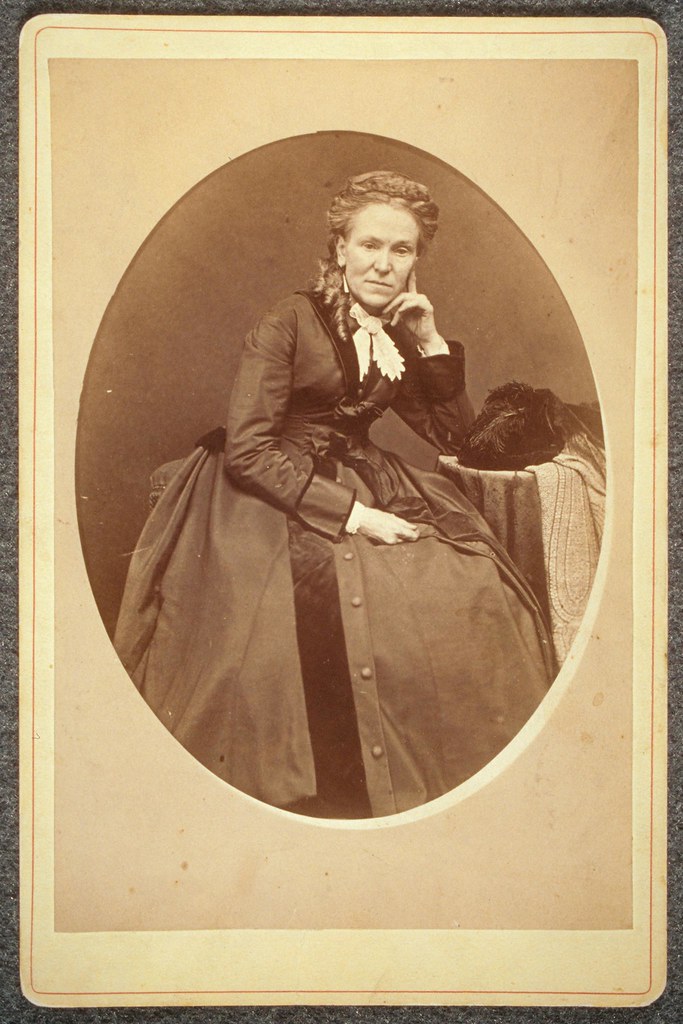
Nitzavim-Vayeilech: Inspiration for a More Egalitarian Judaism.

The Torah portion for yesterday was a double one: Nitzavim-Vayeilech (Deuteronomy 29:9-31:30).  I have already written about Vayeilech here, yet as with any parshah there is always more to say. Nonetheless, I will mainly focus on the motifs that are more particular to Nitzavim (Deut. 29:9-30:20).  Some we have seen before like an obsession with idolatry, threats and punishments in the forms of disease, plagues, destructions, and annihilations, the Israelites’ persistent betrayal, and this-worldly rewards for good behavior.  Yet, there are some ideas we haven’t seen yet.  I want to focus on three: the Torah referring to itself; the idea of the Torah being heard; and the freedom of people to choose their own heart’s inclinations.

Deuteronomy 29:20 refers to the book of the Torah.  However, it is only in verse 31:9, that we learn that Moses is the author of the Torah.  More orthodox versions of Judaism adhere to this belief that Moses wrote the Torah (except for perhaps the last 8 verses or so since he had died), but according to biblical historians, the Torah was compiled out of a myriad of sources during the Babylonian exile.  Nonetheless, I find it interesting that in Vayeilech-Nitzavim, the Torah refers to itself eight times (29:20, 21, 27, 30:10, and 31:9, 12, 24 and 26).  To some extent, it seems to be setting itself up to be an equal to the ten commandments within Israelite temple worship as there are also instructions to put this book of Moses next to the ark of the covenant within the tent of meeting (31:26).  While Moses may not have written the Torah, it is clear that its authors intended for it to be a religiously significant book within Israel.  And, it has become for Jews, the religiously significant book.

Continue reading “Nitzavim-Vayeilech: Inspiration for a More Egalitarian Judaism.”

Welcome to the Psychopomp Dreamhouse! by Stacey Simmon, PhD

When I first heard a Barbie movie was going to be released this summer I groaned. Like the awful complements of GI Joe, American Girl, and Trolls, I assumed that the content of this film would be designed to fleece parents out of the cost of tickets and popcorn. I am delighted to report that I was completely mistaken. Not only does Barbie enchant, she also delivers a complex message about idealism and womanhood.

But Barbie’s most important revelation is in her role as a psychopomp between the world of the ideal and the world of the real. Barbie Land is like a patriarchal heaven. Women are ideal, they don’t have flaws. They get shit done without breaking a sweat or wearing comfortable shoes, and the men are the accessories. It is what I imagine all the men who struggle with patriarchy idealize about what it would mean to be a beautiful, flawless woman- all of the power, where men can relax and be accessories for a change.

Continue reading “Welcome to the Psychopomp Dreamhouse! by Stacey Simmon, PhD”

Legacy of Carol P. Christ: The Sacred Feminine or Goddess Feminism?

This was originally posted on January 25, 2016

Carol Molivos by Andrea Sarris 2

In recent years “the Sacred Feminine” has become interchangeable with (for some) and preferable to (for others) “Goddess” and “Goddess feminism.” The terms Goddess and feminism, it is sometimes argued, raise hackles: Is Goddess to replace God? And if so why? Does feminism imply an aggressive stance? And if so, against whom or what?

In contrast, the term “sacred feminine” (with or without caps) feels warm and fuzzy, implying love, care, and concern without invoking the G word or even the M(other) word–about which some people have mixed feelings. Advocates of the sacred feminine stand against no one, for men have their “sacred feminine” sides, while women have their “sacred masculine” sides as well.

Nothing lost, and much to be gained. Right? Wrong.

Continue reading “Legacy of Carol P. Christ: The Sacred Feminine or Goddess Feminism?”

Re’eh: When Turning to Monotheism Requires Violence.

I have covered all of the Torah portions for the month of August except for Re’eh (Deuteronomy 11:26-16:17), which was the parshah for yesterday the 12th of August, 2023.  It contains discussions of idolatry, the inheritance of the land, what counts as kosher animals, the prohibition against eating blood, the sabbatical years, and a list of festivals and their observance.  As one reads, it becomes clear that the main concern of the parshah is threefold: observance; idolatry; and place.  Re’eh is more or less an argument for monotheism, one that acknowledges the existence of other gods, institutes a series of rewards and punishments to convince people to join in, and resorts to violence when people are unconvinced.  What does that mean for feminism?  We will see.

Continue reading “Re’eh: When Turning to Monotheism Requires Violence.”

Legacy of Carol P. Christ: Argument from “Absence” and Absence of Dialogue

This was originally posted August 31, 2015

Recently in a conversation with a noted archaeologist and his male graduate student assistant, I proposed that the absence of war and the trappings of war, including images of larger than life-size warrior kings, suggested to me that we should not understand the social structure of ancient Crete on the model of patriarchal kingship. “Kings are always warriors,” I said, “yet there is no clear and convincing evidence of organized warfare in ancient Crete. And,” I continued, “because warrior kingship is not a ‘natural state,’ but one achieved through warfare and domination, kings must legitimate and celebrate their power through larger than life-size images of themselves. Such images were common in ancient Sumer and in ancient Egypt, but are not found in ancient Crete.”

The response I received was unexpected: both archaeologists seemed dumbfounded. “Is kingship always associated with war?” they asked. “Yes,” I responded, “this is a conclusion I reached many years ago while studying the cultures of ancient Greece and ancient Israel, and I have recently elaborated this theory in a series of essays on the blog Feminism and Religion ( See “Patriarchy as a System of Male Dominance Created at the Intersection of the the Control of Women, Private Property, and War”).”

Continue reading “Legacy of Carol P. Christ: Argument from “Absence” and Absence of Dialogue”

Matot-Massei: The Question of Women’s Agency and Lives under Patriarchy.

The Torah portion for July 15th is the double-portion, Matot-Massei  (Bamidbar/Numbers 30:2-36:13).  Matot, meaning tribes, runs from Numbers 30:2 to 32:42 and covers vow making as well as what the spoils of war with the Midianites are.  Massei, or journeys, is Numbers 33:1 to 36:13 and describes the Israelites journey through the desert after fleeing Egypt and the boundaries of the Promised Land.  While Matot-Massei have so much that could be discussed including war, images for the deity, and cities of refuge, this post focuses on their women. 

There are three occasions where women are specifically mentioned.  The first concerns vows and their atonement when broken.  Next, women are discussed as spoils of war.  Finally, Matot-Massei describes what to do with inheritance when there are only daughters. 

Continue reading “Matot-Massei: The Question of Women’s Agency and Lives under Patriarchy.”

Who Gets to Define What it Means to be Pro-Life? by Janet Maika’i Rudolph

The sky and sun on June 7th in the afternoon on Long Island.

Today I am coughing and choking here on Long Island because of our unhealthy air quality.  The smoke from the wildfires of Canada have reached us. We, here in NY, are not alone in dealing with air so polluted that breathing is at risk. I think of the CA wildfires, the SpaceX rocket that exploded in April, the Ohio train derailment in Feb. No place is safe.

While coughing and thinking about this, two bits of news came into my consciousness, The first was the Supreme Court ruling narrowing the scope of the Clean Water Act.

My first thought was, do they and their children not have to live in this world too?  Do they think they can buy a clean environment for themselves and their families and the rest of us be damned? 

The next report I heard was from a prominent conservative commentator who explained how “prolife” he is and went on to describe his “deep concern” for life.

Continue reading “Who Gets to Define What it Means to be Pro-Life? by Janet Maika’i Rudolph”

ESCORT SERVICE by Esther Nelson

These days, I spend most of my time in Roanoke, Virginia.  I moved here—a three-hour drive west—from Richmond, Virginia.  One of the ways I’m settling into my new community is by volunteering as an escort at Planned Parenthood.

The job is straight-forward:  Greet people as they exit their vehicle when they arrive at the medical facility’s parking lot.  Usually, there are several protestors in front of the building, and clients must drive past them before turning right into the driveway.  Protestors wave pink, plastic bags filled with anti-abortion literature as well as pamphlets that outline a specific, Christian view of “salvation.”  Not many drivers stop.  If they do, I walk over to the line that divides Planned Parenthood property from public space and wave the cars forward.  The drivers are grateful.  So many clients are nervous, upset, and unsure of protocol.  One woman asked me if I was associated with “those people out there,” pointing to the protestors.  “Not at all,” I assured her.  She smiled with relief.

Continue reading “ESCORT SERVICE by Esther Nelson”

To Stand in the Presence of the Ancients! – Enheduanna, Part 2 by Janet Maika’i Rudolph

Yesterday I wrote about the priestess/scribe Enheduanna and her warrior/king father Sargon. I posited their connection to the codification of patriarchy. They did not invent it, as war and the diminution of women had been happening in some circles. I do wonder, however, if they furthered it along to a point of no return.

Another king of the time, Urukagina from circa 2350 bce[1] codified laws under the guise of reformation.  Some of his reforms were progressive in that they sought to protect the poorer classes against aristocracy and the priesthood.  But they also were clear to let women “know their place.” Here are the translated words from his laws:

“If a woman to a male has spoken . . .[bad] words(?) which exceed (her rank?), onto the teeth of that woman a baked brick shall be smashed, and that brick will be hung at the main gate.”

Continue reading “To Stand in the Presence of the Ancients! – Enheduanna, Part 2 by Janet Maika’i Rudolph”

Goddess Lost: How the Downfall of Female Deities Degraded Women’s Status in World Cultures by Rachel McCoppin, Ph.D

In this blog post, I would like to take the opportunity to promote my new book, entitled:  Goddess Lost: How the Downfall of Female Deities Degraded Women’s Status in World Cultures. This book makes the assertion that women must be educated about the history of goddess worship around the world in order to adopt a comprehensive spirituality that fits what it means to be a woman.

Continue reading “Goddess Lost: How the Downfall of Female Deities Degraded Women’s Status in World Cultures by Rachel McCoppin, Ph.D”