Ask me No Questions by amina wadud

amina 2014 - cropped

In some alternate universe I would have complete control of what becomes part of discourse about me and about my work.  In THIS universe, I just try to set some minimal standards even when it might sometimes not seem generous to the persons who send requests to interview me.  Must be some alignment of the stars that I’ve been inundated with requests of late, so I will share some of the “types” of request to ask you–my community at Feminism and Religion blog-sphere–what you make of these, or how better to respond? I seriously contend that all people deserve dignity even when this might clash with the dignity of another human being at times.

First, there are the curiosity seekers from the world of fast pace media sensationalism, perhaps in order to keep up with the latest, hippest media hype they rush in with their requests.  While they often include the deadline they are up against, they simultaneously ignore that I might be up against my own deadlines, or just LIVING my life.  I’m clear from way back…the kind of work I do is not well suited for the 30 second sound bites, one second for each of the 30+ years I’ve spent to develop coherent reconstruction of Islamic thought and practice, away from the dominant patriarchal paradigm developed during its classical period and maintained until today.  By the time I explain even that previous sentence my 30 seconds are up!

Next would be sincere but slightly naive students of modern Islamic thought, Islamic reform or Islamic feminism. At one end they define the parameters of their research problem or their term paper (also on deadline) and then they ask me for references, despite particular interests that may be slightly outside my area of expertise.  I usually think and sometimes reply: I am not a reference librarian.  At the other end are graduate students who have more detailed inquiry to make and thus send along complex questions each one, in my mind, deserving a mini-dissertation in order to do justice with.  I have to temper my desire to assist them with a realistic assessment of how long I can be at their disposal. It is not uncommon to answer one set of questions only to be sent another set. Continue reading “Ask me No Questions by amina wadud”

A feminist closet? by Linn Marie Tonstad

Linn Marie TonstadEvery now and again, a budding systematic theologian comes to my office and wants to talk about how to avoid being pegged as a feminist, and therewith avoid not being taken seriously as a theologian. Sometimes the students are feminists, but don’t want that aspect of their work to dominate or perhaps even to be visible for a time; in other cases, the students aren’t feminist – or didn’t start out that way – but are having experiences as they enter the guild that are raising these concerns for them in a new way. Perhaps professors are assuming that they are feminist simply because they are female, or perhaps male students are dominating in class and the professor is doing nothing to rein them in.

These students seek me out knowing that I am an avowed feminist and an avowedly feminist theologian. But they are concerned about the effects being or appearing feminist might have on their future careers. After all, they want to join the theological conversation in order to shape it – and their ambitions are right and justified. Continue reading “A feminist closet? by Linn Marie Tonstad”

Pap Smears I Have Known by Molly

IMG_0522Your body is your own. This may seem obvious. But to inhabit your physical self fully, with no apology, is a true act of power.”

–Camille Maurine (Meditation Secrets for Women)

“I used to have fantasies…about women in a state of revolution. I saw them getting up out of their beds and refusing the knife, refusing to be tied down, refusing to submit…Women’s health care will not improve until women reject the present system and begin instead to develop less destructive means of creating and maintaining a state of wellness.”

Dr. Michelle Harrison (A Woman in Residence)

One afternoon at the skating rink for homeschool playgroup, a few of my friends sit in a hard plastic booth and the conversation turns to pap smears and pelvic exams. Later, I read Michele Freyhauf’s post about her hysterectomy experience and the skating rink pap smear stories come back to me with vivid clarity.  Being a woman is such an embodied experience and we have so many stories to tell through and of our bodies. During my conversation with my friends, I warn them: watch for my new show–Pap Smears I Have Known. At the time, several other friends are preparing for a local production of the Vagina Monologues and I have a vision: The Pap Smear Diaries. But, really, how often do we have a chance to tell our Pap smear stories, our pelvic exam stories? Where are they in our culture and do they matter? Continue reading “Pap Smears I Have Known by Molly”

In Memoriam – God Hates Fags

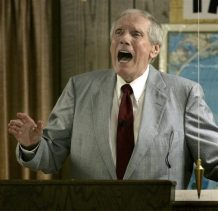
Phelps didn’t just live a life filled with hate but he also embodied the very reasoning why so many communities cannot cross that proverbial bridge to work together to see past their differences and maybe never will. In the case of Phelps, sticks and stones may break our bones, but words really do hurt.

Fred Phelps, an American PasFred Phelpstor who headed the Westboro Baptist Church in Topeka, Kansas died at the age of 84 on March 19, 2014.  While some individuals leave behind legacies of their good deeds and loving memories, the only thing Phelps left behind was a family and church founded on the principle of hate.

A frequent eyesore at various events ranging from military funerals and gay pride gatherings to mainstream events that captured the attention of our pop-culture obsessed society, Fred Phelps and his clan believed it was their sacred duty to warn others of God’s anger over the growing acceptance of not only modernity in general but also issues like gay rights and abortion.  From slogans and signs such as ‘God Hates Fags’ to ‘Thank God for IEDs (Improvised Explosive Devices), Phelps has caused many controversies both during his lifetime and after his death.

Continue reading “In Memoriam – God Hates Fags”

To Do Justice for Jordan Davis by Kelly Brown Douglas

Rev.-Dr.-Kelly-Brown-Douglas

Theology is faith seeking understanding.  Faith is that ineffable, intangible spiritual apparatus that keeps us in relationship to a transcendent, infinite god. It is, for Christians, the core of their relationship with the god of Jesus Christ. Yet, as Karen Armstrong and others so often remind, faith is not about loyalty to a certain doctrine, or dogma, or set of beliefs, rather it is about a commitment and engagement in a certain way of “living, and moving and having one’s being” in the world.  As the word faith derives from the Greek word “pistis” it fundamentally signals not a way of thinking about who god is and god’s relationship to us, but a way behaving in light of our belief in and relationship to god.

Christian faith is grounded in the theological claim that god became incarnate in Jesus. Faith, in this regard, is not about an intractable and intolerant assertion of that theological claim; rather, it is about a sincere and consistent commitment to live into the implications of that claim. Put simply, “To keep the faith,” is not about holding onto a certain way of thinking, rather it is about maintaining a certain way of acting. The point of the matter is that for Jesus faith did not signal a preoccupation with belief per se.

When Jesus was calling people to faith, or telling them to have faith, he was not calling them to believe in him or in his divinity, rather he was asking them to be engaged in a particular way of living, to be committed to his mission in the world. Their loyalty, their trust was to be in the way of life which he embodied, a way of life that reflected the presence of god in the world. And so it is in appreciating the meaning of this word faith as Jesus used it, that I come to theological task on this day. Continue reading “To Do Justice for Jordan Davis by Kelly Brown Douglas”

The Day I Re-Learned How to Love My Femininity: This Butch’s Experiment in Healing by _Melody F.

I feel like I am a bit of a typical white, middle class, butch. Maybe not, but I feel like I’ve met me: I dress like a dude, take on what I consider masculine roles in relationships, and do ‘guy things’ like play video games or carry heavy objects. And then there’s that really feminine part of me, the soft-butch side that comes out when I can’t take something macho I’m trying to do seriously, or when my voice (already high) hits that pitch that (not ‘screams,’ but) sort of sweetly says ‘hello, I’m girly.’ When my soft butch side comes out, my students coo at me. It’s all very embarrassing.

But under a face which turns blotchy red in such moments, something my ex used to think was cute, I have been privately wishing that feminine part of me would die away. For the last year, I’ve silently hated her. This post is about when I decided to stop.

I’ve been having an ongoing conversation with a fiercely femme friend of mine about misogyny and masculine privilege in LGBTQ communities. About a month ago she sent me an article by Gabrielle Rivera titled Fat-Booty Butch Wears Leggings — Confuses World, Confronts Self. In it, Rivera dons a pair of leggings for the day and writes a post about her experience that addresses invisibility of femmes, butch privilege, and other well-thought-out and honest observations about queer folks and communities from the perspective of a butch/Queer Person of Color. Rivera rocked both the leggings and the post. (I highly recommend giving it a read.) What struck me most was how very much herself Rivera seemed to stay. Even as she engages a complex shift in the way in which her communities received and read her, she protests her invisibility – nothing about switching codes had erased her or her queerness. I wasn’t sure I would feel the same. I was so alienated from my feminine side that the idea of looking even a little bit feminine, just to touch her, seemed as though it might blank out my identity. Continue reading “The Day I Re-Learned How to Love My Femininity: This Butch’s Experiment in Healing by _Melody F.”

The Agony and the Ecstasy of Creating Syllabi by Grace Yia-Hei Kao

Grace Yia-Hei KaoThe start of the Spring 2014 semester is right around the corner, which means that many academics like me are madly trying to put the finishing touches on their syllabi.

The process of doing so has always been equal parts exciting and stress-inducing. Right now, however, I am feeling the pain. Why?

Continue reading “The Agony and the Ecstasy of Creating Syllabi by Grace Yia-Hei Kao”

Evangelical Missionaries Preach Death in Uganda by Andreea Nica

Andreea Nica, pentecostalismA former evangelical Christian friend of mine sent me information on the intriguing documentary God Loves Uganda. The newly released documentary addresses how the American evangelical movement has prompted a political and social shockwave in the country of Uganda. While missionaries are typically associated with delivering aid and improving the conditions of third world countries, the spreading of Christian values and ideals has inflicted suffering upon ethnic communities through evangelical indoctrination.

The intent of the film is to raise awareness of the political and social brutality that the evangelical missionaries are instigating; specifically through their teaching that homosexuality is a sin and should be dealt with accordingly. In Uganda this means death. Given the rise of globalization, transnational religious actors have been more enabled to engender other nations with their respective religious beliefs, often with minimal regard for the cultural and political landscape of the nation they wish to transform. Continue reading “Evangelical Missionaries Preach Death in Uganda by Andreea Nica”

“Never Again…” by Ivy Helman

headshotEvery year, the Greater Lowell Interfaith Leadership Alliance, GLILA, sponsors an interfaith service on genocide.  During these services, the community gathers together to remember, to mourn, to heal, to honor and to work towards a world in which Elie Wiesel’s words, “Never Again!” ring true.  Three years ago, we focused on the Shoah and the year after that the Armenian genocide.  Last year it was Cambodia under the Khmer Rouge and this year our focus is Rwanda.  Part of this preparation is self-education.  I would like to share with you a few of the things I have learned through my own research about the Rwandan genocide as well as some reflections on this difficult, yet extremely important topic.

In many ways, the Rwandan genocide is a direct consequence of colonialism as well as a United Nations’ failure to respond to warnings.  Before colonization, first by the Germans and then as a spoil of WWI for the Belgians, the Hutus, Tutsis, and Twa peoples lived in relatively peaceful coexistence.  Yes, there were acknowledged differences between the three groups based on caste-like descriptions, but they also all spoke the same language, practiced the same religion, intermarried, and co-existed together for a long time.  Generally, the Hutus who made up 85% of the population were the lower caste, so to speak, and were associated with labor and farming, while the Tutsis, 14% of the population, were the herders.  This occupation often generated more wealth and prestige than farming did, so Tutsis were also long associated with the elite in economic and political terms running small chiefdoms and the like.  According to Philip Gourevitch in We Wish to Inform You that Tomorrow We Will Be Killed with Our Families: Stories from Rwanda, these were fluid categories of sorts where it was possible to become part of another group through the acquisition or loss of wealth (see page 47).  Continue reading ““Never Again…” by Ivy Helman”

Painting Jephthah’s Daughter by Angela Yarber

angelaAnd Jephthah made a vow to the Lord, and said, “If you will give the Ammonites into my hand, then whoever comes out of the doors of my house to meet me, when I return victorious, shall be the Lord’s, to be offered up by me as a burnt offering…Then Jephthah came to his home at Mizpah; and there was his daughter coming out to meet him with hand drums and with dancing…he did to her according to the vow he had made…” (Judges 11:30, 34, 39)

When I was a little girl I used to make up routines to perform for my family.  From Tina Turner’s “What’s Love Got to Do With It” to Michael Jackson’s “Beat It” I can remember making up creative choreography and performing in front of the affirming audience that was my family.  Often times, my routines were accompanied by props, such as a hula hoop, roller skates, or an unwilling younger brother.  Whether I had props or not, there was always a big smile on my face as I twirled and leapt to the tunes on my family’s 8-track, record, or cassette player.  Half the fun was making up the routine and practicing until it was performance perfect.  The other half of the fun was the response on my family’s faces as I forced them to “watch me, watch me!” once again.  Despite the cheesiness of my routines and my silly props, they watched with delight, clapped, and encouraged me to dance all the more.  Such is the experience for many fortunate children: choreographing routines, drawing pictures, making up skits and plays, and practicing to make their parents proud. Continue reading “Painting Jephthah’s Daughter by Angela Yarber”