Whenever the epidemic of rape in Egypt makes the news, I am destined to think of Joyce Carol Oates.
Last summer, the author took to twitter to question whether Islam was responsible for the widespread incidence of sexual assault in Egypt, an argument people continue to make today. As a Muslim woman, I desperately wanted to respond to Ms. Oates’ tweets. I held my cursor over the “reply” button countless times. But I’ve been silent about the things I would have said, about why I follow Dennis Rodman on twitter, and why Pearl Jam is my favorite band, and how my heart shattered for women in Syria who felt like they had to be silent, too.
Reading the story of the Levite’s pîlegeš – found in the Hebrew Bible, Judges 19:1-20:7 – is unlike any other scholastic endeavor I have undertaken.1 The narrative is of a woman who leaves her husband’s house, only to be retrieved by her husband, gang raped on her way to his home, and dismembered upon arrival. This intense violence then escalates to the abduction and rape of more than 400 virgins and the death of many more (Judges 20-21).
The first time I encountered this narrative was while reading Phyllis Trible’s Texts of Terror as an undergrad student. While at the time I did not fully understand the textual nuances Trible points out, I did understand this story was sacred in a way I could not articulate. It was not until years later that I realized I was not truly listening to the story because I had not read it from the pîlegeš’ perspective and was yet to be affected by the horror of it.
An explanation is needed when one calls a story of violence sacred. To clarify, it is the telling of the story that makes it sacred, not the violence. In much of the world today, violence done to women is taboo.2 Not only are the violent acts ignored, but the victim and her retelling of the acts are also often ignored. Perhaps this is because our society is biased towards the perpetrator. Perhaps it is because our faith communities have self-identified as loving and to acknowledge violence is to acknowledge failure. But perhaps it is mostly because violence is hard to process, especially when the violent act is committed against a loved one, and we prefer not to struggle with the presence of violence all around us. Continue reading “Painting Women from Judges – Part 3: The Sacred Account of the Levite’s Pîlegeš by Melinda Bielas”
We find our versions of home in these communities and it is within these spaces where our home not only begins to define who we are but we, as a reflection of that space, begin to outwardly redefine the spaces we exist in. If we slowly begin, through our experiences to shape our homes based on privilege and power without self-reflection and acknowledgment of others, then we are no better than those oppressive forces we say we’re against.
This post is a response to a recent blog entry titled “Who is Gender Queer?” on this site from Carol Christ. The post can be read by clicking here.I want to thank my friend, advocate, and upcoming scholar Martha Ovadia for reasons only she knows! Stay brave, speak up, be heard! _________________________________________
It is terrifying to know that something is wrong but not be able to speak truth to power.
It is even more terrifying to know something is wrong, be able to speak to it, and then silence those voices that do not have that same privilege, power, or position.
The struggle that many of us in positions of privilege and power face is not just that of being ostracizing and essentializing forces—it is that we, as allies, members of communities, or even those dedicated to a cause, can ourselves participate in the oppression we are fighting against and can do harm.
It’s taken me a long time to not only be comfortable with who I identify as, but also how I go about fighting and defining my life based on said identity and experience. However, the one thing that I have the ability to do is choose that identity more freely than others. Unlike Leelah Alcorn, Ash Haffner, Aniya Knee Parker, or Yaz’min Shancez pictured above, I did not have to face the types of oppressions they did, to which they sadly lost their lives, as a result of the fact that we exist in a society that can’t deal with the inability to leave things undefined or to allow people to define who they are on their own terms.
It is vital that although my lived experiences could never meet nor match the same types of oppression that these brave individuals had to face, I, as a white, cisgendered gay male, do not become part of their oppression through my own position and privilege.
As a man who exists in the world of feminism and within various women’s communities, I walk a daily tightrope of privilege and power to insure that I do not silence those that I consider allies, friends, mentors, or colleagues. As a man who exists in the world of the LGBTQ community, I walk an additional tightrope to additionally not take away from or diminish the experiences of those members of our community that do not have the same type of lived experiences as myself. Even within minority communities, there are positions of hierarchy and within these hierarchies of knowledge, identity, or power, comes a responsibility to insure that the oppressed do not become the oppressors.
We find our versions of home in these communities and it is within these spaces where our home not only begins to define who we are but we, as a reflection of that space, begin to outwardly redefine the spaces we exist in. If we slowly begin to shape our homes based on privilege and power without self-reflection and acknowledgment of others, then we are no better than those oppressive forces we say we’re against.
I can’t speak for what identity feels like –I can only speak for what essentializing does, and what it does is reflected in the deaths of Lelah, Ash, and the many others who die nameless. It is our responsibility, as allies, members of communities, and those fighting to end sexist, patriarchal, and, even now, homonormative oppression, to make sure that no more deaths occur on our watch or that truth is spoken to power even when power is masquerading around as truth.
John Erickson is a Ph.D. Candidate in American Religious History at Claremont Graduate University. He holds a MA in Women’s Studies in Religion; an MA in Applied Women’s Studies; and a BA in Women’s Literature and Women’s Studies. He is a Non-Fiction Reviewer for Lambda Literary, the leader in LGBT reviews, author interviews, opinions and news since 1989 and the Co-Chair of the Queer Studies in Religion section of the American Academy of Religion’s Western Region, the only regional section of the American Academy of Religion that is dedicated to the exploration of queer studies in religion and other relevant fields in the nation and the President of the University of Wisconsin Oshkosh’s LGBTQA+ Alumni Association. When he is not working on his dissertation, he can be found at West Hollywood City Hall where he is the Community Events Technician and works on policies and special events relating to women, gender, sexuality, and human rights issues that are sponsored or co-sponsored by the City of West Hollywood. He is the author of the blog From Wisconsin, with Love and can be followed on Twitter @JErickson85
Poppaea Sabina as portrayed on a Roman coin minted 62-65 CE.
As suggested in my first post on Poppaea it is likely she knew one or more of the women Paul refers to in Romans. Of particular interest is the woman Paul refers to as his ‘mother’ (Romans 16:13). If Poppaea knew her she surely knew about Paul. If that was the case, then it seems all but certain Poppaea was among those members of the imperial household to whom Paul refers at Philippians 4:22. Corroboration of that may have been in the source(s) of an anecdote Saint John Chrysostom tells, attributing Paul’s incarceration and execution to Nero’s anger at his interaction with a woman with whom Nero was erotically involved.
Though it is difficult to place much reliance on Chrysostom’s anecdote without more knowledge about his source(s), in the aggregate the evidence for Poppaea knowing about or even meeting with Paul is relatively strong, especially when compared to the sort of evidentiary problems with which ancient historians regularly grapple. Furthermore, it is easy to spot the issue Poppaea would have focused on (that precisely because it relates to sexuality could have led in antiquity to the sort of distortion or misunderstanding of her motivation in meeting with Paul) that may underlie Chrysostom’s anecdote: circumcision. The problem with understanding that issue today, however, ironically relates to modern perceptions of no relevance whatsoever to the ancient evidence. Continue reading “Poppaea & Paul: Was This About A Female Challenge To Male Privilege? by Stuart Dean”
My last article for Feminism and Religion had a very brief reference to an episode of sexual violence; since its publication I have received emails from women who decided to tell me their experiences with rape and abuse.
I am deeply grateful, ladies. I read each one of your stories. I am honored by the trust you placed in me to open your heart and let me go in to see your sorrow and hopes. My soul found solidarity in your words and I recognized myself in your struggle with physical and emotional scars, with your courage to pick up the pieces and coming back from the ashes to pursue justice, inner peace and build new self confidence.
Breaking the silence is not easy. We live in a culture where “women are prettier the more they remain quiet.” We’re taught rather to accept violence without complaints; if we talk, we will be blamed and vilified, isolated, ashamed or mocked. Rape is frequent topic of jokes and the medicine many males recommend for disciplining women who don’t behave “as a woman should.” Continue reading “Breaking The Silence About Sexual Violence by Vanessa Rivera de la Fuente”
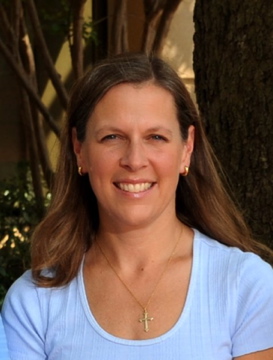
Feeling safe again is often the healing and elusive aspiration of a person like me.
I have been living with the deep and cellular residuum of sexual trauma for most of my life—over thirty of my going-on forty-six years.
For many years, the grief and shame of losing my innocence cultivated an intense orientation to life’s doing. Safety for me back then was activity, noise, frenetic schedules, and a constant soundtrack to my life that meant I never had to be quiet with myself. Safety was in the predictable metrics of success that I could use to measure my self worth. I never had to stop and admit that I didn’t feel safe, ever.
I got a lot done all those frenetic years and my diligent efforts were affirmed with everything from scholarships to awards to pay raises.
But, trauma does not allow itself to be ignored. It demands attention. Its cellular ghosts haunt their host. They must be acknowledged, sometimes cast out, sometimes befriended, other times adapted or transformed. My trauma is tethered to the violence of a dangerous world, a world that knows no boundaries when it comes to annihilating innocence.
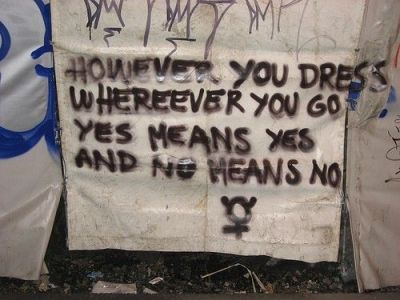
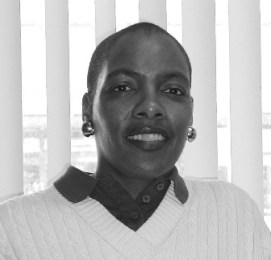
In these last several weeks, the horror that one out of four women will encounter domestic violence- sometimes referred to as “intimate partner” violence- in their life time has come to the national forefront. Indeed, women are more likely than men to be killed by their “intimate partner:” one in three women who is a victim of homicide is killed by an intimate partner. While sixty percent of domestic violence incidents occur in the home, this is not where domestic violence begins. It is the perhaps inevitable result of a culture of violence against women. It is the violence that violence creates.
This is a culture of violence in which women’s work continues to be grossly undervalued. One third of all women are living in or near poverty, what has been described as “the brink of poverty.” Two-thirds of minimum wage workers are women. The average white woman is paid 77 cents for every dollar her male counterpart man makes; for African American women it is 64 cents and Hispanic women 55 cents for every dollar made by white men. Women devote more than double the hours as men to “unpaid interactive children care.” Women over 65 “are twice as likely as men of the same age” to live in poverty—primarily because they are full or part-time caregivers. A 2013 “State of the World’s Mothers Report” ranked the United States 30th of the 30 best countries in the world to be a mother, based on indicators such as economic status, political opportunities and universal health care. And what this report makes most clear is that the status of children reflects the status of their mothers. This means that at least 28 million children are living in poverty in the United States.
As for physical violence, one in four college aged women experiences an attemptted or actual date rape. Forty-two percent of women who have been date raped consider suicide. In the Shriver Report, Sister Joan Chittister suggests that in the United States, “rapes in military and rapes on college campuses go unpunished because ‘boys will be boys,’ and winning wars and football games are more important than protecting the integrity of the women who are victims of rape.” These statistics represent nothing less than systemic and cultural violence against women and their children.[i] And, such violence is a sin. Continue reading “Domestic Violence: The Sin that Sin Created by Kelly Brown Douglas”
I had an entire blog ready to go for posting this week, but as news broke of Jennifer Lawrence’s stolen pictures, I couldn’t bring myself not to speak up.
If you have not heard yet, hackers broke into Jennifer Lawrence’s personal accounts and uploaded quite a stash of private photos on to the internet. They are currently threatening to upload stolen videos as well. You can find the story chronicled here. I’ve decided to link to a feminist website that is withholding the photos because, trust me, you do NOT want to wade the waters of what is out there in regards to this story. It is rage inducing. Continue reading “We Are All Jennifer Lawrence by Martha Cecilia Ovadia”
I feel like I am a bit of a typical white, middle class, butch. Maybe not, but I feel like I’ve met me: I dress like a dude, take on what I consider masculine roles in relationships, and do ‘guy things’ like play video games or carry heavy objects. And then there’s that really feminine part of me, the soft-butch side that comes out when I can’t take something macho I’m trying to do seriously, or when my voice (already high) hits that pitch that (not ‘screams,’ but) sort of sweetly says ‘hello, I’m girly.’ When my soft butch side comes out, my students coo at me. It’s all very embarrassing.
But under a face which turns blotchy red in such moments, something my ex used to think was cute, I have been privately wishing that feminine part of me would die away. For the last year, I’ve silently hated her. This post is about when I decided to stop.
I’ve been having an ongoing conversation with a fiercely femme friend of mine about misogyny and masculine privilege in LGBTQ communities. About a month ago she sent me an article by Gabrielle Rivera titled Fat-Booty Butch Wears Leggings — Confuses World, Confronts Self. In it, Rivera dons a pair of leggings for the day and writes a post about her experience that addresses invisibility of femmes, butch privilege, and other well-thought-out and honest observations about queer folks and communities from the perspective of a butch/Queer Person of Color. Rivera rocked both the leggings and the post. (I highly recommend giving it a read.) What struck me most was how very much herself Rivera seemed to stay. Even as she engages a complex shift in the way in which her communities received and read her, she protests her invisibility – nothing about switching codes had erased her or her queerness. I wasn’t sure I would feel the same. I was so alienated from my feminine side that the idea of looking even a little bit feminine, just to touch her, seemed as though it might blank out my identity. Continue reading “The Day I Re-Learned How to Love My Femininity: This Butch’s Experiment in Healing by _Melody F.”
A former evangelical Christian friend of mine sent me information on the intriguing documentary God Loves Uganda. The newly released documentary addresses how the American evangelical movement has prompted a political and social shockwave in the country of Uganda. While missionaries are typically associated with delivering aid and improving the conditions of third world countries, the spreading of Christian values and ideals has inflicted suffering upon ethnic communities through evangelical indoctrination.
The intent of the film is to raise awareness of the political and social brutality that the evangelical missionaries are instigating; specifically through their teaching that homosexuality is a sin and should be dealt with accordingly. In Uganda this means death. Given the rise of globalization, transnational religious actors have been more enabled to engender other nations with their respective religious beliefs, often with minimal regard for the cultural and political landscape of the nation they wish to transform. Continue reading “Evangelical Missionaries Preach Death in Uganda by Andreea Nica”


 Reading the story of the Levite’s pîlegeš – found in the Hebrew Bible, Judges 19:1-20:7 – is unlike any other scholastic endeavor I have undertaken.1 The narrative is of a woman who leaves her husband’s house, only to be retrieved by her husband, gang raped on her way to his home, and dismembered upon arrival. This intense violence then escalates to the abduction and rape of more than 400 virgins and the death of many more (Judges 20-21).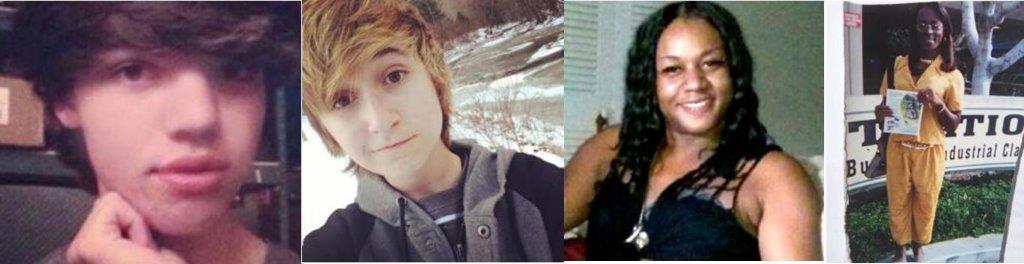

 Feeling safe again is often the healing and elusive aspiration of a person like me.
 In these last several weeks, the horror that one out of four women will encounter domestic violence- sometimes referred to as “intimate partner” violence- in their life time has come to the national forefront. Indeed, women are more likely than men to be killed by their “intimate partner:” one in three women who is a victim of homicide is killed by an intimate partner. While

 Feminism and Religion