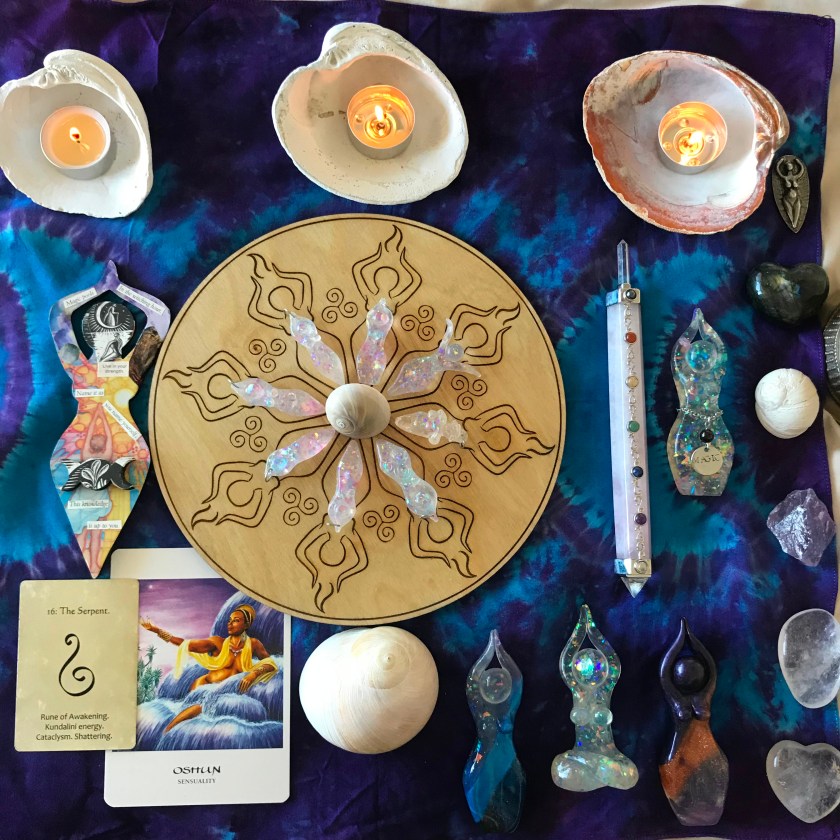
Winter Lessons, by Molly M. Remer

Yes, it is December
already and again.
Let yourself notice the milkweed pods,
how they have split their sides
and are sending silky white seed fluffs
into the waiting air.
Witness the trees,
bare and gray and patient.

Yes, it is December
already and again.
Let yourself notice the milkweed pods,
how they have split their sides
and are sending silky white seed fluffs
into the waiting air.
Witness the trees,
bare and gray and patient.
Watch the squirrels,
tails puffed against the chill,
stored nuts in their cheeks.
Listen to the wind
how it whispers and rattles
through the empty branches.
Watch the clouds,
slow-moving white billows
in a pale blue sky.
Be patient with yourself.
Grant yourself grace.
Remember the three invitations
of the solstice season:
to listen,
to wonder,
to be content.
Remember your promise
to keep company with joy.
Remember your vow
to be in devotion
to your own life.
Think about everything
there is to do.
Open your hands.
Feel that thin, whispering
winter wind
skim over your palms.
Take a deep breath.
Allow yourself to marvel
at all this year
has held.
Bless it.
Thank it.
Cup your hands
around your own face.
Say: thank you.
Here you are in the center
of your own life’s unfolding.
There is nowhere else to be.
Be gentle with yourself.
Invite the winter crone to tea.
Look into her eyes.
See yourself reflected there,
your own winter eyes open
to the possibility
of both clarity and delight.

I have been writing for Feminism and Religion for 13 years. In the summer, I compiled a post with 13 summer lessons from 13 years of posts here at FAR. I decided to bookend that post with a Winter Lessons post as well. Here are thirteen lessons to share from past winter posts:

Continue reading “Winter Lessons, by Molly M. Remer”

From the Archives: The Full Spirited Four-Fold Goddess: The Maiden, the Mother, The Queen and the Crone by Mama Donna Henes

Moderator’s Note: This was originally posted on February 24, 2013. Sadly Mama Donna died on Sept. 21, 2024. You can read FAR’s post that honored her life here.

Donna Henes, Urban Shaman, Queen of my self, crones,

The Queen paradigm promotes a new understanding of what it might mean to be a middle-aged woman today who accepts complete responsibility for and to her self, and it celebrates the physical, emotional, and spiritual rewards of doing so.

Although I have been passionately devoted to the Many Splendored Goddess in Her complex multiplicity for more than thirty years now, I am not a believer in the Triple Goddess paradigm. It has never resonated with me because it belies what I believe to be the true nature of nature. The Triple Goddess in Her tripartite phases is widely understood to represent the complete cyclical wholeness of life. She who is Three is likened to the moon, the tides and the seasons, whose mutability She mirrors. And therein, lies the rub.

I am sorry, but forty years of researching, teaching, and writing about Celestially Auspicious Occasions — the cycles of the cosmos and the earthly seasons, and the multi-cultural ritual expressions that they inspire — I can state unequivocally that the moon has four quarters, not three, and that there are, as well, four seasons in the year. Continue reading “From the Archives: The Full Spirited Four-Fold Goddess: The Maiden, the Mother, The Queen and the Crone by Mama Donna Henes”

Threshold Time, by Molly M. Remer

Step by step,
we make our way.
Breath by breath,
we choose.
Day by day,
we see where we are.
Let us remember
that we do not really finish anything,
we tumble with the turning
which is right where we belong.

It is now
in this liminal space
between the cauldron
and the cave,
as obligation struggles
to come roaring back
into center,
that we sense what we truly need
whispering beneath the surface
of all that clamors to co-opt our time
and all that howls
to claim our attention.
Stand steady.
Inhabit your own wholeness.
Cast a one word
spell of power: return.
Step into the sacred
right where you are.
Re-collect yourself.
Reclaim your right
to your own life.
Defend your edges.
Give clarity space
to crystallize
and your own knowing
space to emerge.
It is vital,
this work of reclamation.
Hold it holy.
Let the knots unravel.
Set yourself free.

Continue reading “Threshold Time, by Molly M. Remer”

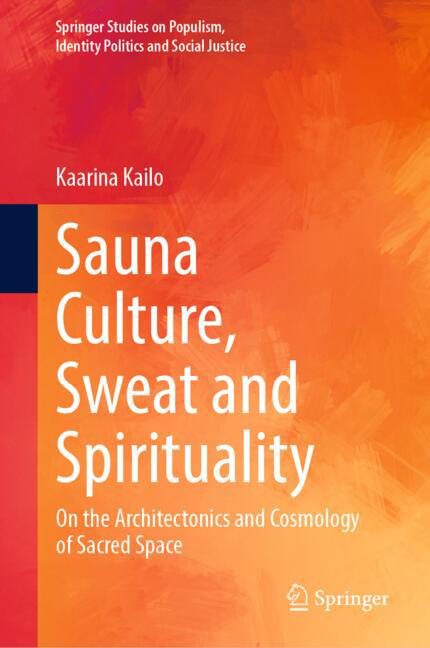
Sauna, Culture, Sweat and Spirituality: On the Architectonics and Cosmology of Sacred Space by Kaarina Kailo: Book Review by Beth Bartlett

Living as I do in the midst of both Finnish immigrant and Anishinaabe cultures, and where the two merge in the many here who identify as “Findians,” I was intrigued by the description of Kaarina Kailo’s book, Sauna, Culture, Sweat and Spirituality, as a comparative exploration of Indigenous sweat lodges  — madoodiswan in Anishinaabemowin — and Finnish saunas.[i] As an outsider to both cultures, I have no ancestral or traditional knowledge of either saunas or sweat lodges and I wanted to learn more about both.  Kailo’s book did not disappoint.  What I hadn’t expected and was delighted to discover was that Kailo connects both with ancient goddess religions, contemporary feminist spiritualities, and ecofeminism. 

Kailo’s book is a widely and deeply researched cross-cultural comparative study of the elements, practices, intentions, and spiritualities of sweat cultures ranging far beyond various Native American sweat lodge practices – Delaware Great Houses, Anishinaabe sweat lodges, Pueblo kivas – and the Finnish sauna,to Iberian/Galician saunas, Irish sweathouses, and Old Europe.  As Kailo herself says, the value of such cross-cultural studies is the way they help to expand our thinking, enabling us to see things we might not have otherwise.  She repeatedly says that she is looking for the “affinities” among these various sweat cultures, rather than focusing on their differences, and she finds many.  In the process, she reveals the role of sweat lodges, sweat houses, and saunas as sacred spaces of healing, restorative balance, connection with the spirits, rebirth and regeneration, women-centered spirituality, and Great Bear religions. Infiltrated throughout are her reflections on how reviving the widespread use of sweat cultures and saunas, and the woman and life-centered spiritualities at their heart, would provide an antidote  to the current economic, ecological, and political threats to the world.

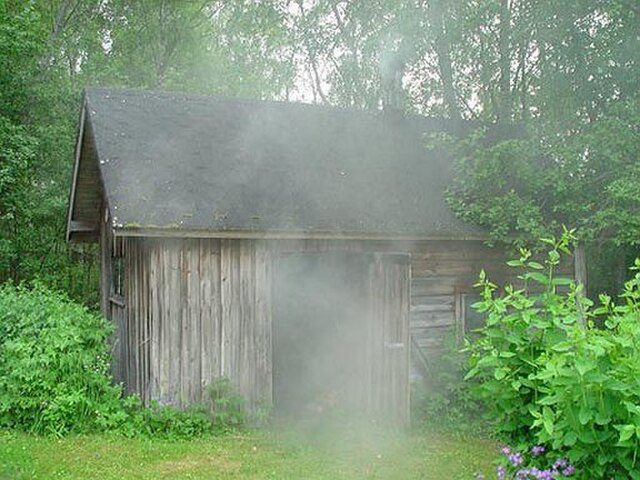
Finish Smoke Sauna
Continue reading “Sauna, Culture, Sweat and Spirituality: On the Architectonics and Cosmology of Sacred Space by Kaarina Kailo: Book Review by Beth Bartlett”

Legacy of Carol P. Christ: Is the Spirit of Great Generosity in Crete a Survival of Ancient Matriarchal Values?

This was originally posted on October 28, 2013

carol-christAt a coffee shop in Agios Thomas, Crete last month a perfect stranger offered to pay for the coffees and sodas of the 16 women on the Goddess Pilgrimage to Crete. This spirit of great generosity is rarely experienced in the United States or other parts of Europe, but it is still common in rural Crete and some parts of Greece.

 In fact our group was in Agios Thomas because our bus driver Babis, also in a spirit of great generosity, insisted on stopping to show us his village when we were passing nearby. He guided us to see Roman rock cut tombs and arranged for the early Byzantine church to be opened. At the end of the our pilgrimage, Babis stopped the bus at a wooded glen beside a small church where he offered us his own homemake raki, wine, and olives, accompanied by local sheep cheese he had purchased while we were climbing a mountain. After every meal that we ate in local tavernas, we were offered bottles of cold raki, fruit, and sweets.

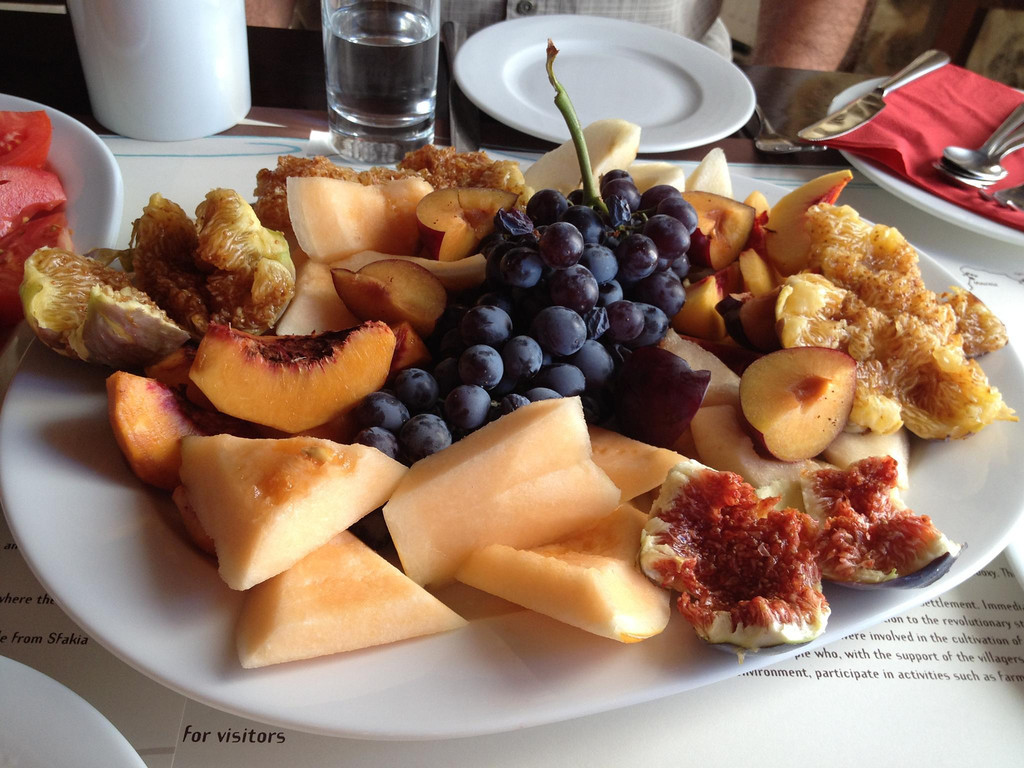
crete fruitsThis spirit of great generosity has long been commented on by travelers in Greece, who often speak of it as unexpected (for them) hospitality to the stranger or traveler. That it is, of course. Through the work of Heidi Goettner-Abendroth, I now understand that the famous Greek hospitality to the stranger has deep roots in matriarchal cultures. According to Goettner-Abendroth, equality of wealth is assured through the widely-practiced custom of gift-giving in matriarchal cultures. Continue reading “Legacy of Carol P. Christ: Is the Spirit of Great Generosity in Crete a Survival of Ancient Matriarchal Values?”

Legacy of Carol P. Christ: IS THE SPIRIT OF GREAT GENEROSITY IN CRETE A SURVIVAL OF ANCIENT MATRIARCHAL VALUES?

carol-christ

This post was originally published on Oct. 28th, 2013

At a coffee shop in Agios Thomas, Crete last month a perfect stranger offered to pay for the coffees and sodas of the 16 women on the Goddess Pilgrimage to Crete. This spirit of great generosity is rarely experienced in the United States or other parts of Europe, but it is still common in rural Crete and some parts of Greece.

 In fact our group was in Agios Thomas because our bus driver Babis, also in a spirit of great generosity, insisted on stopping to show us his village when we were passing nearby. He guided us to see Roman rock cut tombs and arranged for the early Byzantine church to be opened. At the end of the our pilgrimage, Babis stopped the bus at a wooded glen beside a small church where he offered us his own homemake raki, wine, and olives, accompanied by local sheep cheese he had purchased while we were climbing a mountain. After every meal that we ate in local tavernas, we were offered bottles of cold raki, fruit, and sweets.

crete fruitsThis spirit of great generosity has long been commented on by travelers in Greece, who often speak of it as unexpected (for them) hospitality to the stranger or traveler. That it is, of course. Through the work of Heidi Goettner-Abendroth, I now understand that the famous Greek hospitality to the stranger has deep roots in matriarchal cultures. According to Goettner-Abendroth, equality of wealth is assured through the widely-practiced custom of gift-giving in matriarchal cultures. Continue reading “Legacy of Carol P. Christ: IS THE SPIRIT OF GREAT GENEROSITY IN CRETE A SURVIVAL OF ANCIENT MATRIARCHAL VALUES?”

Summer Lessons, by Molly M. Remer

Let us be gentle with ourselves 
as we cross the threshold 
into summer, 
as we both open our hearts to change 
and open our hands to choice. 
It is now that we both let things go 
and celebrate what is flourishing, 
what is thriving and growing 
and calling us onward. 
Let us be soft and supple, 
luminous and languorous. 
Let us practice the discipline of pleasure 
and the liturgy of delight. 
Let us protect wide margins for magic,
commit to our own life’s unfolding 
and swim freely 
in the current of the sacred 
that is always available 
to receive us 
and welcome us home.

Today, I sit missing the orioles and thinking about cycles of change, how things grow and decline, and how we can choose to be present or not with what we see and feel. I tip my head back in the green filtered light of morning and discover berries beginning on the mulberry trees. The wild raspberries and blackberries too are tipped with small, firm caps of green. I am feeling the sort of overdue clarity that descends when I finally realize I can let something go, that not everything is mine to carry or mine to fix. I know that this clarity too will come and go, but for now, I welcome it, feeling the cool wind stirring my hair and brushing my shoulders as I enjoy the sunshine and the sound of hawks on the wing. There is a powerful hope in these blue sky days and for now, I bask in the sensation of both remembering and reclamation.

This year, as we tip into summer in the Northern hemisphere, the temperatures in my own Midwestern biome have been surprisingly cool, peaceful and rainy. In an era of climate change, this slow entry into the heat of the year has felt welcome and encouraging. Something that continues to inspire and teach me this year has been to start where my feet are, to return again and again to where I am on this earth and in my body. In a culture that encourages fragmentation and distraction, distance, discord, and dis-embodiment, this practice of return is an act of both rebellion and reclamation.

I have been writing for Feminism and Religion for 13 years. This year, sitting down to write and reflecting on the life lesson of starting where my feet are, I decided to go back through my past summer posts here to discover the other lessons I have learned from summers gone by. I chose thirteen lessons to share from past summer posts:

Continue reading “Summer Lessons, by Molly M. Remer”

Showing Up, by Molly M. Remer

When we return home, I see a meme on social media that says: “Ten minutes online will show you everything that is wrong with the world. Ten minutes outside will show you everything that is right.” I think about the students and professors, each one alight with enthusiasm, with passion, for their work, their projects, their art, the contributions they are making. This is what we need. We need to see, spend time with, and BE people who are involved, connected, committed, and passionate. People who are creating instead of destroying. People who are connecting instead of controlling. People who are reaching out to offer what they can, who create and care, and who show up.

We may let connections thin
and interests slide,
forgetting that it takes work
to nurture and tend
to what we love,
that following what is easy
can be the wrong direction,
one that eventually leads
to the withering of what we value
and to the shrinking of our worlds.
We must evaluate the balance
between effort and ease,
yes,
but let us remember
that both are essential to thriving.
Let us lean into effort sometimes,
when there is meaning on the line,
put our backs into it,
feel sweat on our brows
and the satisfaction that comes
from choosing to immerse ourselves
in wholehearted living,
in presence,
in the work of reaching out
and holding on.

This past weekend, I went to my oldest son’s next college campus. The green spaces were filled with students working on art. The halls of the buildings were lined with art by high school students there for a visiting show. The art gallery was filled with diverse works of many mediums. The speakers for the day were filled with enthusiasm for their subjects, talking about study abroad trips to Paris and being part of the chorus or the band. We pass the student theater, abuzz with activity, and listen to a young man playing rippling tunes on the piano in the atrium of the library. This school is in a rural Missouri farming community, where we passed tractors laden with hay on the potholed road. Their mascot is a mule (“the only college with live mascot in Missouri!” they proudly report. The mule’s name is Molly, so I like her right away). Missouri is a “red state” and yet the students handed me the school paper with a front page story about protests at the capitol and a large color photo of someone holding an “Impeach Elon” sign. I happily picked up a library button proclaiming “libraries are for everyone” and another saying “what’s more punk than a library?” as well as snagging a “plant queer” sticker from the LGTBQ+ alliance table for my sister. The History table gives me a bookmark reading: “Don’t make me repeat myself.” –History

Continue reading “Showing Up, by Molly M. Remer”

Legacy of Carol P. Christ: “The Divine Mystery”?

carol-christ

This post was originally published on Nov. 11th, 2013

“The mystery of God in feminist theological discourse” is the subtitle of Elizabeth Johnson’s widely read She Who Is. The notion that God is “a mystery” is rarely questioned in feminist theologies. But maybe it should be.

Although it is true that the finite cannot encompass the infinite, and that all knowledge is rooted in particular standpoints, I do not agree that the first and last thing to be said about the divine power is that it is “a mystery.” Indeed as I will argue here, speaking about God as “a mystery” obscures more than it “reveals.”

christina's loveThe notion that Goddess or God is “a mystery” is rooted in notions of “a God out there” that most spiritual feminists reject. Goddess or God “in” the world is, I suggest, not unknown, but known, not hidden, but revealed–in the beauty of the world and in ordinary acts of love and generosity.

The notion that God is “a mystery” is a well-worn trope in Roman Catholic theology. Protestants make similar claims when they speak of  the hiddenness of God Continue reading “Legacy of Carol P. Christ: “The Divine Mystery”?”

From the Archives: I Sing Asherah Exalted! by Janet Maika’i Rudolph

This was originally posted Dec. 16th, 2021

With this season of the festivals of light upon us (Hanukkah, Christmas, Solstice, Kwanzaa), I wanted to focus on the more joyful aspects of our lives. For that, I have been diving into passages about joy and singing in the bible.

Sometimes when I write these posts, they take me in directions I never thought to go. This post is one of them. The surprise direction I found is in the Psalm below:

Sing unto him, sing psalms unto him: talk ye of all his wondrous works.
Glory ye in his holy name: let the heart of them rejoice that seek the LORD.
Psalm 105:2-3 KJV

Continue reading “From the Archives: I Sing Asherah Exalted! by Janet Maika’i Rudolph”