IS IT ESSENTIALIST TO SPEAK OF EARTH AS OUR MOTHER? by Carol P. Christ

carol-christThe charge of “essentialism” has become equivalent to the “kiss of death” in recent feminist discussions. In this context it is taboo to speak of Mother Earth.  Yet, I would argue there are good reasons for speaking of Mother Earth that do not add up to essentialism. What if the values associated with motherhood are viewed as the highest values? What if the image of Mother Earth encourages all of us to recognize the gift of life and to share the gifts we have been given with others?

For those not familiar with the “essentialism” debate in feminist theory, it might be useful to define “essentialism.”  In philosophy, essentialism is the idea that every “thing” has an “essence” which defines it.  In its pure form, essentialism is a by-product of Platonic “idealism” which states, for example, that the “idea” of table is prior to every actual table and that every actual table is an embodiment of the idea of table.

Aristotle disagreed with the Platonic view “way back then,” arguing that the idea of what a table is can be inferred from actual tables, and so on for every “thing.”  There is no need for an idea to exist prior to the existence of anything. Rather ideas help us to name and categorize existing things.  In the 20th century “existentialism” again challenged “essentialism,” asserting that “existence precedes essence.”  Existentialism argued that free individuals are defined by what they do, not by what they “are” prior to or apart from their actions.

When Whitehead said that all western philosophy can be understood as a footnote to Plato, he was referring in part to disagreements among philosophers about the relationship of ideas to things and existence to essence.

In the context of feminist theory, the charge of “essentialism” is used to criticize theories which speak of woman as opposed to man or feminine as opposed to masculine. Continue reading “IS IT ESSENTIALIST TO SPEAK OF EARTH AS OUR MOTHER? by Carol P. Christ”

Who Am I Under Oppression? By Deanne Quarrie

Deanne QuarrieIn a class I am taking we were asked to journal with these questions: Ask yourself who are you in the inner voice that does not speak in the world around you or which you have worked tirelessly to bring into fruition in your life. Who are you that has felt suppressed and suffocated?

I sometimes think that I do not know who I am anymore.  Life teaches us that it is those outside of ourselves who determine our value to society.  We are given love and support (if we are lucky) by our parents as children.  Our value is determined by how much time and attention they give us.  If we get a lot, we grow up confident in ourselves trusting our way through life. When we attend school our value is determined by the effort we put into our studies, the grades we receive and the extracurricular activities we take part in and finally by the friends we choose. Continue reading “Who Am I Under Oppression? By Deanne Quarrie”

Dreaming the dream on . . . by Kaalii Cargill

kaalii picI am author, writing fiction and non-fiction. My short stories have been published in various magazines and I have won an international writing prize. When my work was first published, I wanted to write a best-seller and earn enough from my books to retire from my ‘day job’ and write full time. I know the formula: open fast and strong, pick up the reader and carry her along until the last page, action, action, action…

Instead I found myself writing about balance, about land in need of healing and about the people called to defend the balance. My stories are as much about meaning and value as about action, and the same themes cycle though: cooperation vs. domination, defending the Earth, being an integral part of the world around us, cooperation with the rest of Nature. Continue reading “Dreaming the dream on . . . by Kaalii Cargill”

The Quiet Voice of the Frame Drum by Oxana Poberejnaia

oxanaLayne Redmond passed away on 28 October 2013. Days before her death I received by post her signature Lotus Tambourine which Layne developed with Remo, manufacturer of world frame drums. Remo posted a tribute to her on her page as a Remo artist. Percussive Arts Society published an In Memoriam of her, along with the link to an article by Layne Redmond “Frame Drums and History”. Facebook and especially Women Frame Drumming page exploded with expressions of gratitude, sympathy and testimonials of how Layne changed people’s lives. Here is an account of Layne’s last summer by a person who supported her in her end-of-life transition.

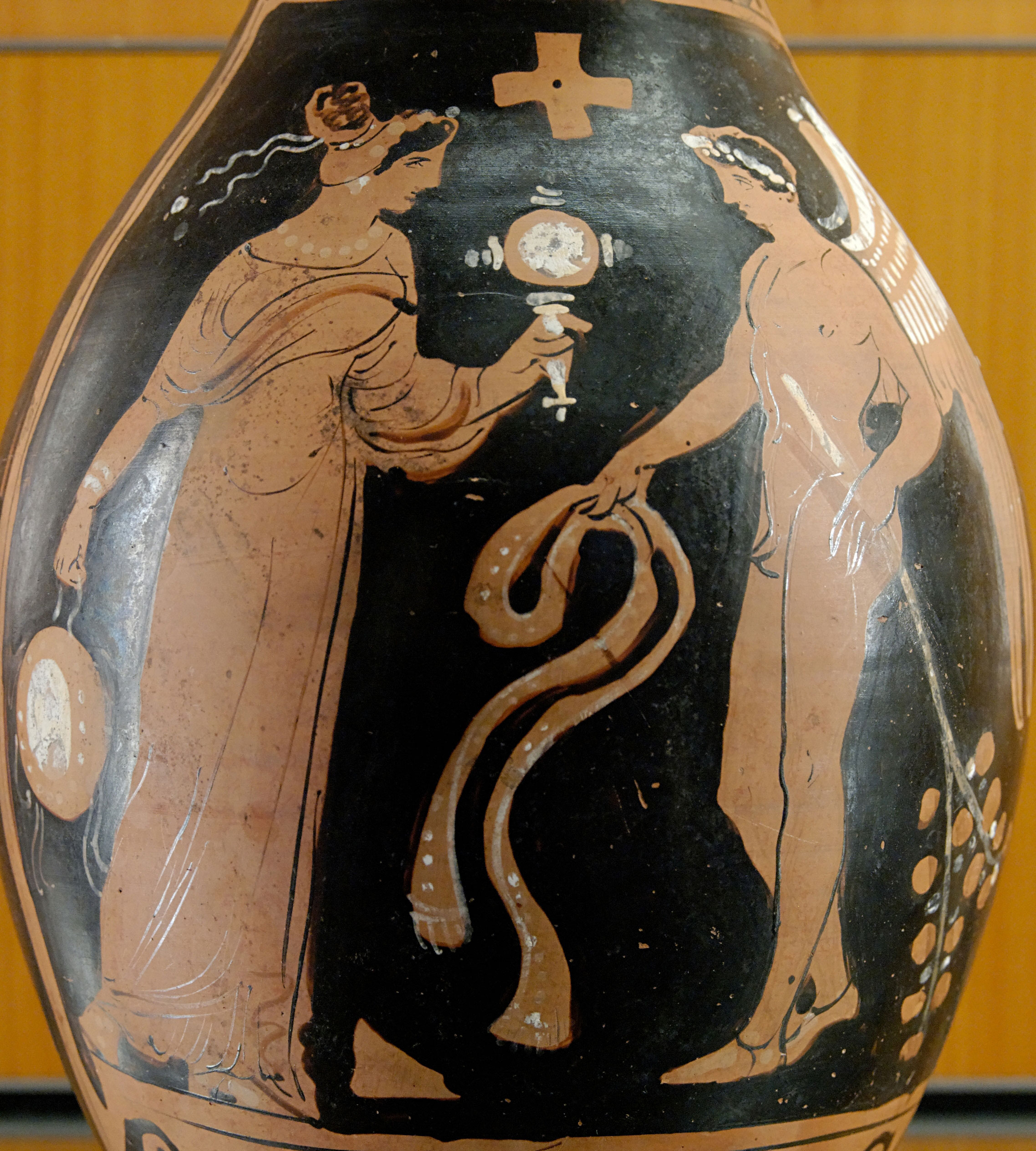
Woman_mirror_tambourine_MBA_Lyon_L631FWLayne Redmond was intensely busy with two projects during this time: completing her film about drumming spiritual practices to dream awake Afro-Brazilian Gods and Goddesses, and preparing her seminal book When The Drummers Were Women for re-printing with new materials and photos. She put out appeals for both projects, including on Karen Tate’s show “The Voices of the Sacred Feminine” in June 2013, and people helped with their money and time.

Continue reading “The Quiet Voice of the Frame Drum by Oxana Poberejnaia”

“THE DIVINE MYSTERY”? by Carol P. Christ

carol-christ“The mystery of God in feminist theological discourse” is the subtitle of Elizabeth Johnson’s widely read She Who Is. The notion that God is “a mystery” is rarely questioned in feminist theologies. But maybe it should be.

Although it is true that the finite cannot encompass the infinite, and that all knowledge is rooted in particular standpoints, I do not agree that the first and last thing to be said about the divine power is that it is “a mystery.” Indeed as I will argue here, speaking about God as “a mystery” obscures more than it “reveals.”

christina's loveThe notion that Goddess or God is “a mystery” is rooted in notions of “a God out there” that most spiritual feminists reject. Goddess or God “in” the world is, I suggest, not unknown, but known, not hidden, but revealed–in the beauty of the world and in ordinary acts of love and generosity.

The notion that God is “a mystery” is a well-worn trope in Roman Catholic theology. Protestants make similar claims when they speak of  the hiddenness of God Continue reading ““THE DIVINE MYSTERY”? by Carol P. Christ”

Painting Dorothy Day by Angela Yarber

angela

Radical Revolutionary.  One with the workers.  Daily works of mercy.  One who challenged the status quo.  She never wanted to be called a saint, though the Claretian Missionaries proposed that she be canonized in 1983.  The Catholic Church calls her a “Servant of God.”  I call her a Holy Woman Icon.  She joins the myriad other Holy Woman Icons with a folk feminist twist that I feature each month: Virginia Woolf , the Shulamite, Mary Daly, Baby Suggs, Pachamama and Gaia, Frida Kahlo, Salome, Guadalupe and Mary, Fatima, Sojourner Truth, Saraswati, Jarena Lee, Isadora Duncan, Miriam, Lilith, Georgia O’Keeffe, Guanyin.

Born on November 8, 1897 Dorothy Day’s radical spirit, her development of the Catholic Worker Movement, and  her solidarity with the poor have taught countless women what it means to be a revolutionary.  This American anarchist and activist converted to Catholicism as an adult after living what many describe as a bohemian lifestyle.  She advocated the Catholic economic theory of distributism, daily works of mercy, pacifism, and solidarity with the poor. Continue reading “Painting Dorothy Day by Angela Yarber”

Fand – Goddess of the Sea – a Shapeshifter for Samhain by Judith Shaw

judith shaw photoFand is a Celtic Sea Goddess whom some scholars believe originated as a Manx sea deity (the original inhabitants of the Isle of Man).   With time She became the most loved of Ireland’s fairy queens, called “Queen of the Fairies.  Fand, meaning “Pearl of Beauty” or “Tear” was stunningly beautiful.  Though she was married to the Celtic Irish Sea God, Manannan Mac Lir, She, like other faery queens, fell in love with and then enchanted a mortal man, linking our world with Her Otherworld.  Being the Goddess/Faery Queen she was, Fand fell in love not with any common man but with Cuchulainn, the greatest Irish hero.

Continue reading “Fand – Goddess of the Sea – a Shapeshifter for Samhain by Judith Shaw”

Entering Winter, the Season of Darkness by Barbara Ardinger

Halloween used to be spelled “-e’en,” with the apostrophe replacing the V in “eve.” The N was probably added so the word ends in a consonant and we don’t have “hallow-wheee.” But people get lazy, and since the late 20th century, both the V and “eve” have disappeared. This holy day is the true beginning of winter. In pre-Christian Europe, it was celebrated by the wild Celts, who called October 31 Samhain (pronounced approximately SOW-un). Today it’s a major sabbat, or holy day, celebrated by most modern pagans. Although religious fundamentalists keep trying to convince us that Halloween is an evil pagan festival (emphasis on the evilness of pagans) and pressuring retailers not to sell little collectable witches, the name of this day is in fact Christian: it’s Hallowed (or Holy) Evening, or the Eve of Holy Days. In the olden days and still today in, for example, the Jewish calendar, a holy day begins when the moon rises on the evening before. October 31 precedes All Saints Day (November 1) and All Souls Day (November 2). Like Christmas Eve, it’s a holy (but seldom silent) night.

All Saints Day, the Catholic Encyclopedia informs us, was instituted in the fourth century when dioceses began to divide up and exchange the relics of martyr-saints. At first, only martyrs and St. John the Baptist were recognized, but in 609 Pope Boniface IV consecrated the Pantheon in Rome to the Blessed Virgin and all martyr-saints. The theological basis for All Souls Day is the doctrine that “souls that have not been perfectly cleansed from venial sin are debarred from the Beatific Vision.” With prayers, the living can help the dead pass through purgatory. To commemorate “the faithful departed,” the Catholic Encyclopedia further tells us, the priest recites the Office of the Dead and celebrates a Requiem Mass. The vigil for All Saints, or Hallows Eve, was also first celebrated in the fourth century. The Mexican version of this holiday is Día de los Muertos, which is also celebrated on November 1 and 2. That’s when we see the wonderful costumed skeleton figures and the sugar skulls. Like similar festivals in cultures around the globe, this is a celebration of family and ancestors.

Continue reading “Entering Winter, the Season of Darkness by Barbara Ardinger”

IS THE SPIRIT OF GREAT GENEROSITY IN CRETE A SURVIVAL OF ANCIENT MATRIARCHAL VALUES? by Carol P. Christ

carol-christAt a coffee shop in Agios Thomas, Crete last month a perfect stranger offered to pay for the coffees and sodas of the 16 women on the Goddess Pilgrimage to Crete. This spirit of great generosity is rarely experienced in the United States or other parts of Europe, but it is still common in rural Crete and some parts of Greece.

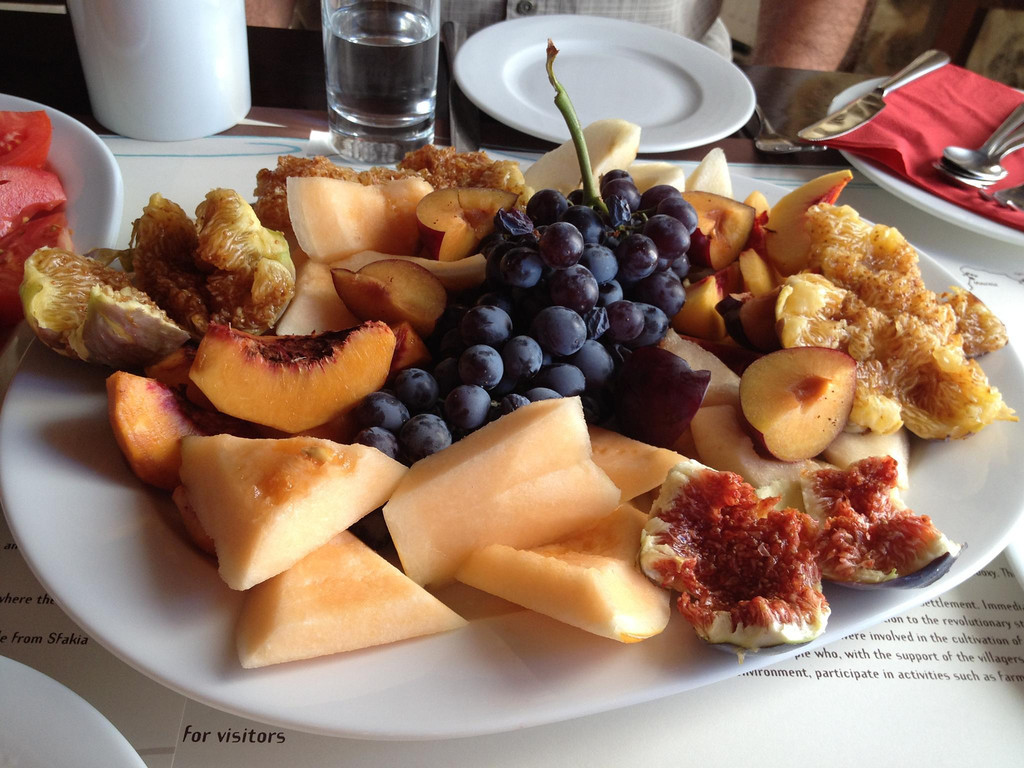
 In fact our group was in Agios Thomas because our bus driver Babis, also in a spirit of great generosity, insisted on stopping to show us his village when we were passing nearby. He guided us to see Roman rock cut tombs and arranged for the early Byzantine church to be opened. At the end of the our pilgrimage, Babis stopped the bus at a wooded glen beside a small church where he offered us his own homemake raki, wine, and olives, accompanied by local sheep cheese he had purchased while we were climbing a mountain. After every meal that we ate in local tavernas, we were offered bottles of cold raki, fruit, and sweets.

crete fruitsThis spirit of great generosity has long been commented on by travelers in Greece, who often speak of it as unexpected (for them) hospitality to the stranger or traveler. That it is, of course. Through the work of Heidi Goettner-Abendroth, I now understand that the famous Greek hospitality to the stranger has deep roots in matriarchal cultures. According to Goettner-Abendroth, equality of wealth is assured through the widely-practiced custom of gift-giving in matriarchal cultures. Continue reading “IS THE SPIRIT OF GREAT GENEROSITY IN CRETE A SURVIVAL OF ANCIENT MATRIARCHAL VALUES? by Carol P. Christ”

Painting Holy Women By Angela Yarber

angelaEach month, I focus on one of my Holy Woman Icons with a folk feminist twist, highlighting the often unsung stories of feminism’s heroines: Virginia Woolf , the Shulamite, Mary Daly, Baby Suggs, Pachamama and Gaia, Frida Kahlo, Salome, Guadalupe and Mary, Fatima, Sojourner Truth, Saraswati, Jarena Lee, Isadora Duncan, Miriam, Lilith, Georgia O’Keeffe, Guanyin, and many others who will be featured in the months to come.  While some of these holy women may not be incredibly famous to the wider public, most of their names and stories are familiar to the readers of Feminism and Religion.  They are goddesses, saints, artists, dancers, scholars, clergy, and pillars of the faith.  We tell their stories in our classrooms.  Their stories embolden us to stand tall, stay strong, and continue working for justice and equality.  But what of the women whose songs really are unsung, whose stories never grace the pages of our textbooks?  What about the women who have, indeed, emboldened us, paved the way for us to be who we are, but who our readers have never heard of?  This month I would like to focus on one of these women.  You’ve probably never heard her name, but I know her very well.  It is her courage that has given me strength, her compassion that has taught me to love.  Her name is Mary Harrell and she is my mother.

In her seminal work that highlights the importance of telling women’s stories, FAR’s own Carol Christ begins by saying:

Women’s stories have not been told.  And without stories there is no articulation of experience.  Without stories a woman is lost when she comes to make the important decisions of her life.  She does not learn to value her struggles, to celebrate her strengths, to comprehend her pain.  Without stories she cannot understand herself.  Without stories she is alienated from those experiences of self and world that have been called spiritual or religious.  She is closed in silence.  The expression of women’s spiritual quest is integrally related to the telling of women’s stories.  If women’s stories are not told, the depth of women’s souls will not be known.  (Carol Christ, Diving Deep and Surfacing: Women Writers on Spiritual Quest.  Boston: Beacon Press, 1980) Continue reading “Painting Holy Women By Angela Yarber”