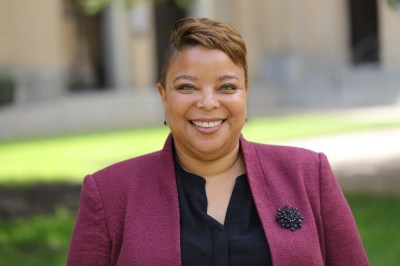
Toward an Alternative Ecclesiology by Xochitl Alvizo 

I mentioned in a recent post that I would share a little more about my current research, as one of the aspects of my life I gained more clarity in during my recent process of regrounding was in the area of my research.

Two things stood out to me as I reflected on my work and scholarship: my concern for individual human dignity drives my work—it is an underlying thread in how I think and theologize. The second is that I want to make a major contribution to the theology of the church—I know I want to write a feminist ecclesiology. These two things are obviously related. I have witnessed enough of the ways that not only Christianity harms people, but how the church specifically is a conduit for the damages Christianity causes. At the same time, Christianity remains a living tradition, a shared story and language, and a community to which many are committed. So just as people are harmed by church, some are also nurtured and held by it. While it is true, then, that church indeed harms people and violates their dignity, often also justifying that violation on theological grounds, it need not do so and has other possibilities before it.

Thus, I want to contribute to a theology of church that is a grounded and liberating alternative to the problematic one to which people most often default or inherit. A queer, feminist, anti-racist, and decolonial ecclesiology.    

Continue reading “Toward an Alternative Ecclesiology by Xochitl Alvizo “

Legacy of Carol P. Christ: Goddess as Love: From Experience To Thealogy

This was originally posted on September 24, 2012

If theology is rooted in experience, how do we move from experience to theology? In my life there have been a number of key moments of “revelation” that have shaped my thealogy. One of these was the moment of my mother’s death.

In 1991 my mother was diagnosed with cancer. While she was being treated, I realized that I had never loved anyone as much as I loved her. When I wrote that to her, she responded that “this was the nicest letter” she “had ever received” in her life and she invited me to come home to be with her and my Dad.

My mother died only a few weeks after I arrived, in her own bed as she wished. She was on an oxygen machine, and I heard her call out in the dark of early morning. When my Dad got to the room, he tried to turn up the oxygen, but it didn’t help. Then he called the doctor who reminded him that my mother did not want to go to the hospital under any circumstances.

Continue reading “Legacy of Carol P. Christ: Goddess as Love: From Experience To Thealogy”

Carol P. Christ’s Legacy: Why Don’t Feminists Express Anger At God? by Carol P. Christ

Moderator’s Note: We here at FAR have been so fortunate to work along side Carol Christ for many years. She died from cancer in July, 2021. Her work continues through her non-profit foundation, the Ariadne Institute for the Study of Myth and Ritual and the Goddess Pilgrimage to Crete. To honor her legacy, as well as allow as many people as possible to read her thought-provoking and important blogs, we are pleased to offer this new column to highlight her work. We will be picking out special blogs for reposting. This blog was originally posted July 9, 2012. You can read it long with its original comments here.

My relationship to God changed when I accused “Him” of everything I thought “He” had done or let be done to women—from allowing us to be beaten and raped and sold into slavery, to not sending us female prophets and saviors, to allowing “Himself” to be portrayed as a “man of war.”

In the silence that followed my outpouring of anger, I heard a still small voice within me say: In God is a woman like yourself. She too has been silenced and had her history stolen from her. Until that moment God had been an “Other” to me. “He” sometimes appeared as a dominating and judgmental Other, and at other times as a loving and supportive Other, but “He” was always an “Other.” I as a woman in my female mind-body definitely was not in “His” image. 

Continue reading “Carol P. Christ’s Legacy: Why Don’t Feminists Express Anger At God? by Carol P. Christ”

What’s Changed? by Elise M. Edwards

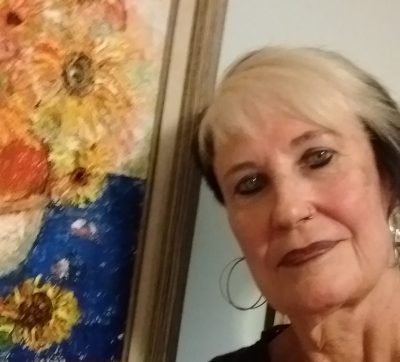
An image of Elise Edwards smiling outdoorsFriends, it has been a few months since I’ve posted in this community.  I’m amazed at how much our world has changed since then.  Here in the northern hemisphere, spring came and went.  It felt like a tide of turmoil rolled in, leaving debris all along the shore and now we are trying to clean it up while keeping our eyes on the sea for more dangerous waves that are coming.
The issues we now face began before March, but for many of us, that was when the COVID-19 pandemic began to alter our patterns of daily existence. In-person instruction at my university and most schools was suspended and spring semester courses shifted online.  In March and April, we quarantined, self-isolated, and sheltered in place.  While a gradual re-opening of businesses and services has occurred in the months since then, I don’t know anyone who has resumed daily life as it was before. The virus continues to spread and the death toll rises.

Continue reading “What’s Changed? by Elise M. Edwards”

Not My Story Anymore by Esther Nelson

The meaning we derive from stories—especially religious stories we’ve heard and become familiar with since infancy—shape how we perceive and understand the world.  Our beliefs are an amalgam of “my story” (my individual life experience in a specific context) shaped by another story.  Who I am is heavily informed by particular narratives and their (often) codified interpretation.

I was raised on the doctrine of substitutionary atonement.  Doctrine is an interpretation of story, the substance of which is thought of as “truth” by believers.  The story informing substitutionary atonement is a familiar one, especially to those in Christian circles.  Jesus of Nazareth, a Jew living during the Roman occupation of much of the Mediterranean region, was crucified circa 30 C.E.  Jesus was a teacher who attracted many followers and often spoke (according to the writers of the gospels) of a coming Kingdom of God.  This threatened Roman rule so the Romans killed him.

Is the story factually true?  Perhaps.  As with so many narratives that are passed down through generations, there are many versions.  We find meaning (or not) in the story we have at hand.  On one level, Jesus’ crucifixion demonstrates the lengths governments will go to in order to keep themselves in power, showing the oppression, fear, and suffering people endure under despotic rulers.  On another level, substitutionary atonement (Jesus died to pay for humanity’s sins) is an interpretation of that story.  So often the stories we carry with us, along with a specific interpretation (doctrine), become conflated.  Rarely do we stop and unravel the story from the meaning we’ve been given and sometimes appropriated. Continue reading “Not My Story Anymore by Esther Nelson”

When Life Hands You Lemons… by John Erickson

“When life hands you lemons, sometimes you have to make applesauce.”

I’ve been thinking a lot about something my grandmother would always tell me: “When life hands you lemons, sometimes you have to make applesauce.” I know, it sounds crazy, but life right now appears to be more on the crazy than the sane side.

We’re all in a state of uncertainty right now. The news is scary. Twitter is scary. Heck, even TikTok is losing parts of its humor. Everywhere we seem to turn, it’s more information about COVID-19, new cases, new lockdowns, and new things that we shouldn’t do for the foreseeable future. Continue reading “When Life Hands You Lemons… by John Erickson”

A Theological Conversation by Natalie Weaver and Valentine

My son asked me to discuss with him the theological problem of the dual natures, i.e., the divine and human natures, coexisting in the person of Jesus.  He asked me to begin by assuming the premises that 1) Jesus was a real, historical person and 2) that Jesus was both human and divine.  The question then became, “Did Jesus know he was God?”

Of course, as a theologian, I was delighted to have this conversation with my son.  It was fascinating to see how his mind worked, to hear him evaluate the strengths and weaknesses of high and low Christologies, to hear how he resolved the question himself, and to have an opportunity to share my own thoughts with a genuinely engaged, truly curious, and attentively listening dialogue partner in the person of my teenage son.  Not too shabby a victory for any parent!

As we talked, he continued to provide context for the question, which began as a classroom debate in his high school theology seminar.  Apparently, the students were tasked with taking some element from their in-class discussion, evaluating it, and then applying it practically by a twofold retrospective reflection in which the students were 1) to identify a specific situation in their life that could have gone better and 2) to share how their insight drawn from class would have made all the difference.  Now, my son expressed a bit of frustration with this assignment because he would have preferred to discuss how today’s insights might help him in the future, rather than to dwell in the past.  As his wheels turned, I left him alone to puzzle out his assignment, with the promise that I eagerly would return in an hour to see what he produced, accompanied by my own essay on the same task.

Continue reading “A Theological Conversation by Natalie Weaver and Valentine”

What If Jesus Is Dead (And It’s A Good Thing)? by Tallessyn Zawn Grenfell-Lee

Bear with me.

I know that most Christians accept some version of the idea that Jesus, the person, died, and then ‘rose from the dead’ in a supernatural, miraculous way – probably the most common definition of what Christians celebrate at Easter. I grew up in progressive Christian churches, where I, too, was taught this idea, which I found fascinating and inspiring. Many people (both Christians and others) still find it healing and inspirational; and I want to state clearly that I think that’s well and good.

Okay.

What I would like to suggest, however, is that this approach may miss the main point of Easter, of resurrection, and of these narratives. Here goes.

Continue reading “What If Jesus Is Dead (And It’s A Good Thing)? by Tallessyn Zawn Grenfell-Lee”

Musings on the Triune God by Natalie Weaver

This past term I had the opportunity to teach courses on the Christian doctrines of Christology and Trinity.  My first inclination was to approach these doctrines from the perspective of their historical development. For, I find the historical study of doctrinal development to be a fascinating and liberating approach to theology because it delivers the searcher from the illusions of ubiquity and universality, even in matters of the most central tenets of faith.  When people can see doctrine in its political, polemical, and posited guises, we can be free from absolutization of belief in past expressions as well as in present permutations.

Yet, as much as I enjoy tours through the historical development of faith formulations, I found myself unable to really commit to this approach this year.  I was more concerned with allowing students space to think about Christ and to think about God.  I wanted to introduce the problems and tensions that have dogged Christian logic and practice for millennia, but I wasn’t interested in arriving at conclusions or teaching modern experts’ answers.  I wanted to create occasion for my students to answer for themselves questions of justice and mercy; theodicy; particularity; scandal; and more. Continue reading “Musings on the Triune God by Natalie Weaver”

LeBron James and Loads of Baskets by Natalie Weaver

On June 8, Cleveland watched the Cavaliers lose the NBA championship.  Outside of Cleveland, according to the commentators I heard, no one really expected our guys to pull it off.  But, here in Cleveland, we felt otherwise. Up until the final four minutes of the fourth quarter, when the Herculean LeBron took the bench, we were still thinking something magical could happen.  When he stopped, the game ended.  We lost. And, the city, once again, had to recast its disappointment, redirect its energies, and rediscover the eschatological hope that is the core of Cleveland’s athletic grit: “there’s always next year!”

Over the past few years, I have noticed t-shirts popping up around the city that say things such as, “I liked Cleveland before it was cool;” “216;” and even one that details the geometric shape and geographic coordinates of a Bernie Kosar winning touchdown pass.   Ohio love is blooming in the rust; things are green in our urban gardens, and progressive real estate is making of bombed out warehouses cool art studios, breweries, and theater houses for budding local talent. Continue reading “LeBron James and Loads of Baskets by Natalie Weaver”