Where are they, my feathered iridescent turkey friends one of which is usually at my doorstep by dawn (I call them in as I write these words – an hour later only four show up – something has gone amiss). Wild turkeys live in this small sanctuary all year long, coming and going with the seasons. I normally feed them during the winter months, but this year has been thin, so I have been supplementing their diet.
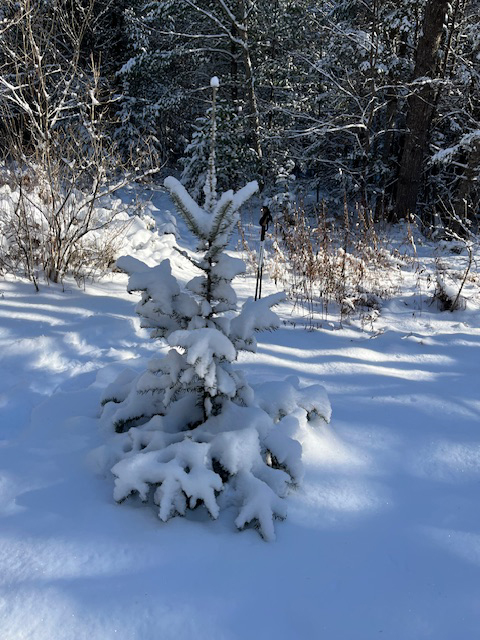
Yesterday I watched them trudge up the hill, twittering and chirping, their feet sinking into eleven inches of snow. It’s only December 2nd and with the drought seeds and insects have been scarce. Snow makes ground feeding inaccessible.
I have learned so much about how to live in genuine community from years spent observing and interacting with turkeys. I have three groups in all, and this time of the year males and females come separately.
Mostly I just love these wild birds who have befriended me to the point where I can work outdoors while they are sunning themselves on the hill or pecking leaves and detritus after seeding. They respond to my greetings with friendly little chirps, twitters, and a number of other sounds I can’t describe, but conversation between us is ongoing.
About 20 years ago I witnessed a performance of the 3 plays of the Oresteia (the Orestes plays) by Aeschylus. I was stunned. Watching them in sequence, I understood that the plays were one of patriarchy’s “just so stories” and that their continuing performance was part and parcel of patriarchy’s perpetuation and legitimation.
According to the myths, Helen, the wife of King Menelaus of Sparta, ran off to Troy with its prince, Paris. In revenge for his lost honor, Menelaus called the Greeks to attack Troy and bring her back. Agamemnon, brother of Menelaus and king of Mycenae, assembled his ships, but the wind refused to fill their sails. He was told that his army would be allowed to depart only if he killed his daughter Iphigenia. He lured his daughter and her mother Clytemnestra to the place where his ships were waiting with the promise of marriage to Achilles. When they arrived, he killed his daughter and the ships sailed.
A Prayer for Solstice Winter’s Crone, cave tender, cauldron keeper, mother of time, guide us into stillness, into a time of deep rest and reflection. Unwind our knots and soothe our scurrying, remind us how to listen, how to be still, how to turn inward and know. Remind us not to fear darkness for it is a time of necessary patience and growth. Help us to celebrate the cycles of change through which we move, honoring the fallow times and the flourishing times as equally essential for life. Bone woman, great mother of us all, quiet our wondering and our worries, gentle our grief, and soften our sorrow. Restore our weary hearts and renew our spirits that we might turn towards the light we carry within and warm ourselves by this, life’s eternal and powerful flame, knowing that we belong to this great grand web of incarnation and all it holds.
Only in November 2025, the following murders were reported:
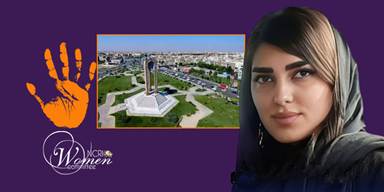
Mobina Zare, age 20, in Islamshahr (a city southwest of Tehran), was killed by her former fiancé. After murdering her, he burned her body in an aluminum-melting furnace at his father’s workshop. Her family searched for her for ten days before finding her half-burned body.
Mobina Zare was burned in analuminum melting furnace
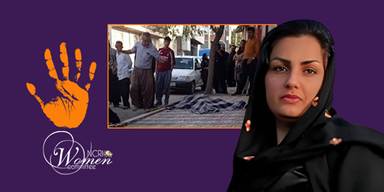
Leila Aliramaii, age 40, in Marivan (in Kurdistan Province, western Iran), was killed with a Kalashnikov rifle because she refused the vile demands of a member of the Revolutionary Guard Corps (IRGC). Leila was married and the mother of a young daughter and son.
Leila Aliramaii, the mother of two young children
Sarina Rostami, age 16, in Sarpol-e-Zahab (in Kermanshah Province, western Iran), was killed by a male relative because she refused accept a forcible marriage.
Sarina Rostami, 16, victim of forced marriage
A 40-year-old woman in Pakdasht (Tehran Province) was suffocated with a blanket by her husband.
Reyhaneh Dorzadeh, age 23, in Nikshahr (Sistan and Baluchestan Province, southeastern Iran), was suffocated by her husband because she opposed his desire to take a second wife.
A 29-year-old woman identified as J.D. was murdered by her father, who then dismembered her body and set it on fire.
Sakineh, age 80, in Tehran, was killed by her son using an iron rod.
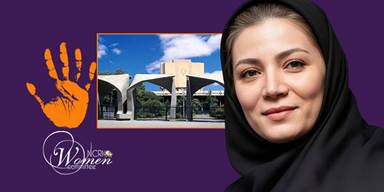
Zahra Ghaemi, a women’s rights activist and member of the Women’s Study Group at the University of Tehran, was suffocated by her husband.
Zahra Ghaemi, a member of the Women’s Study Group at the University of Tehran
Shahla Karimani, age 38, mother of two, in Mahabad (Kurdistan Province), was strangled with a scarf by her husband and brother-in-law.
Sajedeh Sand-Kazehi, in Khash (Sistan and Baluchestan Province), was killed with a hunting rifle because her father-in-law wanted to forcefully take a gas regulator that belonged to her. Sajedeh was the mother of two young children.
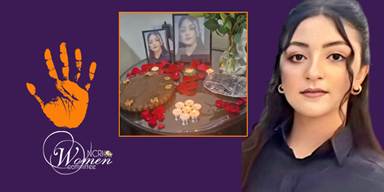
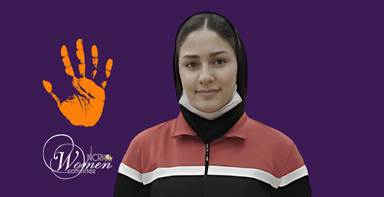
Raheleh Siavoshi, age 26, in Nahavand, a town in Hamedan Province in western Iran, was fatally stabbed by her husband after participating in a sports camp. She died in the hospital two days later.
Raheleh Siavoshi, a national wushu champion and coach
Justice Has Lost Its Meaning
While women are sentenced to long prison terms for “removing their hijab” or protesting discrimination, men who murder their wives typically receive only a few years in prison. In many cases, they can pay money to buy their way out and return to their lives.
In notorious cases such as Romina Ashrafi and Mona Heydari, the murderers received only two to eight years in prison. Even state-run media sometimes acknowledge this “inverted justice”: “The punishment for beheading one’s wife: 8 years in prison; The punishment for removing one’s hijab: 10 years in prison!”
According to the regime’s laws, the father, who is also the “male guardian and blood-owner (vali-ye-dam),” is exempt from retributive punishment for killing his own child.
Zahra Eftekharezadeh, founder of one of Tehran’s safe shelters, said regarding the absence of deterrent laws: “When the law does not impose a punishment proportionate to the crime, perpetrators realize there is no serious consequence waiting for them. In many cases, the sentences issued by the judiciary are not only non-deterrent but encourage the offender. Romina Ashrafi’s father is an example. He openly said that if he killed his daughter, he would receive at most ten years in prison.” (Shargh newspaper – October 11, 2025)
Atrocities Rooted in Law and Politics
Under Iran’s misogynistic clerical laws, a woman is not recognized as an independent individual but as “subordinate” to a man. Without legal or structural protection, women are forced to endure domestic violence, and each day adds new names to the list of women murdered.
Article 1105 of Iran’s Civil Code assigns family leadership exclusively to men.
Article 1108 makes a woman’s right to financial support conditional on her “obedience.”
Article 1114 gives the husband the right to determine the wife’s place of residence.
In such a system, women seeking divorce must prove their lives are in danger, and their testimony is worth only half that of a man. Judges routinely force women who have been beaten or threatened back into the homes of their abusers.
Through its laws, media, and judiciary, the clerical regime perpetuates these crimes. Violence extends from home to the school, from the street to the courtroom, widening its reach every day.
But beyond the laws, today’s social tragedies in Iran stem from political roots. The misogynistic clerical regime is founded on the subjugation of women. The horrific killings of women are not isolated acts of personal fanaticism; they are the product of a system that authorizes violence against women.
The rising number of honor killings must therefore be understood as the direct result of the regime’s anti-woman policies and the patriarchal culture embedded within its structure. The Iranian people blame not society but the regime itself, an oppressive, misogynistic establishment that preserves its power through the suppression and elimination of women.
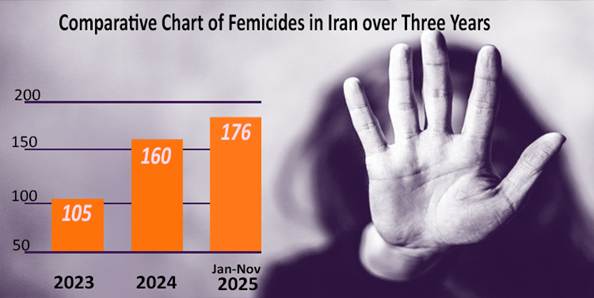
Data compiled over the past three years by the NCRI Women’s Committee shows a sharp upward trend in the number of women murdered under the misogynistic rule of the clerical regime. These figures are drawn entirely from documented and published reports by state-run media and other available sources. They therefore represent a minimum estimate, as the regime deliberately obscures such information, and many families, fearing the perpetrators, avoid publicizing the killings of their daughters and female relatives.
According to these findings, at least 105 women were murdered in 2023, 160 in 2024, and during just the first eleven months of 2025, no fewer than 175 women have been killed in Iran.
INFO: NCRI The NCRI Women’s Committee works extensively with Iranian women outside the country and maintains permanent contact with women inside Iran. The Women’s Committee is actively involved with many women’s rights organizations, NGOs, and the Iranian diaspora.
The NCRI Women’s Committee is a major source of much of the information received from inside Iran with regard to women. Attending meetings of the UN Women, the UN Commission on the Status of Women (CSW), the Human Rights Council, and other international or regional conferences on women’s issues, and engaging in a relentless battle against the Iranian regime’s misogyny are parts of the activities of members and associates of the NCRI Women’s Committee.
The NCRI Women’s Committee is one of the 25 committees of the National Council of Resistance of Iran.
Moderator’s Note: This post has been brought to you in cooperation with the NCRI women’s committee. NCRI stands for the National Council of Resistance of Iran. You can learn more information as well as see this original article by clicking this link. A description of their Council can be found at the end of this post.
Women Are Killed in Iran with Complete Impunity
November 2025 Report: Under the Clerical Regime, Nowhere Is Safe for Women in Iran
Under the rule of Iran’s misogynistic clerical regime, Iranian women, from childhood to old age, are unsafe in all spaces and circumstances. If they manage to escape the brutality of security forces in the streets, they may still fall victim in their homes to so-called “honor suspicions,” resisting forced marriage, requesting a divorce, or even attempting to defend their own rights. Many of these killings take place in front of children or other family members, feeding a cycle of violence across generations. Among the victims are pregnant women or mothers killed alongside their children.
Beatings and torture of women in prisons, firing pellets into the eyes of protesting women, sexual assault in detention centers, and the attacks by morality police patrols enforcing compulsory hijab in public all legitimize and encourage violence against women inside the home and within families.
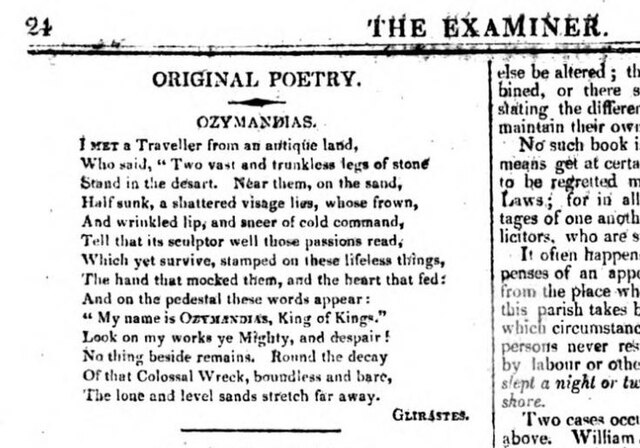
I met a traveller from an antique land Who said: “Two vast and trunkless legs of stone Stand in the desert . . . Near them, on the sand, Half sunk, a shattered visage lies, whose frown, And wrinkled lip, and sneer of cold command, Tell that its sculptor well those passions read Which yet survive, stamped on these lifeless things, The hand that mocked them, and the heart that fed: And on the pedestal these words appear: ‘My name is Ozymandias, King of Kings: Look on my works, ye Mighty, and despair!’ Nothing beside remains. Round the decay Of that colossal wreck, boundless and bare The lone and level sands stretch far away.”
Percy Bysshe Shelley 1792 – 1822
There has been discussion of what to name Trump’s ever-expanding ballroom. Some have suggested naming it after Epstein. I would suggest naming it after Ozymandias from Shelley’s poem.
There is something about building projects that feed to the patriarchal ego. The Patriarchal ego stands on permanence, largess and if that involves crushing those “below” them, that is just how it is. Pre-patriarchal pagan systems focus on the cycles of life and are based on an understanding that impermanence is what life is all about. Life works on cyclic movement. The seasons, the moon, the sun, the stars, all is in motion and all presages different aspects of the wheel of life.
This set of poems reflects on ways we humans have responded creatively, expansively and artistically to the challenges of our times. Of course, two of the poems center upon music, one of the strongest themes of my own life. The first and last poems are ways that the natural world is always knocking at the door, saying, “pay attention.”
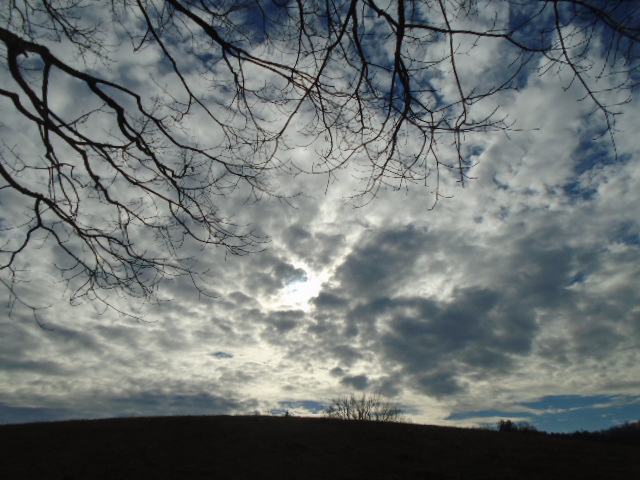
Winter Sky
Like this
“Like this,” says the titmouse, hanging upside down to get at the suet. “If you really want it, there it is.” “Like this,” says the January sun, one day icing us to our bones, and today like Spring, warm enough for rides on little boys’ new scooters. “Like this,” say the squirrels, entranced with each other, whirling ’round the branches, twining fluffy tails, intent on making new Squirrel babies. “Like this,” says the chickadee, landing near my toe, tiny and brave, ready to eat, scolding me to get out of the way. “You are here to live, so live.”
Stories about refugees in the island of Lesbos (where I live) are no longer front page news. Yet according the United Nations Refugee Agency, 12, 742 refugees arrived here in 2017. This number is equivalent to 15% of the year-around population of the island. Though this number is huge, it does not compare to the estimated 91,506 arrivals in Lesbos in 2016. In January 2018, 7572 refugees are estimated to be stranded in the island waiting for their applications for asylum to be processed. The government-controlled reception center has a capacity of 2000, but up to three times that number are being housed there at any one time, in conditions that must be described as inhumane. It is suspected that “someone” in Greece or the European Union is slowing the asylum process in order to discourage refugees from attempting to enter the EU via Lesbos.
Recently I have begun to work with the Starfish Foundation, a local non-profit helping refugees on the island, using my skills as a writer to help with outreach. Today I share with the FAR community a blog I wrote to contextualize the desperation of the situation the refugees find themselves in.
On the 21st of November, I took part in a faculty panel as part of the 20th anniversary celebration of the Gender Studies Master’s Program, the program in which I teach, at the Faculty of Humanities (FHS) at Charles University in Prague, Czech Republic. The event featured the afore-mentioned faculty panel, a panel of program graduates, and an invited lecture entitled “Care as Taking Part,” by Prof. Estelle Ferrarese of the Institut Universitaire de France, organized in cooperation with CEFRES and CETE-P. After the formal part of the program, we all enjoyed refreshments and socializing with current and former students, faculty, and staff.
Perhaps the reader of this blog has not heard about the existence of a Gender Studies Master’s Program in the heart of Central Europe. I would like to take some time in my post this month to explain what we do and why we are, in the spirit of Ḥanukah, bringing more light into the world.



 About 20 years ago I witnessed a performance of the 3 plays of the Oresteia (the Orestes plays) by Aeschylus. I was stunned. Watching them in sequence, I understood that the plays were one of patriarchy’s “just so stories” and that their continuing performance was part and parcel of patriarchy’s perpetuation and legitimation.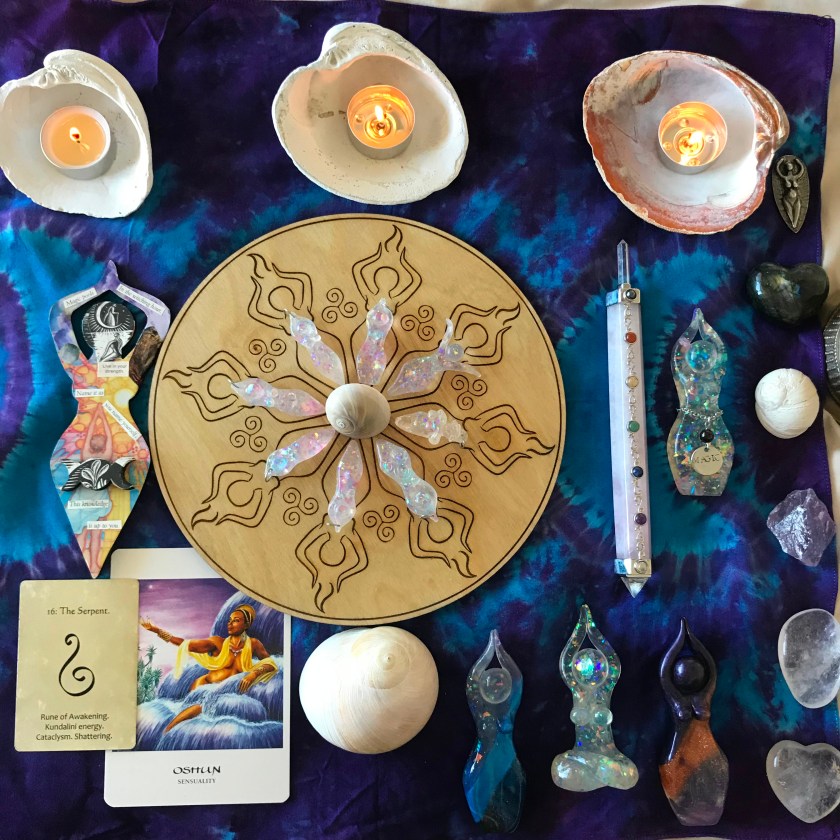
 Feminism and Religion