The Ninth Touchstone: Repair the Web by Carol P. Christ

As I reflected on the Nine Touchstones again recently, I was pleased to discover that the first and the eighth touchstones are articulations of the central values of egalitarian matriarchal societies. Few of us live today in egalitarian matriarchies, and it would not be possible for all of us to return to cultivating the land. I offer the Nine Touchstones in the hope that they can help us to find a way to express and embody the values of egalitarian matriarchal cultures in the modern world. The touchstones are intended to inform all our relationships, personal, communal, social, and political.

Nurture life.

Walk in love and beauty.

Trust the knowledge that comes through the body.

Speak the truth about conflict, pain, and suffering.

Take only what you need.

Think about the consequences of your actions for seven generations.

Approach the taking of life with great restraint.

Practice great generosity.

Repair the web

The ninth touchstone is based on the Jewish “commandment” to repair the world. It is derived from the mystical tradition in which prayers were directed towards reuniting the broken sherds that became the created world with their transcendent source. It was reinterpreted by liberal Jews in America as a commandment to create justice in this world through social and political action. I rephrase it as “Repair the web,” to underscore to the need to repair not only the human community, but also the web of life in which it is situated.

To nurture life is to protect the weak and the vulnerable and to create the conditions in which human beings and all beings can experience the joy of living.

To walk in love and beauty is to love yourself, other human beings, and all beings in the web of life, and to appreciate the beauty that is found in all of our diversity and difference.

To speak the truth about conflict, pain, and suffering is to recognize that everything is not love and light in the modern world: to speak the truth about that which is broken is the path to healing.

To take only what you need is to recognize the interdependence of life: when we take more than we need, we take from others without reason.

To think about the consequences of your actions for seven generations is to recognize that what we do today will affect the next generations and the planet as a whole, in good ways, and in bad.

To approach the taking of life with great restraint is to think about what we eat, never to kill unnecessarily, and not to react with violence when there are other ways to resolve conflict.

To practice great generosity is to recognize that none of us has the God-given right to own anything, and to learn to give and receive in the grace of life.

To repair the web is to always act to create a better life for ourselves, for the next generations, and for the species with which we share life this earth.

The Nine Touchstones help us to imagine the way to a better world. Can we join together to create it?


*Parts of this blog will be included in my keynote address at The Parliament of World Religions on November 5, 2018 in Toronto, Canada.

*Also see: Ethics of Goddess Religion: Healing the World , Nurture Life: Ethics of Goddess Spirituality,  Walk in Love and Beauty: A Touchstone for Healing,  Trust the Knowledge that Comes through the Body: Heal Yourself, Heal the World,  Speak the Truth About Conflict, Pain, and Suffering, Take Only What You Need, Think About the Consequences of Your Actions for Seven Generations, Approach the Taking of Life with Great Restraint,  Practice Great Generosity


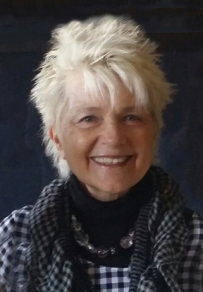
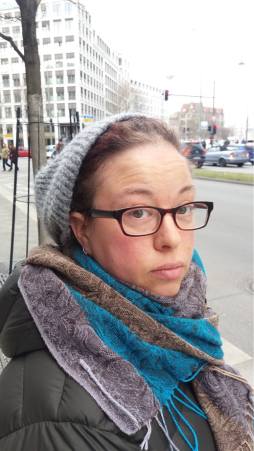
Carol P. Christ is an internationally known feminist writer, activist, and educator currently living in Lasithi Prefecture, Crete. Carol’s recent book written with Judith Plaskow, Goddess and God in the World: Conversations in Embodied Theology, is on Amazon. A Serpentine Path: Mysteries of the Goddess is on sale for $9.99 on Amazon. Carol  has been leading Goddess Pilgrimage to Crete for over twenty years: join her in Crete. Carol’s photo by Michael Bakas. Carol will be speaking at the 25th Anniversary Celebration of the Re-Imagining Conference at Hamline College in St. Paul Minnesota on November 1 and 3 and at the Parliament of World Religions in Toronto, Canada on November 5.


A Ritual to Bless Our Children by Barbara Ardinger

It was maybe twenty-five years ago that I first got addicted to the Sunday morning news/talk shows. I’d turn on the TV at 7 a.m., watch an hour of local news, then Stephanopoulos at 8 a.m., then MSNBC until noon or later. Not anymore. This morning, I turned the TV off at 10:00 and immediately got into the shower to wash off what I’d been hearing. I’m worn out by the news!

Now don’t get me wrong. I am totally against any “normalizing” of the Troll-in-Chief. In fact, I’m convinced we ought to pack him into capsule with about a hundred cheeseburgers and without his phone and fire him off to one of the outer planets. Maybe Saturn, which astrologically forces us to face ourselves and to get to work and learn our life lessons.

Continue reading “A Ritual to Bless Our Children by Barbara Ardinger”

The Personal Book of Shadows: Compendium of Sacred and Scientific Knowledge, Wisdom, and Evolving Experimentation by Elisabeth Schilling

I’m the type of insecure wallflower who has deleted social media accounts, blogs, photos, poems, and journals because 1. I am not good at commitment or planning, 2. I shame myself for being eclectic and lacking consistency, and 3. a sentiment I have either created or exists in some form externally prods me to brand myself, something I cannot do well (see no.1 and no.2). Oh, that doesn’t mean I don’t find the brand smart, and maybe calling it a “brand” condemns it to consumerism and commodities, when really it is being focused where I am distracted and a frivolous sensationalist.

On the whole, currently, I suppose I’m experimenting with accepting this all-over-the place eclecticism that has seemed to follow me my entire non-linear life and trying to commit to embracing whatever mess I create, even if it feels disjointed and that I can never have a nice, clean, mono-personality. Who am I? About 8 different people. Can anyone relate? Okay, maybe I just need to grow up. I have a feeling it will just have to happen in my next life. Continue reading “The Personal Book of Shadows: Compendium of Sacred and Scientific Knowledge, Wisdom, and Evolving Experimentation by Elisabeth Schilling”

Don’t Be Surprised… by Valentina Khan

We are people, navigating in a large world filled with expectations, hopes & dreams. I find that happiness is comprised when we share our expectations with other people. I do think it’s right to expect things, and hope to receive things like love, respect, and honesty. However, I just want to share that when it doesn’t happen, not to be surprised… Continue reading “Don’t Be Surprised… by Valentina Khan”

Review: In Search of Pure Lust, author Lise Weil by Sara Wright

In this remarkable memoir one woman’s life is set in the collective context of the women’s movement as a whole, and through Lise Weil’s eyes we get to see the “both and” quality of her struggle to understand the wound caused by what went wrong not only in her personal relationships with women, but between the powerful women who inspired the women’s movement in the first place. We can only heal this wound personally and collectively if we are willing to self-reflect, ask difficult and painful questions, and take responsibility for our actions, something that the author is willing to do. By addressing our own mother-daughter and woman to woman betrayals, choosing to respect one another’s differences regardless of sexual orientation, color, race, religion etc. we can finally unite with one purpose – to save ourselves and the planet.

What Lise proposes – namely, that Lesbian Visionary Thinking opened the door to women re–imagining women as powerful agents in their own lives even as they became women who acted upon these visions – is, I believe, truth. Lesbian visionaries envisaged a woman centered culture and created one. Many of us realize today that without a feminist standpoint, the ravages of patriarchy are going to destroy us all.  We have much to learn from reading this story. Continue reading “Review: In Search of Pure Lust, author Lise Weil by Sara Wright”

On Not Eating Gefilte Fish by Joyce Zonana

What does it mean to be an Arab-Jew in the twenty-first century? For me, it means recognizing and honoring Arab culture: the music, food, language, and customs my parents brought with them when they emigrated from Cairo in 1952; it means feeling a strong bond with other Egyptians, North Africans, and Middle Easterners, refusing efforts in the U.S. and elsewhere to demonize and “other” any of us. It means respecting the claims of displaced Palestinians and protesting Israeli occupation of Palestinian territories. It also means not seeking to equate our displacement with Palestinian displacement, as some Jews from Arab countries have sought to do, in a transparent effort to discredit Palestinian suffering.

jz-headshotWhen I was growing up in 1950s Bensonhurst, in Brooklyn, NY, my identity as a Jew was often called into question. “You mean you’re Jewish? And you don’t know about gefilte fish?” my best friend’s Eastern European (Ashkenazi) Jewish mother asked, shocked to discover that our family ate stuffed grape leaves rather than stuffed cabbage. “What kind of a Jew are you?” schoolmates challenged. When I answered “Sephardic . . . from Egypt,” they would reply. “But all the Jews left Egypt a long time ago, isn’t that what Passover is about?”  “No,” I would say, having been taught the words by my father. “Some Jews returned to Egypt when they were expelled from Spain.” [Later I would learn that some Jews actually lived in Egypt for millennia, never having left.] “There are no Jews in Egypt,” my little friends would retort. “We never heard of any Jews in Egypt. You can’t be Jewish.”

It was puzzling, I knew, but I could find nothing further to say. Aside from a handful of relatives, I did not know any other Jews from Egypt either. An Egyptian Jew. To my neighbors, it seemed a contradiction in terms, an oxymoron. To myself as well. What was the Egyptian part, what the Jewish? How did they fit together? Maybe I wasn’t really Jewish. Later, when acquaintances continued to wonder about my identity, I was similarly stymied. “You mean you don’t speak Yiddish?” they would ask after I had painstakingly explained that my grandparents spoke Arabic and French.

Continue reading “On Not Eating Gefilte Fish by Joyce Zonana”

A Better World is Impossible Today (#WETOO) by Adam F. Braun

At the end of the second Matrix film (Reloaded), Neo (the messianic figure, “The One”) is told by the Architect of the Matrix, itself a program in the system, that Neo was in fact the sixth iteration of messianic figures that the Matrix had itself created.  In such a case, what hope is there when the System creates messiahs in order to produce a hope it allows—a hope it allows for the sake of reproducing itself through the exploited labor of others, who are able “to get by” because they have this same hope.  A hope that a better world is possible.

In the midst of the young #metoo movement in Japan, this story emerges from one of its medical schools:

Japan’s government urged a medical university to promptly disclose the results of an investigation into its admissions process Friday after reports alleged it had altered the test scores of female applicants for years to deny them entry and ensure fewer women became doctors. Continue reading “A Better World is Impossible Today (#WETOO) by Adam F. Braun”

A Total Eclipse of the Moon by Carol P. Christ

The morning after the July 27 total eclipse of the moon, I wrote:

I am a-mazed and still in awe. Last night I saw the eclipse and the blood moon from my favorite tavern in Pachia Ammos. We pulled the table out from the roof shelter and positioned our chairs so that we were looking at the high mountains where the moon came up, almost full, the night before. The mountains are sheer exposed rock that seems to have risen up from the sea. In the evening light they were bathed in the rose glow of the setting sun.

I read that the eclipse would last from 8: 22 until 2: 28, but at 8: 22 the moon was still hidden behind the mountains. Soon someone shouted, “it’s coming,” pointing to lacy clouds capping one of the peaks that had suddenly become luminescent. The clouds disappeared leaving only a faint light emerging from behind the mountain. When the moon finally rose about 9, the eclipse had already begun. It looked like someone had taken a small bite from the lower left side of a cookie. It was very white and there was no sign of the promised red moon. Mars was positioned to the lower right of the moon, so large and so bright I had mistaken it for Saturn a few nights earlier. Continue reading “A Total Eclipse of the Moon by Carol P. Christ”

When Silence and Speech both Burn Too Much by Marisa Goudy

Read Part One of this post here.

I’ve been participating in Elizabeth Cronise McLaughlin’s RISE Activist/Leader Bootcamp this summer.  You may know this modern warrior priestess. She’s a lawyer turned corporate leadership consultant who broadcasts Resistance Live on Facebook.

In one training session, she spoke at length about the ways that women are silenced and how their voices are repressed. Nodding along, I remembered all the times I’d been accused of being “shrill” and warned not to “cackle.”

Though in high school I was voted “most likely to speak her mind” and I haven’t changed all that much over the years, my political and creative passions are held in check by my “good girl” programming. Continue reading “When Silence and Speech both Burn Too Much by Marisa Goudy”

What You Learn When Your Voice Shakes by Marisa Goudy

As I heard my voice rising over the half-eaten breakfast, something inside me began to splinter.

“We cannot effectively ‘open lines of communication’ with racists and fascists!” I exclaimed. It was followed by an impassioned speech (perhaps you’d call it a tirade) fueled by news of migrant families separated, my own helplessness, and other people’s tweets.

My family didn’t greet me with stunned silence. They’ve watched me get worked up over politics since well before I could vote. All of us are accustomed to the pervasive, ever-escalating outrage that’s been part of the new normal for the last year and a half. And when one of us gets loud (ok, it’s always me), nobody tends to get offended.

But, as I said, something cracked within me when I heard the brittle desperation in my own tone.

When I stopped talking, I heard the echo of my own voice

I know this part of me, the part whose words rise above everyone else’s. It’s harsh, frantic, and shadowed. It’s driven by disconnection, adrenaline, and fear.

This is the part of me that only knows how to react and exclaim, not how to consider and respond.

This is the part of me that tells you to bury your thoughts and prayers ‘til the end of the battle.

This is the part of me that loses track of personal, grounded truth in order to parrot collective indignation.

This is the part of me that forgets every spiritual truth and every bit of healing wisdom I’ve gained.

This is the part of me that retreats and leaves her weapons to rust, once again exhausted from all that seemingly fruitless fighting.

This is not the part of me that is truly empowered to change the world. This is not the part of me that is confident she’s contributing to the work of peace, justice, or divinity. This is not the part of me that is teaching my daughters how to create a livable, equitable society they want to live in.

That said, I forgive her. After all, she’s also the part of me that’s trying.

Yes, we need to raise our voices.
The passion often makes our voices crack.
Sometimes, those cracks show us our own fragility, fault lines, and beautiful sacred edges.

…Tomorrow, Part Two

Marisa Goudy is a story healer and writing coach with a passion for everyday creative magic. Currently, she’s working on a book project called Sovereignty Lessons which invites women to “free the princess, crown the queen, and embrace the wise woman.” Marisa is fascinated by the Irish Sovereignty Goddess and how her many expressions in myth and contemporary understanding can guide us through 21st century life through life. A graduate of Boston College’s Irish Studies program and recipient of an MA in Anglo-Irish Literature and Drama from University College Dublin, Marisa lives with her husband and daughters in New York’s Hudson Valley. Visit her website to sign up for the free community writing practices sessions she holds regularly and for the #7MagicWords challenges that she offers at the turn of each season.