Esther’s Choice — And Ours by Joyce Zonana

The Book of Esther tells a story in which women’s power is not so much repressed as asserted. The king who banishes one queen finds himself submitting to the will of another. Numerous women writers of various ethnic, religious, and racial backgrounds in the nineteenth, twentieth, and twenty-first centuries have found inspiration in the stories of both Esther and Vashti’s disobedience to an autocratic king.

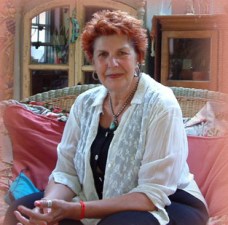
jz-headshotThis year, February 28th, the 14th of Adar on the Jewish calendar, is the first night of Purim, a holiday the orthodox Chabad organization blithely calls the “most fun-filled, action-packed day of the Jewish year.” Purim is celebrated with two full readings of the Megillah–the Book of Esther–in synagogues; whenever the tale’s villain Haman is mentioned, congregants drown out his name with noisemakers and foot-stomping. Children and adults masquerade and often cross-dress. Plays are performed; Haman is burned in effigy. After a daylong fast, everyone shares a festive meal, where drinking is encouraged, even mandated:

A person should drink on Purim until the point where he can’t tell the difference between “Blessed is Mordechai” and “Cursed is Haman. (Talmud – Megillah 7b; Code of Jewish Law 695:2)

It all sounds like great fun. But what exactly are we celebrating when we celebrate Purim?

Continue reading “Esther’s Choice — And Ours by Joyce Zonana”

What We Can’t See by Sara Frykenberg

As a professor, I find myself returning to a similar struggle again and again. I know what I know; and I know what I hope students will gain from the class, in terms of content knowledge, critical thinking, classroom community-making, etc. But often, I don’t know what they don’t know.

This might seem a silly kind of observation. No duh, Sara, you barely know this group of people. Also, this may seem an easy question to answer. And sometimes it is; and I do have part of the answer when I begin a class. My “Intro to Ethics” students, for example, will understand and be frustrated by the way people use the Bible to justify their own positions, but they usually won’t know the term “proof texting,” or easily understand “hermeneutics.” My “Women in Christianity” students will understand sexism and often, the idea of gender as a social construct, but they are usually unfamiliar with the dualistic gendering and ranking of larger social realities, like nature and culture, production and reproduction, etc.

There are obvious differences in academic training—that’s why I’m allowed to teach at a university after all. But I’m not really wrestling with what I can contribute in terms of content knowledge or historical/ theoretical contextualization. I think what I don’t know is what understandings of reality they bring into the classroom and what these realities have allowed them to see. Learning and/or teaching feminist theory and theo/alogy for the last fifteen years at least, I also often take my own reality for granted. I “know what I know,” after all—I just can’t always remember what it was like to learn it. And all of these classroom dynamics can make it harder to catch the realities we can’t yet know or can’t see. Continue reading “What We Can’t See by Sara Frykenberg”

Chinese New Year: The Year of the Dog by Anjeanette LeBoeuf

AnjeanetteFebruary has come and with it the celebration of the Chinese New Year. This year’s cycle is the Year of the Dog. The 15-day celebrations can range from parades, gift exchange, meals, and fireworks. Chinese New Year is a large global festival and celebration. It is one of the few celebrations that can cause mass migration as many travel to be with family. It signifies the new year. Multiple countries honor Chinese New Year as an official holiday while many more include Chinese New Year Festivals into their year’s celebrations. Chinese New Year is a very old festival. Continue reading “Chinese New Year: The Year of the Dog by Anjeanette LeBoeuf”

Princess Peach from The Goddess Project: Made in Her Image by Colette Numajiri

Toy stores and department store aisles are decked with pink and purple princess paraphernalia. Disney has provided an array of princesses for little girls to choose their birthday party or bedroom decor from. But as we all know, there’s a deeper secret hidden in the FAIRY TALES that high powered media execs have made their fortunes on: THE GODDESS.

Every hero’s tale, be it in video games or romantic movies sets out to do one thing: SAVE THE PRINCESS.  When I was a child I saved Her myself on my little Nintendo system never knowing why She was in trouble in the first place. And was I the only one who ever wondered why NONE of the PRINCESSES HAD MOTHERS!?

In the early Centuries during the Christianization of Europe, Pagans (which means “people of the land”) hid truths right under the nose of the newly forming Christian Church in their folklore, games and children’s rhymes to avoid being burnt at the stake. These simple people tried to covertly keep the Wisdom of the Sacred Feminine that they’d been honoring since the beginning of time, ALIVE.

Continue reading “Princess Peach from The Goddess Project: Made in Her Image by Colette Numajiri”

Activism Helps You Heal: #RESIST #NeverAgain by Marie Cartier

Here we are, as I write this,  a week after the horrible shooting of 17 students and teachers in Parkland, Florida. And the beginnings of a new student led movement: #NeverAgain—never another school massacre like what happened in Florida.

Today, one week after this horrific event, you had massive student walk-outs all over the country to protest the government’s refusal to do anything substantive about it. Here are images of student protests.

One of the out spoken survivors of the Parkland shootings, Emma Gonazlez, has turned into a spokeswoman/teen, for the movement, fueled by her fiery speech the day after the shootings.

Emma Gonzalez

She has continued to speak out as have the other students.

And the movement grows. 

I am a college teacher, a college teacher in two public universities. I teach students one to four years older than the students at Parkland. Last week at one of the public schools I teach at there was an active shooter warning that turned into a hoax. I have in the past been on lock down because an active shooter was on campus. This is a very real problem for me.

Today I heard the president of the United States suggest that the solution to the every growing problem of gun violence is to arm teachers or other school officials with weapons. As a black belt in karate, I have had gun training and gun safety as part of my training and it is part of my self-defense resume. I had to learn it. What I can tell you about owning a gun (which I don’t) is that having a gun is not the same as knowing how to us one. I know how to disarm someone, if I am lucky and the fight goes in my favor. Anyone with any experience in self-defense will tell you that the quickest way to escalate a situation is to introduce a gun into the situation.

Continue reading “Activism Helps You Heal: #RESIST #NeverAgain by Marie Cartier”

A View from the Chute by Charlene Spretnak

Charlene SpretnakRecently I was hurled across the existential divide that separates the millions of people around the world who have experienced a life-threatening extreme weather event from those who have not. In December 2017 unseasonal Santa Ana winds roared off a California desert across two drought-parched counties, not for the usual 48 hours but for more than a week, blowing a brush fire across 440 square miles. It was named the Thomas fire, the largest in California history.

The two mountain ranges forming the walls of the Ojai Valley were incinerated as the town on the valley floor was evacuated but, in the end, was saved. A month later 23 people were killed in nearby Montecito by mudslides that brought boulders and debris crashing down from the burned out mountainside after only one hour of an unusually intense rainstorm. The ground shook as a thunderous roar arose. The impact of the fast-moving debris flow obliterated many houses, splintering them instantly and sweeping the remains into the growing torrent that ran to the sea.   Continue reading “A View from the Chute by Charlene Spretnak”

Saying Yes to Saying No by Katey Zeh

andy-tootell-59614

I was sitting in my then-therapist’s office one day, feeling exhausted and hopeless. Between mourning a break-up and constantly traveling for work, I felt like I’d been digging myself out of an ever-deepening hole of despair for months.

“When someone asks you to do something, how do you decide when to say ‘yes’?” she asked.

“If I’m not committed to something else at the same time, then I usually agree to do it,” I responded.

That was my only criterion: was I physically able to do it? If I was, I did it. 

I was living in Washington, D.C. at the time where I was surrounded by other ambitious, overachieving twenty-somethings who seemingly never turned down an opportunity that might help them succeed professionally.

Continue reading “Saying Yes to Saying No by Katey Zeh”

Reflections on the Theology of Simone Weil by Elisabeth Schilling

French philosopher and mystic Simone Weil, in Gravity and Grace, says forgiveness is knowing I am other than what I imagine myself to be (9).  For Weil, our true selves seem to be inextricably intertwined with each other, with the universe; knowing this can bring compassion for the self and world.

Upholding the constructed self that needs to be justified, protected, and admired can cause a lot of stress within our bodies and perhaps violence in relationships. Weil says that the cause of war is that we do not know we have access to the universe in our own bodies (86). Sometimes I feel that we avoid each other, looking in to each other’s eyes, because we cannot bear the weight of energy, the collision of spinning vortex that might occur the closer we move. Our DNA might hold memories, shared vibrations with ancient mountains, and the bodies we inhabit feel so intensely. Every cell seems alive with sensation, and most of us want to avoid the pain that cannot always be extracted from the pleasure that is also ready to be encountered.

One of my students asked me, as we discussed Weil in class, why we should improve, try to become better people, what the point was of anything. I don’t always know the answer to these questions or what might prompt them, but what I think for the time being is that we get up off the floor because there are these moments of intimacy where the universe is felt through our veins, and to experience that, even occasionally, might be worth everything. To do what we might be destined to do, to co-create and do that in healing, pleasurable ways, is to align with something beyond, but not excluding, ourselves.

Continue reading “Reflections on the Theology of Simone Weil by Elisabeth Schilling”

Time Traveling Letter to Kids of the 70s (especially you, Natalie) by Natalie Weaver

Hmmm…. Time Travel?  Maybe, I suppose.  I recall a strange video clip in which Steven Hawking throws a Time Travelers’ Party.  He sends an invitation for a fancy soiree, holds the event, and sets the scene where future folk will find a welcome reception at specific coordinates in the past, should they find the means to get there.

Then, there’s the Baby and Bird pub in Oxford, England, where the famed Inklings writers convened to share manuscripts.  There was a curious tile in the wall of one of the more private rooms, wherein, while drinking my Pimm’s Cup, I was told by some cat playing cards that Tolkien, Lewis, and company made a pact to use that tile as a sort of gathering horcrux, if they discovered they could get meet up again after crossing into the world beyond.  I can imagine that conversation among pipe-smoking guys in tweed, very seriously stacking their hands together, imbuing their spirits into a piece of decorative ceramic.  I hope it is a true story.  I’ve heard enough Brian Greene to appreciate theoretically how perhaps skipping ahead to the future is possible.

My greatest sympathy, though, for the time theorists goes to my old professor, who used to pray for things to be different in his past.  He said he believed God could change anything.  I thought it was eccentric, and I sort of think he was praying for particular events and things to actually have been different.  I admit, his level of specificity is hard for me to brook, but the concept makes a measure of sense when I consider that a person’s past is still actively present in her or his personhood insofar as we are constantly remembering, revaluing, and reintegrating ourselves in one way or another.

From a transcendental personal perspective, things that are decades old condition certain meanings, values, and tolerances in the present self. I have lunch with a friend every couple of months, and there is a never a visit that goes by in which she does not recount and somehow integrate the experience of having a gun pointed at her head.  Our stories, especially how we re-member them, great and small, live on in us.  It occurs to me even as I write that our conditioning is not even our own exclusively; we carry legacies of the human and cultural past in our embodied presents.  And, we presume the future every time we make a promise.

I am reminded of St. Augustine here and largely persuaded to appreciate the value of recognizing something like a perpetual NOW: Continue reading “Time Traveling Letter to Kids of the 70s (especially you, Natalie) by Natalie Weaver”

To Love the Earth and Fear the Forest: My Paradox as an Ecofeminist by Tallessyn Zawn Grenfell-Lee

I am privileged to live near a wood where I can walk with my family, my dog, or alone – when I have the courage. I fear the woods, see; not because of physical danger from humans or wild animals, at least, not really. I fear the woods because time in the wilderness forces me to think and feel things I normally can distract myself from.

It took me years to figure out why I resist going to the woods alone. I’m not really alone, of course – there are other people and their dogs on the trails, not to mention all the wild animals and plants whose homes I am visiting. But without a walking companion, sometimes, something rushes in, something that crushes me, so that I can’t breathe. Is it Nature’s Wall of Grief, as nature connection mentor Jon Young posits – the stark reality of the ecological crisis and my own disconnect with my earthly roots? Is it the summation of all my past grief and trauma, or a fear inherited from my ancestors? Is it whatever feelings of fear, inadequacy, or pain that I usually process in smaller, more manageable quantities? All of the above? No, no… it’s much safer to wait until someone wants to go with me. Continue reading “To Love the Earth and Fear the Forest: My Paradox as an Ecofeminist by Tallessyn Zawn Grenfell-Lee”