The image of the Goddess as Maiden, Mother, Crone is widespread in contemporary Goddess Spirituality. The Triple Goddess honors three ages of women, in contrast to the wider culture that: affirms young women as sex objects while shaming them as sluts; celebrates mothers on Mother’s Day, while providing few legal and economic protections for mothers; and ignores older women.
Though Goddess feminists have created rituals for menstruation and birth, I suspect that a greater number of rituals have celebrated “croning.” The reasons for this are twofold. One is that women have time and space to reflect on the meaning of life in middle age. The other is that aging women are not honored and respected in the wider culture–creating a need for rituals that do just that. Many women I know have spoken of the empowerment they felt in their croning rituals.
There has been so much hate on display in the world so far in the 21st century that it’s easy to fall into despair. Not only are there wars in the Middle East, beginning with the Bush-Cheney invasion of Iraq, passing through the general failure of the Arab Spring, and continuing into the work of sociopathic terrorists of the so-called Islamic State, but we have also seen a multitude of murders in the U.S. I’m almost afraid to turn on the news! We have insane, mostly young, men who buy guns and ammunition and invade movie theaters, churches, hair salons, regional centers, and schools. We have murders of black men by (usually) white police, then the murder of police by an angry black man, and then more murders. As some protesters are now saying, “All lives matter.” Right on!
Let’s turn off the news for a little while. Let’s set aside our devices and all those pesky social media. Instead, let’s consider one of the best known (and, alas, probably most ignored) teachings of Jesus—the Sermon on the Mount as given in the Gospel of Matthew. I especially like the Beatitudes (verses 3-12):Continue reading “Blessed Are They by Barbara Ardinger”
My life’s work with traditional women’s circle dances of Eastern Europe and the Near East has been a natural interweaving of feminism, activism and Goddess spirituality. I would like to share how I came to discover these dances and their potential as tools for healing and transformation.
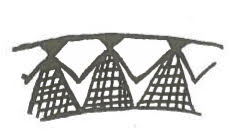
Circles of women dancing with joined hands appear in rock art, pottery shards, vases and frescoes going back thousands of years1, showing that ritual dance was a primary means of women’s worship. I believe that existing women’s circle dance traditions of the Balkans are direct descendants of these rituals. In their expression of values of partnership, sustainability, and peace, they are living links to the matrifocal Goddess culture of Old Europe as articulated by Marija Gimbutas.2
Tell Halaf, Iraq, ca, 5000-4000 BCE (Garfinkel)
Incorporating symbols of the Goddess in her many guises, these women’s ritual dances are deeply spiritual. They are feminist in the way they provide women with a place of power, not ‘power-over’ but ‘power-from-within.’3 They are an activist practice because the qualities they embody – connection, inclusiveness, balance, empathy, and mutuality – are the principles of a Partnership society, as proposed by Riane Eisler;4 or in Carol Lee Flinders’ term, a society of Belonging.5 Each dance circle is an opportunity to practice being in community in a respectful and cooperative way, which can offer a profound source of healing.6
How did I come to these women’s dances? As a child I was convinced of certain truths: that nature is holy, that God is also female, and that instead of hurting one another, people should celebrate together with music and dance. These longings led me to the rich folk dance traditions of the American melting pot, women’s Middle Eastern Dance circles, and the women’s spirituality network. Around the same time, in the early 1980s, I encountered the meditative communal dance practice known as Sacred Dance. Together with my university training in Intercultural Studies and Dance Movement Therapy, these different streams helped shape the path of my life. Continue reading “Women’s Ritual Dances: Secret Language of the Goddess by Laura Shannon”
Autumn of 1977. The faculty wives have come together in the modest University Heights home of a physics professor. Their Aquanet hair is sprayed to the heavens and at significant risk of igniting from lipstick-stained cigarettes that are resting precariously in the cradle a heavy crystal ashtray. Their business is serious. They are putting together a cookbook. The Faculty Wives Cookbook of 1977, to be precise. It is a noble task. They will cook from it for their young families, for their husbands, that is, the faculty. Even more, they will use each other’s recipes. Martha will cook Mary’s chili; Margaret will lose weight on Donna’s diet cabbage stew. It is an achievement that will be smugly displayed on bookshelves for decades. It will yellow, and the black plastic spiral binding will wear and crack. The Kinko’s heavy card stock cover will be ringed with coffee marks. And, one day, daughters-in-law will decide whether to keep it or to pitch it out.
I think I must have one of the last remaining copies of this rare book. Almost 40 years old, I stumbled on it while cleaning the other day, seeing at last with my own eyes a thing of legend. At the dinner table, I oft heard of the making of this collection of recipes – what a job it was to oversee and how much pride the wives felt in its completion. Holding it now, I was struck poignantly by the absence of its authors from the scene. No longer card bearing faculty wives, they are widows or caregivers to aged retirees or elderly divorcees or simply deceased. Continue reading “Realize by Natalie Weaver”
Last month, I took a dear friend on a trip to the North Carolina mountains. Throughout the trip we were sharply aware that we were no longer in the progressive enclave where we both lived – the tiny area whose deep blue always stands out in votes-by-county maps after elections and whose responses to discriminatory legislation like HB2 – the controversial “bathroom bill” that prevented trans people from using the restrooms that correspond to their identities – has always been resistance.
Even in our progressive bubble, though, transphobic people found themselves empowered by legislative support to speak louder and more harshly to gender nonconforming people. Leaving that bubble for two days of rural travel with a trans friend meant a thread of tension that followed us throughout much of our trip, as every glance, every bathroom break and every interaction with strangers had the potential to become upsetting or frightening. Continue reading “I’ll Go With You: On Bathrooms and Theocracy by Chris Ash”
Every week, the women participating in my workshops easily share their experiences in the social, political or community world. However, it is difficult for them to talk about themselves. Several of them face complex situations: A divorce or a long layoff, illness of a relative whom they are caretakers, raising a disabled child. They are ashamed to speak up about how they feel; this should not be so. We women have the right and the duty to speak openly about what ails us in our private lives. The idea that the personal is political has to be a perfect circle.
Bisi Adeleye-Fayemi says that the lack of attention to physical, emotional and spiritual needs of women has become one of the weak points in the work of feminists. In our own social and institutional spheres where we work, the combined effects of the strong reactions against women’s movements, harassment on social networks, cultural and religious fundamentalisms, the pressures for leadership and the challenge of finding a balance between multiple spheres of life make it difficult to conserve energy.
While activisms mean resistance to the hegemonic system, some dynamics could reproduce patriarchal control’s devices on women’s emotions and impact us negatively: The expectation of renunciation and silent sacrifice as supreme feminine virtue. Sadness, illness or emotional distress are political issues and a way to control us with them is through the imposing or adopted silence about. Continue reading “Caring as Resistance and Sisterhood by Vanessa Rivera de la Fuente”
History offers few instances of women helping create scripture. Hinduism’s sacred Rigveda may have been partly composed by women, and scholars believe the biblical Book of Ruth was possibly written by a woman, but the evidence for each is wanting. And while Muhammad’s widow was entrusted with the manuscript that would become the Quran, its scribe was a man named Zayd ibn Thabit. The only clear exception to this is the Book of Mormon, which Joseph Smith partially dictated to his wife Emma. The central role of Mormon women in the church was therefore fixed from the start.
In 1842 Joseph Smith organized the church sisters into a philanthropic organization known as the Relief Society. Among other things, the Relief Society sent women to medical school and opened cooperative stores. Operating independently from local bishops, it afforded Mormon women unprecedented independence. In fact the early Mormon Church was a feminist pathfinder. The first Mormon pioneers arrived in Salt Lake City in 1846, and by 1870 Utah Territory became the second place in the Union (after Wyoming) to give women the right to vote—nearly fifty years before the Nineteenth Amendment. But Mormons wanted freedom for all women, and that same year the Relief Society held a meeting in which the renowned poet Eliza Snow entrusted Bathsheba Smith with a mission to travel “all through the South” preaching “retrenchment [restriction of government spending] … and women’s rights.” Continue reading “Power & Restraint: A Feminist Perspective on Mormon Sisterhood: A sculpture series by Page Turner, presented by David Volodzko”
Today is the official release date for Goddess and God in the World: Conversations in Embodied Theology. It just so happens that August 1 is also a day for celebrating the harvest. An excerpt from the Introduction introduces the embodied theological method” we hope will turn the field of theology upside down.
People who reject the popular image of God as an old white man who rules the world from outside it often find themselves at a loss for words when they try to articulate new meanings and images of divinity. Speaking about God or Goddess is no as longer simple as it once was. Given the variety of spiritual paths and practices people follow today, theological discussions do not always begin with shared assumptions about the nature of ultimate reality. In the United States, the intrusion of religion into politics has led many people to avoid the subject of religion altogether. In families and among friends, discussions of religion often culminate in judgment, anger, or tears. Sometimes the conversation is halted before it even begins when someone voices the opinion that anyone who is interested in religion or spirituality is naïve, unthinking, or backward—or, alternatively, that religious views are a matter of personal preference and not worth discussing at all.
Like Crosley-Corcoran, I was raised in poverty. After my parents divorced in the early 1960s, our fall into poverty was pronounced. My mother liked to move, so much so that I attended no less than 15 different schools before high school. We lived in one house for two years without hot water. I learned early on the stigma of poverty, when even a Catholic school uniform could not protect me from signs of inferiority. Perhaps worse was the alienation I experienced as a young girl when other children’s parents discovered my father’s second job as a tattoo artist. Once that was known, most friends could no longer play with me outside of school. My psyche situated itself between shame and love, with the burden of keeping my humiliation a secret from the rest of my family. Continue reading “White Privilege: Confessions of a Poor White Girl by Cynthia Garrity-Bond”
I’ve been married for most of my life. Marriage, along with all our institutions, is influenced by and therefore takes shape from the culture/society in which it exists. When I got married, I had certain expectations that I’d absorbed from my environment. Attaining “marital bliss” by achieving an indistinguishable oneness with my spouse was part and parcel of it all. Popular thought tells us that marriage (especially heterosexual marriage) brings about the completion of two individuals. How often do we hear about people searching for, and sometimes finding, a person they label as their soulmate? People seem to long for that one human being they think will make them happy.
I recently picked up Rainer Maria Rilke’s (Bohemian-Austrian poet and novelist, 1875-1926) short book, LETTERS TO A YOUNG POET, and found his thoughts about marriage liberating. A few months after he married Clara Westhoff he wrote, “I am of opinion that ‘marriage’ as such does not deserve so much emphasis as has fallen to it through the conventional development of its nature. It never enters anyone’s mind to demand of an individual that he be ‘happy’,–but when a man marries, people are much astonished if he is not!” Continue reading “Solitary Marriage by Esther Nelson”


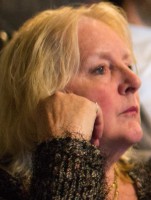 The image of the Goddess as Maiden, Mother, Crone is widespread in contemporary Goddess Spirituality. The Triple Goddess honors three ages of women, in contrast to the wider culture that: affirms young women as sex objects while shaming them as sluts; celebrates mothers on Mother’s Day, while providing few legal and economic protections for mothers; and ignores older women.
 There has been so much hate on display in the world so far in the 21
 Let’s turn off the news for a little while. Let’s set aside our devices and all those pesky social media. Instead, let’s consider one of the best known (and, alas, probably most ignored) teachings of Jesus—the Sermon on the Mount as given in the Gospel of Matthew. I especially like the Beatitudes (verses 3-12):
 Autumn of 1977. The faculty wives have come together in the modest University Heights home of a physics professor. Their Aquanet hair is sprayed to the heavens and at significant risk of igniting from lipstick-stained cigarettes that are resting precariously in the cradle a heavy crystal ashtray. Their business is serious. They are putting together a cookbook. The Faculty Wives Cookbook of 1977, to be precise. It is a noble task. They will cook from it for their young families, for their husbands, that is, the faculty. Even more, they will use each other’s recipes. Martha will cook Mary’s chili; Margaret will lose weight on Donna’s diet cabbage stew. It is an achievement that will be smugly displayed on bookshelves for decades. It will yellow, and the black plastic spiral binding will wear and crack. The Kinko’s heavy card stock cover will be ringed with coffee marks. And, one day, daughters-in-law will decide whether to keep it or to pitch it out.
 Last month, I took a dear friend on a
 History offers few instances of women helping create scripture. Hinduism’s sacred Rigveda may have been partly composed by women, and scholars believe the biblical Book of Ruth was possibly written by a woman, but the evidence for each is wanting. And while Muhammad’s widow was entrusted with the manuscript that would become the Quran, its scribe was a man named Zayd ibn Thabit. The only clear exception to this is the Book of Mormon, which Joseph Smith partially dictated to his wife Emma. The central role of Mormon women in the church was therefore fixed from the start.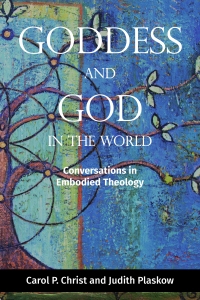
 Recently FAR contributor
  I’ve been married for most of my life. Marriage, along with all our institutions, is influenced by and therefore takes shape from the culture/society in which it exists. When I got married, I had certain expectations that I’d absorbed from my environment. Attaining “marital bliss” by achieving an indistinguishable oneness with my spouse was part and parcel of it all. Popular thought tells us that marriage (especially heterosexual marriage) brings about the completion of two individuals. How often do we hear about people searching for, and sometimes finding, a person they label as their soulmate? People seem to long for that one human being they think will make them happy.
 Feminism and Religion