Facing Depression by Carol P. Christ

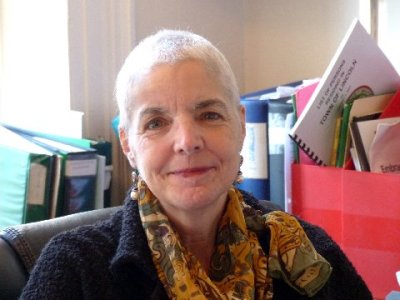
carol mitzi sarahThe suicide death of Robin Williams prompted me to reflect again on my own experience with depression and to share my story in the hope that it can help others.

In my twenties, thirties, and forties, I suffered severe intermittent depressions. My life in those days was a series of ups and downs. When I feel in love and was having good sex, I was in love with the world and could literally feel energy radiating from my body connecting it to the world. When I was dumped, the energy retreated, and I crawled into a dark hole of despair and self-pity from which there seemed to be no escape. In the in-between times, I carried on my life with neither the highs or the lows.

In recent days, a number of people have tried to describe what depression feels like. Here is what it felt like to me.

It was as if my mind had a single track on which were repeated a few deadly words: “No one loves me. No one will ever love me. I might as well die.” I could not erase the track or jump to another one. The words repeated themselves relentlessly in my mind.

Although I usually managed to get up and go to work during those times, these words were ever present: they would take over when my mind wandered on the bus or the subway and whenever I was alone. I could go through the motions of life, but I could not connect to the wellsprings of my creativity.

In the low times, I thought often about suicide. Indeed the words “I might as well die” encouraged them. Thoughts of my mother usually stopped me.

One time I decided to slit my wrists (slightly) to see if committing suicide would hurt. When I found that it didn’t, I immediately called two friends and asked them to take me to their home for the weekend.

When I was depressed, well-meaning friends told me that “this too will pass” and assured me that “you will find someone else.” I didn’t believe them. When I was in the place of depression those words did not help at all.

In therapy I learned that depression often masks enormous anger. Sometimes I screamed out my rage at my latest boyfriend in the confines of my apartment. But when the depression had taken hold, this did not help either.

I also tried all kinds of spells and divination to see “if our love was meant to be,” “to bring him back,” and “to find my true love.” None of this worked. (Readers of this blog who have wondered why I put little faith in divination and spells have their answer: not from lack of trying!)

Just as I was coming out of my last serious bout with depression, a friend who had suffered in similar ways told me that she had resorted to anti-depressant pills. She explained to me that the pills seemed to move her mind away from her depressing thoughts. When she felt stronger, she weaned herself off of them gradually. She said that she would go back to the pills if the depression came back. I was elated to learn that there was something that could work, and I filed this information in the back of my mind.

I don’t suffer from depression any more. Yes, life has its ups and downs, and I sometimes feel lonely or under-appreciated. I never did find “the right” man. But my disappointments no longer spiral down into depression and not wanting to live.

What happened?

It was like a miracle.

When my mother died, I felt the room fill with love. From that day to this I have never doubted that there is enough love to go around and that I am loved.

Thinking about the change that “happened” in my life, I can now say that I was suffering from an “error in thought.” I had equated “being loved” with finding my “true love.” In the process I was discounting all the many other forms of love in my life—including the love of my mother and grandmothers that had sustained my childhood years, and the love of friends, family, animals, plants, and the universe itself that continued to sustain it.

Soon after that, I realized that I had compounded my suffering with a major “error in theology.” When I bemoaned my inability to find “true love,” I was blaming the universe. I was blaming the divine power.

When, years earlier, I expressed my anger at God for not “saving” women from patriarchy, I heard the words: “In God is a woman like yourself. She shares your suffering.” These words inspired my journey to the Goddess.

cave woman climbingBut I needed to take another step.

I was still angry at the universe for not giving me what I wanted and thought I needed in my life. I was angry at Goddess because I thought She could make my life better and She was not doing it!

When I finally expressed my enormous anger to Her, I learned that I had been making the “theological error” of attributing omnipotence to Goddess. However She sympathized with my suffering, She did not have the power to “send my true love to me” when I poured out my heart to Her.

“The path you are on is not easy,” She said to me, “but I will be with you all the way.” Reflecting on those words, I understood that Her power is not omnipotence, but omnipresence, not power over, but power with.

So what advice would I give to those are in the throes of depression. (I am speaking here to those who suffer as I did from “garden variety” depression, not its more serious forms.)

• I would tell them that I understand how they are feeling. I would tell them that I understand how bad it really can feel. Not: “oh come on, it’s not that bad.”

• I would recommend getting in touch with the anger and sadness that underlies depression with the help of therapy, spirituality, family, and friends. A depressed person often feels that whatever underlies depression is too horrible to be faced. Yet there is nothing that cannot be faced “with help” from someone who can listen. However, this might have to wait until the depression has lifted.

• I would encourage exercise, singing, and dancing. Sometimes moving the body can also move the mind off the fixed track that leads to depression.

• I would suggest anti-depressant drugs not for the long-term, but for their short-term power to move the mind off a fixed track.

• After the depression has lifted, I would ask if “errors in thought” led to the conclusion that life is not worth living. I would urge them to open new tracks in their minds that lead to different conclusions—while they are healthy enough and strong enough to do so. Repeating a mantra like, “my true love is me,” “life is worth living,” or “life is a gift” just might help.

• I would also ask them to examine their “theology”–even if they think they don’t have one. Feelings that “God” could make things right, but in “this particular case” chooses not to, are one of the pathways to depression.

• I would urge them to be open to miracles.

Carol is looking forward to the fall Goddess Pilgrimage to Crete–$150 discount for the next two women to sign up for the fall 2014 tour–www.goddessariadne.org.  Carol can be heard in a recent interviews on Voices of the Sacred Feminine, Goddess Alive Radio, and Voices of Women.  Carol is a founding voice in feminism and religion and Goddess spirituality. Her books include She Who Changes and Rebirth of the Goddess and with Judith Plaskow, the widely-used anthologies Womanspirit Rising and Weaving the Visions.  Follow Carol on GoddessCrete on Twitter.


Seeing the Humanity in the Inner Child by Jameelah X. Medina

Jameelah Medina

Article 6

1. States Parties recognize that every child has the inherent right to life.
2. States Parties shall ensure to the maximum extent possible the survival and development of the child.

Article 37
States Parties shall ensure that:

(a) No child shall be subjected to torture or other cruel, inhuman or degrading treatment or punishment. Neither capital punishment nor life imprisonment without possibility of release shall be imposed for offences committed by persons below eighteen years of age;

(b) No child shall be deprived of his or her liberty unlawfully or arbitrarily. The arrest, detention or imprisonment of a child shall be in conformity with the law and shall be used only as a measure of last resort and for the shortest appropriate period of time;

(c) Every child deprived of liberty shall be treated with humanity and respect for the inherent dignity of the human person, and in a manner which takes into account the needs of persons of his or her age. In particular, every child deprived of liberty shall be separated from adults unless it is considered in the child’s best interest not to do so and shall have the right to maintain contact with his or her family through correspondence and visits, save in exceptional circumstances;

(d) Every child deprived of his or her liberty shall have the right to prompt access to legal and other appropriate assistance, as well as the right to challenge the legality of the deprivation of his or her liberty before a court or other competent, independent and impartial authority, and to a prompt decision on any such action.*

inner childIslam has taught me so many things over the years. One lesson, in particular, plays in my head throughout the day as a constant and necessary reminder: My soul has rights over my ego. I still remember the first time I read that. Over the years, I have expanded it to include the idea that my body has rights over my mind, my mind has rights over my body, and even that my inner child (she’s six) has rights over me (the 12-year old me and the adult me).

I was crushingly self-critical and dealt with devastating self-loathing for many years, but learning how to be compassionate helped me to be much kinder to others, and eventually, to myself. I had not really thought about making myself a recipient of my own kindness and compassion before. It was so natural to judge that kid in me who just wanted a chocolate chip cookie, to jump in a dirty puddle, to stick my tongue out and make faces at other little kids, and all the other odd things I felt urges to do as an adult. Continue reading “Seeing the Humanity in the Inner Child by Jameelah X. Medina”

Racism from Born Muslim Men is Hurting Latino Muslim Women by Vanessa Rivera de la Fuente

Vanessa Rivera de la Fuente. Racism against Latin WomenOne of the first things a newly Muslim woman convert learns is that Islam makes people equal and the only thing that differentiates a believer from another believer is their level of piety. They also learn that Islam raises the honor of women to levels that no religion has done, that they, as Muslims, have rights, and they are encouraged to get marry since marriage is a half of the Din.

However, when it comes to Latino Muslim women of marriageable age, some have not received respect in terms of their honor, their rights as Muslims, or equal treatment as with other Muslim born women. It seems racism and stereotypes about Latina women are stronger than faith and piety. Continue reading “Racism from Born Muslim Men is Hurting Latino Muslim Women by Vanessa Rivera de la Fuente”

Feminist Bookstores and the Disappearance of Sacred Space by Marie Cartier

MarieCartierforKCETa-thumb-300x448-72405In my book Baby, You Are my Religion: Women, Gay Bars, and Theology Before Stonewall I talked about the importance of the gay women’s bar (and gay men’s bar) as sacred space for pre-Stonewall homosexuals—how the community space of the gay bar was the only public space for pre-Stonewall homosexuals and how it galvanized and concretized a community that had no other way of connecting. It was “home.”

I was so fortunate to do two readings and signings for People Called Women, the feminist bookstore from Toledo, Ohio — and Ohio’s only feminist bookstore — when they brought their “traveling bookstore” which goes to feminist events (they also have their mortar and brick store in Ohio J which I was thrilled to visit) to Michigan Womyn’s Music Festival last week. I was thrilled that we were able to sell out of all the copies of my book that People Called Women brought “to the land” (Michfest). I was thrilled that so many women showed up to our event, told stories about early bar life, cried, shared hugs and created community — and bought books. It felt radical and “old school” feminist. It felt like something I have missed – that connection with a feminist bookstore–for Los Angeles lost our women’s bookstore in 1999 —15 years ago.

people called women- front of store
Marie Cartier w/ Gina Mercurio, owner of People Called Women, Photo by: Megan Morris

For many of us who came of age post-Stonewall in the mid 70s, 80s and late 90s, the gay women’s bookstores—or rather feminist bookstores — were these sacred “home” spaces. They were our “alternate church,” as I so label the pre-Stonewall bars.

I “came out” as a lesbian and as a feminist — in 1979. One of the first places I visited was New Words Bookstore in Cambridge, MA. New Words really did feel like that—“new words,” like parting the curtain onto a brand new world where I had access to language that finally made sense—a new way of communicating—that is what feminism felt like — like being able to talk and be heard and understood for the very first time. Continue reading “Feminist Bookstores and the Disappearance of Sacred Space by Marie Cartier”

Good Muslim, Bad Muslim by amina wadud

amina 2014 - cropped

No doubt about it, the news of late has been dismal, heart breaking, soul crunching. Pick a place or theme and see where you end up: Ebola in parts of Africa, Israel and Hamas; Ferguson, Missouri; Ukraine, U.S., and Russia; unaccompanied minors from the south crossing over into U.S. borders; the assault of the Islamic State of Iraq and Levant (ISIS) on Christians, Kurds, Yazidis, Shi’ahs and journalists. This list could (should) be augmented by many other conflicts and areas of strife which have been on-going for longer than the last several weeks.

I don’t know about you, but I draw my weary attention to the latest news each morning with knots in my stomach and a heavy weight on my shoulders. Meanwhile, even if I am not directing my attention to the news per se, the same events are all over social media and I confess I check into facebook and twitter each day even when I try to maintain a casual posture over usage and to keep upbeat attitude in how I engage (or ignore) the latest hash tag or hot button issues.

For weeks I have been thinking I should blog about an important lesson I have learned as best articulated in the book by Sharon Welch: A Feminist Ethic of Risk. In a world riddled with problems of proportions greater than can be solved by any one person, one group, one country or over one life time, how does one continue to be ethically engaged, avoid crippling despair and pointless cynicism, or just plain fall into apathy? Continue reading “Good Muslim, Bad Muslim by amina wadud”

Lessons Learned from the Atheist Alliance of America Convention by Andreea Nica

Andreea Nica, pentecostalismThe Atheist Alliance of America National Convention 2014 held earlier this month in Seattle, Washington granted me the opportunity to interview, converse with, and listen to renowned speakers, comedians, and influential figures in the atheist movement including the likes of David Fitzgerald, Dr. Steven Pinker, Dr. Rebecca Goldstein, Richard Haynes, and Dr. Richard Carrier.

This year’s convention drew in approximately 100 attendees throughout the weekend, according to Amy Monsky, Executive Director of Atheist Alliance of America (AAA). Monsky states that the AAA National Convention has several primary goals including: to bring atheists together; to hear great speakers; to network and socialize; and to raise awareness through education.

The family-friendly event was comprised of educational and activist-oriented sessions, debate, a comedy show, VIP non-prayer breakfast, film by Jeremiah Camara, “2014 Richard Dawkins Award” banquet, and a Sunday outing to Snoqualmie Falls and Chateau Ste. Michelle Winery.

Below is an overview of the sessions I attended, the conversations I had with presenters and experts, and the interviews I conducted. Continue reading “Lessons Learned from the Atheist Alliance of America Convention by Andreea Nica”

Anger is Not a Panacea: The “Next Stage” after Rage by Carol P. Christ

carol mitzi sarahIn a recent post Xochitl Alvizo cited Beverly Harrison’s much-loved essay “Anger as a Work of Love.” Harrison captured feelings that were in the air at the time of its writing several decades ago. Women were laying claim to the right to be angry at the silencing of our voices, the double standard, the media portrayal of women, income inequality, lack of access to good jobs, failure to prosecute rape and domestic violence, and a host of other injustices.

Most of all we were protesting the cultural stereotype that the “good woman” (understood to be white, Christian, and married or hoping to be) would not protest loudly or at all, would turn the other cheek, and would think about others rather than herself. (Jewish women and black women had to strive doubly hard to “live up” to this standard, as it was assumed that Jewish women were “overly assertive” and that black women were “too strong” and often “angry.”)

In this context Harrison’s essay and Mary Daly’s epithet “rage is not a stage” gave women—especially white women–permission to get in touch with our feelings of anger and to express them. We understood that “good women” had been hiding and repressing their feelings for centuries if not millennia with the result that the structures of injustice remained intact. Continue reading “Anger is Not a Panacea: The “Next Stage” after Rage by Carol P. Christ”

Coming to Consciousness: Eckhart Tolle and Yoga by Elisabeth Schilling

roadBoth Eckhart Tolle and yoga have helped me become more conscious lately. As a Christian, I had always been a bit of a spiritual hypochondriac. Believing in the ultimate external body that had an opinion about my body – how it should feel, how it should be positioned – left me self-doubting and scrutinizing every moment for possible infractions. Christianity is supposed to be the peace that passes all understanding, but I think I had turned it into a moral gage that would never land on perfect for very long.

Furthermore, it was always difficult for me to believe what I was supposed to without being filled with ego about it. But let us face it, as someone who had journeyed outside those fundamentalist leanings, I was still a hypochondriac (it was simply that grad school had given me more physical conditions to be suspicious of) and completely full of ego, perhaps even more so. Except here I mean ‘ego’ not in a reductive way, but in the broader, more all-encompassing way that Eckhart Tolle describes.

One good way to explain ego is to relate the story that is found in Eckhart Tolle’s A New Earth but that I first encountered in Yu Dan’s Confucius from the Heart: Ancient Wisdom for Today’s World. This makes me think it is a familiar story to many people, but perhaps even those people will enjoy reading it here once again. Dan narrates the story as such who also tells us it is a Buddhist tale: Continue reading “Coming to Consciousness: Eckhart Tolle and Yoga by Elisabeth Schilling”

Stillness by Oxana Poberejnaia

oxanaI am visiting my home town in Russia for holidays. I have not been home for 3 years and I have not lived there for 12 years. Many things surprise me. One of the features of contemporary life in my home town is the relentless and often destructive onset of capitalism. As I have said already, currently patriarchy has joined forces with capitalism in order to suppress nature and oppress women.

One of the ways capitalism does this is by involving women and men into an endless rat race and by substituting their Wild Nature (as Dr Clarissa Pinkola Estés describes it) with an identity of a consumer. People willingly put on masks of consumers who live to make money and to spend it on entertainment which is sold to them.

Continue reading “Stillness by Oxana Poberejnaia”

What Feminists of Color Taught Me In the Wake of the Michael Brown Shooting by Grace Yia-Hei Kao

Like many others, I’ve been following the aftermath of the recent shooting death of an 18-year old black teenager by a police officer in Ferguson, Missouri with a mixture of shock and horror. Mainstream news coverage and my Facebook newsfeed have been appropriately flooded with commentary about systemic racism, racial profiling, civil unrest, and the militarization of the police. As several African American thought leaders have noted, Brown’s death was not an aberration but “just the most recent example of police officers killing unarmed black men.” Continue reading “What Feminists of Color Taught Me In the Wake of the Michael Brown Shooting by Grace Yia-Hei Kao”