For me the word “matriarchy” expresses the certainty that “another world” can exist—a world not based in domination and hierarchy or violence and war.
The word “matriarchy” makes people’s hair stand on end as they imagine the mirror-image of patriarchy: societies in which women dominate men, beat men, rape men, hold men as slaves, and demand obedience from men. Some who do not protest very loudly or at all against patriarchy are horrified by the very idea of matriarchy. To be fair, most feminists have also been schooled not to use the “m” word.
Early in my academic career, I read “The Myth of Matriarchy” by Joan Bamberger and learned that the idea of matriarchy gone wrong has been used by men to justify patriarchy. From other academics I learned that in matrilineal societies, uncles have a great deal of power—so therefore there never was a matriarchy. I was also aware that Jungian and other proponents of a “matriarchal stage” in the development of culture have argued that matriarchy had to be succeeded by patriarchy in order for societies to evolve to a “higher” stage. Unlike many of my colleagues I stubbornly held onto the belief that there must have been “a better way” prior to patriarchy. Continue reading “MATRIARCHY: DARING TO USE THE “M” WORD by Carol P. Christ”
One topic that emerges from the discussions I have with other Muslims and people in general relates to marriage. Starting with, I don’t agree with marriage. Not because I think married life is negative but because, under the prevailing patriarchal logic, marriage is not conducive to full relationships. Patriarchy has also polluted Islam and, therefore, the way in which gender relations are understood as part of a Muslim’s life including the concept of marriage.
Since I converted to Islam, I have received 11 marriage proposals. I have refused them all. Many people have seen in my attitude a sign of pride and rebellion. They are wrong. I do not rebel against married life, but against the terms in which it is presented to me and the role I am supposed to have because I am a woman in it. Manly-man-male ideas about women, prejudices related to the fact that I am not “pure Muslim, but converted,” “not Arab,” and stereotypes about Hispanic-Latina women, have all played a major role in the deep indignation and disgust with which I have rejected each prospect. Continue reading “A Not So Ideal Deal: Perspectives On Sexism In “Islamic Marriage” by Vanessa Rivera de la Fuente”
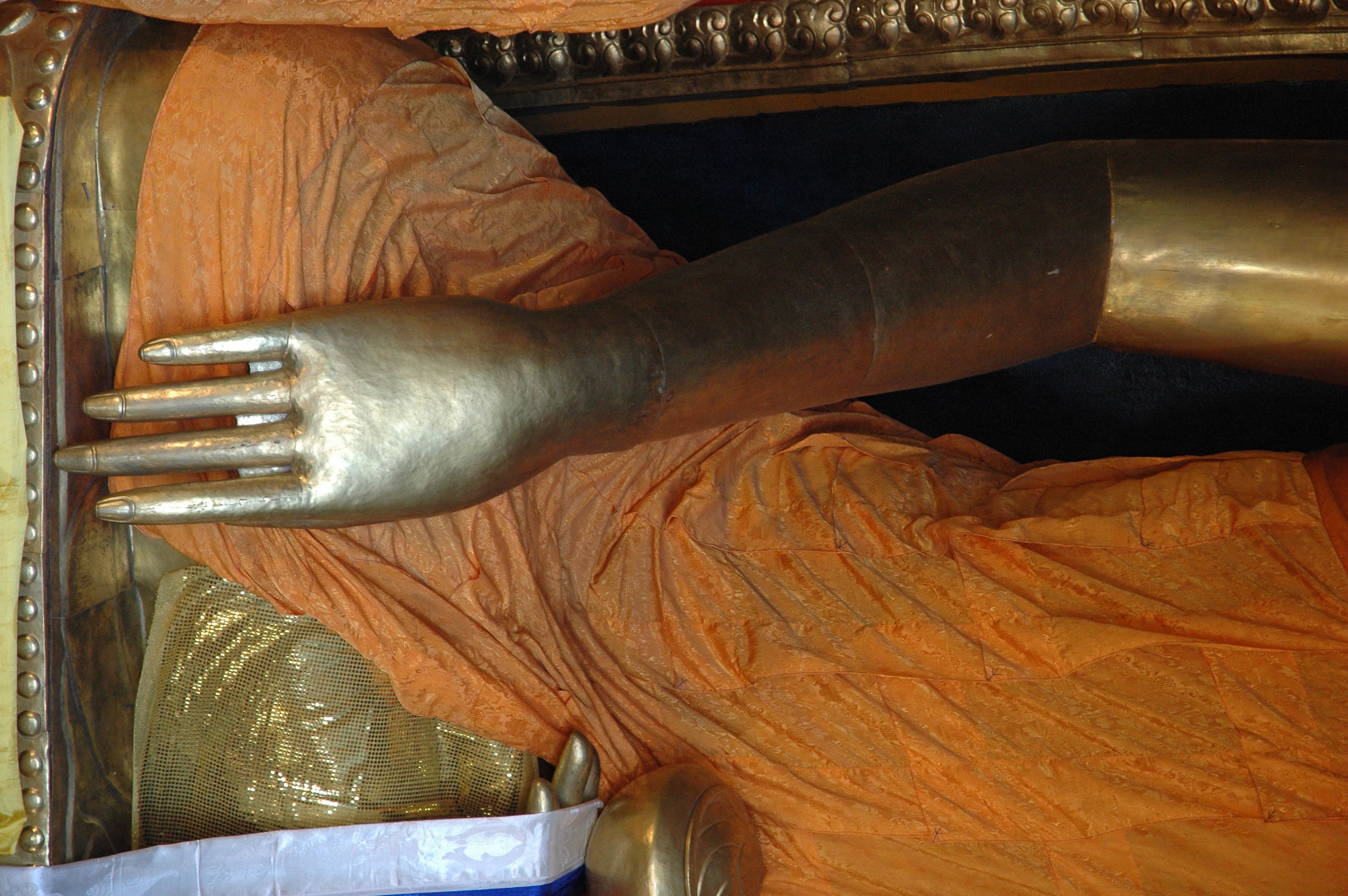
My friend whom I teach frame drumming teaches us shamanic journeying. There was an episode in one of my journeys, when, unable to see the way forward, I put the palm of my hand on the ground and went down a hole I was creating to the core of the earth. Since then, this scene came into my mind several times when I was talking to friends about inner truth. Also, the posture itself bears uncanny resemblance to the iconic Buddha posture of touching earth with his right hand.
Touch the Earth Mudra
According to a Buddhist legend, on the night of Enlightenment Prince Siddhartha encountered Mara, the Lord of Death, who threw various hindrances the Buddha’s way to prevent him from attaining Supreme Enlightenment. The final challenge was Mara’s claim that the Buddha had no right to be in the seat of Enlightenment. The Buddha then touched the earth with his right hand to call Her as a witness of his past spiritual achievements and his right to gain Enlightenment.
Lori Gottlieb’s article in the February 9 New York Times magazine, “The Egalitarian-Marriage Conundrum,” was yet another tired entry in the New York Times’s annual clickbait misogyny Olympics. Who doesn’t remember the supposed opt-out revolution, and the sadness of the decade-later follow-up demonstrating every single consequence that any feminist could have predicted? Or the weekly gender terrorism spewed by Maureen Dowd, who somehow gets people to believe that constant belittling and feminizing male Democratic politicians counts as incisive, progressive political commentary? To name just a few of the most memorable, and most infuriating, examples.
Gottlieb’s article rehashed the studies – I’ve lost count of how many times I’ve read about them in one version or another – that suggest that equality in household labor leads to decreased frequency of intercourse among married heterosexual couples. The most revolting lines in the article – among many contenders – start with a quote from Julie Brines, the author of the study in question: ‘”The less gender differentiation, the less sexual desire.’ In other words, in an attempt to be gender-neutral, we may have become gender-neutered.” It is possible that Brines may be quoted out of context, or that what she intended to say was something quite different, but as the quotation stands, it implicitly suggests that so-called “traditional” gender differentiation is necessary for sexually satisfying heterosexual relationships. (For, of course, there are plenty of other ways in which gender differentiation might be present in heterosexual relationships. Gender differentiation is here being equated with a very particular set of decisions about ‘housework’, a notion that arguably exists only to render some parts of women’s work invisible.) That’s before getting into the implications of the word “neutered” used in the second sentence. Why would egalitarian distribution of household labor be considered “gender-neutral” to begin with? Continue reading “Anti-sex feminism? by Linn Marie Tonstad”
As Valentine’s Day approaches, it seems normal to think of love, perhaps with cynicism or hope or a mix of conflicted emotions. Last year, I wrote a post on this site about Valentine’s Day, and I’m happy to contribute this year around the same time. But this year I’ve been doing a different kind of reflection. Maybe it’s because I just took my artificial Christmas tree down this past weekend, but I’ve been a little slow to get in the Valentine’s spirit, more specifically to reflect on the idea of a holiday dedicated to love.
It’s not that I haven’t been talking about love and relationships—I’ve been doing a lot of that lately. I’m teaching a class that is currently in the middle of a unit on Christian sexual ethics, I’ve been conversing with friends about their upcoming weddings and future plans, and I have spent a lot of time on the phone navigating the terrain of a long-distance relationship. But all this talk hasn’t left me too much time to reflect. It wasn’t until last night, as the church choir rehearsal I was attending was ending, that my thoughts of devouring chocolate hearts were interrupted by a litany prepared by two choir members in honor of Valentine’s Day. Continue reading “Love and Happiness by Elise M. Edwards”
Echoes of Mesopotamia small figures from ancient places ancient times and ancient faces ancient words and ancient wisdom still flowing in my veins
Clay in my hands clay in her hands running on the rivers of time spiraling in the mysteries of being spinning in the eddies and ripples of eternity…
I have a strong emotional connection to ancient Paleolithic and Neolithic goddess sculptures. I do not find that I feel as personally connected to later goddess imagery, but very ancient figures call to something deep and powerful within me. I have a sculpture of the Goddess of Willendorf at a central point on my altar. Sometimes I hold her and wonder and muse about who carved the original. I almost feel a thread that reaches out and continues to connect us to that nearly lost past—all the culture and society and how very much we don’t know about early human history. There is such a solid power to these early figures and to me they speak of the numinous, non-personified, Great Goddess weaving her way throughout time and space. Continue reading “Echoes of Mesopotamia by Molly”
It may come as a surprise to those who identify as both feminists and religious practitioners that I don’t believe women should be pastors of any dominant religious congregation. This includes most religions which, I assert, are rooted in and structured by the tenets of patriarchy. Does that mean I think women should be congregants of a patriarchal-originated religious system? You guessed it – no. While this may seem like a radical notion to some, it took me quite some time to come to terms with my own conflict in being both feminist and a believer.
My transition from the Pentecostal sect was a long, intricate process that involved life-altering decisions. The notion of leaving the church was driven by my immersion in women’s studies during my undergraduate degree. There were many difficult questions I simply didn’t have an answer for, as the church didn’t provide me with them.
One of them being: Can women instruct an entire congregation of believers?
For those who are female pastors, I’m sure you’ve heard this one a million times, but somehow it never fades from religious and secular discourse. Whether it’s the Islamic, Jewish, Christian, or Mormon faith, women have had to constantly fight for their right to preach religious doctrine. In the beginning of my transition, I was on the side of: Preach it ladies! Continue reading “Why I Don’t Believe in Female Pastors by Andreea Nica”
Mary, Mary, quite contrary, how does your garden grow? With silver bells and cockle shells, and pretty little maids all in a row.
From the beginning of horticulture about 8000 BCE or earlier to the present day, weeding has been women’s work. Women, who were the gatherers and preparers of food in traditional nomadic societies, no doubt were the first to discover that seeds dropped at a campsite one year sometimes sprung up as plants the next year. When this discovery was systematized, agriculture was invented, and human beings began to settle down in the first villages and towns.
In the early days of horticulture (the name for the earliest stage of agriculture before the plow was developed), the cycles of planting and harvest and all the stages in between were understood to have been given to mothers by the Great Mother, the Source of Life. The secrets of planting, seed collection, harvest, and food preparation and preservation were all perceived to be “mysteries” connected to the ongoing cycles of birth, death, and regeneration in the universe.
My grandmother Lena Marie Searing who was born on a farm in Michigan must have learned agricultural secrets from her mother, for she not only created a beautiful garden, she also farmed an orchard and preserved its fruits in glass jars that lined her pantry. It was she who taught me and my brothers and cousins to love nature. My mother learned to garden from her mother, but she did not harvest food crops. I think of both of them whenever I work in my garden.
The past few days I have been weeding my garden after heavy rains that left the soil clumpy and moist. I have weeded before, but I have never enjoyed it so much. My garden has matured over the past seven years, and now the weeds are more “under control.” There aren’t so many of them, and as I have now been weeding them out over the years, their roots are shallow.
As I slide a trowel into the earth the weeds lift up and with my fingers I gently pull the plants with their roots from the soil. The weeds are familiar, though I don’t know all of their names. The “sticky weed” has many tough roots, the clover has many fine ones—both are hard to eradicate. Other weeds are easy to pull up and do not reappear again until the next year.
wild chamomile blooming among “weeds”
I am discovering that weeding is a delicate process. Sometimes the roots of plants I want in the garden are entangled with those of the weeds. I work carefully choosing the ones to save and the ones to discard.** I leave poppies, chamomile, yellow daisies, and marigolds where I find them, as I consider them to be wildflowers that will provide beauty in my garden when they bloom in spring. I also take care to “keep the soil in good heart” by not discarding too much of it along with the weeds.
As I weed, I think of the women in my village who harvest greens from the fields, feeling certain that some of the weeds I discard are edible. I marvel at all of the knowledge women have shared and passed down over the past 10,000 years and more, as I realize how little of it I know. My suspicion that some of my weeds could be food is validated when a friend and I order boiled “greens from the mountains” for lunch at a local taverna and are served one of the plants I had thrown into the garbage can.
As I weed, I am reminded of an essay called “Keeping the Soil in Good Heart: Women Weeders, the Environment, and Ecofeminism” by Candice Bradley which was published in Karen J. Warren’s Ecofeminism. Bradley writes that weeding is women’s work in almost all cultures. As I work, I understand that this is so because weeding is delicate work that requires concentration and patience and that must be repeated. Bradley says that in many cultures men disparage weeding as they disparage housework—not considering either to be “real” work.
Horticulture is the most environmentally friendly form of farming, according to Bradley, because it does the least harm to the soil, and because the weeds that are not eaten are burned or composted and turned back into the earth to replenish it.
While weeding by hand has been considered work for women and children, men have generally controlled the plow and its recent successor, the tractor. However, as Bradly states, the plow and the tractor do not eliminate the need for hand-weeding. In many cases they encourage the weeds to regenerate. Women and children still weed.
The chemical gardening and farming industry (“round it up”) is based on the premise that weeds can and must be eradicated. Rachel Carson warned us of the danger this approach to agriculture presents to human and all other forms of life. A by-product of chemical agriculture is that the careful work of women weeders is further discounted.
I do not use chemicals or pesticides in my garden, and I will be out there weeding on a regular basis in the next months. As I put my hands in the earth, I will think of all the women before me who have weeded and planted, weeded and harvested, and weeded again. Blessed be.
*The title of this essay is an homage to Elizabeth Wayland Barber’s Women’s Work: The First 20,000 Years which discusses and celebrates women and weaving.
**I am aware that no plant was born a “weed” and that the designation of some plants as weeds is a by-product of human digestive systems, human taste, agriculture, and the creation of gardens for the celebration of beauty.
Growing up, there was a way in which I always felt excluded from holy things. There was the holy: blessed water, sacred oil, priestly blessings, consecrated priests, pilgrimage sites, religious buildings and communion to name a few and then there was everything else including me. Yet, I was a good kid who always (or almost always) did as I was told. Doing good works is not contrary to a Catholic childhood or education. In fact, it is an integral part of Catholicism, but there is also a competing notion that good works are in a different ontological category from holiness. While goodness merits salvation, salvation is not connected to being holy. Holiness was granted; salvation was earned. In addition, holiness also seemed more distant because men had more access to holiness than women did. Only men could be ordained and priests consecrate the Eucharist, celebrate the sacraments and bless people and things. These are all holy things and the closer one interacts with holiness, the more holiness is bound to transfer onto the person coming into contact with them. Continue reading “On the Path of Holiness by Ivy Helman”
Cooper was born a slave in Raleigh, NC in 1858. Her mother was a slave and her biological father was her mother’s white master. After living and working as a slave until the age of five, Cooper began her formal education at a school for slaves. She would grow up to become one of the most educated and intellectual black women of her century. In fact, she was the fourth African American woman to earn a Ph.D. in the United States, writing her dissertation on “Attitudes toward Slavery in Revolutionary France.” Continue reading “Painting Anna Julia Cooper by Angela Yarber”


 For me the word “matriarchy” expresses the certainty that “another world” can exist—a world not based in domination and hierarchy or violence and war.