‘Forget Me Not’ by Sara Wright

As if I could.

Almost three days of spring flooding seems so normal now that I expect it. Hard to believe it’s only been raining like this for less than a year. A warming climate creates torrential rain, three to five feet of snow at once, wildly fluctuating temperature shifts and who knows what else. After all, this is just the beginning. The end is out of sight.

One robin awakened me this morning with a symphony and kept up his chorale for an hour. It was still raining then but robin warbled on, harbinger of spring.

Today was the day I promised myself I’d tackle the cellar, now flooded even with a sump pump that runs around the clock. Our poor patch of northern earth is just too saturated.  

Continue reading “‘Forget Me Not’ by Sara Wright”

Legacy of Carol P. Christ: THE CARELESS SPIRIT OF ANNIE CORLISS: TRUMPING DESPAIR IN THE NEW WORLD

This was originally posted on April 2, 2012 and updated on December 30, 2016

Annie Corliss was my great-great-grandmother. The Corliss name, also spelled Corlis, Corless, Corlies, Corlers, and Carlis, is derived from “careless” meaning someone who is “carefree” or “happy-go-lucky.”

Annie Corliss was the daughter of James and Mary Corliss, both born in Ireland. Her parents may have been tenant farmers, but given that their surname could refer to someone who doesn’t settle or own property, they may have been Irish Travellers– itinerant craft persons and traders, sometimes called tinkers because they mended cooking pots and farm implements.  “Irish Travellers are a traditionally nomadic people of ethnic Irish origin, who maintain a separate language and set of traditions. … Irish Travellers have their roots in a Celtic (and possibly pre Celtic) nomadic population in Ireland.”

Continue reading “Legacy of Carol P. Christ: THE CARELESS SPIRIT OF ANNIE CORLISS: TRUMPING DESPAIR IN THE NEW WORLD”

The Courage to Go Your Own Way by Caryn MacGrandle

My eleven-year-old daughter is regularly called a lesbian in the conservative Southern town that we live.  Not because she has identified her gender, but because she does not dress the same as all of the other girls or wear any makeup.  She wears linen baggy pants with casual t-shirts.  And it is not as if the other girls are dressed more formally than her, but there is a ‘prescribed’ casual look that involves Lululemon and expensive sports casual clothing bought at stores like Dick’s Sporting Goods.

My daughter doodles a skeleton on her hand, and the girl next to her calls her ‘emo’ akin to pariah in the culture.  The boy on the other side says, ‘why don’t you just go kiss a girl already.  Faggot.’      

My heart breaks when I hear her tell me these things.

‘Keep carving your own way.  Fly,’ I silently entreat her.

Continue reading “The Courage to Go Your Own Way by Caryn MacGrandle”

RACHEL KADISH:  TRANSCENDENCE AND TEXT, part 2 by Theresa C. Dintino

THE SYMBOL OF THE GENIZAH

Being a non-Jew, the first word I had to look up while reading The Weight of Ink was  genizah—a hiding place or the act of hiding sacred texts until they can receive proper burial in the earth. In Jewish tradition this is a required honoring of the written word, especially if it is writing about God. It can also mean depository or treasure; something hidden away in time with hope for more welcome in the future that finds it.

Genizah was the perfect word for me to have etched into my mind with regard to The Weight of Ink as it set the stage and opened a space in my heart for a novel which concerns itself with the power of writing and words through time. The story is centered around human lives engaged in passionate intellectual pursuits, the love of books and learning, and imaginations set afire by the academic.

Continue reading “RACHEL KADISH:  TRANSCENDENCE AND TEXT, part 2 by Theresa C. Dintino”

RACHEL KADISH:  TRANSCENDENCE AND TEXT, part 1 by Theresa C. Dintino

Moderator’s Note: This post is presented as part of FAR’s co-operation with The Nasty Women Writers Project, a site dedicated to highlighting and amplifying the voices and visions of powerful women. The site was founded by sisters Theresa and Maria Dintino. This was posted on their site on November 7, 2023

I love recognizing Toni Morrison’s influence on a writer as I am reading a book. Reading Rachel Kadish’s novel, The Weight of Ink, immediately sunk into Jewish reality, life, and experience without any explanation or apology, I sniffed a familiar point of view, a ghost of novels prior, detected the faint fingerprints of a giant. I liked it and when I recognized it for what it was, I thought to myself, Good for her.

Kadish had taken Toni Morrison’s advice to black writers that says you don’t have to explain yourself to white readers and applied it to not explaining herself to non-Jewish readers.

Why not?

Continue reading “RACHEL KADISH:  TRANSCENDENCE AND TEXT, part 1 by Theresa C. Dintino”

Powerful Women in Pre-History by Rachel Thomas

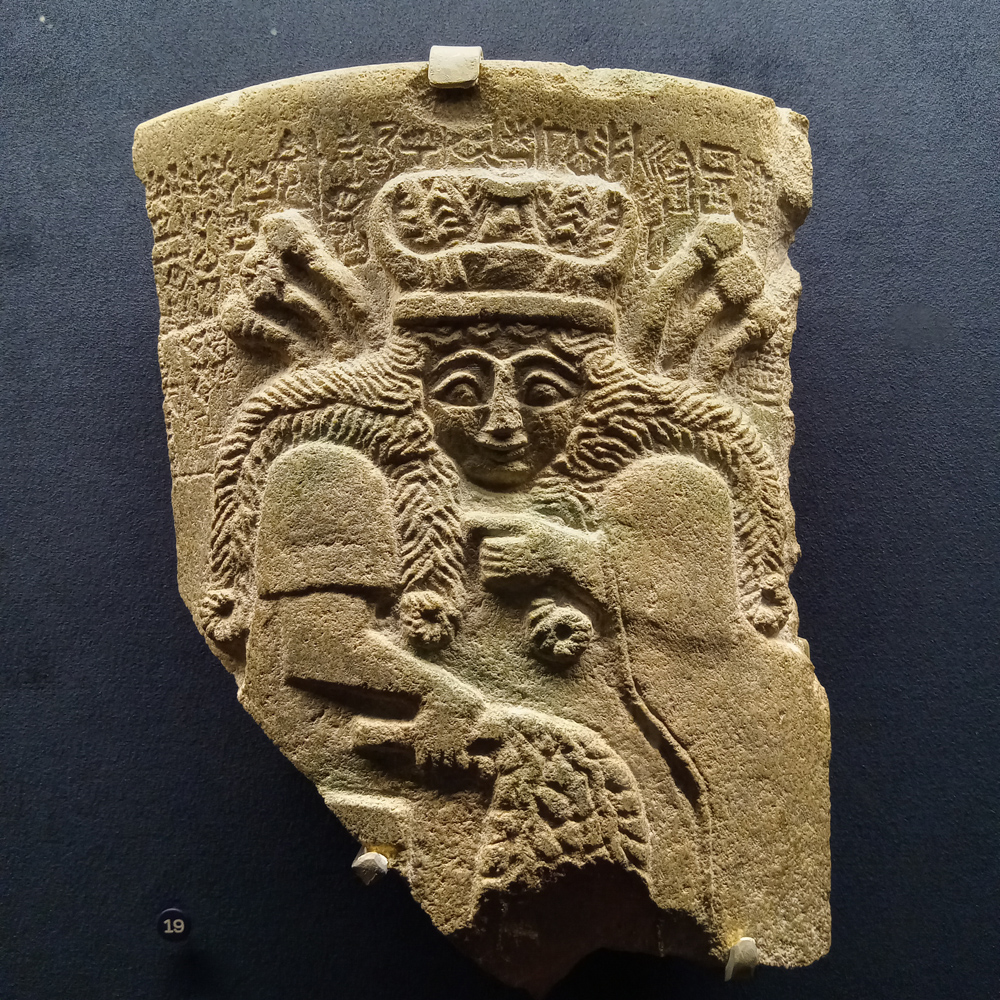
Image of a Goddess, maybe Inanna. Could she also be a Shaman and/or Queen? From 2400 BC, Sumeria. Photo by Rachel Thomas at the Morgan Library, on loan from the Vorderasiatisches Museum of Berlin.

Women’s History Month brings our attention to women of the present and the recent past. What about those women from our distant past? Those whose great stories go back thousands of years?

Scholars are discovering more and more evidence of powerful women in pre-history.  Here is a snippet of the true herstory of my ancestral grandmothers.

Every day there is more research showing that women played leadership roles in the earliest large-scale civilizations of Western Asia, North Africa and Europe. We know that these areas had international trade and exchange of ideas going back at least 5,000 years. Maybe more.

Continue reading “Powerful Women in Pre-History by Rachel Thomas”

Women’s Rights: How Far Back in Time Will our Legal System Go? by Janet Maika’i Rudolph

Wikimedia Commons

I was in the process of writing this blogpost last week when the Arizona supreme court decided to turn abortion rights back to the civil war era (1864). This was a time when women had no rights at all and abortion from conception was illegal. But civil war era laws are downright quaint and modern compared the legal underpinnings of the supreme court’s Dobbs decision.  

In his decision, Mr. Alito cited four “great” and “eminent” legal authorities, Henry de Bracton, Edward Coke, Matthew Hale, and William Blackstone. For perspective here are their dates. 

Henry de Bracton  c. 1210 – c. 1268
Edward Coke 1552 – 1634
Mathew Hale 1609-1676
William Blackstone 1723 –1780

To help me understand Alito’s logic, I read up on some conservative commentary. Here is what I learned: When the founding fathers needed to create legal documents, they didn’t create them out of thin air. They relied on the logic of the four men (and others) listed above. Yes, they did pick some enlightened aspects of these thinkers of the time, esp. in regard to the rights of the common people in relation to royalty. The thought of commoners having rights was revolutionary in its day. But as we have learned so painfully, our founding fathers limited who those rights applied to. They did not take into consideration the rights of anyone other than landowners, which at the time meant white men.

Continue reading “Women’s Rights: How Far Back in Time Will our Legal System Go? by Janet Maika’i Rudolph”

Embrace Fearlessly this Burning World by Sara Wright

“Attention is the rarest and purest form of generosity”.
Barry Lopez

Ice and water

The older I get the more I realize that being able to pay attention is the greatest gift especially in what Lopez calls ‘this burning world’.

Every day there is an opportunity to engage with some aspect of the rest of nature, no matter how despondent I might feel. Because early spring is a difficult time for me, I try to discipline myself to open nature’s door daily because it is in these timeless moments, I get caught by the ephemeral Now.

Last week before the storm that would later drop another two feet of snow at my door I decided to visit and feed the two geese thinking that they might appreciate extra food. I also had a nagging sense they might be calling me.

Continue reading “Embrace Fearlessly this Burning World by Sara Wright”

Legacy of Carol P. Christ: Why Should We Care About Birds?

This was originally posted on Feb. 6, 2012 with updates added later.

I believe that we should we care about birds because it is right to do so.  If we do not, we will contribute to extinction of species, and we will leave a diminished world to those who come after us. We must not give up hope that we can save the world for birds, for other wildlife, and for our children’s children.

On February 2, 2012, the International Day for Wetlands, the Greek government signed into law a Presidental Directive mandating protection of the small wetlands of the Greek islands.  There is no assurance that this law will be enforced.  There are still no measures in effect to protect most of the larger wetlands in Greece, even though this is required by the European law Natura 2000, which requires all of the countries in the European Union to protect bird and wildlife habitats.

When I became a birdwatcher, I could not have told you what a wetland is.  Now I know that wetlands are fragile bodies of water shallow enough for wading birds from flamingoes to sandpipers to stand in “without getting their bottoms wet” while feeding on shrimp, small fish, frogs, and other watery treats.  Wetlands often take the form of pools near the sea, but they also include the deltas at river mouths and seasonally flooded fields.  In the twentieth century and today many wetlands were designated “swamps” and drained.

Continue reading “Legacy of Carol P. Christ: Why Should We Care About Birds?”

Acharei Mot: Build Each Other Up.

The parshah (Torah portion) for May 4, 2024 is Acharei Mot, Leviticus 16:1-18:30.  It explains how to approach the divine and who should approach the divine in the context of establishing a yearly day of atonement to absolve the people of their sins.  This atonement day proscribes various rituals for the high priest to perform that day including immersions in ritual baths, special clothing, many animal sacrifices and sprinklings of blood, an incense offering, and a goat let loose in the wilderness carrying the sins of the community.  In addition, the parshah warns against idolatry and forbids the drinking and eating of an animal’s blood, as it contains its soul.  The parshah ends with a list of prohibited sexual relations.  This is a tricky parshah as it is often cited as proof that homosexuality is forbidden by the deity, and this has caused much pain and struggle for us within the LGBTQ+ community. 

Continue reading “Acharei Mot: Build Each Other Up.”